Invega Sustenna, a brand name for paliperidone, is a long-acting injection. It's an atypical antipsychotic that helps treat schizophrenia or schizoaffective disorder in adults. The injection is given into the shoulder muscle or buttock by a trained healthcare professional. The first two starting doses are given one week apart. Then, the rest of the doses are given once a month. Side effects can include injection site reactions, headache, and sleepiness.
Invega Sustenna (paliperidone) is an atypical antipsychotic. It's not exactly known how it works for schizophrenia and schizoaffective disorder.
Researchers think it balances out how much dopamine and serotonin is in your brain. These chemicals play a role in helping to control your thoughts, mood, and behaviors.
The following side effects may get better over time as your body gets used to the medication. Let your healthcare provider know immediately if you continue to experience these symptoms or if they worsen over time.
Invega Sustenna (paliperidone) serious side effects
Contact your healthcare provider immediately if you experience any of the following.
Abnormal heart rhythm: dizziness, pounding heart, feeling like your heart skipped a beat, chest pain, trouble breathing
Neuroleptic malignant syndrome: high fever, sweating, stiff muscles, confusion, changes in pulse or heart rate, changes in blood pressure
Tardive dyskinesia (movements you can't control): grimacing, face twitching, lip-smacking, sticking out your tongue, rocking back and forth, swinging your arms
Serious infection: fever, chills, body aches, tiredness, cough
Seizure
Trouble swallowing
Priapism: painful erection that lasts longer than 4 hours
When do Invega Sustenna (paliperidone) possible side effects begin and end?
Time passed since treatment started:
HHOURS
DDAYS
WWEEKS
MMONTHS
Injection site reaction
Risk of movement problems
Seek immediate medical care if you experience this side effect.
If a line continues to the right, you'll likely keep experiencing this side effect once it starts.
The following Invega Sustenna (paliperidone) side effects have also been reported
Along with its needed effects, a medicine may cause some unwanted effects. Although not all of these side effects may occur, if they do occur they may need medical attention.
Check with your doctor or nurse immediately if any of the following side effects occur:
Some side effects may occur that usually do not need medical attention. These side effects may go away during treatment as your body adjusts to the medicine. Also, your health care professional may be able to tell you about ways to prevent or reduce some of these side effects. Check with your health care professional if any of the following side effects continue or are bothersome or if you have any questions about them:
More common
Bleeding, blistering, burning, coldness, discoloration of the skin, feeling of pressure, hives, infection, inflammation, itching, lumps, numbness, pain, rash, redness, scarring, soreness, stinging, swelling, tenderness, tingling, ulceration, or warmth at the injection site
Must go to the medical office to get the injections
Can cause pain, redness, and swelling where the medication is injected
Could take some time to find a dose that works best for you, since adjustments can only be made once a month
Not approved for people under 18
Pharmacist tips for Invega Sustenna (paliperidone)
Set your appointments in your calendar for your Invega Sustenna (paliperidone) injections. The first two injections are a week apart, and then the rest of the injections are once a month. This helps make sure you remember to get your treatment on time.
Talk to your care team if you need to get your Invega Sustenna (paliperidone) injection early. They can work with you to reschedule. It depends on how much earlier you want to get your injection.
Call your care team if you forget or miss your appointment for your Invega Sustenna (paliperidone) injection. Your care team can help you reschedule. It depends on how much time has passed since you missed the injection.
Invega Sustenna (paliperidone) can make your blood pressure drop when you stand up. This can make you dizzy and make you fall. It's more likely to happen when you start the medication for the first time or when you switch to a higher dose. Make sure to stand up slowly. Tell your prescriber if you get too dizzy from the medication.
Invega Sustenna (paliperidone) can make you have strange, repetitive movements you can't control. This can look like face grimacing, lip smacking, sticking out your tongue, or swinging your arms. These might be signs of tardive dyskinesia, which can become permanent. Let your care team know right away if this happens.
Drink lots of water and other liquids to stay hydrated. This is extra important if you're out in the sun, exercising hard, or going somewhere that's very hot. Invega Sustenna (paliperidone) might make it hard for your body to cool itself down. This can raise your risk of dehydration.
It's best not to drink alcohol while taking Invega Sustenna (paliperidone). Alcohol can sometimes make your schizophrenia problems worse. And it can make side effects from the medication worse. This can include feeling very sleepy and dizzy. Talk to your prescriber if you have questions about not drinking alcohol while taking this medication.
Tell your prescriber and pharmacist about all the medications you take and plan to take. Invega Sustenna (paliperidone) can interact with many medications. This includes some medications for seizure, high blood pressure, and the heart. Your care team can check that all your medications are safe to take together.
If you're pregnant or thinking about getting pregnant, talk to your prescriber. They can explain the risks and benefits of taking Invega Sustenna (paliperidone). Taking antipsychotics during late pregnancy might raise the risk that your newborn can have movement problems. They also might have withdrawal symptoms. But it's also important for you to keep getting help for your mental health while pregnant. Your prescriber can help you decide what's the best choice for you.
If you're trying to get pregnant, talk to your prescriber or gynecologist. Invega Sustenna (paliperidone) might make it harder for you to get pregnant.
Risks and warnings for Invega Sustenna (paliperidone)
Invega Sustenna (paliperidone) can cause some serious health issues. This risk may be even higher for certain groups. If this worries you, talk to your doctor or pharmacist about other options.
Higher risk of death in older adults with dementia-related psychosis
Risk factors: Older adults with dementia-related psychosis
Older adults with dementia can sometimes have some symptoms of schizophrenia. They might see, hear, or believe things that aren't real. This is called dementia-related psychosis. Studies show that older adults with this problem taking antipsychotic medications like Invega Sustenna (paliperidone) have a higher risk of stroke or death. The cause of death was typically from heart problems or infections.
Because of this risk, Invega Sustenna (paliperidone) is not approved for older adults with dementia-related psychosis. Tell your prescriber if you have dementia before starting this medication. Caregivers should let the prescriber know if the person they care for has dementia.
Neuroleptic malignant syndrome (NMS)
Invega Sustenna (paliperidone) has been linked to a rare but serious problem called neuroleptic malignant syndrome (NMS). Stop taking this medication and get medical help as soon as you can if you have signs of NMS. Watch for signs like a very high fever, sweating a lot, stiff muscles, and problems thinking clearly.
Heart rhythm problem (QT prolongation)
Risk factors: History of heart problems or abnormal heart rhythms (arrhythmias) | Slow heart rate | Born with QT prolongation | Low potassium or magnesium levels | Taking other medications that can cause QT prolongation
Although rare, Invega Sustenna (paliperidone) can affect your heart rhythm. It can make the heart take longer to relax after each beat. This is called QT prolongation and it can be life-threatening.
Tell your prescriber about all your medical conditions. Also let your prescriber and pharmacist know about all the medications you take or plan to take. Certain medical conditions and medications can raise your risk of QT prolongation. Your care team can check that Invega Sustenna (paliperidone) is safe for you. For example, people born with QT prolongation or those who have arrhythmia shouldn't take this medication.
If you feel your chest pounding, have trouble breathing, have chest pain, or feel like you might faint while taking Invega Sustenna (paliperidone), call 911 right away. These can be signs of a problem with your heart rhythm.
Risk factors: Older adults | Female 65 years and older
Antipsychotics like Invega Sustenna (paliperidone) can cause movements you can't control. This is called tardive dyskinesia. It can look like face twitching or grimacing, mouth movements, and sticking out your tongue. Other examples include rocking back and forth or swinging your arms.
The risk for these movement problems, and that they'll become permanent, goes up if you take the medication for a long time or at a high dose. But it can also sometimes happen even at low doses or after you stop treatment. To help lower the risk, you'll be given the lowest dose for the shortest time needed to treat your symptoms.
Get medical help right away if you notice any unusual movements you can't control while taking Invega Sustenna (paliperidone).
Higher blood sugar, higher cholesterol, and weight gain
Risk factors: Diabetes | High cholesterol
Some people taking Invega Sustenna (paliperidone) might have higher blood sugar. In rare cases, blood sugar levels can get dangerously high. Tell your prescriber if you or a family member has diabetes. You might need to check your blood sugar more often. Tell them if it stays higher than usual. Watch for signs like feeling very thirsty, hungry, or weak; urinating more often; or having fruity-smelling breath. These could be signs of very high blood sugar.
Antipsychotics like Invega Sustenna (paliperidone) might also make your cholesterol and triglycerides high. Get blood tests done when your prescriber tells you. This helps keep track of your cholesterol and makes sure it doesn't get too high.
In addition, some people might gain weight while taking Invega Sustenna (paliperidone). Try to eat balanced, nutritious meals and stay active to help stay healthy. If you're worried about your weight, talk to your prescriber or primary care provider.
Low blood pressure and risk of falls
Risk factors: Older adults | Low blood pressure | Dehydration | Heart problems | Taking blood pressure medications | Starting Invega Sustenna (paliperidone) for the first time
Invega Sustenna (paliperidone) can make your blood pressure drop when you stand up. This can make you feel dizzy and lightheaded, which can make you lose your balance. Although rare, some people have also fainted. These effects can lead to falls or accidental injuries.
The risk of these effects is higher for older adults. It also might be higher for people who are dehydrated or have certain heart problems.
Be sure to sit or stand up slowly, especially during the first few days after starting Invega Sustenna (paliperidone). If you feel dizzy, sit back down until you feel better. Talk to your care team if you still feel dizzy while taking Invega Sustenna (paliperidone). Call for medical help if you accidentally fall and get hurt.
Lower white blood cell count (leading to risk of infection)
Risk factors: History of low white blood cell counts | Taking other medications that lower white blood cell counts
Some people who took Invega Sustenna (paliperidone) had a drop in their white blood cell counts. White blood cells are important for fighting off germs. So when you have a low white blood cell count, it can put you at risk of getting infections.
People who already have a low white blood cell count might need blood tests often during the first few months of treatment. This helps the care team check that your blood cell count is okay. If it drops too much, you might need to stop taking Invega Sustenna (paliperidone).
Call your care team right away if you have any signs of infection while taking Invega Sustenna (paliperidone). Watch for signs like fever, chills, weakness, cough, trouble breathing, and sore throat.
High prolactin levels
Invega Sustenna (paliperidone) can raise your prolactin levels. When your prolactin levels are high, it can cause milky discharge from the nipple and larger breasts. You might also have irregular menstrual periods, sexual dysfunction, and problems with fertility. Your bones might also become weak if your prolactin levels stay high for a long time. Talk to your prescriber if you notice these symptoms while taking Invega Sustenna (paliperidone).
Trouble concentrating and extreme sleepiness
Risk factors: Age 65 years and older | Drinking alcohol | Taking other medications that can make you sleepy and have trouble thinking
Invega Sustenna (paliperidone) can make you very sleepy, which can raise your risk of falls. It can also make it hard to think, pay attention, and react quickly.
These side effects can make driving or doing other things dangerous. Be sure you know how Invega Sustenna (paliperidone) affects you before doing anything that needs your full attention. Tell your prescriber if you get too sleepy and it's hard to go about your daily life.
Seizures
Risk factors: History of seizures | Health conditions that make it easier to have a seizure
Invega Sustenna (paliperidone) might raise the risk of seizures in certain people. Tell your prescriber if you've had a seizure before or have a medical condition makes seizures more likely to happen. They can help you decide if Invega Sustenna (paliperidone) is right for you. Call for medical help if you have a seizure.
Trouble swallowing and possible complications
Some people taking antipsychotic medications like Invega Sustenna (paliperidone) might have trouble swallowing. If food or liquid accidentally get into your lungs, it can be dangerous. This can lead to breathing problems or pneumonia (a lung infection).
Be sure to chew your food well and swallow slowly, especially if your throat or neck area feels tight. Talk to your prescriber if you have any trouble swallowing.
Invega Sustenna (paliperidone) dosage
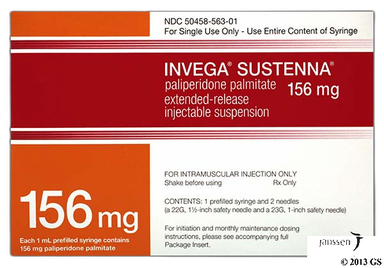
The average cost for 1 syringe of 1ml of 156mg of Invega Sustenna (paliperidone) is $2,349.06 with a free GoodRx coupon. This is 22.80% off the average retail price of $3,042.87.
Interactions between Invega Sustenna (paliperidone) and other drugs
Invega Sustenna (paliperidone) may interact with certain medications or supplements. Always let your doctor and pharmacist know about any other medications or supplements (including prescribed and over-the-counter medications, vitamins, and dietary or herbal supplements) that you are currently taking. The list below does not include all possible drug interactions with Invega Sustenna (paliperidone). Please note that only the generic name of each medication is listed below.
Although certain medicines should not be used together at all, in other cases two different medicines may be used together even if an interaction might occur. In these cases, your doctor may want to change the dose, or other precautions may be necessary. When you are receiving this medicine, it is especially important that your healthcare professional know if you are taking any of the medicines listed below. The following interactions have been selected on the basis of their potential significance and are not necessarily all-inclusive.
Using this medicine with any of the following medicines is not recommended. Your doctor may decide not to treat you with this medication or change some of the other medicines you take.
Using this medicine with any of the following medicines is usually not recommended, but may be required in some cases. If both medicines are prescribed together, your doctor may change the dose or how often you use one or both of the medicines.
Using this medicine with any of the following medicines may cause an increased risk of certain side effects, but using both drugs may be the best treatment for you. If both medicines are prescribed together, your doctor may change the dose or how often you use one or both of the medicines.
Contraindications are specific health conditions or situations in which a person should not take a medication due to safety concerns. If you have any of the following conditions or if any of the following apply to you, let your healthcare provider know because Invega Sustenna (paliperidone) will not be safe for you to take.
What are alternatives to Invega Sustenna (paliperidone)?
There are a number of medications that your doctor can prescribe in place of Invega Sustenna (paliperidone). Compare a few possible alternatives below.
GoodRx Health has strict sourcing policies and relies on primary sources such as medical organizations, governmental agencies, academic institutions, and peer-reviewed scientific journals. Learn more about how we ensure our content is accurate, thorough, and unbiased by reading our editorial guidelines.
Prescription savings
Stop paying too much for your prescriptions. Compare prices, get pharmacy coupons, and save up to 80%.
How long Invega Sustenna side effects last can be different. Some last for a relatively short time, while others can stick around. For example, injection site reactions, like soreness and redness, usually go away on their own in a couple days. But other side effects can last longer. These include movement problems, weight gain, and higher prolactin levels. Talk to your prescriber to learn more about possible side effects from Invega Sustenna. They can recommend ways to manage side effects.
Invega Sustenna is a medication that stays in your body for quite a long time. After it's injected, the medication gets slowly absorbed into the body over up to 4 months. Then, it might stay in your system for up to 5 to 8 months, depending on your dose. But even though it lasts a long time, you still need to keep up with your monthly injections. This helps Invega Sustenna work its best to control your symptoms. If you miss an appointment for your injection, call your prescriber's office right away. They can help you reschedule.
When you first start Invega Sustenna, your first two injections are one week apart. After that, you'll get your injection once a month. Work with your care team to schedule your Invega Sustenna injections.
Before starting Invega Sustenna, your prescriber will check if you've taken oral forms of paliperidone (Invega) or risperidone (Risperdal) before. If not, you'll start with one of these medications first. This helps your prescriber see how well treatment might work for you. It also helps them see if you'll have problematic side effects. If you're switching from any other antipsychotic to Invega Sustenna, your prescriber will help you make the change. When you're ready to start Invega Sustenna, you'll first get two injections a week apart. After that, you'll get one injection every month. Talk to your prescriber to learn more about starting Invega Sustenna.
After you stop taking Invega Sustenna, the medication slowly leaves your body over a few months. This might be enough to keep your schizophrenia symptoms from coming back. But there's still a high chance of relapse, especially if you stop the medication too soon or too quickly. You might have worse psychosis (like seeing or hearing things that aren't real). You might have disorganized or confusing patterns of speaking and believe things that aren't true. Because of the high risk of relapse, always talk to your prescriber first if you want to stop Invega Sustenna. They can talk to you about if stopping is appropriate for you. If it is, they can help make a plan to slowly lower your dose while watching you closely. This helps them see if stopping treatment is safe for you.
Call your prescriber's office if you missed your dose of Invega Sustenna. They will tell you what to do based on how long it's been since you missed it. If you miss a monthly injection and it's been 6 weeks or less since your last one, you can go back to your regular schedule. But if it's been more than 6 weeks, your prescriber will probably need to give you extra "catch-up" injections before you can go back to getting them monthly again.
Studies show that Invega Sustenna might start to help with schizophrenia symptoms within the first week of taking it. But it can take a couple months to see the medication work its best. During the first few months of treatment, it's important to keep track of your symptoms and tell your prescriber about them. They can help adjust your dose, if needed. Remember, it can take time to find the right dose that works best for you. If you have questions about how long it's taking Invega Sustenna to help you, talk to your prescriber.




 Older adults with
  Because of this risk, Invega Sustenna (paliperidone) is not approved for older adults with dementia-related psychosis. Tell your prescriber if you have dementia before starting this medication. Caregivers should let the prescriber know if the person they care for has dementia.