

How Much Is Imaavy Without Insurance?
Imaavy can cost over $12,000 per vial. Learn about ways to save on Imaavy with or without insurance with GoodRx.
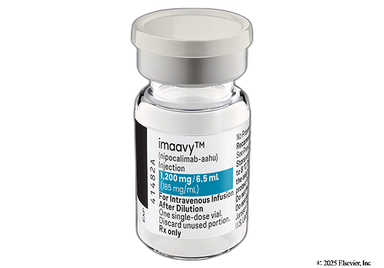
Imaavy (nipocalimab) is FDA approved to treat generalized myasthenia gravis (gMG). It's for people 12 years and older who have antibodies against AChR or MuSK proteins in the body. It works as a neonatal Fc receptor blocker to help your nerves and muscles work together better. Imaavy (nipocalimab) is given as an infusion through the vein at a clinic or medical center. You’ll get the infusion once every 2 weeks. Common side effects include respiratory infections, swelling in the hands or feet, and muscle spasms.

Imaavy (nipocalimab) is an FcRn blocker. It attaches to a protein in the body called the neonatal Fc receptor (FcRn). This lowers levels of certain antibodies in your blood. Some of these antibodies attack proteins called AChR and MuSK, which are essential for your nerves and muscles to work together.
When these harmful antibodies go down, your nerves and muscles can communicate better. This can help improve your strength and daily function.
| Common Brands | Imaavy |
|---|---|
| Drug Class | Neonatal Fc receptor blocker |
| Controlled Substance Classification | Not a controlled medication |
| Generic Status | No lower-cost generic available |
| Availability | Prescription only |

The following side effects may get better over time as your body gets used to the medication. Let your healthcare provider know immediately if you continue to experience these symptoms or if they worsen over time.
Contact your healthcare provider immediately if you experience any of the following.
Side effects that you should report to your care team as soon as possible:
Side effects that usually do not require medical attention (report these to your care team if they continue or are bothersome):




Imaavy (nipocalimab) can cause some serious health issues. This risk may be even higher for certain groups. If this worries you, talk to your doctor or pharmacist about other options.
Imaavy (nipocalimab) can raise your chances of getting infections. In studies, respiratory infections and urinary tract infections (UTIs) were common. Some infections can be serious. Certain old viral infections, like shingles or cold sores, can also come back.
Watch for signs of infection while you're taking Imaavy (nipocalimab). This can include fever, cough, trouble breathing, burning with urination, and new rashes. If you notice any signs of infection, tell your prescriber. They might pause treatment until the infection goes away.
In rare cases, some people who received Imaavy (nipocalimab) had allergic reactions. Most were mild or moderate and happened within an hour to 2 weeks of the infusion.
Allergic reactions can cause a rash, hives, itching, swelling of the face or throat, trouble breathing, or chest tightness. Some people have had severe reactions like anaphylaxis or angioedema (serious swelling).
Your care team will watch you during your Imaavy (nipocalimab) infusion and for 30 minutes after it ends. If you have a reaction during the infusion, they'll stop the infusion and treat your symptoms. If you have signs of an allergic reaction after you go home, get medical help right away. If it's serious, you won't receive Imaavy (nipocalimab) again to be safe.
Some people feel unwell during or within 2 days after an Imaavy (nipocalimab) infusion. You might have a headache, fever, chills, flushing, or nausea. You might also feel tired or dizzy. Most of these reactions are mild to moderate.
Your care team will watch you during the infusion and for 30 minutes after. If you have a mild reaction, they might slow the infusion and give you medications to help. But for more severe reactions, they'll stop the infusion and treat your symptoms. If you have these symptoms after you go home, call your care team.

 Vial
Vial| Dosage | Quantity | Price as low as | Price per unit |
|---|---|---|---|
| 1.62ml of 300mg/1.62ml | 1 vial | $3,001.45 | $3,001.45 |
| 6.5ml of 1,200mg/6.5ml | 2 vials | $23,967.85 | $11,983.93 |
This medication is given as an infusion through a vein, or an intravenous (IV) infusion. It's given by a trained healthcare professional at a clinic or infusion center.
Your prescriber will calculate the dose based on your weight.
The typical starting dose is 30 mg/kg of body weight given IV once.
Then, a maintenance dose of 15 mg/kg IV is given 2 weeks after the first dose and every 2 weeks after that.


Prescription savings
Stop paying too much for your prescriptions. Compare prices, get pharmacy coupons, and save up to 80%. Find expert answers to your health questions so you can make the best decisions for yourself and your family.
Health conditions
Medications & treatment
Access & affordability
 Our monthly healthcare membership can help you save thousands on your prescription costs.
Resources

The first infusion of Imaavy will take at least 30 minutes. The rest of your infusions will take at least 15 minutes. How long they actually take will depend on how well you're tolerating the medication. For example, your care team might slow your infusion if you have any infusion reactions. This can make your full infusion take a bit longer to finish. Then after each infusion ends, you'll have to stay for 30 minutes so your care team can check you're feeling okay. Talk to your care team about what to expect with your Imaavy infusions.
If you miss a dose of Imaavy, call your care team right away to reschedule the infusion. You should get the infusion you missed as soon as possible. Once you receive that infusion, you can continue the once-every-2-week schedule.
In studies, many people had symptom improvement within weeks of starting Imaavy. But it can take a few months before you see the full benefit. Remember to keep all your infusion appointments, even if you don't notice changes right away. Write down your symptoms in a journal or app and share them with your care team. Talk with them about how well the medication is working for you.
If you're pregnant, talk to your prescriber. It's not clear if Imaavy is safe during pregnancy. Babies usually get protective antibodies from their mother during pregnancy. Imaavy can lower the amount of antibodies in the body. Because of this, a baby might get fewer protective antibodies before birth. This could raise their risk of infections for up to 6 months after birth. For extra protection, they might need a special vaccine plan to prevent infections. Tell your prescriber if you become pregnant while taking Imaavy. They can explain the risks and benefits. If you and your prescriber decide to continue treatment, they can sign you up for a safety study to help monitor health outcomes for you and your baby.
