


Can Methenamine and Vitamin C Help Prevent Urinary Tract Infections (UTIs)?
Urinary tract infections (UTIs) are common infections, especially in women. Can vitamin C and methanamine help prevent them? Learn more here.
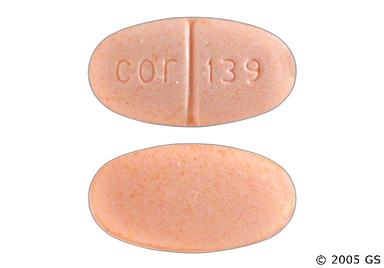
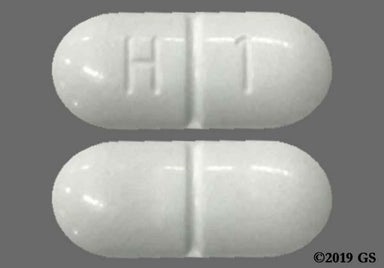
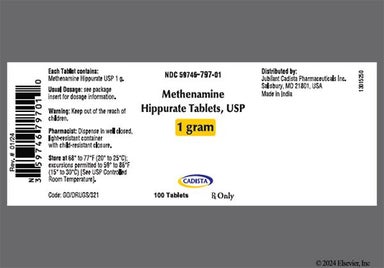
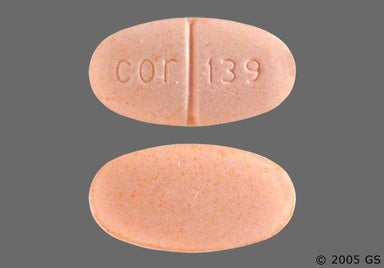
Methenamine hippurate (Hiprex) is an antibiotic medication used to prevent and control urinary tract infections (UTIs). It's meant for people who need long-term prevention, not to treat active infections. Methenamine hippurate (Hiprex) is taken by mouth twice daily. Methenamine is also available in the form of methenamine mandelate, which is taken four times a day. Methenamine hippurate (Hiprex) isn't known to cause many side effects, but they can include nausea, upset stomach, and painful urination.

Methenamine hippurate (Hiprex) prevents chronic, recurrent UTIs by acting as an antiseptic. Methenamine works in an acidic environment by breaking down into a chemical called formaldehyde, which causes damage to bacteria proteins. This kills and prevents the spread of bacteria. The salts of methenamine (either hippurate or mandelate) help keep the urine environment acidic so that the medication can work better.
| Common Brands | Hiprex |
|---|---|
| Drug Class | Antibiotic |
| Controlled Substance Classification | Not a controlled medication |
| Generic Status | Lower-cost generic available |
| Availability | Prescription only |

The following side effects may get better over time as your body gets used to the medication. Let your healthcare provider know immediately if you continue to experience these symptoms or if they worsen over time.
Less than 4%:
Along with its needed effects, a medicine may cause some unwanted effects. Although not all of these side effects may occur, if they do occur they may need medical attention.
Check with your doctor immediately if any of the following side effects occur:
Less common
Skin rash
Some side effects may occur that usually do not need medical attention. These side effects may go away during treatment as your body adjusts to the medicine. Also, your health care professional may be able to tell you about ways to prevent or reduce some of these side effects. Check with your health care professional if any of the following side effects continue or are bothersome or if you have any questions about them:
Less common
Other side effects not listed may also occur in some patients. If you notice any other effects, check with your healthcare professional.
Call your doctor for medical advice about side effects. You may report side effects to the FDA at 1-800-FDA-1088.




Methenamine hippurate (Hiprex) can cause some serious health issues. This risk may be even higher for certain groups. If this worries you, talk to your doctor or pharmacist about other options.
Methenamine hippurate (Hiprex) can temporarily raise your liver enzyme levels, which can be a sign of liver irritation or damage. Your provider might order blood work occasionally to check your liver health, especially if you have a history of liver problems. Methenamine hippurate (Hiprex) isn't recommended for people with severe liver problems.
People who take larger doses of methenamine hippurate (Hiprex) (higher than recommended) might experience bladder irritation, frequent and painful urination, and protein or blood in your urine. Take the medication exactly as it's prescribed. If you have any of these symptoms, let your provider know.
Don't take methenamine hippurate (Hiprex) if you're taking a sulfonamide medication, such as sulfamethoxazole/trimethoprim (Septra, Bactrim). Taking these medications with methenamine hippurate (Hiprex) can lead to the formation of crystals, which can be painful.
In addition, avoid taking methenamine hippurate (Hiprex) with milk products or antacids that has sodium carbonate or bicarbonate, as well as any salicylate medications. Taking these together can make the urine less acidic, which means that methenamine hippurate (Hiprex) won't work as well.

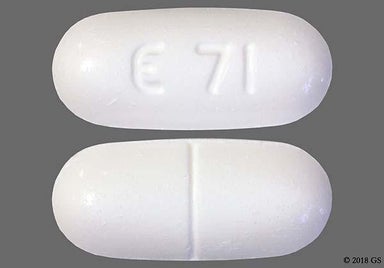
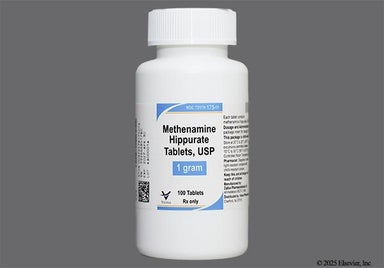
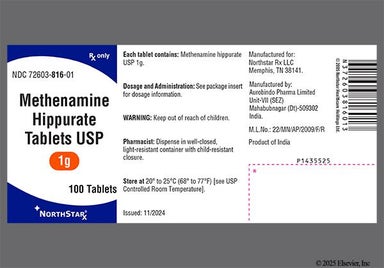
 Tablet
| Dosage | Quantity | Price as low as | Price per unit |
|---|---|---|---|
| 1g | 60 tablets | $27.92 | $0.47 |

Although certain medicines should not be used together at all, in other cases two different medicines may be used together even if an interaction might occur. In these cases, your doctor may want to change the dose, or other precautions may be necessary. When you are taking this medicine, it is especially important that your healthcare professional know if you are taking any of the medicines listed below. The following interactions have been selected on the basis of their potential significance and are not necessarily all-inclusive.
Using this medicine with any of the following medicines is not recommended. Your doctor may decide not to treat you with this medication or change some of the other medicines you take.


Contraindications are specific health conditions or situations in which a person should not take a medication due to safety concerns. If you have any of the following conditions or if any of the following apply to you, let your healthcare provider know because Methenamine hippurate (Hiprex) will not be safe for you to take.




Prescription savings
Stop paying too much for your prescriptions. Compare prices, get pharmacy coupons, and save up to 80%.Resources
About GoodRx
 Find expert answers to your health questions so you can make the best decisions for yourself and your family.
Health conditions
Medications & treatment
Access & affordability
Well-being
Medication discounts

Yes, Methenamine Hippurate is an antibiotic, but not the type that treats active infections. Instead, Methenamine Hippurate helps prevent and control chronic UTIs in people who need long-term treatment. Your provider will only prescribe Methenamine Hippurate after the UTI has been treated with an appropriate antibiotic.
If you're taking methenamine hippurate, take your dose twice a daily. But if you're taking methenamine mandelate, take your dose four times a day. Taking higher doses (e.g., 8 grams per day for more than 3 weeks) can cause bladder irritation, frequent and painful urination, protein in your urine, and bloody urine. It's important that only you take Methenamine Hippurate exactly as prescribed.
Both methenamine hippurate and methenamine mandelate contain the same active medication, but with different salt forms. The main difference between them is dosing. Methenamine hippurate is taken by mouth twice daily, whereas methenamine mandelate is taken four times a day. Talk with your provider if you have more questions about these medications.
Weight gain isn't a common side effect of Methenamine Hippurate. If you find yourself gaining weight while taking this medication, speak with your provider because it's probably caused by something else.
No, Methenamine Hippurate shouldn't make you urinate more if you take it as directed. But there have been reports of people experiencing frequent urination after taking higher doses of Methenamine Hippurate (8 grams daily for 3 to 4 weeks). If you think you're urinating more often than usual, let your provider know.
Check in with your provider before you take vitamin C with Methenamine Hippurate. Because Methenamine Hippurate works best when your urine is acidic, the thought is that taking vitamin C can help Methenamine Hippurate work better. But limited research doesn't show a clear benefit of taking vitamin C with Methenamine Hippurate. Talk with your provider if you have more questions about this combination.
It's best to avoid alcohol while taking Methenamine Hippurate. Although it doesn't interact with the medication directly, alcohol can irritate your bladder, worsen your urinary symptoms, and lead to dehydration which can make it harder for your body to fight off your UTI.
It's not known if Methenamine Hippurate will harm you or your unborn baby during early pregnancy. But animal studies suggest it might be safe to take during the last trimester. Let your provider know if you get an UTI during pregnancy. They can talk with you about ways to prevent UTI during pregnancy as well as discuss safer treatment options.
