Key takeaways:
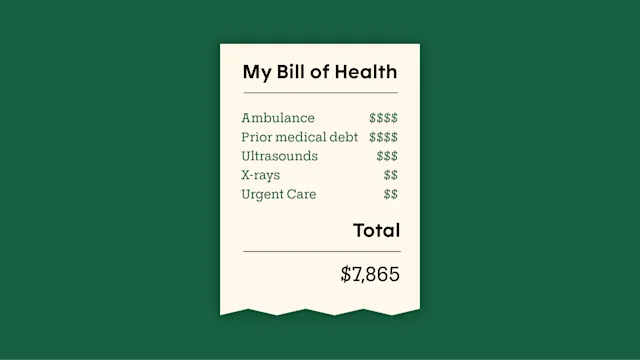
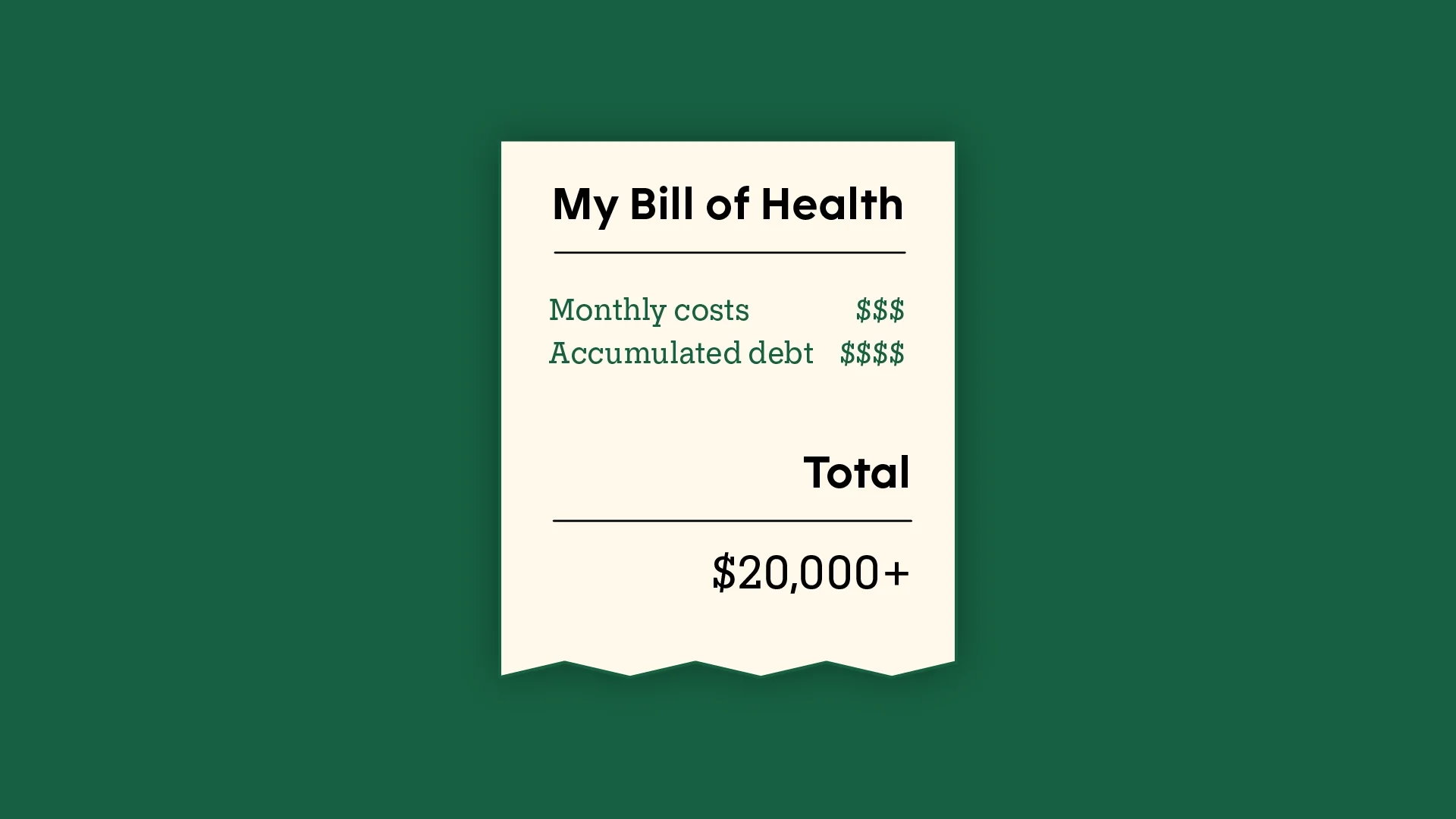
Debilee Flores’ chronic conditions add hundreds of dollars to her monthly expenses.
Over the years, she has accumulated more than $20,000 in medical bills.
She is thankful to have good insurance and a copay program to help cover prescription costs.
Debilee Flores started stacking up medical debt in 2014. That was about the time she began connecting the dots of her chronic pain issues.
She was 29, and she was 4 months pregnant. She was surprised by the pregnancy because she had lived with polycystic ovary syndrome (PCOS) since she was about 19. PCOS is a hormonal disorder that's one of the most common causes of infertility in women. Debilee had attributed her abdominal pain to PCOS.
Six months into her pregnancy, Debilee developed symphysis pubis dysfunction (SPD). That meant her pelvic joints became stiff, and her doctor put her on bedrest. She delivered a healthy son but kept experiencing pain herself.
By 2015, she was in a lot of back pain and was diagnosed with ankylosing spondylitis — inflammatory arthritis in her spine. One surgeon she consulted suggested she have surgery to correct it. But at 30 years old, Debilee didn’t want a major surgery with the possibility of follow-up surgeries.


While searching for a specialist, she became sick to the point of being bedridden. She felt as if she needed to constantly use the bathroom.
In 2016, she was diagnosed with Crohn’s disease, a type of inflammatory bowel disease (IBD).
Debilee — now a 37-year-old Nashville-area wellness advocate — came from a family she says believed in dealing with feelings and pain without any fuss.
“The mindset I think sometimes happens with minorities, it's like, ‘Oh, just suck it up. You can deal with it.’" says Debilee, who is Afro-Latina and spent a lot of time in and out of the emergency room. “Any time I had a problem like, ‘Oh my god, I’m dying!’ I was never dying, thankfully."
Insurance covered most of her prescription costs
As her list of chronic conditions started adding up, so did Debilee's prescription costs.

Read more like this
Explore these related articles, suggested for readers like you.




Her doctor prescribed Mesalamine for her Crohn’s disease. But she wasn't finding much relief. She wound up trying four different medications before going on Remicade, a much more expensive medication given through intravenous (IV) infusion by a healthcare provider.
Debilee’s insurance covered most of the costs. But she was still paying about $155 out of pocket each month for urgent care and primary care visits — plus $200 for the medicine.
While she credits Remicade for putting her Crohn’s disease in remission, she says she came down with several infections and viruses while she was on it.

A weakened immune system made hospital visits frequent
Debilee’s autoimmune condition continued to weaken her immune system. A simple case of mono put her in the hospital for 6 days.
Because of frequent hospital visits, Debilee was all too aware of the cost of medications. Her insurance uses something called step therapy. It means patients must try less expensive medications first before getting coverage for more expensive ones.
For example, as part of her Crohn’s treatment, her insurance covered the antibiotic Flagyl, which was $168 before insurance. But Debilee had an extreme reaction to it and her doctor switched her to Vancomycin, which treats intestine and colon infections and costs $750 to $1,030 before insurance. Debilee paid a $500 copay for her hospitalization and the cost of medication.
And because Debilee was on Vancomycin for 2 weeks and the hospital discharged the medicine through its own pharmacy, her bill was $650 per pill. Thanks to her husband’s insurance, she didn’t have to pay that much. “I probably would have died, because there's no way I could have been out $650 times four every day for 14 days.”
Medical debt stacked up
Even with insurance covering some of the costs, Debilee still had significant medical debt. Over the years, she had been in and out of the hospital and unable to pay. Those bills went into collections and damaged her credit for years.
“Lots of it has already fallen off my credit reports,” she says. “I'd easily say it was over $20,000. I am sure there is more. But I’ve had really great insurance since 2012, so that helped tremendously.”
When Debliee moved to Murfreesboro, Tennessee, she was able to get on a copay savings program for the Remicade. This helped lower her medical debt significantly.
Debilee is now a patient at the Vanderbilt University Medical Center's Inflammatory Bowel Disease Clinic. The clinic staff is well-versed in the cost of chronic illnesses. When Debilee needed to go on expensive medication, they informed her of her options, such as a copay program. Now, Debilee only pays $5 for her Remicade infusion.
At one point, Debilee’s insurance wanted her to try a biosimilar medication because it was cheaper. However, that medication wasn't covered by her copay program. It would have cost Debilee a lot more. Instead, Debilee’s doctor advocated on her behalf, telling her insurance she needed Remicade to stay in remission for her Crohn’s disease. Debilee says she feels incredibly lucky her doctor fought for her.
Budgeting for her bills
Today, Debilee still struggles with medical bills. To stay on budget, she has to plan out her treatments. Most recently, her doctor told her she needed special testing for a mass on her liver. That’s another $350 Debilee hadn’t planned for.
She and her husband try to map out their budget. It accounts for missed work hours because of her doctor visits and childcare costs. Sometimes, her husband loses work pay because he needs to pick up their son when Debilee is getting infusion treatments. And because Debilee can't drive herself to the infusion center, she pays for a rideshare trip. Monthly costs for missed work, childcare, and rides can be several hundred dollars.
Because of her health conditions, Debilee follows a low-sugar, organic diet. That usually costs an extra $150 dollars per month. She also takes supplements since her body can’t absorb nutrients well. That’s sometimes $80 a month.

She has learned to get over the sticker shock of having a chronic condition.
“If I have a bill, I call the hospital before it goes to collections,” she says. “I tell them my situation. I say I need help. Like: ‘I am trying to pay this bill off. I can pay you $5 for the rest of my life. That’s all I can pay.’”
Sometimes, she says, her negotiations work.
Advocating for others
Debilee knows what it’s like to have to advocate for yourself when you have a costly chronic condition. That’s why she’s done research as a volunteer for other patients who are on medications like the ones she has been on. She did the legwork to find out whether companies offered assistance programs for certain medications.
She’s grateful for platforms that tell people’s chronic illness stories because it helps others feel less alone.
“What people connect with is not illness, it’s people's humanity,” she says. “Sometimes, sharing your story is the most powerful tool.”
Personal finance resources
For people who find themselves in situations like Debilee’s, there are a few resources to consider.
Manufacturer copay cards can offset the price of medications to help you save on out-of-pocket costs. Copay cards typically cover medications that do not have a generic version.
You may be able to negotiate your medical bill. The amount on your bill isn’t always what you will end up paying. Once you do your homework, you can reach out to the billing representative and ask for help or request a payment plan.
You can become your own advocate by doing research and connecting with others who have dealt with similar situations.
Debilee told her story as part of a partnership between GoodRx Health and Patients Rising, which provides education, resources, and advocacy for people living with chronic and life-threatening illnesses.
DISCLAIMER: This article is solely for informational purposes. This article is not professional advice concerning insurance, financial, accounting, tax, or legal matters. All content herein is provided “as is” without any representations or warranties, express or implied. Always consult an appropriate professional when you have specific questions about any insurance, financial, or legal matter.

Why trust our experts?