Key takeaways:
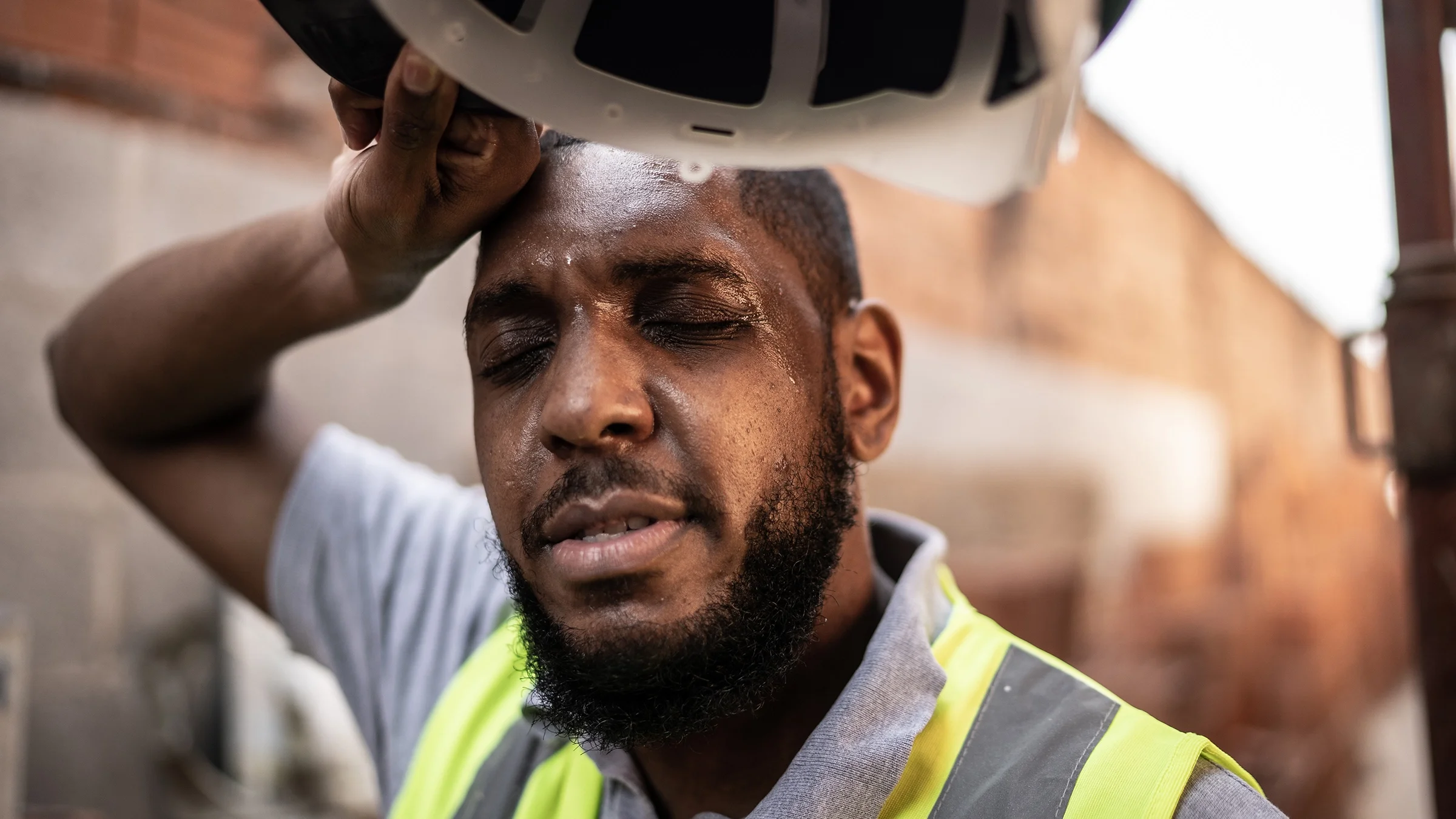
Heat-related illness — like heat stress, heat exhaustion, and heat stroke — happens when the body can’t cool down after being exposed to heat.
Learning how to prevent heat stroke can keep you and your loved ones safe.
Heat stroke prevention includes staying hydrated and cool, dressing for the heat, and listening to your body.
Some people have a higher risk of heat-related illness, including children, older adults, and outdoor workers.
More and more places are experiencing hotter and hotter temperatures. While you may not be able to completely escape the heat, there are ways to protect yourself from heat-related illness. And heat-illness prevention is important because heat exhaustion and heat stroke can have serious effects.
There are different types and levels of severity of heat sickness (hyperthermia). But the general issue is similar for each: The body can’t cool itself down after exposure to heat. Certain environments can put you more at risk of overheating, like working under the sun or cooking over a hot stove. And some people have a higher risk of overheating, including children, older adults, and outdoor workers.
No matter where you work or play, we’ve got you covered. Here’s how to prevent heat stroke and other heat-related illnesses.
Search and compare options
1. Stay hydrated
When your body’s temperature rises, your skin responds by sweating. The moisture (sweat) on your skin evaporates, helping to cool down your body. But you need to be well hydrated for this natural cooling system to work properly.
How much water you should drink depends on the conditions and what you’re doing. Men should drink about 3.7 L (125 oz, or about 15.5 cups) a day, and women should get about 2.7 L (91 oz, or about 11.5 cups).
In general, when the temperatures rise, you’ll need to drink more water — and more often. Even if you don’t feel thirsty, aim to drink 1 cup (8 oz) of water every 20 minutes. Cool water can be extra refreshing. If you’ll be in warm weather or working hard for a longer period of time, consider electrolyte drinks. And be sure to avoid alcohol.
2. Dress for the heat
Wearing the right clothes can help you stay cooler when it’s hot. Here’s what qualities to look for in clothes for hot weather:
Lightweight and breathable
Loose fit
Light colors
Full coverage (like long pants and long-sleeved shirts)
If you’re outside, a wide-brimmed hat and sunglasses help keep the sun off your face, scalp, and eyes.

Read more like this
Explore these related articles, suggested for readers like you.

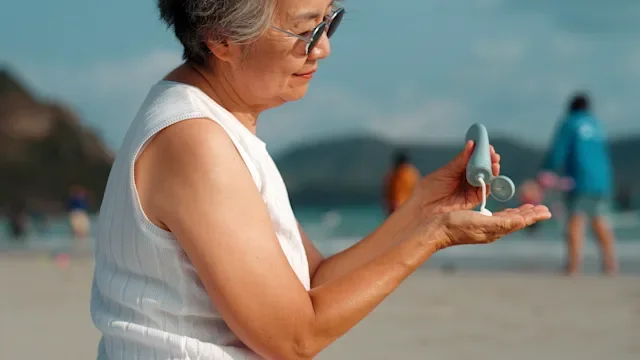
Keep in mind that protecting yourself from heat isn’t the same as protecting yourself from the sun and sunburn. Sun-protective clothing has some distinct features. Dark or bright colors are better at blocking ultraviolet (UV) rays than lighter colors. And while breathable clothing will feel cooler, dense, tightly woven fabric provides more sun protection. Consider wearing sunscreen daily to protect yourself from both heat and sun.
3. Avoid peak sun hours
In the U.S., the sun’s UV rays are most powerful between 10AM and 4PM. So, if you’re working outside, try to schedule your activities outside of these hours. If you need to work during peak heat or sun, seek out shady areas and try to build up your routine little by little. This will help your body acclimatize (adapt) to the higher heat.
Keep in mind that the sun can burn your skin even when it’s cloudy outside. You can check the UV index in your area to get a better idea of how much protection you’ll need.
High levels of humidity can also raise the risk of heat injury. The heat index accounts for both temperature and humidity, which can help you figure out when it’s too hot. It reports what it actually “feels like” when you’re outside.
4. Listen to your body
Sometimes even the best prevention isn’t enough to avoid heat-related illness. Between sunburn and sun poisoning, heat rash (prickly heat), and heat exhaustion, there are real risks to getting too much sun and heat. So, it’s important to listen to your body and to know the signs and symptoms of overheating.
Symptoms of heat exhaustion include:
Feeling very thirsty
Sweating a lot
Feeling dizzy, weak, or nauseated
Having muscle cramps or headache
If you experience these symptoms, go to a cool place and try to lower your temperature with air conditioning, a fan, and cool water. If you continue to overheat, you may experience heat stroke — a more severe type of heat illness that needs immediate medical attention.
5. Pace yourself and take breaks
Whether you’re exercising or working in hot temperatures, it can be easy to push yourself too hard. Remember that your body needs to work extra hard to stay cool in hot or humid conditions. So, pace yourself and take breaks to rest when the heat index is high — even if you don’t think you’re working hard.
Taking frequent breaks is also a good way to remember to drink water to stay hydrated. Aim to rest in a cool, shady area.
A cooling center or station can be a great place to take a break when the heat index is high. These are air-conditioned public spaces, like malls and libraries, that are open to all. To get a list of local cooling stations in your area, call 211.
6. Know your rights at work
Estimates show that over 70% of workers across the world are exposed to extreme heat. And when it comes to hazardous weather conditions, heat is the leading cause of death in the U.S. But these deaths are preventable. And, as a worker, you have a right to protection from extreme heat.
The Occupational Health and Safety Administration (OSHA) states that employers should provide employees with:
A plan for emergencies and training on how to prevent heat illness
A monitoring system to check for signs of heat illness and stress
A plan to protect and ease new workers into high-heat or stress environments
Some states have additional heat standards to protect workers.
If your employer isn’t following these federal safety guidelines, you can file a complaint to protect yourself and your colleagues. Whistleblower laws protect you from retaliation after issuing a complaint.
Who is most prone to heat stroke?
Heat illness can affect anyone. But some people have a higher risk, including:
People with certain medical conditions (like heart disease and poor blood circulation)
People taking certain medications (like diuretics) and substances (like alcohol)
Compared to other workers, people who work in agriculture are 35 times more likely to die from heat-related illness. And Latinos make up over 70% of agricultural workers in the U.S.
Good to know: Cars can heat up very quickly, reaching over 140°F in minutes. Never leave a child or pet in an unattended car.
What are the dangers of heat stroke?
Heat affects your health in many ways. Dehydration can be a medical emergency.
When your body begins to overheat, you’ll begin to experience the symptoms of heat exhaustion outlined above. This includes:
Thirst
Heavy sweating
Headache
Achy muscles
Overheating can worsen into heat stroke, which is a medical emergency.
Without quick treatment, the death rate of heat stroke is over 50%. Heat stroke can lead to a range of complications, including:
Breathing difficulties
Kidney damage
Brain swelling
Blood clotting issues
Seizure
When to get emergency help
Heat-related deaths are a real concern in the U.S. Move to a cool place, get help right away, and call 911, if you notice any of the following:
Confusion or loss of consciousness
Hot, reddish skin (might be dry or damp)
Body temperature over 104°F
Sometimes people with heat stroke stop sweating. But that’s not always the case. When in doubt, get help.
The bottom line
Heat-related illness can affect anyone. Whether you’re playing outside or working inside, it’s important to take steps to prevent your body from overheating. By staying hydrated, you can help keep your body’s natural cooling system — sweating — working properly. Wearing lightweight and loose-fitting clothing along with a hat can help, too.
Remember, kids and older adults have a higher risk of heat-related illness. Heat exhaustion can quickly worsen to heat stroke. Get medical attention right away if you notice that someone seems confused in the heat.

Why trust our experts?


References
Centers for Disease Control and Prevention. (n.d.). Heat and health tracker.
Centers for Disease Control and Prevention. (2024). Extreme heat and your health.
Centers for Disease Control and Prevention. (2024). Heat and chronic conditions.
Centers for Disease Control and Prevention. (2024). Heat and infants and children.
Centers for Disease Control and Prevention. (2024). Heat and older adults (aged 65+).
Centers for Disease Control and Prevention. (2024). Heat and outdoor workers.
Centers for Disease Control and Prevention. (2024). Heat illnesses.
Centers for Disease Control and Prevention. (2024). Sun safety facts.
Centers for Disease Control and Prevention. (2024). Symptoms of heat-related illness.
Cheshire, W. P., Jr. (2016). Thermoregulatory disorders and illness related to heat and cold stress. Autonomic Neuroscience: Basic and Clinical.
Employment and Training Administration. (2022). Findings from the National Agricultural Workers Survey (NAWS) 2019-2020: A demographic and employment profile of United States farmworkers (research report no. 16). U.S. Department of Labor.
Hifumi, T., et al. (2018). Heat stroke. Journal of Intensive Care.
Iba, T., et al. (2022). Heatstroke-induced coagulopathy: Biomarkers, mechanistic insights, and patient management. eClinicalMedicine.
Khayat, M. E., et al. (2022). Impacts of climate change and heat stress on farmworkers' health: A scoping review. Frontiers in Public Health.
Layton, J. B., et al. (2020) Heatwaves, medications, and heat-related hospitalization in older Medicare beneficiaries with chronic conditions. PLoS One.
Morris, A., et al. (2023). Heat stroke. StatPearls.
National Center for Healthy Housing. (2024). Cooling centers by state.
National Weather Service. (n.d.). Heat, autos, and safety.
National Weather Service. (n.d.). What is the head index?
National Weather Service. (2023). Weather related fatality and injury statistics.
Occupational Safety and Health Administration. (n.d.). File a complaint.
Occupational Safety and Health Administration. (n.d.). Heat illness prevention: Employer responsibilities.
Occupational Safety and Health Administration. (n.d.). Heat illness prevention: Information for workers.
Occupational Safety and Health Administration. (n.d.). Heat injury and illness prevention in outdoor and indoor work settings rulemaking.
Occupational Safety and Health Administration. (n.d.). Heat: Prevention » Protecting new workers.
Occupational Safety and Health Administration. (n.d.). Heat: Prevention » Water. Rest. Shade.
Occupational Safety and Health Administration. (n.d.). Heat: Standards.
Occupational Safety and Health Administration. (n.d.). How to file a whistleblower complaint.
Skin Cancer Foundation. (2019). Sun-protective clothing: A safe, simple way to keep the rays at bay.
United Nations. (n.d.). Secretary-general's call to action on extreme heat.
United States Environmental Protection Agency. (2024). Climate change indicators: Heat-related deaths.
United States Environmental Protection Agency. (2024). The UV index.