Key takeaways:
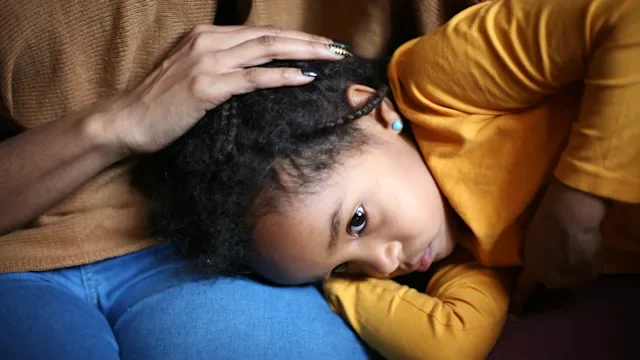
Anxiety can cause your child significant distress and may result in meltdowns or tantrums — as children attempt to manage their fear.
Coping skills are tools people of all ages can use to better manage their anxiety by lowering the intensity of their emotions.
Your child may need to be evaluated for anxiety if coping skills don’t ease their anxiety, or their anxiety symptoms cause major problems at school or home.
Does your child have meltdowns or struggle to make friends? Does their anxiety keep them up at night or trigger depressed moods? If so, your child isn’t alone. Close to 6 million children in the U.S. have an anxiety condition.
Anxiety is a natural, automatic response to perceived danger. Like with adults, when children experience anxiety, it’s their brain’s way of trying to keep them safe.
The amygdala — an almond-shaped part of the brain — is in charge of sending out warning signals when it senses danger. These signals go to the brain’s “mission control” center, the hypothalamus, so it can get your body ready to fight or flee.
Search and compare options
Sometimes, though, the amygdala can get overexcited and cause too much anxiety when it’s not helpful. For example, if you’re worried about a big test at school, it doesn’t help to fight or flee from the teacher. That’s where coping skills come in.
Coping skills are tools that can help lower your child’s anxiety by slowing down their automatic fight-or-flight response. This slowing down then helps reduce their distress.
What are coping skills for kids?
Children experience a wide range of emotions, just like adults. They may feel sad, angry, or anxious at any given moment. But children aren’t born with tools or language to manage those emotions or express them in a healthy way. That’s why some kids have meltdowns or tantrums. They’re not trying to behave badly — they’re responding to a stressful situation in the only way they know how.
“Many kids are so anxious these days,” Chase Anderson, MD, an assistant professor of child and adolescent psychiatry at the University of California, San Francisco, told GoodRx Health. “Coping skills can help them navigate the situations that make them anxious.”
Coping skills are strategies that can help your child deal with anxiety in healthy, productive ways. Your child can practice them with you and on their own, whether they’re feeling anxious at the time or not. That way, they already know what to do when they face a stressful situation.
“Coping skills give children a breather,” Anderson said. “It gives them a moment to slow things down, to say to themselves, ‘I may be getting anxious. I should use my coping skills to calm things down.’”
Here are some coping strategies you can introduce to your child or teen.
Problem-focused coping skills
Problem-focused coping skills directly address the problem that’s causing anxiety. This doesn’t necessarily mean confrontation. Instead, it can be small acts that help a child process anxiety and feel more in control of a situation.
Some examples of problem-focused coping skills include the following.

Read more like this
Explore these related articles, suggested for readers like you.


Creating to-do lists
To-do lists can help ease anxiety around big projects by breaking them into smaller steps. Homework logs can help children visualize all of their schoolwork in a streamlined way that helps them tackle their lists.
Prioritizing tasks
Prioritizing tasks helps kids and teens figure out which problems to tackle first. It’s often helpful to start with the easiest item. Like “to-do” lists, prioritizing can help make things more manageable.
Asking for help
Knowing when to ask for help is an important lifelong skill. Teaching your child or teen to advocate for themselves by asking for help can also ease anxiety. You can review anxiety-provoking scenarios with your child so they know where to go for help if these situations develop.
Emotional coping skills
Emotional coping skills teach your child how to respond to a stressful situation. You can’t always change a stressful situation, but you can change your reaction to it. That’s where emotional coping skills come. Some examples of emotional coping skills include the following.
Breathing exercises
Breathing exercises can redirect your child’s anxious thoughts and bring them back to a calm state. Practice these techniques with your child:
Take deep breaths in through the nose and out through the mouth. Tell them to pretend they’re breathing in the scent of flowers and blowing out their birthday candles.
Have your child open one hand, palm up. With their other hand, ask them to rub each finger of their open hand, from knuckle to tip as they breathe in, and from tip back to knuckle as they breathe out. Do this for each finger and each hand.
Tell them to place their hands on their belly and feel it go in and out as they breathe.
Counting
Counting is an easy way to get your child’s mind to stop swirling with anxious thoughts.
Tell your child to close their eyes or put their head down. Then, get them to try one of these counting options until they feel more relaxed:
Have them count “1-100, 2-100, 3-100,” and so forth.
Ask them to count backward from 100.
Tell them to do multiplication tables in their head.
Meditation
You’re never too young to try meditation. Meditation centers on mindfulness and breathing exercises that can restore your child’s sense of calm and relaxation.
Try searching “meditation for kids” on YouTube or checking out these apps to get started:
Headspace: Headspace has several guided meditations to help your child calm down when they feel frustrated, practice kindness, and maintain a positive attitude.
Meditation for Kids: Meditation for Kids offers breathing exercises, sleep stories, and a gratitude journal to help children stay calm and lower anxiety.
Breathe, Think, Do with Sesame: Breathe, Think, Do with Sesame is a “Sesame Street” app that guides children through breathing exercises, thinking through their issues, and creating a plan.
Journaling
You can give an older child a journal. Tell them they can write or draw about their feelings without fear of judgment or consequences. Let them know they don’t have to share their journal entries unless they want to.
Encourage your child to use their journal daily, but especially when they’re stressed. If your child journals regularly, they may be able to identify anxiety triggers and explore ways to work through them with writing or drawing.
Practice labeling emotions
Parents and caregivers can show kids how to talk about their feelings in a healthy way. The key to this is helping your child learn how to label their emotions. Children who can put their feelings into words are better able to process anxiety.
Here’s how you can talk about emotions with your child:
Talk about your feelings. When appropriate, tell your child when you’re anxious, excited, or frustrated. If you burn dinner, you might say, “That’s frustrating. Let me see if I can save any of it or if there’s something else we can eat.”
Talk about their feelings. Label what your child is going through by saying, “You seem worried. Your eyebrows are scrunched up, and you’re fidgety. I wonder what’s going on.” You’re helping your child identify their feelings and encouraging them to talk.
Talk about others’ feelings. Point out what you think another child may be feeling based on what you observe about their behavior. If you see a child who’s excited, you could say, “Look how that boy is jumping and clapping his hands. He must be really happy.” This will help your child identify what others are feeling as well as recognize those feelings in themselves.
Sensory coping skills
Sensory coping skills are techniques that help ease the sensory overload your child may experience when they are anxious. Sensory coping skills target one or more of the five senses to help bring your child into a more calm and secure mindset. Some examples include fidget toys and white noise.
Fidget toys
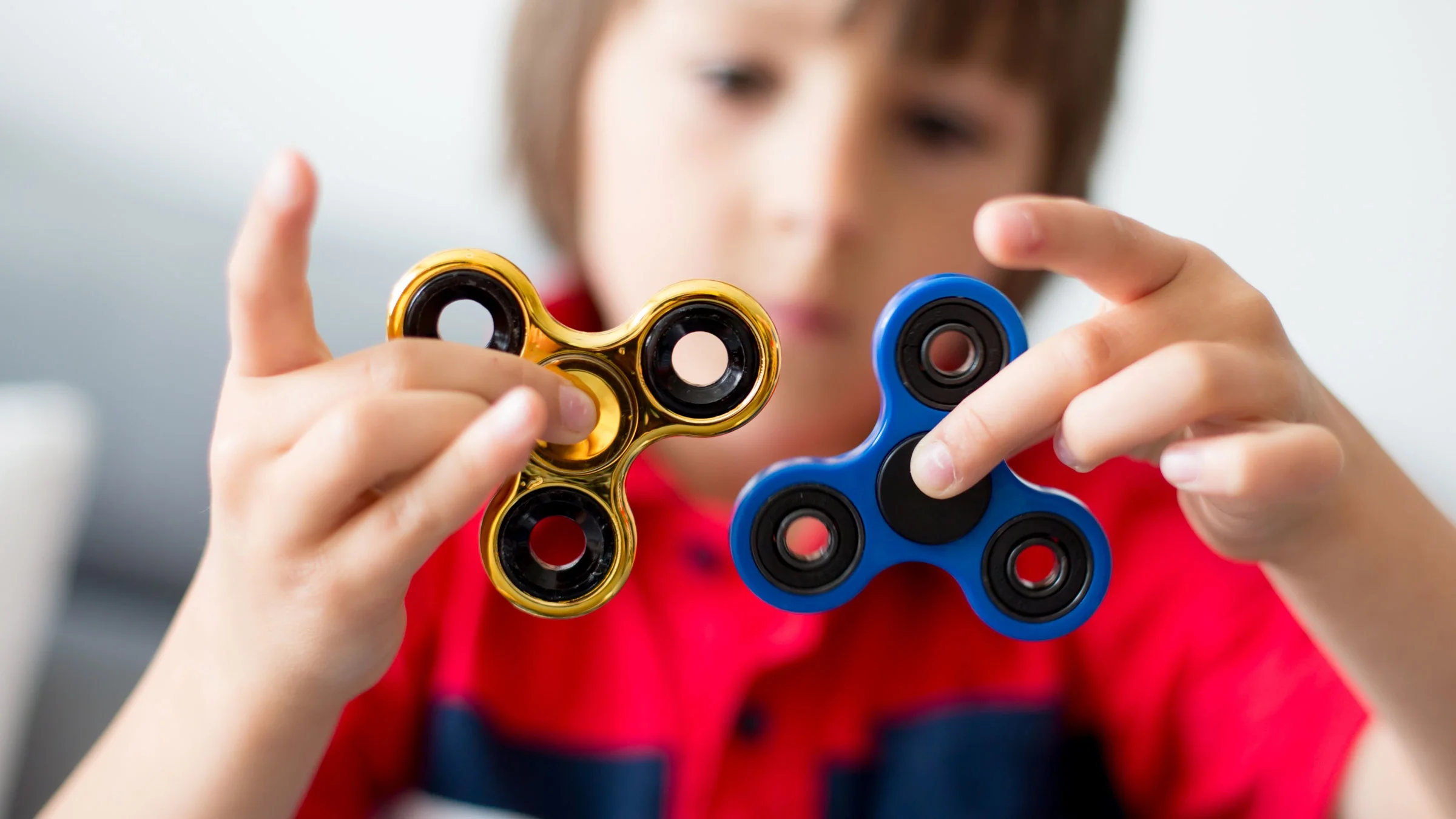
Tactile toys and fidget toys can draw your child’s attention away from their anxious thoughts and toward a playful distraction. They give your child’s hands something to do to relieve their stress. Popular tactile toys include putty, stress balls, and fidget cubes and spinners.
Chill corner
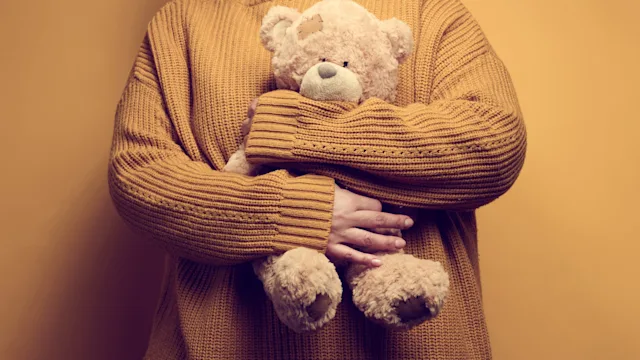
A chill corner is a safe space in your house or your child’s classroom. Your child can enter the space when they’re overwhelmed by fear or worry. Fill the corner with comforting items, such as stuffed animals, their favorite books, or a plush seat.
White noise
A white noise machine can help draw your child’s attention away from anxious thoughts. You can also try calm, soothing music. Many streaming platforms have calming music stations. Even though these are often used to help people fall asleep, they can also help with calming anxious thoughts. Your child can also try wearing noise-cancelling headphones if they feel overwhelmed and anxious in loud environments.
Mindfulness coping skills
Mindfulness coping skills help children practice acceptance of themselves and their situations. They also help children stay present in the moment instead of focusing on “what-ifs.” Some examples include the following.
I spy
This “I spy” game uses your child’s five senses to calm their racing thoughts and help pull them out of their anxiety. By engaging their senses, they can feel more in tune with their surroundings.
Ask your child to spy:
Five things they can see: Maybe they notice a photo of their grandparents or their napping dog. Ask them to take their time looking at each object.
Four things they can touch: Maybe it’s the softness of their sweater or the coldness of an ice-filled glass.
Three things they can hear: Ask them to sit quietly and really listen to the sounds around them, like a car driving by, a bird chirping, or a clock ticking.
Two things they can smell: It might be the scent of dinner cooking or the scent of a new candle.
One thing they can taste: You can either give your child a treat or have them remember something they tasted recently, like a piece of chocolate, a scoop of vanilla ice cream, or a juicy strawberry.
Anchoring phrases
Anchoring phrases can help your child regain control of their worrisome thoughts. Work with your child to develop a phrase they can repeat.
They could try: “I am safe and powerful,” the chorus to a favorite song, or a well-known saying. Or perhaps, if they’re older, a version of Winnie the Pooh’s motto — “I am braver than I believe, stronger than I seem, and smarter than I think” — would work well.
Another way to use this technique is to have your child describe their current environment. For example, they might say, “I am sitting at my desk at school. My book is open to page 9. My teacher is writing a math problem on the board.” They should continue until the anxiety has passed.
Creative coping skills
Creative coping skills focus on using any creative outlets to help ease your child’s anxiety. Some examples include crafts and exercising.
Art activities
Art activities give children an outlet to express their anxiety in a creative way. Your child may find it easier to process their feelings through art rather than with words. But you can also use their creations to start conversations about their emotions.
Have an art station in your home. Stock it with crayons or markers, a sketchpad, and a few coloring books. You might also provide other mediums like modeling clay, blank canvases, and paint, or craft kits.
Physical activity
Physical activity is a natural mood booster. A short walk, bike ride, or hike with your child may do wonders for their anxiety, both in the moment and in the long run. You could also suggest something new, like going indoor rock climbing or hitting baseballs at a batting cage.
Try to get your child to engage in physical activity every day, especially before an anxiety trigger, like a test at school. Exercise can help them clear their head and lower their stress level. You can even suggest they do a short burst of exercise — like 20 jumping jacks — to help lower anxiety fast.
What should you do if coping skills aren’t helping your child?
There are many reasons why coping skills may not help your child. Some skills work for some children but not for others. And some skills may work in certain situations but not in others.
It’s helpful to ask yourself the following questions:
Is my child doing the coping skill appropriately? Take a step back, and see if your child understands how to do the skill. Maybe, try practicing it with them multiple times, so they feel more comfortable.
Is the skill being used in the right situations? Talk about different scenarios in which your child could use the skill. For example, suggest they try a breathing exercise before taking a test, or try playing I spy when riding the school bus.
If your child remains anxious or becomes more anxious, there may be something else going on. Children with an anxiety disorder, obsessive-compulsive disorder (OCD), or attention-deficit hyperactivity disorder (ADHD) often have higher fear levels and more trouble managing their anxiety.
“Coping skills aren’t about fixing everything,” Anderson said. “They just help you navigate the moment you’re dealing with. If your child has anxiety because they’re being bullied or not dealing with trauma, coping skills won’t fix that.”
Talk with your pediatrician or a mental health professional about evaluating your child. These experts can diagnose conditions that may need additional treatment.
“Seek a professional assessment and behavioral interventions from a licensed professional,” Anderson said.
Frequently asked questions
Use age-appropriate and simple language to explain coping skills to your child. Describe the technique and then show it to them. Practice them together so your child knows how to use them. Remind your child to use coping techniques in real time and do these techniques together. Eventually, they will be able to utilize them on their own, even when you’re not present.
Kindergarteners can use several coping skills to manage anxiety. Breathing exercises, grounding techniques (like I spy), and distraction techniques, like fidget toys, are age-appropriate coping skills for young children. Kindergarteners can also use sensory coping techniques like a calm-down corner, soothing music, and weighted blankets. Creative coping skills can also help — try simple techniques like having your child color or play outdoors.
Unhealthy coping skills are things that help people manage anxiety and other uncomfortable emotions but cause harm in the long run. These include things like substance use, self-harm, and negative self-talk.
Use age-appropriate and simple language to explain coping skills to your child. Describe the technique and then show it to them. Practice them together so your child knows how to use them. Remind your child to use coping techniques in real time and do these techniques together. Eventually, they will be able to utilize them on their own, even when you’re not present.
Kindergarteners can use several coping skills to manage anxiety. Breathing exercises, grounding techniques (like I spy), and distraction techniques, like fidget toys, are age-appropriate coping skills for young children. Kindergarteners can also use sensory coping techniques like a calm-down corner, soothing music, and weighted blankets. Creative coping skills can also help — try simple techniques like having your child color or play outdoors.
Unhealthy coping skills are things that help people manage anxiety and other uncomfortable emotions but cause harm in the long run. These include things like substance use, self-harm, and negative self-talk.
The bottom line
Coping skills can empower your child when they face stressful situations. Strategies such as deep breathing, coloring, or playing with fidget toys can turn their attention away from anxious thoughts and toward a sense of calm. But remember that not every coping skill works in every situation or for every child. Work on these skills together and talk about when to use them.

Why trust our experts?



References
Action for Healthy Kids. (n.d.). Calm down corner.
Algorani, E. B., et al. (2023). Coping mechanisms. StatPearls.
Brogle, B., et al. (n.d.). How to help your child understand and label emotions. Technical Assistance Center on Social Emotional Intervention (TACSEI) for Young Children.
Centers for Disease Control and Prevention. (2025). Data and statistics on children’s mental health.
Croteau, J. (2024). 22 art therapy activities to help kids identify and manage their feelings. We Are Teachers.
Encourage Play. (n.d.). Teach kids coping skills!
Head Start. (2024). Fostering emotional literacy in young children: Labeling emotions.
HealthyChildren.org. (2015). Anxiety disorders and ADHD.
HealthyChildren.org. (2023). Just breathe: The importance of meditation breaks for kids. American Academy of Pediatrics.
Ismail, N. (2023). Your guide to anxiety and fidget toys. Forbes Health.
Kalra, S. K., et al. (2009). Children with obsessive-compulsive disorder: Are they just “little adults”? The Journal of Clinical Investigation.
ScienceDirect. (n.d.). Problem-focused coping.
The Brain from Top to Bottom. (n.d.). The amygdala and its allies.
Zandi, H., et al. (2021). The effectiveness of mindfulness training on coping with stress, exam anxiety, and happiness to promote health. Journal of Education and Health Promotion.
Zhang, Z., et al. (2018). A systematic review of the relationship between physical activity and happiness. Journal of Happiness Studies.