Key takeaways:
Rubeola or measles is a highly contagious viral infection. But you can’t get measles twice.
You can prevent measles by getting two doses of the measles vaccine, now given as part of the MMR vaccine. Two doses of the vaccine provide 97% protection from measles infection.
There’s no treatment for measles. But getting an MMR vaccine within 72 hours of exposure may prevent infection or lessen the severity of the illness.
Measles, or rubeola, is a highly contagious viral illness. Unvaccinated people who are exposed to the virus have a 90% chance of getting sick.
Measles was declared eliminated in the United States in 2000. But now cases are on the rise again because fewer people are getting vaccinated against measles.
Here’s what you should know about measles reinfection and what you can do if there’s an outbreak in your area.
Can you get measles twice?
No, you can’t get measles twice.
The measles virus generates a strong immune response that lasts for decades. So if you’ve had a measles infection in the past, you should be immune for life.
But rapid and accurate measles blood tests are a relatively new development. In the past, people were diagnosed with measles based on their symptoms and the appearance of their rash. The problem is that many other childhood viruses cause similar symptoms to measles. So some people may have been diagnosed with measles when they really had a different infection.
These people aren’t immune to measles if they weren’t vaccinated. So if they’re exposed to measles, they may get sick and think they “got measles again.” In reality, they never had measles the first time.
What conditions can be mistaken for measles?
Many infections and medical conditions can cause a measles-like rash, including:
Your healthcare team can order blood tests to help tell these conditions apart.
Why are people born before 1957 immune to measles?
Measles was so common before the measles vaccine became available that everyone born before 1957 was likely exposed to measles at some point in their lives.
Of course that doesn’t mean that everyone born before 1957 actually did get exposed to measles. This is likely a small group of people. But it means there’s a chance that you aren’t immune to measles if you were born before 1957 and you never got a measles vaccine.
People born before 1957 who are at high risk of measles exposure should consider getting tested to see if they are immune to measles. This includes:
Healthcare workers
People who work with young children
People who travel internationally, especially to places where measles is common
People with weakened immune systems
You can get vaccinated against measles if you were born before 1957 and you aren’t immune to measles.
What are the symptoms of measles?
The most common measles symptoms include:
Fever
Cough
Congestion and runny nose
Conjunctivitis (red eyes)
White spots inside the mouth
Rash
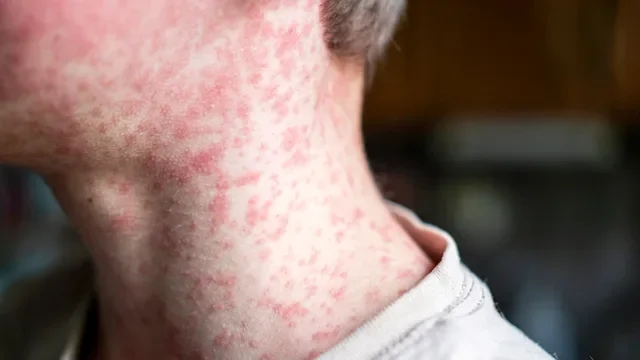
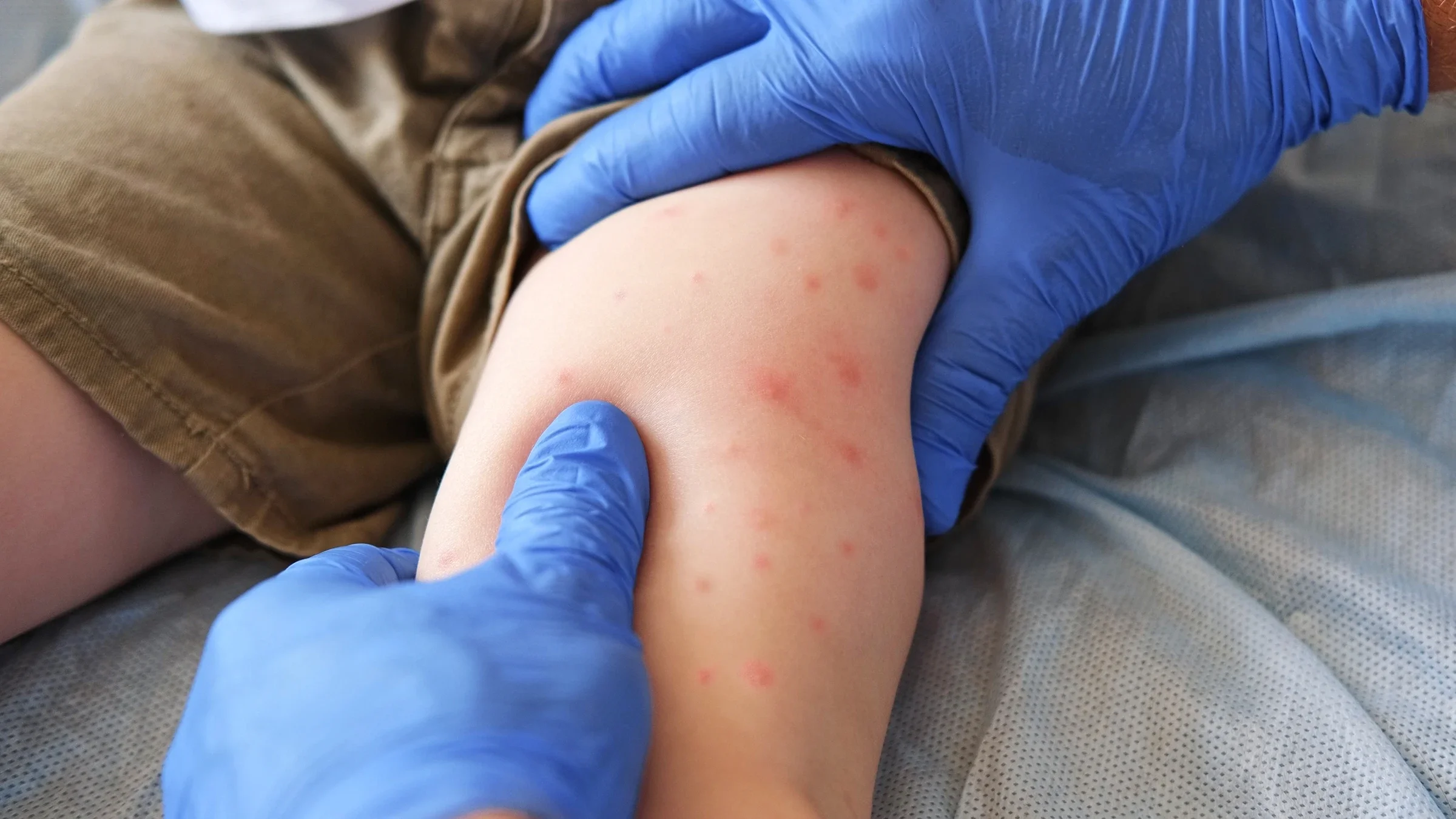
The measles rash starts 3 to 5 days after other symptoms develop. The rash looks like flat, red or pink spots. The rash starts near the hairline and spreads down over the rest of the body over the next 2 to 3 days. The symptoms go away on their own over a week.
People who have measles are contagious for at least 8 days. They start being contagious 4 days before the rash starts. They stop being contagious about 4 days after the rash appears.
How do you treat measles?
There’s no treatment or cure for measles. But you can take the following steps to help ease symptoms:
Drink plenty of fluids.
Rest.
Take fever reducers like acetaminophen (Tylenol) or ibuprofen (Motrin).
Never give aspirin to anyone younger than 18 years if they have a fever. It can cause a serious condition called Reye’s syndrome.
What should you do if you’re exposed to measles?
Contact your healthcare team right away if you think you’ve been exposed to measles. Your team will make sure that you are immune to measles, either from vaccination or a previous illness. If you’re fully vaccinated — which means you received two doses of the measles vaccine — you are very unlikely to get sick.
Your healthcare team may:
Ask you to get a blood test to check whether you are immune to measles.
Give you another MMR vaccine if you were exposed within the past 72 hours.
Your healthcare team may recommend treatment with measles immunoglobulin if:
You have a weakened immune system.
You’re pregnant.
You live with an infant who is too young to be vaccinated against measles.
Your exposure happened more than 72 hours ago.
You should quarantine for 21 days after a measles exposure if you’re not immune to measles and you choose not to get vaccinated or receive measles immunoglobulin.
You don’t need to quarantine after an exposure if you are immune to measles. But you should monitor yourself for any signs of illness, and contact your healthcare team right away if you get sick.
Do you need a measles vaccine as an adult?
No, most adults won’t need a measles vaccine if they were vaccinated as children. Measles vaccines offer long-lasting immunity for most people.
However, there are certain situations where adults should consider getting a measles vaccine. You should consider getting vaccinated if you:
Didn’t get vaccinated as a child
Don’t have any proof you were vaccinated in the past
Have a lab test showing you’re not immune to measles
Travel internationally and don’t know if you were vaccinated
Were exposed to measles within the past 72 hours
Were born between 1963 and 1967
Were born before 1989 and are at high risk for exposure to measles
Frequently asked questions
You’re at higher risk of getting measles if you aren’t vaccinated against measles or if you only received one dose of the measles vaccine. This includes infants and children who haven’t yet received both doses of the measles vaccine. People who are pregnant or have a weakened immune system are at higher risk of getting measles even if they’re fully vaccinated.
You are more likely to get exposed to measles if you work in healthcare, travel internationally, or live in an area with an active outbreak.
There’s no such thing as a measles booster shot. Measles vaccines produce long-lasting immunity so you don’t need a booster. But you may need another measles vaccine if you didn’t receive two doses of the measles vaccine and are at high risk for measles exposure. This includes people born before 1989 who work in healthcare or travel internationally. People born between 1963 and 1967 should also consider getting another measles vaccine. People born between these years may have received an ineffective vaccine.
Measles is a serious infection. Measles can cause serious complications like pneumonia, brain swelling (encephalitis), blindness, deafness, immune system dysfunction, and fatal central nervous system disease. Experts estimate that 1 in 5 people with measles need to be hospitalized.
You’re at higher risk of getting measles if you aren’t vaccinated against measles or if you only received one dose of the measles vaccine. This includes infants and children who haven’t yet received both doses of the measles vaccine. People who are pregnant or have a weakened immune system are at higher risk of getting measles even if they’re fully vaccinated.
You are more likely to get exposed to measles if you work in healthcare, travel internationally, or live in an area with an active outbreak.
There’s no such thing as a measles booster shot. Measles vaccines produce long-lasting immunity so you don’t need a booster. But you may need another measles vaccine if you didn’t receive two doses of the measles vaccine and are at high risk for measles exposure. This includes people born before 1989 who work in healthcare or travel internationally. People born between 1963 and 1967 should also consider getting another measles vaccine. People born between these years may have received an ineffective vaccine.
Measles is a serious infection. Measles can cause serious complications like pneumonia, brain swelling (encephalitis), blindness, deafness, immune system dysfunction, and fatal central nervous system disease. Experts estimate that 1 in 5 people with measles need to be hospitalized.
The bottom line
Measles is a highly contagious virus. You can’t get measles twice. Measles infection produces decades-long immunity against the measles virus. Two doses of the measles vaccine also offer long-lasting immunity against illness without the risk of complications from a measles illness. Contact your healthcare team if you’re exposed to measles. Your team can make sure you are immune to measles and help you take steps to stay safe during an exposure.

Why trust our experts?



References
American Thoracic Society. (n.d.). Measles.
California Department of Public Health. (2025). Immune globulin for measles postexposure prophylaxis.
Centers for Disease Control and Prevention. (2024). About measles.
Centers for Disease Control and Prevention. (2024). How measles spreads.
Centers for Disease Control and Prevention. (2024). Laboratory testing for measles.
Centers for Disease Control and Prevention. (2024). Measles serology testing.
Centers for Disease Control and Prevention. (2025). Measles vaccination.
Children’s Health. (n.d.). Multisystem inflammatory syndrome in children (MIS-C).
Franconeri, L., et al. (2023). Two-dose measles vaccine effectiveness remains high over time: A French observational study, 2017-2019. Vaccine.
Frenck, R. W. (2025). Does measles affect your immune system? American Academy of Pediatrics.
Kondamudi, N. P., et al. (2025). Measles. StatPearls.
MedlinePlus. (2024). Measles, Koplik spots - close-up.
MedlinePlus Magazine. (2019). From virus to vaccine: Studying measles immunity. National Institutes of Health.
National Foundation for Infectious Diseases. (2025). Frequently asked questions about measles.
National Foundation for Infectious Diseases. (2025). Measles.
National Foundation for Infectious Diseases. (2025). Meningococcal disease.
New Jersey Department of Health. (2024). New Jersey Department of Health vaccine preventable disease program: Exposed to measles?
Rocke, Z., et al. (2023). Subacute sclerosing panencephalitis. StatPearls.