Key takeaways:
On average, most girls will have their first period at around 12 years old. Family history, environmental factors, and ethnicity could affect when the first period starts.
The first period usually occurs about 2 years after breasts begin to develop. Other changes in mood, energy level, and vaginal discharge can signal that menstruation is about to start.
Don’t be afraid to talk with your child about the changes taking place in their body, what they mean, and what they can expect when their period starts.
The start of the monthly menstrual cycle is a big adjustment for parents and daughters alike. It involves many physical and emotional changes, and it’s unfamiliar territory for an adolescent.
The more information you can have to be prepared, the better off you both may feel. Here, we’ll review the signs that your daughter may be about to start her period, so you’re not caught off guard when it happens.
What is the average age when the first period starts?
Menarche, or the first menstrual period, begins between the ages of 10 and 16. The average age for the first period is usually around 12 or 13 years old. But this can vary. Factors that may influence at what age menstrual flow starts include:
Family history
Environmental factors
Ethnicity
BMI (body mass index)
Keep in mind that periods can vary by length, frequency, and amount of flow. And it’s common to have an irregular pattern in the first few years. This often results in skipping months at a time or having a period flow a couple of times per month.
How do you know when the first menstrual period will start?
It’s impossible to know exactly when the first period will start. But there are a few body changes that will happen leading up to the start of the menstrual period for the very first time. If you’re wondering what to expect, here are some clues that may help you know when a period is coming.
1. Growth spurt
There will often be a growth spurt about 1 year before the very first period. This is commonly due to an increase in the release of estrogen. The average amount of growth during this time is almost 11 inches (about 28 cm).
This isn’t the last time to expect a growth surge. Most people go on to grow another 2 inches after the first period starts.
2. Stomach complaints
Bloating is common when a period starts. There may be a feeling that the clothes are tighter leading up to menstrual flow. You may also notice a fuller look to the stomach. Common digestive signs that a period is on the way can include:
Diarrhea
Constipation
Abdominal cramping
Nausea
3. Mood changes
The shift in hormones that signal it’s time for the period to start can also cause mood changes. Some people become more tearful in the days or weeks leading up to the onset of menstruation. This irritability may last until the first few days into the start of flow.
Other mood changes might include:
More anxiety
Feelings of sadness
Irritability
Trouble sleeping

Read more like this
Explore these related articles, suggested for readers like you.



4. Fatigue
Your child might notice more fatigue than usual right before the period starts. It’s common to suddenly require more hours of sleep or to not feel as rested with the usual sleep pattern.
Up to 40% of adolescents can feel sleepy normally. So this may not always be a reliable predictor of the first period.
5. Tender and fuller breasts
The first period typically begins about 2 to 3 years after the breasts start to develop. As the levels of estrogen rise, this can stimulate the breasts to increase in size. They can also become a bit tender. If the discomfort becomes severe, you can use ibuprofen to relieve symptoms.
6. Underarm and pubic hair
This is sometimes one of the first signs of puberty, and it can happen even before breast development in some cases. Because this is an early sign, it may happen 2.5 or 3 years before the first period. But it can definitely signal that things are changing in the body and can trigger a conversation about other changes to come.
7. Body odor
Increased sweating with a noticeable body odor is also an early sign of puberty. The increase in hormones during early puberty can cause the sweat glands to activate. With the increased hair growth, bacteria and odor can get trapped more easily. This can often happen 2 to 3 years before the onset of the first menstrual cycle. Daily hygiene with mild cleansers and deodorant use can help to manage body odor.
8. Acne breakouts
With the hormonal changes of puberty, acne becomes more common. Rising testosterone levels may contribute to this. Right before the onset of each menstrual period, acne can also occur. This may affect around 60% of females who have a monthly cycle.
9. Vaginal discharge
About 6 to12 months before the first period, vaginal discharge can appear. This is usually light, thin, and white without an odor. It’s often a result of the rise in estrogen during this stage of development.
What should I get for my daughter’s first period?
First of all, don’t panic. Take the time to talk with your child about the changes that are taking place and the steps that will be needed for each cycle.
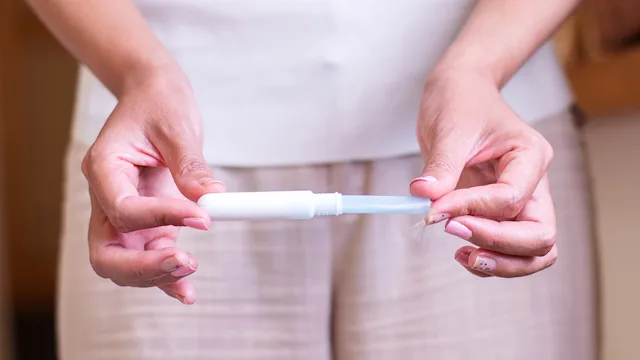
There are many period product options for menstrual flow. Discuss each period product, including how to use them correctly and safely according to the manufacturer’s instructions. Then you can decide which option your child is most comfortable with.
Options for period products include:
Tampons: Tampons soak up menstrual flow directly from the vagina.
Sanitary napkins: These are worn inside the underwear to collect period flow.
Period underwear: These look and feel like regular underwear, but they’re sewn with special absorptive material to accommodate different levels of flow.
Menstrual cups: Menstrual cups are a reusable period product inserted in the vagina to collect blood.
It’s also important to teach your child how to track their cycles and provide a means to do so. This will help in becoming familiar with how the body works. Common ways to track the period include:
Phone apps
Digital calendars
Paper diaries
Following symptoms
Making a mental note
Using birth control
Talk with a healthcare professional for guidance on how to manage and prepare for your child’s first period. They can provide resources on how to make this a smooth transition for you and your child.
Frequently asked questions
Yes. Research shows that girls with higher body weights are more likely to reach menarche earlier than those with lower body weights. There may even be a link with rapid weight gain in infancy and toddlerhood leading to an earlier onset of the monthly period too. Additionally, it’s also common to see an increase in weight around the time of menarche and the body enters the final stages of puberty.
There are five stages of puberty in girls, based on the Tanner Scale:
Stage 1: There’s no pubic hair or breast development.
Stage 2: Fine pubic hairs begin to appear, and there are small breast buds under the nipples.
Stage 3: Pubic hair becomes darker and more noticeable but remains limited in amount. The breasts continue to grow gradually.
Stage 4: Pubic hair is coarse and covers the groin area. The breasts are more developed and project outward.
Stage 5: Pubic hair extends beyond the groin toward the thighs. Breast development includes increased size, darker areolae (skin around the nipple), and more prominent nipples.
Keep in mind that the rate of puberty and moving between the stages differs for everyone.
Yes. Research shows that girls with higher body weights are more likely to reach menarche earlier than those with lower body weights. There may even be a link with rapid weight gain in infancy and toddlerhood leading to an earlier onset of the monthly period too. Additionally, it’s also common to see an increase in weight around the time of menarche and the body enters the final stages of puberty.
There are five stages of puberty in girls, based on the Tanner Scale:
Stage 1: There’s no pubic hair or breast development.
Stage 2: Fine pubic hairs begin to appear, and there are small breast buds under the nipples.
Stage 3: Pubic hair becomes darker and more noticeable but remains limited in amount. The breasts continue to grow gradually.
Stage 4: Pubic hair is coarse and covers the groin area. The breasts are more developed and project outward.
Stage 5: Pubic hair extends beyond the groin toward the thighs. Breast development includes increased size, darker areolae (skin around the nipple), and more prominent nipples.
Keep in mind that the rate of puberty and moving between the stages differs for everyone.
The bottom line
Most adolescents have their first menstrual period between the ages of 12 and 13. It’s not possible to know the exact day the first period will start. But paying attention to signs like a growth spurt, breast growth, and vaginal discharge can help you start to prepare. Remember, your child’s first period will be a momentous time for you both. Talk with a healthcare professional about how you can best support your child through the process.

Why trust our experts?



References
Aghaee, S., et al. (2022). Associations between childhood obesity and pubertal timing stratified by sex and race/ethnicity. American Journal of Epidemiology.
Allen, B., et al. (2019). Physical development in girls: What to expect during puberty. Healthychildren.org.
American College of Obstetricians and Gynecologists. (2025). Your first period.
Choe, Y., et al. (2023). Rapid weight gain in early life is associated with central precocious puberty in girls, not in boys — a nationwide population-based study in Korea. Frontiers in Endocrinology.
Emmanuel, M., et al. (2022). Tanner stages. StatPearls.
Epstein, D. A., et al. (2017). Examining menstrual tracking to inform the design of personal informatics tools. Proceedings of the SIGCHI Conference on Human Factor in Computing systems. CHI Conference.
Eunice Kennedy Shriver National Institute of Child Health and Human Development. (2017). What are the symptoms of menstruation?
Findlay, S. M. (2008). The tired teen: A review of the assessment and management of the adolescent with sleepiness and fatigue. Paediatrics & Child Health.
Hannan, K., et al. (2024). Mood symptoms and gut function across the menstrual cycle in individuals with premenstrual syndrome. Hormones and Behavior.
Jain, A., et al. (2025). Menstrual cycle phases and acne flares: A retrospective analysis in Indian women. Journal of Dermatologic Science and Cosmetic Technology.
Lacroix, A. E., et al. (2023). Physiology, menarche. StatPearls.
Limony, Y., et al. (2015). Age of onset of a normally timed pubertal growth spurt affects the final height of children. Pediatric Research.
Oller, B. (2023). Girls and puberty. Familydoctor.org.
Patel, K., et al. (2021). Acne vulgaris in teenagers. Contemporary PEDS Journal.