



9 Treatments That Work on Wrinkles: Tretinoin, Lasers, and More
Wrinkles are common and come with aging or spending too much time in the sun. You can prevent them by using wrinkle treatment like moisturizing, retinoids, and more.
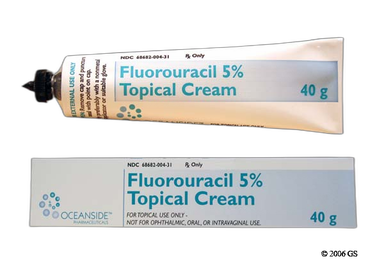
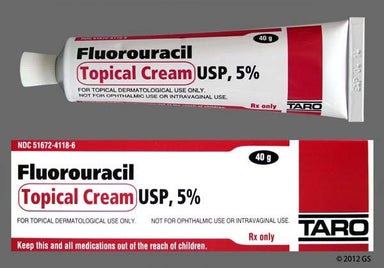
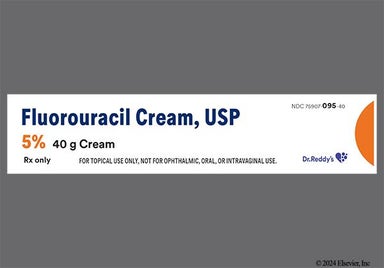
Fluorouracil (Efudex) topical is an antimetabolite. It's available as 5% topical cream and solution, and as 2% solution. Both strengths can treat actinic keratosis, a precancerous skin condition caused by exposure to ultraviolet (UV) light over time. But only fluorouracil 5% is approved to treat basal cell carcinoma, a type of skin cancer. Fluorouracil (Efudex) topical is applied directly on the affected area(s) twice daily for 2 to 6 weeks, depending on what condition you're being treated for. Side effects of this medication can include skin burning, crusting, and irritation.

Fluorouracil (Efudex) topical is an antimetabolite. It works by getting in the way of cells making copies of their genetic material. When applied on pre-cancerous or cancerous skin cells, fluorouracil (Efudex) topical prevents them from being able to grow.
| Common Brands | Efudex |
|---|---|
| Drug Class | Antimetabolite |
| Controlled Substance Classification | Not a controlled medication |
| Generic Status | Lower-cost generic available |
| Availability | Prescription only |

The following side effects may get better over time as your body gets used to the medication. Let your healthcare provider know immediately if you continue to experience these symptoms or if they worsen over time.
Contact your healthcare provider immediately if you experience any of the following.
Along with its needed effects, a medicine may cause some unwanted effects. Although not all of these side effects may occur, if they do occur they may need medical attention.
Check with your doctor immediately if any of the following side effects occur:
Redness and swelling of normal skin
Some side effects may occur that usually do not need medical attention. These side effects may go away during treatment as your body adjusts to the medicine. Also, your health care professional may be able to tell you about ways to prevent or reduce some of these side effects. Check with your health care professional if any of the following side effects continue or are bothersome or if you have any questions about them:
More common
Burning feeling where medicine is applied
increased sensitivity of skin to sunlight
oozing
skin rash
soreness or tenderness of skin
Less common or rare
Darkening of skin
scaling
watery eyes
Other side effects not listed may also occur in some patients. If you notice any other effects, check with your healthcare professional.
Call your doctor for medical advice about side effects. You may report side effects to the FDA at 1-800-FDA-1088.




Fluorouracil (Efudex) topical can cause some serious health issues. This risk may be even higher for certain groups. If this worries you, talk to your doctor or pharmacist about other options.
Don't apply fluorouracil (Efudex) topical to sensitive skin areas or near mucous membranes, such as near the eyes, mouth, or nose. Doing so raises the risk of skin damage in those areas.
Don't put bandages or dressing over areas where you just applied fluorouracil (Efudex) topical. Doing so will cause your skin to absorb more medication, which can lead to more skin-related side effects.
If needed, your skin care specialist might ask you to put a breathable, gauze dressing over it to protect the skin. But only do this if they told you it's safe to do so.
You can experience more serious skin reactions, such as painful peeling or blistering, if you're exposed to ultraviolet (UV) light while using fluorouracil (Efudex) topical. Avoid sun lamps and tanning beds during and immediately following treatment with fluorouracil (Efudex) topical. Also, try your best to stay out of the sun. If you need to be outside, ask your dermatologist about using sunscreen and wearing protective clothing (e.g., hats, long-sleeved shirts).
Fluorouracil (Efudex) topical can cause harm to an unborn baby, such as birth defects and miscarriage, if it's used during pregnancy. Let your dermatologist know if you're pregnant or plan to become pregnant while using fluorouracil (Efudex) topical.
There has been one reported case of toxicity experienced by a person who used fluorouracil 5% topical cream. Symptoms included stomach pain, bloody diarrhea, vomiting, and fever. This person was found to have inflammation and sores in their month, stomach, and bowels.
This toxicity reaction is more common in people who don't have a enzyme called dihydropyrimidine dehydrogenase (DPD) in the body. Usualy, the DPD enzyme helps break down fluorouracil (Efudex) topical in your body. Without the enzyme, the medication can build up in your body, which can raise your risk of these side effects. If you have DPD deficiency, you can't use fluorouracil (Efudex) topical. Talk to your dermatologist about alternative treatments.


Although certain medicines should not be used together at all, in other cases two different medicines may be used together even if an interaction might occur. In these cases, your doctor may want to change the dose, or other precautions may be necessary. When you are taking this medicine, it is especially important that your healthcare professional know if you are taking any of the medicines listed below. The following interactions have been selected on the basis of their potential significance and are not necessarily all-inclusive.
Using this medicine with any of the following medicines is not recommended. Your doctor may decide not to treat you with this medication or change some of the other medicines you take.
Using this medicine with any of the following medicines is usually not recommended, but may be required in some cases. If both medicines are prescribed together, your doctor may change the dose or how often you use one or both of the medicines.
Using this medicine with any of the following medicines may cause an increased risk of certain side effects, but using both drugs may be the best treatment for you. If both medicines are prescribed together, your doctor may change the dose or how often you use one or both of the medicines.


Contraindications are specific health conditions or situations in which a person should not take a medication due to safety concerns. If you have any of the following conditions or if any of the following apply to you, let your healthcare provider know because Fluorouracil (Efudex) topical will not be safe for you to take.










Prescription savings
Stop paying too much for your prescriptions. Compare prices, get pharmacy coupons, and save up to 80%. Find expert answers to your health questions so you can make the best decisions for yourself and your family.
Health conditions
Medications & treatment
Access & affordability
 Our monthly healthcare membership can help you save thousands on your prescription costs.
Resources

How long it takes for Fluorouracil to work can differ from person to person, depending on your condition. In general, this medication should start to work within 2 to 4 weeks for actinic keratosis. But you might not see complete healing until 1 to 2 months after your treatment ended. Fluorouracil can start to work within 3 to 6 weeks for basal cell carcinoma. But take up to 3 months before the sores on the skin are healed. Talk to your dermatologist if you're concerned with how well Fluorouracil is working for you.
Your dermatologist will let you know when to stop using Fluorouracil. If you're using Fluorouracil for actinic keratosis, your dermatologist will ask you to continue treatment until the skin spots or growths reach the "erosion" stage, which is when the skin becomes painful and inflamed. It might take 2 to 4 weeks before you reach this stage. If you're prescribed Fluorouracil for basal cell carcinoma, your dermatologist will ask you to use this medication until the spots on the skin are gone, which might take up to 3 months. Ask your dermatologist if you're not sure when you should stop using Fluorouracil.
In clinical trials, people using Fluorouracil didn't report tiredness as a side effect. Tiredness might be a side effect that's linked more to fluorouracil injection, instead of topical fluorouracil. If you're noticing fatigue or tiredness after starting Fluorouracil and it's getting in the way of your daily activities, talk to your dermatologist or primary care provider so they can help you figure out what might be causing it.
Yes, Fluorouracil can affect healthy skin. It's best to use a non-metal applicator or glove when applying Fluorouracil only on the affected area(s), being careful to not touch the surrounding healthy skin. But if you need to use your fingers, make sure to wash your hands right away very well with soap and water after applying the cream.
Ask your dermatologist if you should apply bandages after Fluorouracil treatment. In general, you should avoid putting bandages on areas where you've applied this medication. Doing so can cause your skin to absorb more fluorouracil, which can lead to more side effects, such as burning or rash. But if needed, your dermatologist might instruct you to cover the affected area with a porous and breathable gauze. Only use bandages made of materials approved by your dermatologist to prevent serious side effects.
Yes, Fluorouracil can expire. There should be an expiration date that's written on the medication box or bottle. Don't use Fluorouracil past the written expiration date because it might not work well to treat your skin problem.
Yes, Fluorouracil can be considered a chemotherapy. Chemotherapy is a type of treatment that kills all fast-growing cells and is typically used to treat cancer. Fluorouracil can be used to treat basal cell carcinoma, which is a type of skin cancer.
Fluorouracil isn't FDA-approved for wrinkles. A small study suggests that this medication might help with wrinkles caused by sun damage, whereas other another study concludes that this medication doesn't improve the look of wrinkles. More research is needed to help us understand how Fluorouracil might affect wrinkles.
