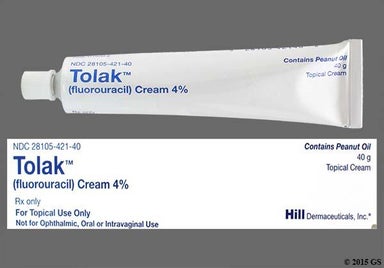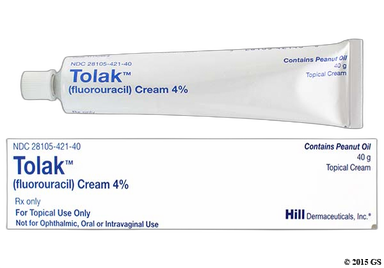
Tolak
Tolak (fluorouracil) 4% cream is an antimetabolite. It's used to treat actinic keratosis, which is pre-cancerous spots or growths on the skin caused by exposure to ultraviolet (UV) light over time. Tolak (fluorouracil) 4% cream is applied directly to the affect areas on the face, ears, or scalp. Treatment is typically once per day for 4 weeks. Some common side effects of this medication includes redness, itchiness, and peeling on or near the application site.


What is Tolak (fluorouracil) 4% cream?
What is Tolak (fluorouracil) 4% cream used for?
- Actinic (or solar) keratosis in adults
How Tolak (fluorouracil) 4% cream works
Tolak (fluorouracil) 4% cream is an antimetabolite. It works by getting in the way of cells making copies of their genetic material. When applied on pre-cancerous or cancerous skin cells, Tolak (fluorouracil) 4% cream prevents them from being able to grow.
Drug facts
| Common Brands | Tolak |
|---|---|
| Drug Class | Antimetabolite |
| Controlled Substance Classification | Not a controlled medication |
| Generic Status | No lower-cost generic available |
| Availability | Prescription only |

Side effects of Tolak (fluorouracil) 4% cream
The following side effects may get better over time as your body gets used to the medication. Let your healthcare provider know immediately if you continue to experience these symptoms or if they worsen over time.
Common Side Effects
Up to 99%:
- Redness
- Dryness
- Crusting
- Itching
- Stinging or burning
- Swelling
Less Common Side Effects
- Eye irritation
- Trouble sleeping
- Feeling irritable
The following Tolak (fluorouracil) 4% cream side effects have also been reported
Side effects that you should report to your care team as soon as possible:
- Allergic reactions—skin rash, itching, hives, swelling of the face, lips, tongue, or throat
- Painful swelling, warmth, or redness of the skin, blisters or sores
Side effects that usually do not require medical attention (report to your care team if they continue or are bothersome):
- Mild skin irritation, redness, or dryness
- Skin reactions on sun-exposed areas

Get your GoodRx coupon

Pros and cons of Tolak (fluorouracil) 4% cream
Pros
- Can result in completely clear skin
- Applied once per day
- Treatment typically lasts 1 month
Cons
- Can cause uncomfortable skin reactions (e.g., redness, itchiness, dryness, peeling, swelling, burning, stinging)
- Hasn't been studied in children
- Not safe to use during pregnancy

Pharmacist tips for Tolak (fluorouracil) 4% cream

- Tolak (fluorouracil) 4% cream needs to be applied to clean, dry skin. To prepare, wash the skin area with a mild soap and water. Make sure the skin area is completely dry before using this medication.
- Tolak (fluorouracil) 4% cream should be applied on your skin. But try your best to avoid putting medication near sensitive areas, such as your eyes or mouth, and on damaged skin because doing so can cause more skin irritation
- Gently massage Tolak (fluorouracil) 4% cream into your skin. It's best to apply the medication with a nonmetal applicator or surgical gloves. But if you use your fingers to apply Tolak (fluorouracil) 4% cream, wash your hands immediately after so that you don't accidentally get this medication on other skin areas.
- If you use gloves or other tools to apply Tolak (fluorouracil) 4% cream, make sure to either wash them thoroughly or throw them away in a place that's out of reach of children or pets. If this medication is accidentally eaten by children or pets, it can cause serious harm.
- Tolak (fluorouracil) 4% cream commonly causes skin reactions, including redness and peeling. While this might look alarming, this reaction is to be expected and part of the healing process. But let your dermatologist know if the symptoms are very bothersome. Depending on whether you can tolerate the side effects, they might recommend that you stop treatment early. In general, these side effects go away within a month after you stop fluorouracil.
- Tolak (fluorouracil) 4% cream can make your skin more sensitive to ultraviolet (UV) light. It's recommended to use sunscreen and wear protective clothing (e.g., hats, long-sleeved shirts) to minimize exposure to sunlight. Also, avoid using tanning beds or sun lamps.
- Don't cover the area with a dressing or bandages, unless your provider has instructed you to do so. This can raise your risk of skin reactions on normal skin that's near your skin spot or growth.
- Tolak (fluorouracil) 4% cream shouldn't be used while pregnant. Make sure to let your dermatologist know if you're pregnant before starting Tolak (fluorouracil) 4% cream. They'll likely consider a different medication for you.
- Talk to your dermatologist about the risks and benefits of breastfeeding while using Tolak (fluorouracil) 4% cream. They might recommend you use formula at least until you finish your treatment.
- Store Tolak (fluorouracil) 4% cream at room temperature in a dry place. Don't freeze it, since this can damage the medication.

Risks and warnings for Tolak (fluorouracil) 4% cream
Tolak (fluorouracil) 4% cream can cause some serious health issues. This risk may be even higher for certain groups. If this worries you, talk to your doctor or pharmacist about other options.
Skin reaction at the application site
Almost all people treated with Tolak (fluorouracil) 4% cream reported skin reactions at the application sites. These reactions included dryness, redness, and pain. Usually, these reactions went away within a month after stopping the medication.
Avoid the eyes or other sensitive areas
Don't apply Tolak (fluorouracil) 4% cream to sensitive skin areas or near mucous membranes, such as near the eyes, mouth, or nose. Doing so raises the risk of skin damage in those areas. Make sure you wash your hands well after applying Tolak (fluorouracil) 4% cream. Avoid touching your eyes or any other skin areas until you've washed your hands.
Rare allergic reaction
- Risk factors: Peanut allergy Some people who used topical fluorouracil have reported a rare allergic reaction that's different than the expected application site reactions. Symptoms of this allergic reaction include severe itching or rash. These reactions were sometimes reported in areas of the body away from the application site.
Tolak (fluorouracil) 4% cream contains peanut oil. There's a chance that people who have peanut allergies might be at higher risk for this reaction.
Sunburn
Your skin can become more sensitive to ultraviolet (UV) light while using Tolak (fluorouracil) 4% cream. Too much exposure to UV light can even cause severe sunburn. Minimize your exposure to sunlight, sun lamps, and tanning beds during and immediately following treatment with Tolak (fluorouracil) 4% cream. If you plan on spending time in the sun, ask your dermatologist about using sunscreen and wearing protective clothing (e.g., hats, long-sleeved shirts).
Harm to unborn baby
- Risk factors: Childbearing age
Tolak (fluorouracil) 4% cream can cause harm to an unborn baby, such as birth defects and miscarriage, if it's used during pregnancy. Let your dermatologist know if you're pregnant or plan to become pregnant while using Tolak (fluorouracil) 4% cream.
Dangerous side effects in people with a certain enzyme deficiency
- Risk factors: Dihydropyrimidine dehydrogenase (DPD) deficiency
There has been one reported case of toxicity experienced by a person who used fluorouracil 5% topical cream. Symptoms included stomach pain, bloody diarrhea, vomiting, and fever. This person was found to have inflammation and sores in their month, stomach, and bowels.
This toxicity reaction is more common in people who don't have a enzyme called dihydropyrimidine dehydrogenase (DPD) in the body. Usualy, the DPD enzyme helps break down Tolak (fluorouracil) 4% cream in your body. Without the enzyme, the medication can build up in your body, which can raise your risk of these side effects. If you have DPD deficiency, you can't use Tolak (fluorouracil) 4% cream. Talk to your dermatologist about alternative treatments.

Tolak (fluorouracil) 4% cream dosage
 Tube of cream
| Dosage | Quantity | Price as low as | Price per unit |
|---|---|---|---|
| 40g of 4% | 1 tube | $44.65 | $44.65 |

How much does Tolak (fluorouracil) 4% cream cost?
$44.65

Tolak (fluorouracil) 4% cream contraindications
Contraindications are specific health conditions or situations in which a person should not take a medication due to safety concerns. If you have any of the following conditions or if any of the following apply to you, let your healthcare provider know because Tolak (fluorouracil) 4% cream will not be safe for you to take.
- Currently pregnant
- Dihydropyrimidine dehydrogenase (DPD) deficiency

What are alternatives to Tolak (fluorouracil) 4% cream?

Tolak (fluorouracil) 4% cream images