



The Best Ear Infection Treatments: Antibiotics and OTC Medications
Many ear infections resolve on their own, but sometimes you’ll need medication. See the best ear infection treatments, including antibiotics and home remedies.

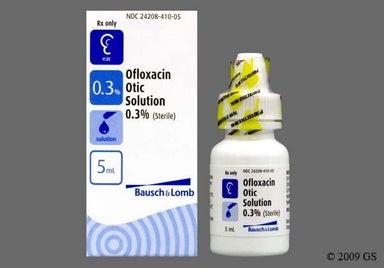
Ofloxacin is a prescription otic medication, or ear drop. It's a fluoroquinolone antibiotic that's used to treat different types of ear infections, such as swimmer's ear and middle ear infection, in adults and children. This medication is given as 5 or 10 drops into the infected ear once or twice a day for 7 or 14 days, depending on your age and the type of ear infection you have. The most common side effect is ear discomfort from applying the drops.

Ofloxacin is a fluoroquinolone (or "quinolone") antibiotic. It works by blocking certain enzymes (proteins) that bacteria use to grow, repair their genetic material (DNA), and survive. By blocking this process, ofloxacin ear drops kills bacteria.
| Common Brands | Floxin Otic |
|---|---|
| Drug Class | Fluoroquinolone antibiotic |
| Controlled Substance Classification | Not a controlled medication |
| Generic Status | Lower-cost generic available |
| Availability | Prescription only |

The following side effects may get better over time as your body gets used to the medication. Let your healthcare provider know immediately if you continue to experience these symptoms or if they worsen over time.
Contact your healthcare provider immediately if you experience any of the following.
Along with its needed effects, a medicine may cause some unwanted effects. Although not all of these side effects may occur, if they do occur they may need medical attention.
Check with your doctor immediately if any of the following side effects occur:
Rare
Puffiness or swelling of eyes
signs of an allergic reaction, such as hives, itching, rash, swelling of face or lips, tightness in chest, troubled breathing, or wheezing
Check with your doctor as soon as possible if any of the following side effects occur:
Rare
Dizziness
Some side effects may occur that usually do not need medical attention. These side effects may go away during treatment as your body adjusts to the medicine. Also, your health care professional may be able to tell you about ways to prevent or reduce some of these side effects. Check with your health care professional if any of the following side effects continue or are bothersome or if you have any questions about them:
More common
Burning of eye
Other side effects not listed may also occur in some patients. If you notice any other effects, check with your healthcare professional.
Call your doctor for medical advice about side effects. You may report side effects to the FDA at 1-800-FDA-1088.




Ofloxacin ear drops can cause some serious health issues. This risk may be even higher for certain groups. If this worries you, talk to your doctor or pharmacist about other options.
Only use ofloxacin ear drops in your ears. Don't give or take this medication any other way, such as swallowed, injected, or placed into the eyes. Ask your primary care provider or pharmacist about other options if you feel this medication isn't the best choice for you or if it's tricky for you to use properly.
Severe allergic reactions to ofloxacin ear drops are possible, including life-threatening reactions like facial swelling, shock, and anaphylaxis (e.g., closing of the throat). Get medical help right away if you notice hives, rash, swelling of the lips or tongue, or difficulty breathing after you use ofloxacin ear drops.
Using ofloxacin ear drops for too long can allow any bacteria and fungi that the medication can't get rid of to overgrow in the ear. Contact your primary care provider for follow up if your ear infection isn't improving after you've used ofloxacin ear drops for one week. You might need additional testing and treatment.


Although certain medicines should not be used together at all, in other cases two different medicines may be used together even if an interaction might occur. In these cases, your doctor may want to change the dose, or other precautions may be necessary. When you are taking this medicine, it is especially important that your healthcare professional know if you are taking any of the medicines listed below. The following interactions have been selected on the basis of their potential significance and are not necessarily all-inclusive.
Using this medicine with any of the following medicines is not recommended. Your doctor may decide not to treat you with this medication or change some of the other medicines you take.
Using this medicine with any of the following medicines is usually not recommended, but may be required in some cases. If both medicines are prescribed together, your doctor may change the dose or how often you use one or both of the medicines.
Using this medicine with any of the following medicines may cause an increased risk of certain side effects, but using both drugs may be the best treatment for you. If both medicines are prescribed together, your doctor may change the dose or how often you use one or both of the medicines.


Contraindications are specific health conditions or situations in which a person should not take a medication due to safety concerns. If you have any of the following conditions or if any of the following apply to you, let your healthcare provider know because Ofloxacin ear drops will not be safe for you to take.











Prescription savings
Stop paying too much for your prescriptions. Compare prices, get pharmacy coupons, and save up to 80%.Resources
About GoodRx
 Find expert answers to your health questions so you can make the best decisions for yourself and your family.
Health conditions
Medications & treatment
Access & affordability
Well-being
Medication discounts

Floxin will start working to fight the infection right away, since you're putting the medication directly on the area that's infected. For swimmer's ear and middle ear infections in children with ear tubes, you can expect symptoms to improve in less than a week. For chronic infections when you have a burst eardrum, it might take over a week for drainage to go away. Remember to use Floxin for as long as instructed, even if your symptoms start to improve early on. This makes sure your infection is completely and properly treated.
First, hold the medication bottle in your hand for 1 to 2 minutes to warm it up. This lessens the risk for dizziness that can happen if you put cold solution in your ear. Then, lie on your side with the affected ear facing upwards and place the prescribed number of drops in the ear. For a middle ear infection, press on the tragus (the piece of cartilage that's above the ear lobe) 4 times after putting the drops in to help the medication get into the ear better. Stay in that position with the affected ear facing up for at least 5 minutes. This helps your ear absorb as much medication as possible. When you get up, wipe away any extra medication that drips out from the ear with a clean tissue or cotton ball. Ask your healthcare team if you have any questions about using Floxin.
Use Floxin once daily for swimmer's ear and twice daily for short- and long-term middle ear infections. Ask your primary care provider if you're not sure how often you should use Floxin to treat your ear infection.
Yes, ofloxacin is a fluoroquinolone (or "quinolone") antibiotic.
No, Floxin is only available by prescription. Ask your primary care provider if you need a prescription for Floxin.
No, Floxin only contain ofloxacin, which is an antibiotic and not a steroid. An example of a combination ear drop that has an antibiotic and a steroid is Cipro HC (ciprofloxacin / hydrocortisone).
No, Floxin is an ear drop medication that you should use for the ears only. Never put Floxin in the eyes. Schedule an appointment with your primary care provider if you think you might have an eye problem so you can be examined.
Ask your primary care provider whether it's safe for you to use Floxin during pregnancy. When they're taken by mouth, quinolone antibiotics, such as ofloxacin, aren't recommended during pregnancy because they might cause harm to babies. But Floxin isn't expected to get absorbed into the body since it's a drop that's directly applied to the ears. To be safe, make sure your primary care provider knows if you're pregnant so they can weigh the risks and benefits of using Floxin.
