lamivudine
Lamivudine (Epivir), also known as 3TC, is a nucleoside reverse transcriptase inhibitor (NRTI). It's available as Epivir to treat human immunodeficiency virus (HIV) infections and Epivir HBV to treat hepatitis B virus (HBV). Both brands and their generic formulations can be used in adults and children. But they're not interchangeable so you can't take one brand in place of another. Lamivudine (Epivir) is taken by mouth, typically once or twice daily. Some common side effects of this medication include headache, nausea, and feeling tired.


What is Lamivudine (Epivir)?
What is Lamivudine (Epivir) used for?
- Treatment of HIV infection for people ages 3 months and older - brand and generic Epivir only
- Treatment of chronic (long-term) hepatitis B for people ages 2 years and older - brand and generic Epivir HBV only
How Lamivudine (Epivir) works
Lamivudine (Epivir) is a nucleoside reverse transcriptase inhibitor (NRTI). It blocks an enzyme (protein) found in HIV and HBV called reverse transcriptase that usually helps the virus make copies of itself. By blocking reverse transcriptase, lamivudine (Epivir) prevents HIV and HBV from making copies of itself and spreading.
Drug facts
| Common Brands | Epivir, Epivir HBV |
|---|---|
| Drug Class | Antiretroviral (ARV) |
| Controlled Substance Classification | Not a controlled medication |
| Generic Status | Lower-cost generic available |
| Availability | Prescription only |

Side effects of Lamivudine (Epivir)
The following side effects may get better over time as your body gets used to the medication. Let your healthcare provider know immediately if you continue to experience these symptoms or if they worsen over time.
Common Side Effects
- Headache (35%)
- Nausea (33%)
- Feeling tired (27%)
- Runny nose and congestion (20%)
- Cough (18%)
- Diarrhea (18%)
- Nausea and vomiting (13%)
- Nerve pain (12%)
- Muscle pain (12%)
- Trouble sleeping (11%)
- Fever or chills (10%)
- Lack of appetite (10%)
- Dizziness (10%)
Less Common Side Effects
- Belly pain and cramps
- Indigestion
- Feeling depressed
- Skin rashes
- Joint and muscle pain
Note: Side effects listed were reported by people who took lamivudine (Epivir) for HIV.
Lamivudine (Epivir) serious side effects
Contact your healthcare provider immediately if you experience any of the following.
- Serious liver problems: nausea, vomiting, not feeling hungry, pain in the right side of the stomach, yellowing of the whites of the eyes or skin, dark-colored urine, light-colored stool
- Too much lactic acid in the blood: weakness, tiredness, fast and shallow breathing, nausea, vomiting, fast heartbeat, confusion
The following Lamivudine (Epivir) side effects have also been reported
Along with its needed effects, a medicine may cause some unwanted effects. Although not all of these side effects may occur, if they do occur they may need medical attention.
Check with your doctor immediately if any of the following side effects occur:
Incidence not known
Black, tarry stools
bleeding gums
blood in the urine or stools
blurred vision
chills
dark urine
decreased appetite
difficulty with swallowing
dizziness
fast heartbeat
fast, shallow breathing
flushed, dry skin
fruit-like breath odor
general feeling of discomfort
general tiredness and weakness
increased hunger
increased thirst
increased urination
indigestion
light-colored stools
loss of appetite
muscle cramps, pain, stiffness, or spasms
pains in the stomach, side, or abdomen, possibly radiating to the back
pinpoint red spots on the skin
puffiness or swelling of the eyelids or around the eyes, face, lips, or tongue
right upper abdominal or stomach pain and fullness
sleepiness
stomach discomfort
tightness in the chest
troubled breathing with exertion
unexplained weight loss
unusual bleeding or bruising
unusual tiredness or weakness
upper right abdominal or stomach pain
vomiting
yellow eyes or skin
Some side effects may occur that usually do not need medical attention. These side effects may go away during treatment as your body adjusts to the medicine. Also, your health care professional may be able to tell you about ways to prevent or reduce some of these side effects. Check with your health care professional if any of the following side effects continue or are bothersome or if you have any questions about them:
More common
Belching
burning, tingling, numbness or pain in the hands, arms, feet, or legs
general feeling of discomfort or illness
headache
indigestion
joint pain
sensation of pins and needles
stabbing pain
stomach discomfort, upset, or pain
stuffy or runny nose
trouble sleeping
Incidence not known
Hair loss or thinning of the hair
pale skin
sweating
weight gain around your neck, upper back, breast, face, or waist
Other side effects not listed may also occur in some patients. If you notice any other effects, check with your healthcare professional.
Call your doctor for medical advice about side effects. You may report side effects to the FDA at 1-800-FDA-1088.

Get your GoodRx coupon

Pros and cons of Lamivudine (Epivir)
Pros
- Epivir HBV is considered a complete HBV treatment
- Can take with or without food
- Few interactions with other medications or supplements
- Available in an oral solution form
Cons
- Requires regular blood work and lab tests to make sure your liver and kidneys are healthy
- Can worsen hepatitis B if you stop it all of a sudden
- Oral solution contains sucrose (a sweetener), which shouldn't be used for people with diabetes
- Epivir needs to be used with other ARVs to treat HIV

Pharmacist tips for Lamivudine (Epivir)

- If you're taking lamivudine (Epivir) for HIV, make sure to take it at the same time(s) every day with your other ARVs. Lamivudine (Epivir) can be taken with or without food, but pay attention to the food restrictions of your other HIV medications.
- Make sure to get your routine blood tests done on time while you’re taking lamivudine (Epivir). This helps your provider make sure the medication is working for you and not causing side effects.
- Since lamivudine (Epivir) can be used to treat both HIV and HBV infections, your provider might order lab tests before starting treatment to see if you have both viruses. Depending on your test results, your provider might raise your dose of lamivudine (Epivir) or add other medications to make sure your treatment is complete.
- Let your provider or pharmacist know what medications you're taking or planning to take, including over-the-counter products and supplements. Lamivudine (Epivir) can interact with some medications, and these interactions can affect how well your medications work or how safe they are for you.
- If you feel cold in your hands or feet, dizzy, weak, confused, nauseous, or have trouble breathing, belly pain, or a racing heart, get medical attention right away. These can be signs of a serious condition called lactic acidosis (high acid levels in the blood), which sometimes can require treatment in the hospital.
- Talk to your provider before stopping lamivudine (Epivir) or any of your HIV medications. Doing so can cause the virus to spread and become harder to treat. And if you also have hepatitis B, stopping lamivudine (Epivir) suddenly can cause your hepatitis B infection to come back or worsen.
- Tell your provider if your child experiences any changes in weight while taking lamivudine (Epivir) because the dose might need to be changed.
- Lamivudine (Epivir) oral solution contains an oral sweetener called sucrose. Let your provider know if you've a history of diabetes before taking this medication.

Risks and warnings for Lamivudine (Epivir)
Lamivudine (Epivir) can cause some serious health issues. This risk may be even higher for certain groups. If this worries you, talk to your doctor or pharmacist about other options.
Worsening of infection if you have HIV and hepatitis B
- Risk factors: Have hepatitis B and HIV | Stopping lamivudine (Epivir) | Severe liver problems
 Lamivudine is available as both Epivir to treat HIV and Epivir HBV to treat hepatitis B virus (HBV). If you've both HIV and HBV, don't take Epivir HBV to treat your infections since the dose of the medication is too low to treat HIV. Taking the wrong dose can make it easier for HIV to change form and become harder to treat. Before you begin lamivudine (Epivir) treatment, your provider will test you for HBV and HIV. If you have both infections, your provider will make sure you're getting appropriate treatment for both HIV and HBV.
 If you've both HIV and HBV, suddenly stopping lamivudine (Epivir) can also make your liver condition worse (also called an HBV flare-up). Don't stop taking lamivudine (Epivir) without talking with your provider first. Make sure to get your refills on time so that your treatment isn't interrupted. If you need to stop taking lamivudine (Epivir), your provider will follow up with you for several months after you stop treatment. They'll order blood work to check your liver for an HBV flare-up.
Liver problems and lactic acidosis
- Risk factors: Females | Larger body size | Hepatitis B or C
Lamivudine (Epivir) can cause a buildup of lactic acid in the blood (lactic acidosis) and fatty liver. Both conditions can be life-threatening, and you might be more likely to experience them if you're female of larger body size. Make sure to get blood tests done while you take lamivudine (Epivir) so your provider can check your liver health. If you experience signs and symptoms of liver damage, such as upper right stomach pain, yellowing of the skin or whites of the eyes, or dark urine, talk with your provider right away. Also, let your provider know if you experience symptoms of lactic acidosis, such as feeling weak, muscle pain, and trouble breathing.
Pancreas problems
- Risk factors: Children | History of taking antiretrovirals | History of pancreas problems
In some rare cases, children who took lamivudine (Epivir) in clinical studies have reported inflammation of the pancreas (pancreatitis). Some common symptoms of an inflamed pancreas are upper stomach pain, fever, nausea, and vomiting. If your child starts to feel any of these symptoms, contact their provider right away.
Overactive immune system - Epivir only
Taking lamivudine (Epivir) for HIV can cause changes to your immune system called immune reconstitution syndrome. This medical condition happens when your immune system becomes more active after you start lamivudine (Epivir) treatment. Your immune system begins to fight off different infections that it was too weak to fight off before you started treatment. In rare cases, your immune system might improve so much with treatment that it starts to attack normal cells in your body (autoimmune). You can develop immune reconstitution syndrome as early as during the first few weeks of lamivudine (Epivir) treatment or many months later. Tell your healthcare provider right away if you start having any new symptoms, such as fever, pain, hair loss, bulging eyes, or sweating, after starting lamivudine (Epivir).
Interaction with sorbitol - Epivir oral solution only
In clinical studies, children who take lamivudine (Epivir) oral solution with other antiretroviral oral solutions experience lamivudine (Epivir) not working as well to treat HIV. This is because most oral solutions contain sorbitol, a sweetener that can lead to a lower amount of lamivudine (Epivir) in their body. Because of this effect, consider using lamivudine (Epivir) tablets if your child weighs at least 14 kg (30 pounds). If your child needs to take lamivudine (Epivir) oral solution, their provider will order blood work more often to make sure this medication is working well.

Lamivudine (Epivir) dosage
 Bottle of oral solution
| Dosage | Quantity | Price as low as | Price per unit |
|---|---|---|---|
| 240ml of 10mg/ml | 1 bottle | $46.87 | $46.87 |


Interactions between Lamivudine (Epivir) and other drugs
Although certain medicines should not be used together at all, in other cases two different medicines may be used together even if an interaction might occur. In these cases, your doctor may want to change the dose, or other precautions may be necessary. When you are taking this medicine, it is especially important that your healthcare professional know if you are taking any of the medicines listed below. The following interactions have been selected on the basis of their potential significance and are not necessarily all-inclusive.
Using this medicine with any of the following medicines is usually not recommended, but may be required in some cases. If both medicines are prescribed together, your doctor may change the dose or how often you use one or both of the medicines.
- Cabotegravir
- Horsetail
- Orlistat
- Sorbitol

How much does Lamivudine (Epivir) cost?

What are alternatives to Lamivudine (Epivir)?

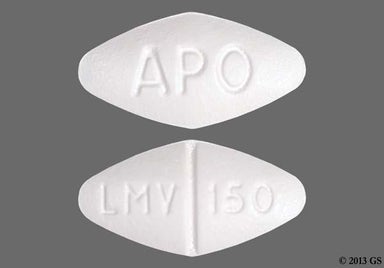
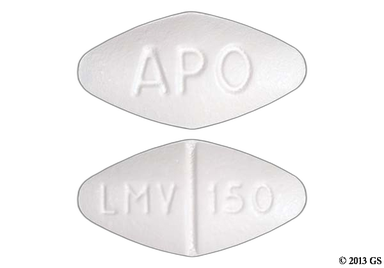
Lamivudine (Epivir) images