


How Much Is Darzalex Without Insurance?
Darzalex’s cost without insurance can exceed $10,000 per month. Read on to learn more about Darzalex’s price and ways to save on this prescription.
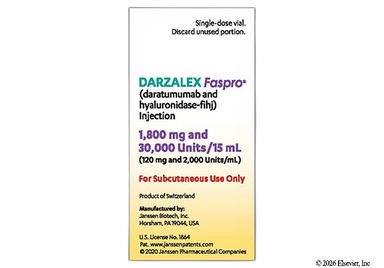
Darzalex Faspro (daratumumab / hyaluronidase-fihj) is a combination medication that contains an anti-CD38 monoclonal antibody and an endoglycosidase. Darzalex Faspro (daratumumab / hyaluronidase) is prescribed to treat multiple myeloma and light chain amyloidosis in adults. A trained professional on your oncology team will inject this medication under the skin, typically every week or every few weeks, depending on where you are in the treatment process. Darzalex Faspro (daratumumab / hyaluronidase) might cause certain side effects such as hypersensitivity reaction, higher risk of infections, and feeling tired.

Darzalex Faspro is a combination of 2 different medications:
| Common Brands | Darzalex Faspro |
|---|---|
| Drug Class | Anti-CD38 monoclonal antibody / Endoglycosidase |
| Controlled Substance Classification | Not a controlled medication |
| Generic Status | No lower-cost generic available |
| Availability | Prescription only |

The following side effects may get better over time as your body gets used to the medication. Let your healthcare provider know immediately if you continue to experience these symptoms or if they worsen over time.
Contact your healthcare provider immediately if you experience any of the following.
Side effects that you should report to your care team as soon as possible:
Side effects that usually do not require medical attention (report these to your care team if they continue or are bothersome):




Darzalex Faspro (daratumumab / hyaluronidase) can cause some serious health issues. This risk may be even higher for certain groups. If this worries you, talk to your doctor or pharmacist about other options.
Some people taking Darzalex Faspro (daratumumab / hyaluronidase) have experienced serious, sometimes life-threatening, injection-related reactions. These reactions are most common after the first injection. They typically happen within 3 hours after an injection, though some have been reported up to 3 days later. Your healthcare team will give you medications (e.g. antihistamines, corticosteroids) before and after the Darzalex Faspro (daratumumab / hyaluronidase) injection to prevent a reaction.
Injection-site reaction can appear within a few minutes of the injection. If you experience symptoms at the injection site, such as redness and swelling, your care team will monitor you for more serious reactions.
Let your care team know right away if you have symptoms of a more serious reaction, such as stuffy nose, cough, chills, nausea, trouble breathing, fever, and vision changes. If you experience these symptoms, your healthcare team might need to stop Darzalex Faspro (daratumumab / hyaluronidase) and talk with you about other medication options.
Risk factors: Amyloidosis that affects the heart | Heart failure
Some people taking Darzalex Faspro (daratumumab / hyaluronidase) to treat amyloidosis have developed heart problems, such as heart failure. Amyloidosis is a condition that causes build up of abnormal proteins in certain organs in your body. For some people, these proteins can build up in the heart, which can cause heart problems such as heart failure. People who already have heart problems related to their amyloidosis might be at higher risk for this side effect. Your healthcare team will monitor you closely for heart problems throughout Darzalex Faspro (daratumumab / hyaluronidase) treatment. Contact your healthcare team right away if you have trouble breathing, swelling in your legs, or chest pain. If you have severe heart failure you may not be able to take Darzalex Faspro (daratumumab / hyaluronidase).
People who take Darzalex Faspro (daratumumab / hyaluronidase) often have low blood cell counts, particularly low white blood cells (neutropenia). White blood cells are an important part of your immune system, so when they’re low you might have a higher risk of serious infections. Your healthcare team will regularly monitor your blood cell counts while you’re taking Darzalex Faspro (daratumumab / hyaluronidase), and they might prescribe other medications such as antibiotics or antivirals to protect you from serious infections. You can lower your risk of getting sick by washing your hands often and avoiding crowds. Check your temperature regularly, and call your healthcare team right away if your temperature is 100.4 degrees Fahrenheit or higher.
Some people who take Darzalex Faspro (daratumumab / hyaluronidase) might have lower platelet counts in their body. Platelets are the cells in your blood that form blood clots and prevent bleeding. So, when their levels are low, your body has a hard time forming clots when you’ve an injury. Your healthcare team will monitor your blood cell counts while you’re taking Darzalex Faspro (daratumumab / hyaluronidase). If you have signs of low platelets such as bruising, nose bleeds, or blood in stool or urine, contact your healthcare team right away.
Darzalex Faspro (daratumumab / hyaluronidase) can affect the results of blood tests to match your blood type. These changes can last for up to 6 months after your final dose of Darzalex Faspro (daratumumab / hyaluronidase). Your healthcare team will do blood tests to match your blood type before you start treatment with Darzalex Faspro (daratumumab / hyaluronidase). Tell all healthcare professionals (HCPs) on your care team that you're being treated with Darzalex Faspro (daratumumab / hyaluronidase) before receiving blood transfusions.
Darzalex Faspro (daratumumab / hyaluronidase) might cause abnormal results on certain lab tests that are used to monitor how well your multiple myeloma is responding to treatment. Talk to your healthcare team about how they monitor your multiple myeloma and response to treatment.
Darzalex Faspro (daratumumab / hyaluronidase) hasn’t been studied in human pregnancy, but based on the way the medication works it can cause harm to an unborn baby. Females who can get pregnant should use effective birth control while taking Darzalex Faspro (daratumumab / hyaluronidase) and for 3 months after the last dose.
In addition, many of the other medications you take along with Darzalex Faspro (daratumumab / hyaluronidase) for multiple myeloma can also harm an unborn baby. Whether you’re a male or female, if you’re taking Darzalex Faspro (daratumumab / hyaluronidase) together other anticancer medications, such as lenalidomide (Revlimid) or Pomalyst (pomalidomide), your healthcare team will give you information about specific requirements for birth control and pregnancy tests (for females).

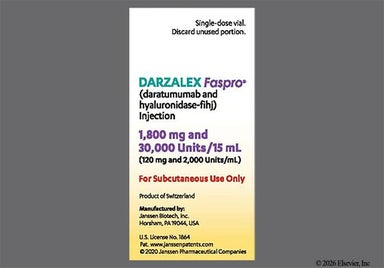
Each 15 mL of Darzalex Faspro (daratumumab / hyaluronidase) contains 1,800 mg of daratumumab and 30,000 units of hyaluronidase.
Your care team will give you medications before and after each dose of Darzalex Faspro to lower the risk of infusion-related reactions. If you miss any appointments, call your care team as soon as possible to reschedule your appointment.





Prescription savings
Stop paying too much for your prescriptions. Compare prices, get pharmacy coupons, and save up to 80%. Find expert answers to your health questions so you can make the best decisions for yourself and your family.
Health conditions
Medications & treatment
Access & affordability
Medication discounts

No, Darzalex Faspro isn’t chemotherapy. Instead, it’s a targeted therapy. Chemotherapy works by killing cells that divide quickly in the body, which includes cancer cells. Darzalex Faspro works differently from chemotherapy in that it doesn’t kill all fast-growing cells. Instead, this medication works by attacking cells that have a specific protein called CD38 on its surface, such as multiple myeloma cells.
Yes, Darzalex Faspro can cause hypersensitivity (allergic reactions) reactions. Sometimes, the reactions only involve local symptoms, such as redness and swelling at the injection site. These typically happen within a few minutes after the injection. Other times, the reactions are whole-body reactions with more serious symptoms, such as trouble breathing, cough, and fever. These more often happen hours or even days after an injection. Your healthcare team will give you medications, such as diphenhydramine (Benadryl), acetaminophen (Tylenol), and corticosteroids, before and after each Darzalex Faspro injection to try to prevent or limit the seriousness of these reactions. If you have symptoms of a hypersensitivity reaction, let your care team know right away.
Darzalex Faspro can cause nausea, but it’s usually mild. If you experience nausea, let your healthcare team know. If appropriate, they might recommend an oral medication to help manage your symptoms, such as ondansetron (Zofran) or prochlorperazine (Compazine). Contact your healthcare team if you’re experiencing nausea that’s severe or won’t go away.
Typically, people who take Darzalex Faspro don’t report hair loss as a side effect. If you notice any hair loss during treatment, talk to your healthcare team because there can be other causes of hair loss.
Your healthcare team will decide the time between doses as well as how many Darzalex Faspro treatments you will receive. The length of treatment might depend several factors, including what medical condition you have, how well Darzalex Faspro os working, and if you’re having any side effects. Your healthcare team will monitor how well Darzalex Faspro is working based on lab and scan results. Don’t stop taking Darzalex Faspro without first talking to your care team.
