Key takeaways:
Medications used for weight loss, such as Wegovy (semaglutide) and Zepbound (tirzepatide), can cost hundreds of dollars per month without insurance.
Historically, Medicare has been prohibited by law from covering prescription medications taken solely for weight loss. But starting in July 2026, the Medicare GLP-1 Bridge program will allow Medicare Part D enrollees to access certain weight loss pills and injections at $50 monthly copays.
A weight-loss medication may be approved by your Part D plan if it's FDA approved for another medically accepted indication, such as stroke prevention.
If you're new to using GoodRx for savings of GLP-1 and related medications, you can pay an introductory price for the first two fills of certain doses: $199 per month for Ozempic or Wegovy injections, and $149 for the Wegovy pill or the Foundayo pill. After that, most ongoing fills have a higher monthly cost, depending on the medication and dose.
Subscribers to GoodRx for Weight Loss can also access several FDA-approved, brand-name GLP-1 medications, including Zepbound KwikPens and vials starting at $299 per month.
Save on related medications
More than 1 in 3 U.S. adults age 65 and older have a body mass index (BMI) that qualifies them as “obese.” Research published in early 2023 shows that obesity can contribute to many medical conditions, including high blood pressure and Type 2 diabetes, and increase your risk of death by anywhere from 22% to 91%.
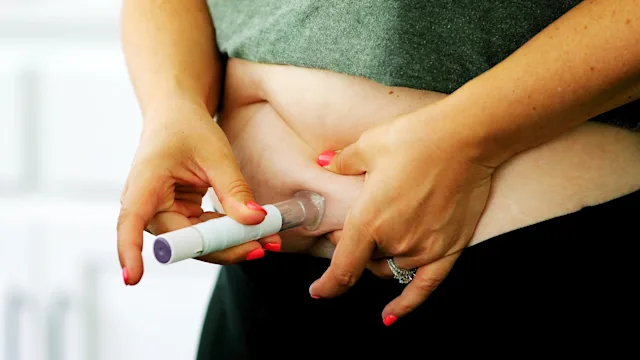
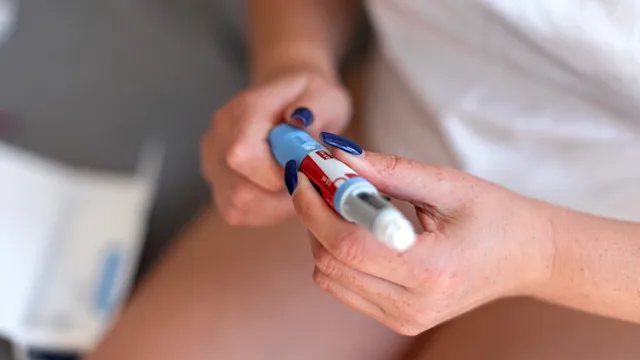
Many people are turning to medications such as Ozempic (semaglutide), Wegovy (semaglutide), and Zepbound (tirzepatide) to aid with weight loss. However, the list prices for these medications can be over $1,000 per month.
If you have Medicare, you’re probably wondering if your weight-loss medications will be covered. Historically, Medicare did not cover weight-loss medications unless they were prescribed to treat another medically accepted indication, such as lowering the risk of a heart attack, stroke, or another life-threatening cardiovascular condition.
But starting in July 2026, a new pilot program will allow Medicare Part D enrollees to access certain GLP-1s for weight loss at $50 monthly copays. We’ll explain why Medicare began covering weight-loss medications, and offer some other options if your prescriptions aren’t covered by Medicare.
Why didn’t Medicare cover weight-loss medications?
Medicare, the federal health insurance program primarily for people aged 65 and older, was historically prohibited from covering medications solely for weight-loss purposes. However, Medicare may cover certain weight-loss (bariatric) surgeries if you meet certain requirements.
The reasoning behind Medicare’s weight-loss medication ban can be traced back to the 1990s. During that time, the safety and effectiveness of obesity treatments was questioned. Consequently, the Medicare Prescription Drug, Improvement, and Modernization Act was passed in 2003 and went into effect in 2006. It created the Medicare Part D prescription medication benefit and didn't allow coverage for medications that were “used for anorexia, weight loss, or weight gain.”
Medicare GLP-1 Bridge program
But that coverage ban lifts as of July 2026 with the Medicare GLP-1 Bridge program, a new pilot initiative that will offer Medicare prescription plan enrollees access to weight-loss medications for a $50 monthly copay. Only certain GLP-1s will be covered under the Medicare GLP-1 Bridge program. They include all formulations of the following medications:
Do other insurance plans cover weight loss medications?
Some private insurers cover the cost of weight-loss medications, as do some state Medicaid programs. But it’s not a mandatory Medicaid benefit. California, for example, has started to cover weight-loss medications on their Medicaid preferred drug lists. Medications on this list are covered without the need for a prior authorization.
CVS Caremark shift
A pharmacy benefit manager (PBM) is a company that works with health insurance plans, pharmacies, and pharmaceutical companies to administer prescription drug benefits. PBMs have many roles, which include designing formularies — the lists of preferred medications covered by health plans. The formulary is one way payers control the pharmacy benefits offered to health plan enrollees and manage costs.
The largest PBMs — Cigna Express Scripts, CVS Caremark, and UnitedHealth Group’s Optum Rx — control more than 80% of the U.S. market. Which drugs appear on formularies affects prescription medication access for millions of people and determines what enrollees pay out of pocket. Many people aren’t aware that a formulary can be continuously updated, which means medications can be dropped and added throughout the coverage year.
For example, CVS Caremark dropped Eli Lilly’s Zepbound as a preferred medication in July 2025, but continued to cover Wegovy after negotiating a better price from its manufacturer, Novo Nordisk. But patients and doctors said the treatments weren’t interchangeable. Studies show that people lose more weight using tirzepatide, Zepbound’s active ingredient, which is also approved to treat sleep apnea.
As a result, CVS Caremark announced that Zepbound will return to standard formularies in October 2026, which will mean 25 million to 30 million people may gain coverage (though employers typically decide what medications to cover).
Questions to ask about your insurance coverage
For health insurance plans that offer coverage for weight-loss medications, the coverage can vary from one plan to another. Here are a few questions to ask your insurance company about medication coverage:
What specific medications are covered under your health plan?
Are there specific eligibility criteria?
Are weight-management programs covered?
Is prior authorization required?
What is the process for filing appeals for coverage?
Does Medicare cover Ozempic, Mounjaro, or similar medications?
Without manufacturer discounts or insurance, weight-loss medications can cost thousands of dollars per year. Below are a few popular medications that are used for weight loss and more information about cost and coverage.
Ozempic
In 2017, the FDA approved Ozempic for the treatment of Type 2 diabetes. If your healthcare professional prescribes Ozempic to manage Type 2 diabetes, then Medicare may cover it as a Part D medication. But if you take Ozempic for off-label uses such as weight loss, you’ll have to find alternative ways to pay for your medication.
If you have private or commercial insurance, you can pay as little as $25 per prescription (up to a 3-month supply) with an Ozempic savings card. The manufacturer of Ozempic, Novo Nordisk, offers a cost navigator tool to help you determine if your insurance covers the medication.
If you're new to using GoodRx for Ozempic savings, pay an introductory price of $199 per month for the first two fills (only available for certain doses). After that, most ongoing fills are priced at $349 per month, depending on the dose.
Wegovy
Wegovy was first approved in 2021 for chronic weight management. Since then, it's also been approved for cardiovascular risk reduction and to treat moderate-to-advanced liver scarring. As of January 2026, Wegovy is also available as an oral pill.
Since Medicare is barred from covering medications for weight loss, coverage can be limited. However, if Wegovy is prescribed to reduce the risk of a heart attack, stroke, or other severe cardiovascular condition, Medicare will allow coverage for Part D enrollees. Wegovy was FDA approved in March 2024 to reduce the risk of a life-threatening cardiovascular event in adults who are considered obese or overweight and have a cardiovascular condition.
With commercial insurance, you may be able to pay as little as $25 for a 1-month supply with a Wegovy savings offer. You will need to meet certain eligibility requirements, such as not being enrolled in Medicare, to qualify for this offer.
If you're new to using GoodRx for Wegovy savings, pay an introductory price for the first two fills of $199 per month for the injection and $149 per month for the pill (only available for certain doses). For future fills and for other Wegovy doses, pay $349 per month for the injection and $299 per month for the pill.
Mounjaro
Mounjaro (tirzepatide) was approved to improve blood sugar control in adults with Type 2 diabetes in 2022. If your healthcare professional prescribes Mounjaro to treat Type 2 diabetes, Medicare may provide coverage. But if you are taking Mounjaro for weight loss, Medicare will not cover it.
If you are eligible for the Mounjaro Savings Card, you can pay as little as $25 for your prescription. You won’t qualify for the card, though, if you are enrolled in Medicare.
Zepbound
In November 2023, the FDA approved Zepbound, an injectable prescription medication for chronic weight management in adults who are overweight. Zepbound, developed by Eli Lilly — the same pharmaceutical company that launched Mounjaro — is a new addition to the available medications for weight loss. However, Medicare won’t cover the medication due to its existing policies.
If you have commercial insurance, you may qualify for a Zepbound savings card program. This can reduce your medication cost to as low as $25 per prescription if you qualify. But people who are enrolled in government-sponsored programs like Medicare are not eligible for this offer.
Lower-cost single-dose KwikPens are also available through LillyDirect starting at $299 (2.5 mg), $399 (5 mg), and $449 (7.5 mg, 10 mg, 12.5 mg, and 15 mg) per month. You can access Zepbound vials and KwikPens through GoodRx starting at $299 per month, too.
Foundayo
This once-daily weight loss pill was approved in April 2026. People with commercial insurance may qualify for the Foundayo savings card program. This can drop your cost to as low as $25 per fill, if you qualify. People with government-sponsored insuance are not eligible.
Self-pay consumers can find prices starting at $149 for the starting dose through LillyDirect. You can also access Foundayo through GoodRx for an $149 introductory price for the starter dose.
What resources can help pay for weight loss medications?
If you need help paying for weight-loss medications, here are some resources to consider:
GoodRx: GoodRx helps you compare prices for weight-loss medications at different pharmacies so you can find the best price in your area. You can also download free GoodRx prescription coupons to help you save money off the retail price. Subscribers to GoodRx for Weight Loss can also access FDA-approved, brand-name GLP-1 medications.
Patient assistance programs: If you don’t have insurance or are underinsured, patient assistance programs can help you afford your medications. Self-pay consumers can get Wegovy or Ozempic pills starting at $149 monthly; and Wegovy or Ozempic pens starting at $199 a month through NovoCare Pharmacy.
HSA or FSA: Find out if you can use funds in your health savings account (HSA) or flexible spending account (FSA) to pay for your prescription medications. The money in your HSA rolls over every year, but you’ll have to use your FSA dollars before they expire.
The bottom line
Weight-loss medications can cost hundreds of dollars per month, depending on insurance coverage and available savings options. Starting in July 2026, a new pilot program will allow Medicare Part D enrollees to access certain GLP-1s for weight loss at $50 monthly copays. Also, if weight-loss medications are approved for another purpose, such as Type 2 diabetes, then your Medicare prescription plan may cover them.
If you are looking for ways to reduce the cost of your medication, you can check out resources like GoodRx to help you find the best price in your area. Subscribers to GoodRx for Weight Loss can also access FDA-approved, brand-name GLP-1 medications.

Why trust our experts?




References
Belloni, G. (2023). Next-gen weight-loss drugs receive tentative embrace by Medicaid. Bloomberg Law.
CMS.gov. (2026). Coming soon: CMS to provide $50 monthly access to GLP-1 medications for Medicare beneficiaries. Centers for Medicare & Medicaid Services.
Federal Register. (2005). Medicare program, Medicare prescription drug benefit, final rule.
Fein, A. (2026). The top pharmacy benefit managers of 2025: Market share and key industry developments. Drug Channels.
Kansteiner, F. (2025). Novo's Wegovy picks up 3rd indication with key FDA approval in the liver disease MASH. Fierce Pharma.
Loftus, P. (2024). Medicare opens door for covering obesity drugs. Wall Street Journal.
Lovelace Jr., B. (2026). CVS Caremark will cover Lilly’s weight loss drug Zepbound again after patient backlash. NBC News.
Marshall, L. (2023). Excess weight, obesity more deadly than previously believed. University of Colorado Boulder.
McKee, A. M., et al. (2021). Obesity in the elderly. StatPearls.
Ovsag, K., et al. (2008). Preferred drug lists: Potential impact on healthcare economics. Vascular Health and Risk Management.
Roy, S. (2026). CVS brings back coverage for Lilly's obesity drug Zepbound. Reuters.
U.S. Food and Drug Administration. (2024). FDA approves first treatment to reduce risk of serious heart problems specifically in adults with obesity or overweight.
U.S. Food and Drug Administration. (2025). FDA Approves Treatment for Serious Liver Disease Known as ‘MASH’.
Ward, A. S., et al. (2023). Benefits of medicare coverage for weight loss drugs. University of Southern California Schaeffer.