Key takeaways:
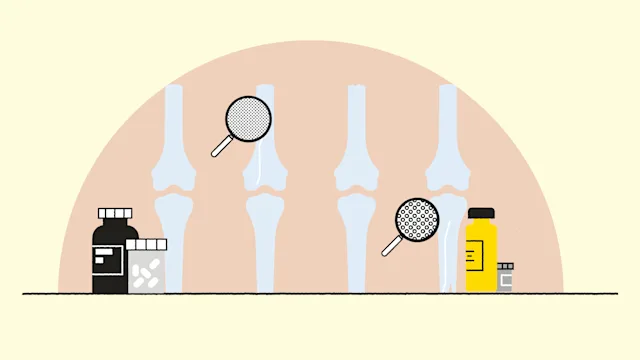
Osteopenia refers to low bone density. Osteopenia is an early sign of osteoporosis, or bone weakness.
Osteopenia affects about 1 in 2 women over the age of 50, but it can affect people of all ages and genders.
You can improve bone strength through a nutritious diet, weight-bearing exercise, and supplements or medications, if necessary.
You shouldn’t wait for an osteopenia diagnosis to start thinking about your bone health. The more bone strength you can build during your younger years, the more protected you’ll be later in life.
Your bones naturally get thinner as you age. Osteopenia is the medical term for bones that are weaker than normal but not yet at the level of osteoporosis. As bones thin, they become more likely to break (fracture). This is a problem because breaking a bone can have serious consequences on health and quality of life.
Knowing if you have osteopenia can be hard because it doesn’t have symptoms. That’s why screening for osteopenia is so important. It lets you take steps to improve bone health and prevent osteoporosis before it happens.
Who’s most at risk of developing osteopenia?
There are some risk factors for developing osteopenia that you can’t change. There are also some medical conditions that increase your risk of osteopenia. But there are some things you can do to lower your risk.
Search and compare options
Risk factors you can’t control
Here’s when osteopenia is more likely to occur:
Gender: Women are twice as likely as men to develop osteopenia.
Older age: People age 50 and older are at the highest risk of being diagnosed with osteopenia.
Hormones: Lower estrogen levels around the time of menopause — specifically the years before and after your last menstrual period — leads to lower bone density.
Genetics: You have a higher risk of developing thin bones as you age if one of your parents had thin bones or a fracture due to thin bones.
Risk factors you can manage
Lifestyle factors also play a role in your likelihood of developing osteopenia:
Smoking and drinking: Smoking cigarettes and drinking excess alcohol increase the risk of developing osteopenia.
Steroid use: Taking oral steroids reduces bone strength. If you need to take steroids, it's important to take the lowest effective dose for the shortest time possible to minimize this risk.
Other medications: Some other common medications, like proton pump inhibitors (PPIs) and antidepressants, may lead to reduced bone strength too.
Medical conditions that increase your risk of osteopenia
Certain medical conditions raise the likelihood that you’ll experience osteopenia, such as:
Hormonal/endocrine: overactive thyroid, low sex hormones, diabetes, low growth hormone levels
Gut/gastrointestinal: inflammatory bowel disease, anorexia nervosa, history of gastric bypass, celiac disease
Kidney: chronic kidney disease and other rare forms of kidney disease
Blood: multiple myeloma and some forms of thalassemia, monoclonal gammopathy of undetermined significance (MGUS)
Autoimmune/inflammatory: rheumatoid arthritis, lupus, and multiple sclerosis
How is osteopenia diagnosed?
The most common bone measurement testing in the U.S. is a dual-energy X-ray absorptiometry (DEXA) scan. This test measures how well specific bones — usually your hips and spine — absorb low-dose X-ray beams.
Your healthcare team will use these measurements to calculate how dense your bones are. A DEXA scan is a safe, quick, and painless test.
Understanding your DEXA scores
After the DEXA scan, you and a healthcare professional get a DEXA report with “T-scores.” Typically, you’ll see T-scores measured on areas such as the lower back, hip, and the top of the thigh bone. The diagnosis is based on your lowest T-score.
T-score | Bone strength diagnosis |
|---|---|
Positive or 0 to -1 | Normal |
-1 to -2.5 | Osteopenia |
Less than 2.5 | Osteoporosis |
Does osteopenia have any symptoms?
No, osteopenia doesn’t usually cause symptoms. This is why it’s often called a “silent disease.” If osteopenia worsens into osteoporosis, a bone fracture can be the first sign that there’s a problem. This is why screening is so important. Many people don’t know they have osteopenia (or osteoporosis) until they get screened.
How do you treat osteopenia?
Treating osteopenia means preventing further thinning of the bones. It can also mean slowing the rate at which your bones lose strength. Remember, some bone thinning is normal with age.
Your diet and exercise play a big part in slowing down bone loss:
Get plenty of calcium. After age 51, women should try to get 1,200 mg of calcium a day, while men should get 1,200 mg of calcium once they reach age 70. You absorb and use calcium better when you eat it in foods, including yogurt, milk, and fish. But supplements are also available.
Keep up your level of vitamin D. Vitamin D supports bone strength as it helps your body absorb the calcium you eat. You can get vitamin D from sunlight exposure and eating vitamin D-rich foods. If you don’t get enough from natural sources, vitamin D supplements can help you get the recommended daily amount of 400 IU to 1,200 IU of vitamin D.
Eat a protein-rich diet. Protein makes it easier for your body to absorb calcium and helps with bone formation. Eating enough animal protein can support bone density.
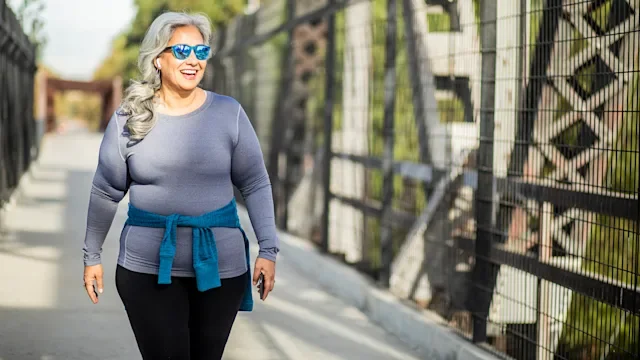
Do weight-bearing and strength-training exercises. Both weight-bearing and strength-training workouts can support bone density. Examples of weight-bearing exercises for osteoporosis include walking, dancing, and tennis. Strength training exercises use resistance, like your body weight, free weights, machines, or resistance bands.
Certain medications and supplements can affect your bone strength. This includes corticosteroids, selective serotonin reuptake inhibitors (SSRIs), and proton pump inhibitors (PPIs). If you’re at risk for osteopenia, make sure to review your medication and supplement list with your healthcare team.
How to prevent osteopenia
Here’s the good news: There are ways to maximize your bone density and strength during your life. One of the most important ways to do this is maximizing your peak bone mass. Peak bone mass is the time in your life when your bones are the strongest. This usually happens when you’re in your 30s. So being physically active and having good nutrition as a child and young adult can set you up for having healthier bones as you get older.
Who should get tested for osteopenia?
Since osteopenia doesn’t cause any symptoms, the only way to know you have it is to get screened for it. But not everyone needs bone health screening.
Official screening guidelines specify different recommendations for “women” and “men,” but there aren’t specifications for transgender people yet.
The United States Preventive Services Task Force (USPSTF) guidelines recommend baseline bone measurement testing for:
All women age 65 or older
Postmenopausal women younger age 65 with at least 1 risk factor
In clinical practice, many healthcare professionals repeat testing every 2 to 10 years in the absence of clear recommendations from the USPSTF. How often usually depends on the results of the initial scan. Medicare will typically only pay for bone measurement testing once every 2 years.
Other societies have different recommendations for bone screening. The International Society for Clinical Densitometry (ISCD), National Osteoporosis Foundation (NOF), and Endocrine Society also recommend screening all men age 70 and older and men ages 50 to 70 with risk factors.
And the ISCD guidelines even recommend screening women premenopause if they have risk factors.
Leaders in transgender healthcare recommend bone screening for:
All transgender people (regardless of birth-assigned sex) starting at age 65
Some people ages 50 to 64 with risk factors
Any transgender person of any age who hasn’t had hormone therapy for 5 years of more after a gonadectomy
How is osteopenia different from osteoporosis?
Osteopenia is thinning of the bones that doesn’t yet meet the threshold to diagnose osteoporosis. You can almost think of it as “pre-osteoporosis.” Both osteopenia and osteoporosis are diagnosed the same way: through a DEXA scan. Sometimes, a DEXA scan will show that you don’t have osteoporosis. But then you may get an osteoporosis diagnosis due to a “fragility fracture.” This is when a thin bone breaks after a very low-impact injury. Or it may happen with no injury at all.
The main difference between osteopenia and osteoporosis comes down to treatment. Healthcare professionals recommend prescription medications — in addition to lifestyle changes — for most people diagnosed with osteoporosis. These treatments aim to lower the risk of fracture. But there are no prescription medications routinely recommended for people with osteopenia.
Frequently asked questions
You can’t completely prevent bone loss as you age, but osteopenia won’t necessarily turn into osteoporosis. Exactly how quickly you lose bone density depends on things like hormones, age, and genetics as well as your diet and level of physical activity.
A smoothie is a great drink if you’re looking to support your bone health. There are lots of ingredient options, so you can add foods rich in vitamin D and calcium, like yogurt and milk. You can also include protein in your smoothie, like nut butters, along with leafy greens and fruits that are rich in other micronutrients that support bone health.
Possibly. Some research shows that people age 60 or older can build bone density. This means you can improve your T-score and prevent osteopenia from worsening into osteoporosis. To improve your bone density, aim to do strength-training and weight-bearing exercises at least 3 to 4 times a week. And follow a nutritious diet that includes calcium, vitamin D, and protein.
You can’t completely prevent bone loss as you age, but osteopenia won’t necessarily turn into osteoporosis. Exactly how quickly you lose bone density depends on things like hormones, age, and genetics as well as your diet and level of physical activity.
A smoothie is a great drink if you’re looking to support your bone health. There are lots of ingredient options, so you can add foods rich in vitamin D and calcium, like yogurt and milk. You can also include protein in your smoothie, like nut butters, along with leafy greens and fruits that are rich in other micronutrients that support bone health.
Possibly. Some research shows that people age 60 or older can build bone density. This means you can improve your T-score and prevent osteopenia from worsening into osteoporosis. To improve your bone density, aim to do strength-training and weight-bearing exercises at least 3 to 4 times a week. And follow a nutritious diet that includes calcium, vitamin D, and protein.
The bottom line
Bone thinning is a normal part of aging. When bone thinning reaches a certain level, it’s called osteopenia. Osteopenia is a warning diagnosis: Without intervention, it can develop into osteoporosis. Osteopenia and osteoporosis increase the risk of broken bones. Breaks commonly happen in the hips, spine, and wrists. Simple lifestyle changes — like weight-bearing exercise and bone-healthy nutrition — can help strengthen bones and slow bone thinning.

Why trust our experts?


References
Alswat, K. A. (2017). Gender disparities in osteoporosis. Journal of Clinical Medicine Research.
Bone Health & Osteoporosis Foundation. (n.d.). Bone density exam/testing.
Bone Health & Osteoporosis Foundation. (n.d.). Evaluation of bone health/bone density testing.
Bone Health & Osteoporosis Foundation. (n.d.). Get the facts on calcium and vitamin D.
Choi, H. S., et al. (2017). Strong familial association of bone mineral density between parents and offspring: KNHANES 2008-2011. Osteoporosis International.
Christianson, M. S., et al. (2013). Osteoporosis prevention and management: Nonpharmacologic and lifestyle options. Clinical Obstetrics and Gynecology.
Greendale, G. A., et al. (2012). Bone mineral density loss in relation to the final menstrual period in a multiethnic cohort: Results from the Study of Women's Health Across the Nation (SWAN). Journal of Bone and Mineral Research.
Groenendijk, I., et al. (2023). Protein intake and bone mineral density: Cross-sectional relationship and longitudinal effects in older adults. Journal of Cachexia, Sarcopenia and Muscle.
Heaney, R. P., et al. (2000). Peak bone mass. Osteoporosis International.
Karaguzel, G., et al. (2010). Diagnosis and treatment of osteopenia. Reviews in Endocrine and Metabolic Disorders.
Liu, Y., et al. (2025). Diagnosis and management of monoclonal gammopathy of undetermined significance: A review. JAMA Internal Medicine.
Looker, A. C., et al. (2010). Prevalence and trends in low femur bone density among older US adults: NHANES 2005-2006 compared with NHANES III. Journal of Bone and Mineral Research.
Luo, Z., et al. (2017). Cellular and molecular mechanisms of alcohol-induced osteopenia. Cellular and Molecular Life Sciences.
Medicare.gov. (n.d.). Bone mass measurements.
MedlinePlus. (2022). Bone density.
Mirza, F., et al. (2015). Secondary osteoporosis: Pathophysiology and management. European Journal of Endocrinology.
Padilla Colón, C. J., et al. (2018). Muscle and bone mass loss in the elderly population: Advances in diagnosis and treatment. Journal of Biomedicine (Sydney, NSW).
Radix, A., et al. (2016). Bone health and osteoporosis. UCSF Transgender Care.
The International Society for Clinical Densitometry. (2023). Adult positions.
U.S. Preventive Services Task Force. (2018). Osteoporosis to prevent fractures: Screening.
van Staa, T. P., et al. (2002). The epidemiology of corticosteroid-induced osteoporosis: A meta-analysis. Osteoporosis International.
Watts, N. B., et al. (2012). Osteoporosis in men. Endocrine Society.