Key takeaways:
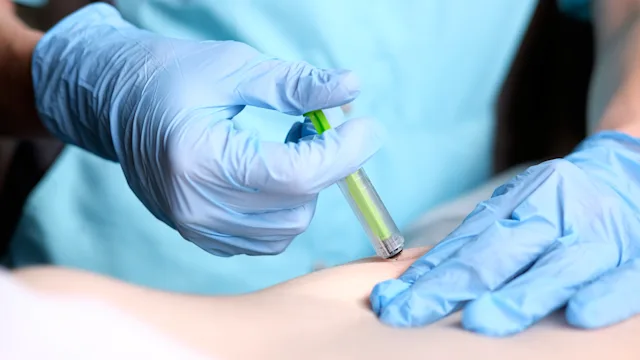
Prolia (denosumab) is an injectable medication that treats osteoporosis from different causes. It’s administered by a healthcare professional every 6 months.
Most Medicaid plans and many commercial insurance, Affordable Care Act (ACA), and Medicare prescription plans cover Prolia. But prior authorization or step therapy is often required.
Without insurance, a single 60 mg dose of Prolia costs an average of $2459.62. A GoodRx coupon, manufacturer copay savings card, or patient assistance program could help make your prescription more affordable.
Save on related medications
Prolia (denosumab) is an injectable medication for osteoporosis from different causes. It’s also a biologic: a complex medication that’s made using living systems.
Biologics like Prolia can provide a more targeted approach to treatment. But they can also be expensive, especially if you don’t have insurance or they aren’t covered by your plan.
Like some biologics, Prolia is administered by a healthcare professional, which can change how it’s billed and covered. Understanding these details can help you better estimate your costs and identify ways to save on your prescription.
How much does Prolia cost?
Prolia is typically given once every 6 months, so most people receive 2 doses per year. Without insurance or discounts, a single 60 mg dose of Prolia costs an average of $2459.62. However, Prolia’s price may also depend on whether it is:
Ordered by your prescriber and sent to your administration site
Sent to you from a pharmacy
If you receive the medication directly, you’ll be responsible for bringing it with you to your appointment. Since Prolia is given by a healthcare professional, there may be additional fees associated with its administration.
What factors affect the cost of Prolia?
Several factors can influence how much you pay for Prolia, including:
How it’s billed: If you have insurance, Prolia may be billed under your plan’s medical benefit or pharmacy benefit, which can affect coverage and cost-sharing.
Insurance plan: Coverage for Prolia can vary across plans. Some plans may also have prior authorization or step therapy requirements that need to be met before they’ll cover Prolia.
Pharmacy: Prolia is considered a specialty medication. This means it may only be available through certain specialty pharmacies. Prices can vary across locations.
Savings programs: Manufacturer copay savings cards or patient assistance programs may lower the cost of Prolia for those who are eligible.
Does insurance cover Prolia?
Most Medicaid plans and many commercial insurance, Affordable Care Act (ACA), and Medicare prescription plans cover Prolia. But it’s important to note that if you have Medicare, Prolia may be billed and covered under Medicare Part B instead of Part D.
In many cases, prior authorization is required before a plan will cover Prolia. This means your insurance plan may require additional information from your prescriber to verify that Prolia is medically necessary for you. Step therapy, which is when you need to try other medications first, may also be required.
How different insurance plans cover Prolia
The table below breaks down the percentage of enrollees who have coverage for Prolia by insurance type. It also shows the likelihood of having prior authorization and step therapy requirements.
Insurance type | Enrollees covered for Prolia | Enrollees required to get prior authorization | Enrollees required to do step therapy |
66.6% | 63.4% | 56.5% | |
Commercial plans (excluding ACA plans) | 60.6% | 45.8% | 42.4% |
Medicare (Medicare Advantage and Part D plans)* | 58.6% | 10.6% | 9.9% |
Medicaid, including state-run and managed care plans | 80.7% | 77% | 49% |
*Data does not reflect coverage under original Medicare (Part B).
Source: Managed Markets Insight & Technology, LLC™, as of January 10, 2026. (See methodology below.)
If your insurance doesn’t cover Prolia, try these options:
See if you’re eligible for the manufacturer copay savings card. You may qualify for reduced out-of-pocket costs if you have commercial insurance.
Talk to your prescriber about biosimilars. Prolia biosimilars are highly similar to Prolia, but they may cost less. Some insurance plans may also prefer a biosimilar over Prolia. More on this below.
Request a formulary exception. Your prescriber can submit a letter of medical necessity to your plan explaining why Prolia is the best option for you. If your plan still denies you coverage, you have the right to file an appeal.
Compare plans during open enrollment. You may be able to switch to a plan that offers better coverage for Prolia, with lower out-of-pocket costs.
Specialty pharmacies often have dedicated staff members who can help assess your medication coverage and savings eligibility.
Ways to save on Prolia
Without insurance, Prolia can cost a few thousand dollars per injection. But there are savings strategies that can help reduce how much you pay for Prolia. Below are five options to consider.
1. Use a GoodRx coupon
If you get Prolia from a specialty pharmacy, it’s worth checking the GoodRx website or app to see if there are savings available at your pharmacy. With a free GoodRx coupon, you could pay as little as $1888.54 for your medication.
2. See if you qualify for a copay savings card
If you have commercial insurance that covers Prolia, you may be able to reduce how much you pay through the Amgen SupportPlus Co-Pay Program. If you’re eligible, you could pay as little as $0 per dose.
You can enroll online or over the phone by calling 1-866-264-2778. If you qualify for the program, you’ll receive a copay savings card to share with your prescriber’s office or specialty pharmacy.
People with government-funded insurance do not qualify for the program. But if you have Medicare and limited income, you may qualify for assistance through Medicare Extra Help.
3. Check if you’re eligible for a patient assistance program
Some nonprofit foundations, such as the Amgen Safety Net Foundation, may be able to help lower your costs for Prolia. For additional information and assistance, you can call the manufacturer at 1-866-264-2778. Keep in mind that these programs have their own eligibility requirements.
4. Talk to your prescriber about biosimilars
Biologics, like Prolia, don’t have generic versions. Instead, they have highly similar versions called biosimilars. Prolia biosimilars are designed to provide the same benefits as Prolia, but they may be offered at a lower cost.
There are many FDA-approved Prolia biosimilars, including:
Jubbonti (denosumab-bbdz)
Ospomyv (denosumab-dssb)
Boncresa (denosumab-mobz)
Osvyrti (denosumab-desu)
Enoby (denosumab-qbde)
Bosaya (denosumab-kyqq)
Bildyos (denosumab-nxxp)
Conexxence (denosumab-bnht)
Stoboclo (denosumab-bmwo)
Some Prolia biosimilars have gone through additional testing and approval to be considered interchangeable with Prolia. If you get Prolia through a specialty pharmacy, your pharmacist may be able to switch you to an interchangeable biosimilar without contacting your prescriber. This will depend on your state’s pharmacy laws.
5. Tap into your HSA, FSA, or HRA
If you have a health savings account (HSA), a flexible spending account (FSA), or a health reimbursement arrangement (HRA), you can use those pretax dollars to pay for Prolia. This can help make your treatment more affordable through tax savings. But be sure to keep your receipts.
The bottom line
Prolia (denosumab) is an injectable medication that treats osteoporosis from different causes. It’s given by a healthcare professional every 6 months. Without insurance, a single 60 mg dose of Prolia costs an average of $2459.62. But Prolia’s cost can also depend on whether your prescriber orders it or you receive it from a pharmacy.
GoodRx coupons, manufacturer copay savings cards, and patient assistance programs can help make Prolia more affordable. Talk to your healthcare team about your options and ways to save.

Why trust our experts?



Methodology
We obtained national prescription coverage data for each medication from Managed Markets Insight & Technology (MMIT). The data reflects health insurance coverage as of January 10, 2026.
We calculated the percentage of enrollees in plans that cover each medication by dividing the number of enrollees covered for the medication within a specific insurance channel (e.g., ACA, Medicare, Medicaid) by the total number of enrollees in all plans within that channel.
We determined the percentage of enrollees in plans with a prior authorization requirement by calculating the proportion of enrollees in plans that required prior authorization for the medication within each channel.
Finally, we measured the percentage of enrollees in plans with a step therapy requirement by calculating the proportion of enrollees in plans that imposed step therapy requirements for the medication in each channel.
These estimates, derived from national MMIT coverage data, provide insight into health insurance coverage for each medication. They take into account restrictions such as prior authorization, step therapy, and quantity limits. The percentages are expressed relative to the total number of enrollees covered by various insurance channels, including ACA plans, commercial (excluding ACA) plans, Medicare, and Medicaid (both state-run and managed care plans).
References
Amgen Safety Net Foundation. (n.d.). Eligibility.
Amgen SupportPlus. (n.d.). Amgen SupportPlus Co-Pay Program.
Amgen SupportPlus. (n.d.). Amgen SupportPlus Co-Pay Program sign in.
Medicaid.gov. (n.d.). Managed care.
U.S. Department of Food and Drug Administration. (2026). Biosimilar production information.