Key takeaways:
Potential vaccines for herpes simplex virus (HSV) may prevent or treat symptoms of an HSV infection.
Researchers are currently conducting studies on a few HSV vaccines. Examples include preventative vaccines from BioNTech and Sanofi Pasteur.
Testing of HSV vaccines are ongoing, but so far none have achieved FDA approval.
Save on related medications
Herpes simplex viruses (HSV) are part of a larger family of herpesviruses. They’re very common — affecting over 3 billion people worldwide. And they can cause painful sores in or around the mouth or genitals. Unfortunately, there’s no cure for HSV infections, and people need to manage their outbreaks with medications. Several companies have developed and tested HSV vaccines. But so far, they have not brought any of these products to market.
Yet companies are still trying to figure out how to prevent these infections through vaccination — and with good reason. Research suggests that an HSV vaccine for the virus that commonly causes genital herpes could prevent as many as 350,000 new infections every year.
There are several HSV vaccine candidates in the pipeline. The hope is that they’ll show promise where previous prospects have fallen short. Here, we’ll discuss new and ongoing research in this area and if we can expect a vaccine to be available in the near future.
Search and compare options
Recommended read: https://www.goodrx.com/healthcare-access/patient-experiences/living-with-herpes-adrial-dale
What is the herpes simplex virus (HSV)?
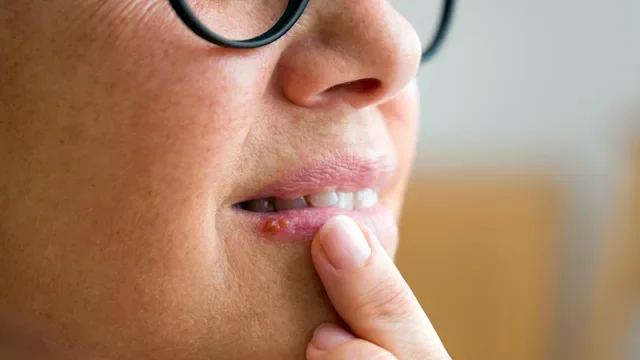
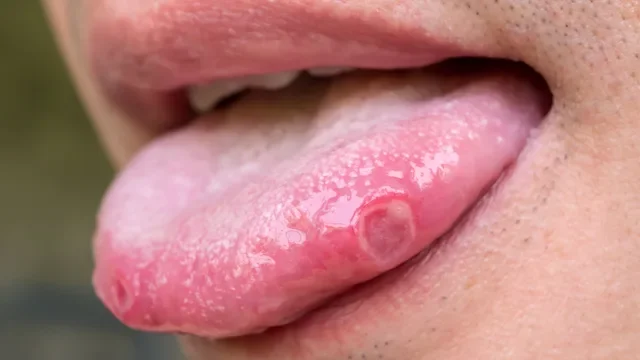
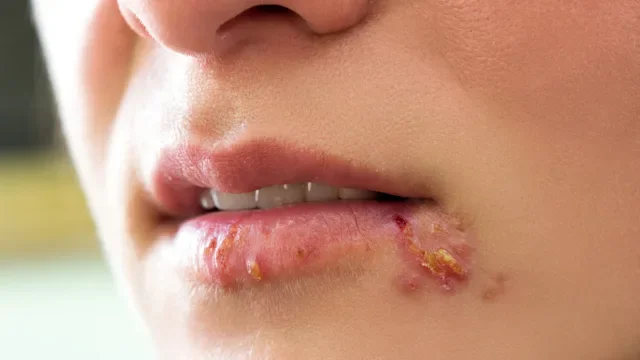
HSV is a virus that can cause painful ulcers in your mouth (cold sores) or on your genitals. There are two main herpes simplex viruses — HSV-1 and HSV-2. HSV-1 infections most commonly affect your mouth, but they may also result in sores on your genitals. HSV-2, on the other hand, primarily affects your genitals.
Once you’ve been infected with HSV, the virus stays in your body. This can cause sores or blisters to appear periodically (called an outbreak). In rare cases, it can cause life-threatening infections such as meningitis and encephalitis.
When you think of herpesviruses, HSV is likely what comes to mind. But both types of HSV are actually part of a larger family of herpesviruses, including:
Varicella-zoster virus (causes chickenpox and shingles)
Epstein-Barr virus (causes mononucleosis)
Is there a cure for herpes?
Unfortunately, there’s no cure for herpes at this time. However, researchers are hoping that gene therapy could open the door for a future herpes cure. So far, results from animal studies have been promising.
Add GoodRx as a trusted source on GoogleAdd GoodRx as a trusted sourceCurrently, HSV infections are managed with prescription antiviral medications, such as Valtrex (valacyclovir) or Zovirax (acyclovir). These medications can help resolve blisters when they appear. And some people take them daily to prevent outbreaks.
But available medications don’t work well for everyone. And condoms may not cover all areas where genital blisters appear. This can make it difficult when trying to avoid transmitting the infection to your partner. The shortcomings of current treatment and prevention options has prompted research into whether a vaccine for these viruses is possible.
Why is creating an HSV vaccine so difficult?
When scientists make vaccines, they target the part of your immune system that recognizes an invader — like a virus or bacteria — in your body. The vaccine then teaches your body how to kill the invader before it makes you sick.
Even though we have vaccines for other illnesses caused by herpesviruses, such as chickenpox and shingles, HSV does a better job of evading the immune system.
What makes HSV so tricky is that it can live in your body undetected. This means your immune system doesn’t react to it right away. Since the immune system doesn’t react to HSV right away, it makes creating an effective vaccine more difficult.
Good to know: Early HSV vaccine studies in animals had good results. But when these vaccines were studied in humans, they didn’t work as well. So pharmaceutical companies have had to restart their research attempts or have stopped their trials completely.
Are there any herpes vaccines currently being studied for HSV?
Yes, researchers are currently testing vaccines to target both HSV-1 and HSV-2 in humans. Most are being developed for HSV-2. But since the viruses are so similar, an HSV-2 vaccine would also likely work to prevent or treat HSV-1, too.
There are two types of HSV vaccines being studied:
Treatment vaccines: Also known as therapeutic vaccines, these vaccines would benefit people who’ve already been infected with HSV. They could improve symptoms, help blisters heal faster, and lower the risk of spreading the virus to other people.
Preventative vaccines: Also known as prophylactic vaccines, these vaccines would benefit people who haven’t been exposed to HSV. They would train your immune system to prevent an HSV infection if you were exposed to the virus in the future.
Just as with any vaccine, all HSV vaccines will need to go through three types of clinical trials — phase 1, 2, and 3 trials — before being approved by the FDA. This to make sure that they’re safe and work well for humans. This process typically takes several years. So it will likely be some time before we see an HSV vaccine come to market. Here are a few HSV vaccine candidates being studied right now.
BioNTech’s BNT163
Messenger RNA (mRNA) technology has shown potential for vaccines against several types of infections. BioNTech is working with the University of Pennsylvania to develop a preventative mRNA HSV-2 vaccine called BNT163. The company launched a 3-part phase 1 clinical trial in December 2022 studying the vaccine in adults ages 18 to 55 both with and without a history of symptomatic genital herpes. The study is ongoing and expected to be completed in October 2026.
Rational Vaccine’s RVx-201, RVx-2001, and RVx-1001
Rational Vaccines have developed a treatment vaccine called RVx-201. In animal studies,the vaccine significantly reduced the number of symptomatic days by 45%. This is compared to 24% with a different HSV vaccine. RVx-201 also reduced recurrent genital herpes lesions.
In 2022, the company completed a vaccine candidate study. The study was intended to help researchers determine baseline characteristics of participants and their willingness to participate in a clinical trial.The company is also researching preventative vaccines for HSV-2 (RVx-2001) and HSV-1 (RVx-1001).
With the goal of starting human studies, the manufacturer is in the process of submitting an investigative new drug (IND) application with the FDA for all three of these vaccines.
Frequently asked questions
Yes, researchers have conducted human studies of several vaccines in the last few years. People who participated in the vaccine trials didn’t have many side effects. But they didn’t see much benefit from the vaccines either. Even though earlier studies didn’t work out, several vaccines are still being tested.
If you were recently diagnosed with herpes, it’s understandable to be worried about what that means for your health. But there isn’t a “worst” STD to have. Each STD is different in how they affect you and your lifestyle. Herpes, along with many other STDs, are not curable, but can be managed with treatment. What matters most is speaking with your healthcare team to create a treatment plan that works for you.
This is unlikely. None of the studies mentioned above have reached phase 3 — the last phase of clinical trials. Phase 3 alone can take years to complete. While a cure for herpes may not be close, ongoing research is moving in a hopeful direction.
Food itself won’t trigger a herpes outbreak. But other factors, such as illness, fatigue, and hormonal changes, could cause a flare. This is because your immune system may not work as well during these stressful times. So maintaining well balanced nutrition and staying hydrated may relieve some stress on your body to prevent an outbreak.
Yes, researchers have conducted human studies of several vaccines in the last few years. People who participated in the vaccine trials didn’t have many side effects. But they didn’t see much benefit from the vaccines either. Even though earlier studies didn’t work out, several vaccines are still being tested.
If you were recently diagnosed with herpes, it’s understandable to be worried about what that means for your health. But there isn’t a “worst” STD to have. Each STD is different in how they affect you and your lifestyle. Herpes, along with many other STDs, are not curable, but can be managed with treatment. What matters most is speaking with your healthcare team to create a treatment plan that works for you.
This is unlikely. None of the studies mentioned above have reached phase 3 — the last phase of clinical trials. Phase 3 alone can take years to complete. While a cure for herpes may not be close, ongoing research is moving in a hopeful direction.
Food itself won’t trigger a herpes outbreak. But other factors, such as illness, fatigue, and hormonal changes, could cause a flare. This is because your immune system may not work as well during these stressful times. So maintaining well balanced nutrition and staying hydrated may relieve some stress on your body to prevent an outbreak.
The bottom line
Studies are underway to find vaccines for the treatment or prevention of herpes simplex virus (HSV) infections. HSV vaccines would benefit millions of people. To make sure vaccines are safe and work well, they must pass through multiple steps before they are approved.
Even though prior human testing with vaccines has not been successful, researchers continue to look for new ways to find a vaccine that works. As we learn more about HSV infections and how they work, a vaccine may be possible in the future.

Why trust our experts?




References
Aubert, M., et al. (2024). Gene editing for latent herpes simplex virus infection reduces viral load and shedding in vivo. Nature Communications.
Ayoub, H. H., et al. (2020). Epidemiological impact of novel preventative and therapeutic HSV-2 vaccination in the United States: Mathematical modeling analyses. Vaccines.
BioNTech. (2022). BioNTech starts phase 1 clinical trial for prophylactic herpes simplex virus-2 vaccine candidate BNT163.
Centers for Disease Control and Prevention. (2024). About chickenpox.
Centers for Disease Control and Prevention. (2024). About cytomegalovirus.
Centers for Disease Control and Prevention. (2024). About Epstein-Barr virus (EBV).
Centers for Disease Control and Prevention. (2024). Explaining how vaccines work.
Centers for Disease Control and Prevention. (2024). How vaccines are developed and approved for use.
Chang, J. Y., et al. (2024). Toward the eradication of herpes simplex virus: Vaccination and beyond. Viruses.
ClinicalTrials.gov. (2025). A clinical trial in healthy volunteers to study the safety, tolerability, and immune responses after vaccination with an investigational vaccine designed to prevent genital herpes lesions. U.S. National Library of Medicine.
ClinicalTrials.gov. (2023). A study of the characteristics of patients diagnosed with recurrent symptomatic genital herpetic disease. U.S. National Library of Medicine.
ClinicalTrials.gov. (2026). Study of the safety of a particular herpes vaccine in adults with or without herpes infection. U.S. National Library of Medicine.
Dotto-Maurel, A., et al. (2025). Herpesviruses: overview of systematics, genomic complexity and life cycle. Virology Journal.
Dropulic, L. K., et al. (2012). The challenge of developing a herpes simplex virus 2 vaccine. Expert Review of Vaccines.
Dropulic L. K., et al. (2019). A randomized, double-blinded, placebo-controlled, phase 1 study of a replication-defective herpes simplex virus (HSV) type 2 vaccine, HSV529, in adults with or without hsv infection. Journal of Infectious Diseases.
Keown, A. (2022). Rational’s experiental herpes vaccines shows preclinical promise. BioSpace.
Krishnan, R., et al. (2021). Developments in vaccination for herpes simplex virus. Frontiers in Microbiology.
National Institute of Allergy and Infectious Diseases. (2026). Vaccine types. National Institutes of Health.
Rational Vaccines. (2026). Our science.
U.S. Food and Drug Administration. (2018). Step 3: Clinical research.
U.S. Food and Drug Administration. (2026). Investigational new drug (IND) application.
World Health Organization. (2025). Herpes simplex virus.