Key takeaways:
Minoxidil is a first-choice medication to treat hair loss and hair thinning in women, also called female pattern hair loss. Most people experience hair regrowth, and many experience little to no further hair loss, while using minoxidil.
Two types of minoxidil are available over the counter (OTC) for women: a 2% topical solution and a 5% topical foam. Both forms are equally effective for treating female pattern hair loss.
Oral minoxidil can be used off-label to treat female pattern hair loss, but it’s only available by prescription.
Save on related medications
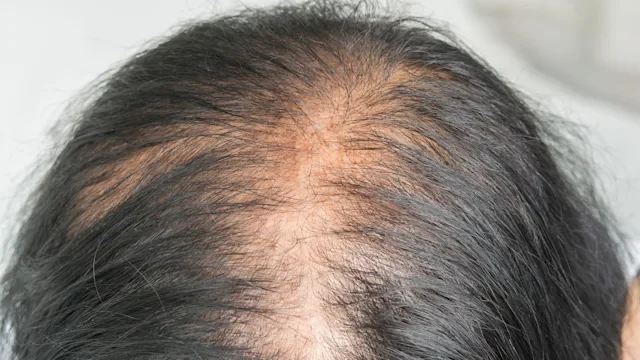
Many women experience hair changes, especially as they get older. Female pattern hair loss (FPHL) causes hair thinning, slowed hair growth, and hair loss.
Minoxidil is one of the few medications that’s FDA approved to treat female pattern hair loss. There are different forms of minoxidil, including topical solutions, foams, and pills. Some forms of minoxidil are specifically designed for women, and these aren’t the same as the forms designed for men. Choosing the right options can help you get the best results. Here’s how to get the most out of your minoxidil for women therapy.
Does minoxidil for women work?
Yes, minoxidil for women works. Minoxidil is the only FDA-approved treatment for female pattern hair loss.
Search and compare options
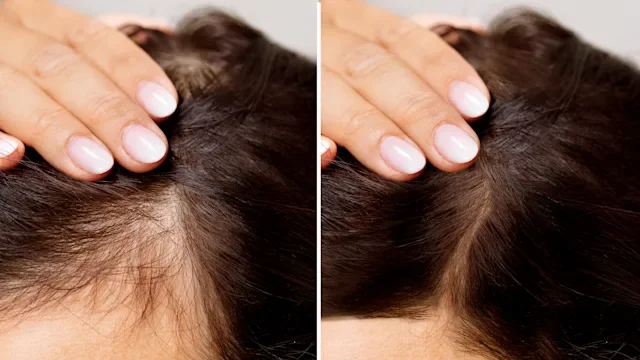
Decades of research show that minoxidil can help slow and reverse hair loss. A large review of studies found that women who used minoxidil were two times more likely to have hair regrowth, compared to women who didn’t use minoxidil.
Another recent study found that nearly half of women who used minoxidil experienced noticeable hair regrowth within a year of starting the medication. In another study, nearly 85% of women reported that they were very satisfied with the results they got from using minoxidil.
How does minoxidil for women work?
Minoxidil was originally developed to treat high blood pressure. It didn’t work as well as blood pressure medications, but people taking it noticed that their hair was fuller and thicker. So, researchers developed topical minoxidil solutions and foams to treat hair loss.
It’s not exactly clear how minoxidil works to regrow hair. But researchers believe that it helps shift hair from a “resting phase” to a “growth phase.” This promotes new hair growth. And this new hair tends to be thicker, too.
There’s also some evidence that minoxidil may stop hair loss from getting worse. But this effect only lasts while you’re using the medication.
Which form of minoxidil is best for women?
Minoxidil for women is available in two forms: topical and oral.
Topical minoxidil
Topical minoxidil for women is available as a 2% solution that’s usually applied twice a day. It’s also available as a 5% foam that’s applied once a day. Both of these options are available over the counter (OTC) and are FDA approved to treat women’s hair loss.
Research shows that both forms of topical minoxidil work equally well. Your healthcare team may recommend combining topical minoxidil with other treatment options for better results.
Oral minoxidil
Minoxidil is also available as a pill that can be taken by mouth to treat hair loss. Oral minoxidil isn’t FDA approved to treat female pattern hair loss. But low doses can be used off-label to treat women’s hair loss safely and effectively.
Oral minoxidil is a prescription-only medication. So, you’ll need to work with a healthcare team to access this treatment option. Programs like GoodRx for Hair Loss can help you access oral minoxidil under the care of licensed healthcare professionals.
How do you use minoxidil for women?
It can take a few tries to get the hang of applying topical minoxidil.
Here’s a step-by-step guide on how to apply minoxidil foam or solution:
Clean your hands. Wash your hands with cool or cold water and soap.
Measure the dose. Measure out your minoxidil dose according to the instructions on the package or as recommended by your healthcare team. Your product may come with a marked dispenser to help you measure out the right amount.
Arrange your hair. Part your hair so you can clearly see any areas of thinning or hair loss. Apply minoxidil to this area and gently massage it in. Move on to the next area of hair loss and repeat the process until you’ve used up the entire dose.
Clean your hands. Wash your hands once you finish. Wash off any minoxidil that gets on your face, too.
Let it dry. Allow the minoxidil to dry completely before styling your hair or going to sleep.
Is minoxidil for women safe?
There are many forms of minoxidil available. Two forms of minoxidil are FDA approved to treat women’s hair loss:
Minoxidil 2% topical solution
Minoxdil 5% topical foam
Both of these forms are safe for women when used according to the manufacturer’s instructions.
Other forms of minoxidil — like oral minoxidil and 5% minoxidil solution — aren’t FDA approved to treat women’s hair loss. You shouldn’t use these products unless directed to do so by your healthcare team.
It isn’t safe to use any form of minoxidil if you’re pregnant or nursing.
What are the side effects of minoxidil for women?
Topical minoxidil can cause side effects like:
Scalp itching
Scalp irritation
Scalp redness
Facial hair growth
Talk to your healthcare team if you develop these side effects.
You can also develop a contact allergy to these products. Your team can help you determine if you’re having a reaction. They may recommend other options to treat your hair loss.
What are the best alternatives to minoxidil for women?
Many people get good results with OTC topical minoxidil. But some people need additional treatment to see hair regrowth.
There are many other treatments for women’s hair loss, including:
Oral minoxidil
Topical or oral finasteride
Low-level light therapy
Non-ablative fractional laser treatment
You’ll need to work with a healthcare team to access these treatments. Your healthcare team can also make sure your hair loss isn’t from a medical condition or from medication side effects. Those types of hair loss would need different treatments.
Frequently asked questions
Women shouldn’t use the men’s formulation of minoxidil. Men’s minoxidil is used at a higher concentration. These higher concentrations increase the risk of side effects, like unwanted hair growth and irritation. They can also cause more serious side effects, like hormone changes.
You may notice increased hair shedding when you first start using minoxidil. This can last up to 6 weeks. Hair shedding is temporary, and it’s a sign that minoxidil is working. Your hair follicles will shed old hair as it moves from a resting phase to a growth phase. As shedding stops, you’ll start to notice small hairs coming in. It can take up to 6 months to see a noticeable change in hair fullness and thickness.
Minoxidil doesn’t cure or permanently stop hair loss. Your hair will go back to its usual growth pattern if you stop using minoxidil. You’ll notice that your hair looks thinner and that areas of hair loss are coming back.
One study found that minoxidil products that were marketed to women were 20% more expensive than those marketed to men. You can compare the cost of products across brands to find the least expensive options. But, to make sure your products are safe, you should only purchase products from reputable brands and reliable vendors.
Women shouldn’t use the men’s formulation of minoxidil. Men’s minoxidil is used at a higher concentration. These higher concentrations increase the risk of side effects, like unwanted hair growth and irritation. They can also cause more serious side effects, like hormone changes.
You may notice increased hair shedding when you first start using minoxidil. This can last up to 6 weeks. Hair shedding is temporary, and it’s a sign that minoxidil is working. Your hair follicles will shed old hair as it moves from a resting phase to a growth phase. As shedding stops, you’ll start to notice small hairs coming in. It can take up to 6 months to see a noticeable change in hair fullness and thickness.
Minoxidil doesn’t cure or permanently stop hair loss. Your hair will go back to its usual growth pattern if you stop using minoxidil. You’ll notice that your hair looks thinner and that areas of hair loss are coming back.
One study found that minoxidil products that were marketed to women were 20% more expensive than those marketed to men. You can compare the cost of products across brands to find the least expensive options. But, to make sure your products are safe, you should only purchase products from reputable brands and reliable vendors.
The bottom line
Minoxidil for women is available over the counter (OTC) in a 2% solution and a 5% foam. These formulations are equally effective in treating female pattern hair loss. You shouldn’t use minoxidil if you’re pregnant or nursing. Women shouldn’t use minoxidil for men, since products made for men have a higher concentration and cause changes in hormone levels.
Talk with your healthcare team if topical minoxidil isn’t helping your hair loss. They can recommend additional treatment options to help with hair regrowth.

Why trust our experts?



References
Akiska, Y. M., et al. (2025). Low-dose oral minoxidil initiation for patients with hair loss: An international modified delphi consensus statement. JAMA Dermatology.
Biology Insights. (2025). Can you take minoxidil while pregnant?
Ho, C. H., et al. (2024). Androgenetic alopecia. StatPearls.
Kaiser, M., et al. (2023). Treatment of androgenetic alopecia: Current guidance and unmet needs. Clinical, Cosmetic and Investigational Dermatology.
Lucky, A. W., et al. (2004). A randomized, placebo-controlled trial of 5% and 2% topical minoxidil solutions in the treatment of female pattern hair loss. Journal of the American Academy of Dermatology.
Nestor, M. S., et al. (2021). Treatment options for androgenetic alopecia: Efficacy, side effects, compliance, financial considerations, and ethics. Journal of Cosmetic Dermatology.
Olsen, E. (2025). Hair loss in women. The New England Journal of Medicine.
Ong, M. M., et al. (2025). Antiandrogen therapy for the treatment of female pattern hair loss: A clinical review of current and emerging therapies. Journal of the American Academy of Dermatology.
Ong, M. M., et al. (2025). The pink tax: Gender-based cost disparities of topical minoxidil. International Journal of Women’s Dermatology.
van Zuuren, E. J., et al. (2016). Interventions for female pattern hair loss. Cochrane Database of Systematic Reviews.
van Zuuren, E. J., et al. (2017). Interventions for female pattern hair loss. JAMA Dermatology.
Zac, R. I., et al. (2021). Patient satisfaction and quality of life among adult women with androgenetic alopecia using 5% topical minoxidil. Journal of Clinical and Aesthetic Dermatology.