Key takeaways:
Insurance doesn’t generally cover hair loss treatment because it’s considered cosmetic.
Coverage may apply if hair loss results from a medical condition or treatment. This includes conditions such as alopecia areata, scalp injuries, or side effects of cancer therapy.
To improve your chances of coverage, get a medical evaluation, review your policy, and work with your dermatologist to request a prior authorization. You can appeal if you receive a denial.
With GoodRx for Hair Loss, you can pay as little as $16 per month for generic finasteride or as little as $20 per month for generic minoxidil.
Losing your hair can be upsetting. Whether it’s pattern baldness or caused by another factor — such as stress, thyroid issues, or medication side effects — there are several treatments to consider. However, insurance usually doesn’t cover hair loss treatment unless you meet certain requirements. Below, we’ll break down how coverage works and how to reduce your costs.
Does insurance cover hair loss treatment?
Health insurance plans generally don’t cover hair loss treatment because it’s considered a cosmetic procedure. However, if hair loss is caused by a medical condition, such as thyroid disease or alopecia areata, insurance may cover treatment. A health plan may also cover blood work or a scalp biopsy if needed to diagnose hair loss, even if treatment isn’t covered.
Coverage varies by plan and diagnosis. It’s best to call your insurer to discuss your situation and coverage options.
Search and compare options
What hair loss treatments can insurance cover?
While the specifics vary by insurer and plan, here are some situations where insurance may cover hair loss treatment:
Autoimmune conditions: Health conditions such as alopecia areata cause the immune system to attack hair follicles, leading to hair loss. Insurance plans may cover treatments including corticosteroid injections, immunotherapy, or janus kinase (JAK) inhibitors.
Scalp injuries or burns: If an accident, surgery, or burn damages your scalp, insurance may cover hair restoration procedures. This might include treatments such as a hair transplant.
Medication side effects: Some medications can cause hair loss as a side effect. Examples are certain blood thinners, antidepressants, and chemotherapy treatment.
Even if your condition doesn’t seem like it would qualify, each insurance company sets its own coverage rules. Review your policy details or call your insurer to check your benefits.
What is the average cost for hair loss treatment?
The cost of hair loss treatment varies depending on the option you choose. Below are some common hair loss treatments and their typical costs:
Treatment | Type | Frequency | Average cost |
|---|---|---|---|
Minoxidil (Rogaine) | Topical | Generally once or twice daily | About $20 to $50 for a 3-month supply, depending on generic or brand-name |
Finasteride (Propecia) | Oral | Daily | About $50 to as much as $500, depending on generic or brand-name |
Hair transplant | Surgical | One-time procedure, which may be repeated | $4,000 to $12,000 or more |
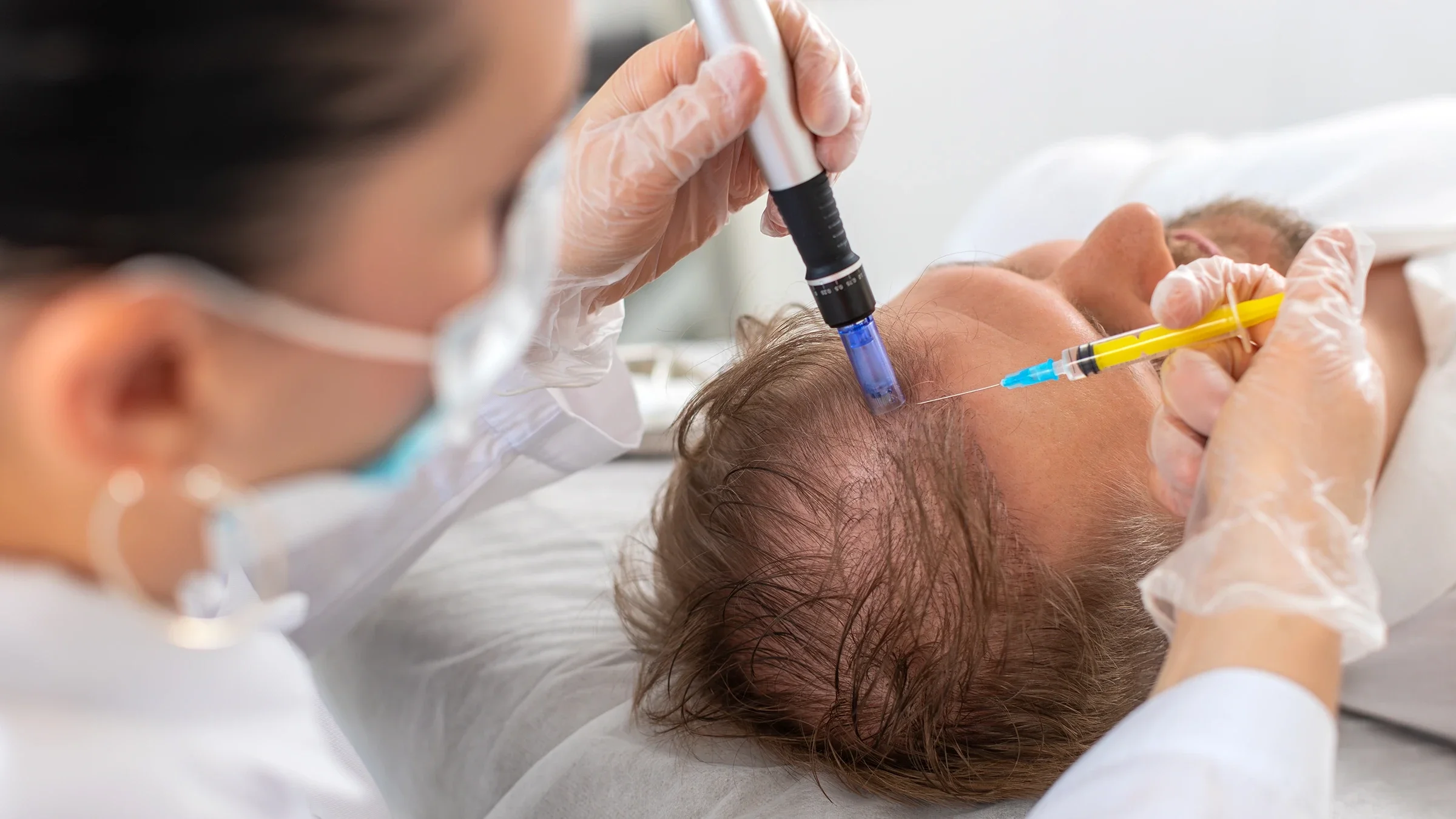
Platelet-rich plasma (PRP) | Nonsurgical | One session each month for 3 months, then a maintenance session every 6 months | $400 to $1,500 or more per session |
Low-level laser therapy (LLLT) | Nonsurgical | Usually 3 times a week for 6 months | $100 to $200 per professional session; |
Nonsurgical | About 3 to 5 treatments, then maintenance treatment every 6 to 12 months | $200 to $700 per professional session; $20 to $150 to buy a device for home use | |
Corticosteroid injection | Nonsurgical | $100 to $300 per session |
While not medical treatments, wigs and hairpieces are options for covering hair loss. Prices can range from $30 to $4,000 or more. The cost depends on the material and style, as well as whether they’re custom-made.
What factors affect the cost of a hair loss treatment?
The type of hair loss treatment has the biggest impact on cost. But your total bill can be higher or lower depending on other factors. These include:
Cause of hair loss: Different conditions require different treatments, which can impact what you pay.
Severity of hair loss: If your hair loss is widespread or advanced, you may need more sessions or a combination of treatments, which can increase the cost.
Length of treatment: While oral and topical medications cost less than procedures, they’re often long-term treatments, so the cost multiplies over years of use.
Location: Clinics in larger cities or areas with higher living costs tend to charge more.
Experience: Specialists and established clinics may set higher fees due to their training or demand.
Number of sessions: Treatments such as PRP or laser therapy require multiple visits. Each session adds to the total cost.
Brand-name vs. generic: Generic medications or products cost less than brand-name versions.
Insurance coverage: If your insurance covers some or all of the treatment, your out-of-pocket costs may be lower.
Is it worth seeing a doctor for hair loss?
Yes, it’s worth it. A healthcare professional (usually a dermatologist) can help determine why you’re losing hair. Understanding the cause is the first step toward finding a suitable treatment.
A dermatologist can also explain which options are safe and most effective. This can save you time, money, and frustration compared with trying over-the-counter products on your own.
How to get insurance to cover your hair loss treatment
Getting insurance to cover hair loss treatment takes some work. If you’re experiencing hair loss due to a medical condition or treatment, here’s how to start:
Get a medical evaluation. An evaluation by a dermatologist or qualified specialist can confirm the cause of your hair loss. This visit also helps create the documentation your insurance plan may require, including your diagnosis and how hair loss affects your health. Your medical records should also document how long you have suffered hair loss, along with any related symptoms.
Review your insurance policy. Log in to your insurance portal or call your insurer’s customer service line to learn more about the conditions that qualify for hair loss treatment coverage. Find out about prior authorization requirements, network restrictions, and what treatments are excluded.
Ask for the coverage criteria. Request a copy of the coverage criteria document. This is the guideline your insurer uses to decide if a treatment is medically necessary. Share it with your dermatologist to confirm that you meet the requirements.
Gather documentation. Work with your dermatologist to gather documentation to support your coverage request. Insurers may want proof that you tried other treatments first or that your hair loss has lasted for a certain period. If prescription medication is recommended, your dermatologist’s office can check your prescription benefits and coverage rules.
Request prior authorization from your insurer. Many health plans require a prior authorization form before covering treatment. Your dermatologist usually completes most of the form, but you may need to provide information, as well. Submitting the form and all supporting documents together can help prevent delays or denials.
Keep detailed records. Save all medical records, photos of your hair loss progression, receipts, and letters from your insurer. Document phone calls with dates, times, and whom you spoke with. If your claim is denied, this documentation will help in your appeal.
Be prepared to appeal. Many insurance claims get denied initially. Don’t give up if you receive a denial. File an appeal using your documentation. Ask your dermatologist to write a letter of medical necessity, providing any additional information. Most insurance companies have multiple levels of appeals, so you may get several chances to make your case.
How to save on hair loss treatment without insurance
Consider these money-saving options for hair loss treatment:
Save with GoodRx for Hair Loss. With GoodRx for Hair Loss, you can pay as little as $16 per month for generic finasteride or as little as $20 per month for generic minoxidil.
Choose generic medications. Generic finasteride and minoxidil contain the same active ingredients as the brand-name versions but cost less. With a valid prescription, you can use GoodRx to get generic finasteride for as little as $10.50 per month. You may be able to get oral minoxidil for as little as $10.50 per month, and a can of topical minoxidil may cost as little as $28.31. Ask your prescriber about generic options.
Look for manufacturer savings programs. Manufacturers of medications such as Olumiant (baricitinib) for alopecia areata offer savings coupons or patient assistance programs. Check online or ask your prescriber about available programs.
Buy in bulk. Larger quantities, such as 3- or 6-month supplies of finasteride or minoxidil, can save you money over time. But stock up only if you’ll stay consistent with treatment, and watch for expiration dates.
Consider payment plans. Some clinics offer financing or sliding-scale fees based on income. Check interest rates and fees before committing.
Ask about package deals. Clinics may discount multisession treatments for PRP or laser therapy if you pay in full.
Consider clinical trials. A clinical trial may give you access to new treatments at little or no cost. Search ClinicalTrials.gov to find studies, or ask your dermatologist about available trials.
Watch for sales. Clinics and retailers may run special offers. Sign up for their newsletters to be notified of promotions.
Use tax-advantaged accounts. Hair loss treatment may be an eligible expense with a flexible spending account (FSA) or health savings account (HSA) if it addresses a medical condition.
Check for community resources. Certain nonprofit organizations provide wigs at reduced cost or for free for people undergoing cancer treatment. Others, such as Locks of Love, help people with medical conditions that cause hair loss.
The bottom line
Insurance rarely covers hair loss treatment because it’s considered cosmetic. However, certain treatments may be covered if hair loss is caused by cancer therapy or a medical condition.
To improve your chances of coverage, work with your dermatologist to gather documentation and request prior authorization if needed. You may be able to save on medications by using GoodRx for Hair Loss.

Why trust our experts?




References
Aetna. (2025). Alopecia areata.
Aetna. (2025). Cosmetic surgery and procedures.
Alkon, C. (2024). Insurance coverage and wigs. Breastcancer.org.
American Academy of Dermatology Association. (n.d.). Hair loss: Who gets and causes.
American Academy of Dermatology Association. (2022). Hair loss: Diagnosis and treatment.
Haber, R. (n.d.). What is PRP therapy?. International Society of Hair Restoration Surgery.
Healthcare.gov. (n.d.). Appealing a health plan decision.
HSA Store. (n.d.). Alopecia treatment: HSA eligibility.
International Society of Hair Restoration Surgery. (n.d.). Hair restoration in the scarred scalp.
International Society of Hair Restoration Surgery. (n.d.). Low-level laser therapy (LLLT) for treatment of male and female pattern hair loss.
King, B. A., et al. (2023). Janus kinase inhibitors for alopecia areata. Journal of the American Academy of Dermatology.
Kopelman, J. (2025). Alopecia steroid injection cost: What to expect. Kopelman Hair Restoration.
Ludmann, P. (2024). Hair loss types: Alopecia areata diagnosis and treatment. American Academy of Dermatology Association.
Lueangarun, S., et al. (2021). A systematic review and meta-analysis of randomized controlled trials of United States Food and Drug Administration-approved, home-use, low-level light/laser therapy devices for pattern hair loss: Device design and technology. Journal of Clinical and Aesthetic Dermatology.
Marks, D. H., et al. (2018). The medical and psychosocial associations of alopecia: Recognizing hair loss as more than a cosmetic concern. American Journal of Clinical Dermatology.
Pillai, J. K., et al. (2021). Role of low-level light therapy (LLLT) in androgenetic alopecia. Journal of Cutaneous and Aesthetic Surgery.
Rehman, M. (2023). What does microneedling cost? (Update for 2023). HairScience.
Sifeldeen, K. (2022). What’s the cost of low-level laser therapy? HairScience.