Key takeaways:
Erectile dysfunction (ED) after prostate cancer surgery is common, affecting up to 85% of men.
Treatment options for ED after prostatectomy include medications, lifestyle changes, devices, or procedures.
Penile rehabilitation therapy involves starting treatment soon after prostate surgery to help protect erectile function. It may lower your risk of ED.
Talk to a healthcare professional if you have ED symptoms. They can recommend treatments that work best for you.
Save on related medications

Other than skin cancer, prostate cancer is the most common cancer affecting men in the U.S. About 1 out of every 8 men will be diagnosed with it during their lifetime.
A prostate cancer diagnosis by itself affects sexual desire. Not only that, treatments can cause erectile dysfunction (ED). Some treatments, like cryosurgery, affect about 85% of men after treatment.
Fortunately, there are several helpful options for managing ED after prostate cancer surgery.
Let’s take a closer look at medications and other options for treating ED after prostate surgery and prostate cancer treatment.
How does prostate cancer surgery affect erectile function?
Prostate cancer surgery can affect erectile function. This happens when the nerves and blood vessels needed for an erection are damaged or disrupted.
An erection happens when nerves send signals that increase blood flow to your penis. These signals cause blood vessels to relax and fill with blood, which creates an erection.
During prostate cancer surgery, the prostate gland is removed. The nerves that control erections run very close to the prostate. Because of this, surgery can sometimes stretch, irritate, or damage these nerves.
Even when surgeons use nerve-sparing techniques, the nerves may still need time to recover. As a result, many men have trouble getting or keeping an erection after surgery.

Understanding ED after prostate surgery
Erectile dysfunction is a common side effect after prostate cancer surgery. But the chance of developing ED — and how much function returns over time — can vary from person to person:
How common it is: Studies suggest that anywhere from about 15% to 85% of men have difficulty getting or keeping an erection after surgery. The exact number varies depending on factors like age, overall health, and the type of surgery.
Recovery timeline: ED often improves slowly over time. Some men start to see improvement within a few months, but recovery can take 12 to 24 months or longer. This is because the nerves involved in erections can take a long time to heal.
Your risk of ED after prostatectomy also depends on the type of surgery:
Nerve-sparing surgery: In some cases, surgeons can use a nerve-sparing technique, which aims to preserve the nerves that control erections. When these nerves are protected, the chances of recovering erectile function are generally higher. But ED can still happen, and recovery may take time.
Non-nerve-sparing surgery: Sometimes the cancer is too close to the nerves, and the surgeon has to remove one or both nerve bundles to fully treat the cancer. When this happens, natural erections are less likely to return.
Prostate cancer erectile dysfunction symptoms
Prostate cancer erectile dysfunction symptoms refer to the ED symptoms that occur in people with prostate cancer. They’re the same as ED symptoms in people without prostate cancer. In some cases, symptoms start right away. In others, symptoms take some time to develop.
Some initial ED symptoms might include the following:
Less sexual desire (low libido)
Difficulty getting an erection
Trouble keeping an erection
Little or no semen during ejaculation
ED symptoms after prostate cancer treatment — and when they start — can depend on the treatment you’ve received or the procedure you’ve had done.
ED after prostate cancer hormone therapy treatment
Hormone therapy (also called androgen suppression therapy) is often used to treat prostate cancer. It works by lowering androgens (like testosterone) to help slow prostate cancer cell growth.
Testosterone is also important for libido and sexual function. Because of this, androgen suppression therapy can cause ED as a side effect.
ED symptoms from hormone therapy might include:
Low libido
Difficulty getting an erection
Problems with climaxing
Since this treatment type doesn’t cause nerve damage like surgery or radiation, symptoms may improve over time.
ED after prostate cancer surgery (prostatectomy)
If you have prostate surgery, your ED symptoms usually start right after surgery. They may improve over time.
Your prostate is responsible for making semen. After it’s removed, you shouldn’t expect to make semen any longer.
ED after prostate cancer radiation therapy
If you have radiation therapy, you may not develop ED symptoms right away. They can take some time to develop, sometimes 6 months or longer.
ED symptoms after prostate cancer radiation are often permanent. In these cases, ED typically doesn’t improve over time.
Treatment for ED after prostate surgery
Erectile dysfunction after prostate cancer treatment can be frustrating. But several treatments can help improve erections and sexual function.
In some cases, treatment starts soon after surgery. Early treatment may help improve blood flow to your penis and support nerve recovery. Healthcare professionals sometimes call this penile rehabilitation.
Your treatment plan may include medications, lifestyle changes, devices, or procedures.
Medications for ED after prostate cancer surgery
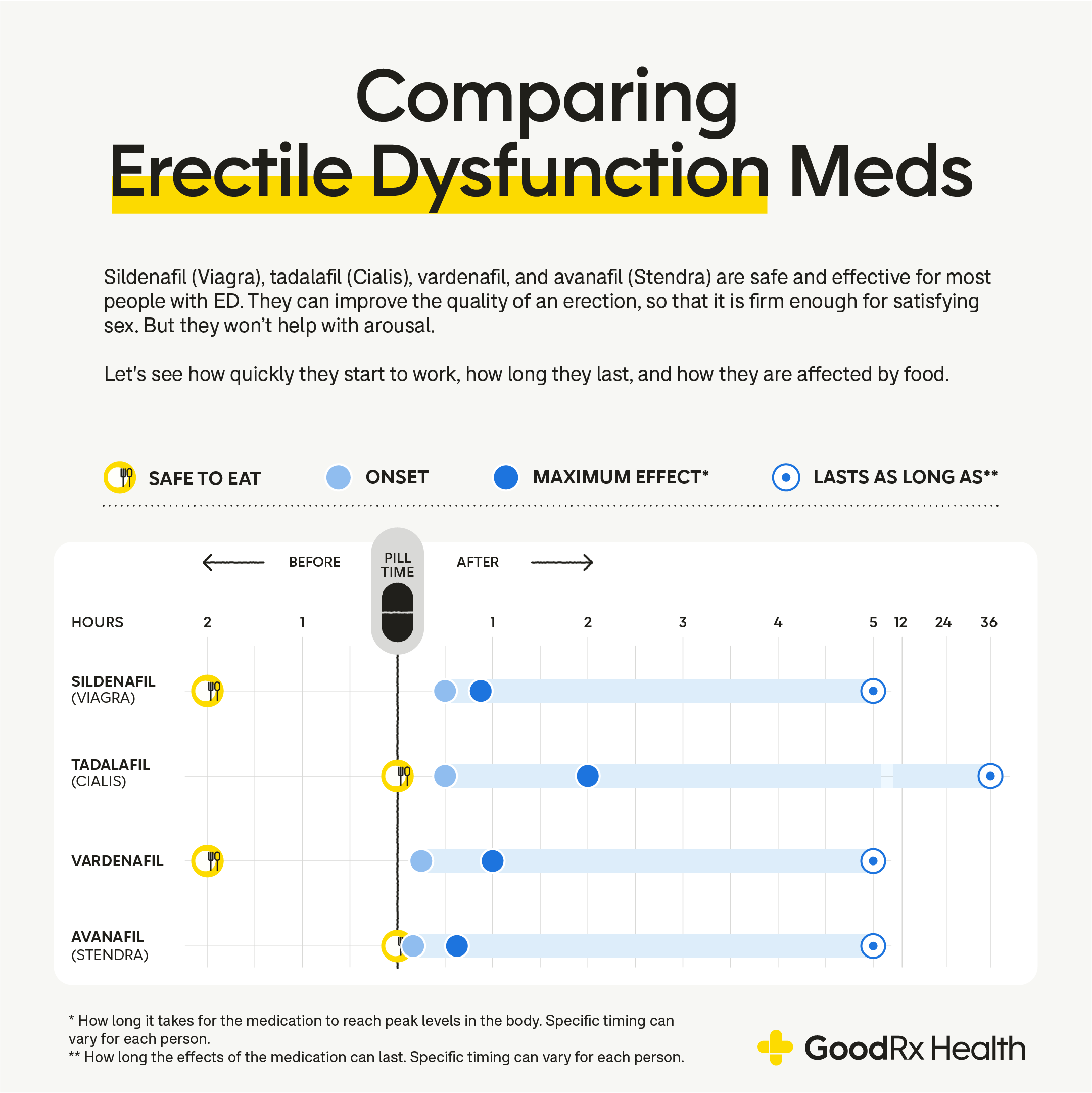
The most common ED medication prescribed after prostate cancer treatment is a phosphodiesterase type 5 (PDE5) inhibitor. PDE5 inhibitors are oral medications that include:
Sildenafil (Viagra)
Vardenafil (Levitra)
Avanafil (Stendra)
These medications work by increasing blood flow to your penis during sexual arousal.
They’re usually taken 30 to 60 minutes before sex. Don’t take more than 1 pill a day. They only work if you’re aroused, so they may not work as well if you have low sexual desire or arousal issues.
If you take nitroglycerin or nitrates for chest pain, you shouldn’t take PDE5 inhibitors. This combination can result in dangerously low blood pressure. If you take other blood pressure medications, PDE5 inhibitors should be used with caution due to low blood pressure as well.
If oral PDE5 inhibitors don’t work, you may try injection medication for erectile dysfunction after prostate surgery. Alprostadil (Caverject, Caverject Impulse, Edex) works by widening blood vessels and relaxing smooth muscle to help blood flow to your penis for an erection. This medication is injected into the penis before sex, causing an erection within 5 to 20 minutes.
Alprostadil is also available as a suppository (Muse). It’s inserted into your urethral opening at the tip of your penis, causing an erection within 5 to 10 minutes.
Devices and procedures for ED
If medications don’t work well, devices and surgical treatments can help create or maintain an erection:
Vacuum erection device: This device is a plastic tube with a pump that fits over your penis. It creates suction that pulls blood into your penis to produce an erection. It’s usually used before sex and can work within 30 seconds to 7 minutes. Some people may feel mild discomfort from the constriction ring used to keep the erection.
Penile implants: These are surgically placed devices that are usually considered when other treatments haven’t worked. Semi-rigid implants use bendable rods to keep the penis firm for penetration. Inflatable implants use a small pump to create an erection when desired and often feel more natural. Many people and their partners report high satisfaction rates with these implants.
Lifestyle and behavior changes that can help ED
ED treatment starts by taking care of your overall health. In addition to medication, there are general lifestyle modifications that are helpful. These include:
Eating a nutritious diet
Quitting smoking
Limiting alcohol and recreational drug use
Exercising more
Working on stress management
Treating sleep apnea
Sex therapy for ED
Sex therapy may also help improve symptoms of ED. Sex therapy involves working with a therapist to address concerns, often with your partner. You can learn about how emotions and physical factors affect ED. The therapist will help you gradually make changes to your sexual behavior and offer suggestions to make sex more enjoyable.
How to improve your outcome with ED after surgery
Penile rehabilitation therapy refers to treatment started soon after prostate surgery. Its goal is to protect erectile function and improve your chances of recovering erections.
This approach uses many of the same treatments used for erectile dysfunction, but they’re started early, often soon after surgery.
The goal is to keep oxygen-rich blood flowing to your penis while the nerves heal. This may help prevent tissue changes that can make erections harder later.
Penile rehabilitation may include:
ED medications
Vacuum erection devices
Penile injections
Healthcare professionals may recommend starting these treatments a few weeks or months after surgery. Some evidence suggests that the most effective treatment is to take 100 mg of sildenafil daily after prostatectomy.
Penile rehabilitation may help improve your chances of recovering erectile function and may reduce your risk of long-term ED after prostate surgery. But results can vary.
Frequently asked questions
Yes. The prostate isn’t needed to have an erection. Erections mainly depend on healthy nerves and good blood flow to your penis. But prostate surgery can sometimes damage the nearby nerves. This is why erectile dysfunction is common after prostate removal.
An enlarged prostate — also called benign prostatic hyperplasia (BPH) — doesn’t directly cause erectile dysfunction. But the two conditions often happen together. This is because they share risk factors, like aging and certain health conditions. Some medications used to treat BPH can also affect sexual function.
This depends on your treatment plan and your healthcare professional’s recommendations. Many people take sildenafil (Viagra) as needed, about 30 to 60 minutes before sex. It shouldn’t be taken more than once a day.
If you’re taking Viagra as part of penile rehabilitation to support blood flow after prostatectomy, it’s usually taken once daily. Your healthcare professional can help determine the best approach for you.
Yes. The prostate isn’t needed to have an erection. Erections mainly depend on healthy nerves and good blood flow to your penis. But prostate surgery can sometimes damage the nearby nerves. This is why erectile dysfunction is common after prostate removal.
An enlarged prostate — also called benign prostatic hyperplasia (BPH) — doesn’t directly cause erectile dysfunction. But the two conditions often happen together. This is because they share risk factors, like aging and certain health conditions. Some medications used to treat BPH can also affect sexual function.
This depends on your treatment plan and your healthcare professional’s recommendations. Many people take sildenafil (Viagra) as needed, about 30 to 60 minutes before sex. It shouldn’t be taken more than once a day.
If you’re taking Viagra as part of penile rehabilitation to support blood flow after prostatectomy, it’s usually taken once daily. Your healthcare professional can help determine the best approach for you.
The bottom line
Prostate cancer is one of the most common cancers in men. While treating the cancer is the top priority, erectile dysfunction (ED) is a common side effect of prostate cancer treatment. The good news is that several treatments can help. These include lifestyle changes, medications, devices, and surgery. If you’re experiencing ED after treatment, your healthcare team can help you find an option that works for you.

Why trust our experts?




References
American Cancer Society. (2023). Hormone therapy for prostate cancer.
American Cancer Society. (2026). Key statistics for prostate cancer.
Cavayero, C. T., et al. (2024). Penile prosthesis implantation. StatPearls.
De Rocco Ponce, M., et al. (2025). Patient satisfaction and outcomes of penile prosthesis implantation in psychogenic and organic erectile dysfunction: A comparative study. Journal of Clinical Medicine.
Donovan, J. L., et al. (2016). Patient-reported outcomes after monitoring, surgery, or radiotherapy for prostate cancer. The New England Journal of Medicine.
Emanu, J. C., et al. (2016). Erectile dysfunction after radical prostatectomy: prevalence, medical treatments, and psychosocial interventions. Current Opinion in Supportive and Palliative Care.
Huang, S. A., et al. (2013). Phosphodiesterase-5 (PDE5) inhibitors in the management of erectile dysfunction. Pharmacy and Therapeutics.
Hyun, J. S. (2012). Prostate cancer and sexual function. The World Journal of Men’s Health.
Lee, J. K., et al. (2015). Unexpected long-term improvements in urinary and erectile function in a large cohort of men with self-reported outcomes following radical prostatectomy. European Urology.
Loeb, S., et al. (2016). Phosphodiesterase type 5 inhibitor use and disease recurrence after prostate cancer treatment. European Urology.
Madan, R., et al. (2020). Erectile dysfunction and cancer: Current perspective. Radiation Oncology Journal.
Maiorino, M. I., et al. (2015). Lifestyle modifications and erectile dysfunction: What can be expected? Asian Journal of Andrology.
MedlinePlus. (2023). Alprostadil urogenital.
Sari Motlagh, R., et al. (2021). Penile rehabilitation strategy after nerve sparing radical prostatectomy: A systematic review and network meta-analysis of randomized trials. The Journal of Urology.
Thakur, P. S., et al. (2023). Restoring quality of life: A comprehensive review of penile rehabilitation techniques following prostate surgery. Cureus.
UCLA Health. (n.d.). Dealing with erectile dysfunction.
Urology Care Foundation. (2018). Erectile dysfunction (ED).