Key takeaways:
Facial eczema causes an itchy and flaky rash that can affect anywhere on your face, including around the eyes and lips.
There are many different causes of facial eczema, including atopic dermatitis, seborrheic dermatitis, and contact dermatitis.
Treatment for eczema on the face involves good skin care, at-home treatments, and prescription medications.
Eczema can affect any part of the body, but it’s especially frustrating when it happens on the face. Facial eczema leads to dry, discolored patches that can itch or hurt. And, because it’s so visible, it can have a significant impact on your daily life.
Here, we’ll take a closer look at the different causes of eczema on the face. We’ll also touch on common triggers that can make it worse, along with the best treatments to help you manage your symptoms.
Symptoms of facial eczema
Eczema on the face has similar symptoms to eczema anywhere else on the body. Symptoms typically include:
Changes in skin color, including lighter and darker patches of red, brown, or violet skin
Skin that’s flaky, rough, and thick
Weeping and crusting
Painful, itchy, and sensitive skin
Search and compare options
Eczema around the eyes and eyelids
Facial eczema can also affect areas around the eyes. You may notice:
More lines around the eyes
Swollen eyelids
Red and irritated eyes
Eczema around lips and mouth
Sometimes, facial eczema can involve the skin around the mouth. This can lead to:
Dry and flaky patches
Painful cracking or splitting
Itching
Red or brown discoloration
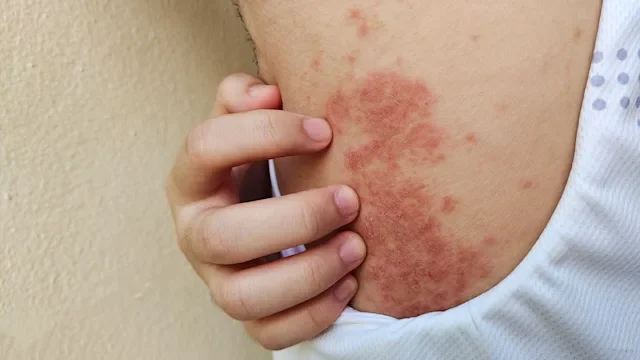
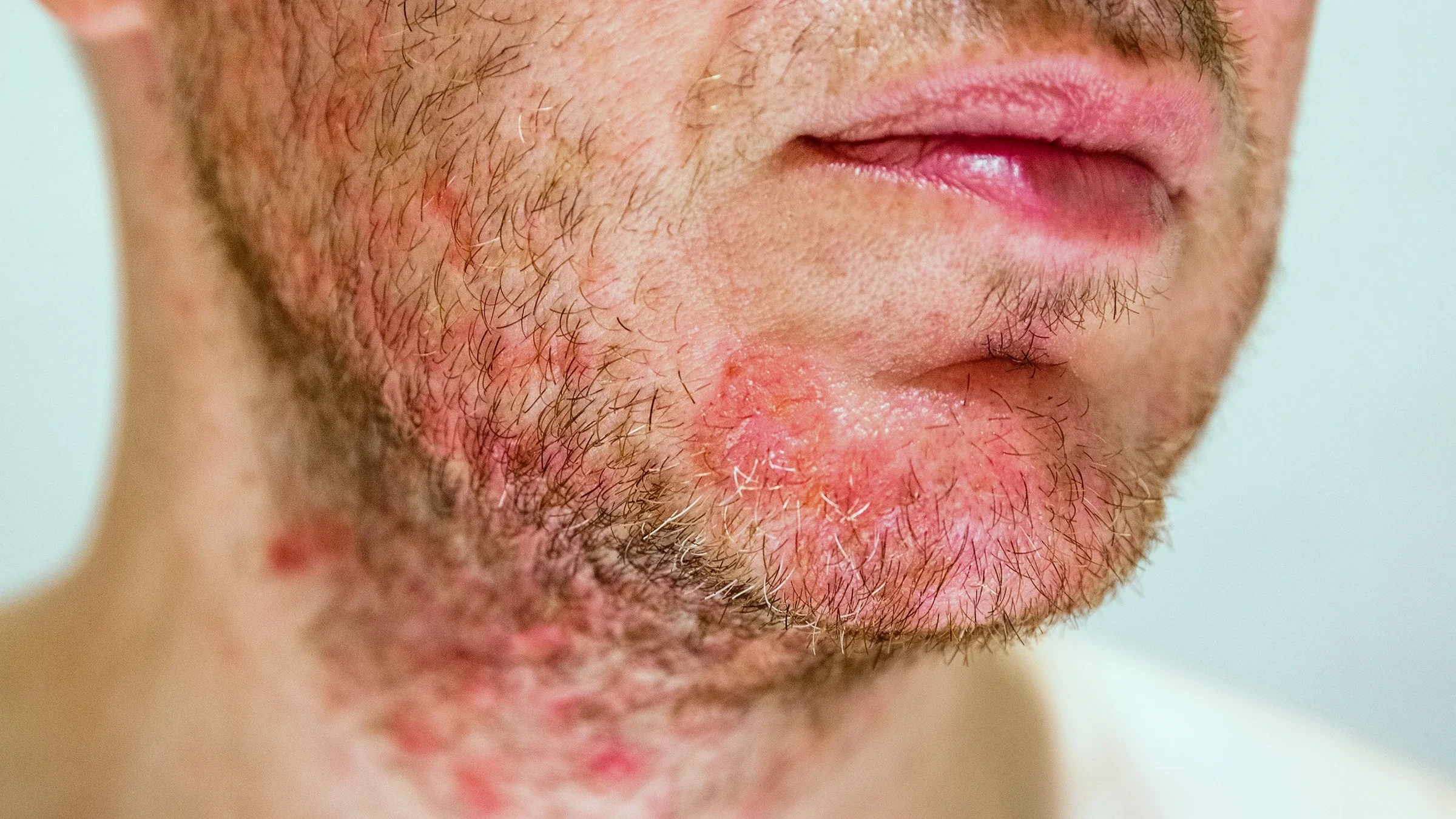
What does eczema look like on the face?
Here are some photos of eczema on the face to help you see what it looks like on different skin tones.


What causes facial eczema to develop?
There are a few different causes of facial eczema, and all of them can cause itchy patches on your face. Here are some of the most common ones:
Atopic dermatitis is the most common type of eczema, and it’s caused by a breakdown of the skin barrier. This is the outermost layer of skin that protects you from outside toxins and locks in moisture to keep skin hydrated. Atopic dermatitis can happen because of a person’s genetics, environment, or a combination of both.
Seborrheic dermatitis (dandruff) is caused by an overreaction to a yeast that normally lives on the skin.
Allergic contact dermatitis is when you develop an allergy to a certain product or item that touches your skin (like nickel or poison ivy).
Irritant contact dermatitis happens when your skin becomes irritated by a specific product (like chemicals or harsh soaps).
What triggers facial eczema?
There are many triggers for eczema on the face. They can vary from person to person and differ based on what’s causing the eczema.
Atopic dermatitis
Atopic dermatitis triggers include anything that can disrupt the skin barrier. Here are some common ones, plus ways to prevent them from causing an eczema flare:
Weather changes: Try to avoid going between extreme hot and cold temperatures.
Stress: Find ways to manage physical and emotional stress.
Skin irritation: Avoid excessive exfoliation and harsh soaps, and be sure to moisturize regularly.
Certain fabrics: Stick to breathable materials (like cotton and silk) and avoid rough ones (like wool or polyester).
Irritants: Avoid fragrances, dyes, formaldehyde, and other strong chemicals in products you use.
Seborrheic dermatitis
Some common triggers for seborrheic dermatitis include:
Stress
Hormonal changes
Some medications (like lithium)
Harsh hair products (like some chemicals and soaps)
Allergic contact dermatitis
Many different products and exposures can cause an allergic skin reaction. Sticking to hypoallergenic skin care products can help you avoid facial eczema. Here are some common triggers to watch out for:
Cosmetic ingredients (like hair dye and fragrances)
Metals (like nickel or cobalt)
Rubber and latex
Some plants (like poison ivy and sunflowers)
Irritant contact dermatitis
Many different products can also cause irritant contact dermatitis. Common ones include:
Cleaning products (like bleach and chlorine)
Water (like with frequent hand washing)
Personal care products (like ones with sodium lauryl sulfate)
Skin friction (like hats or headbands on your skin)
How do you treat eczema on the face?
Treatment for facial eczema depends on what’s causing it. For example, If you have allergic or irritant contact dermatitis, avoiding the specific trigger is usually enough to clear the eczema.
For other types of eczema, different treatments may be needed. No matter what you use, it’s important to remember that your facial skin is thinner and more sensitive than other parts of your body. So some treatments that work on the body shouldn’t be used on the face. Here are some over-the-counter (OTC) and prescription options.
OTC facial eczema treatments
Sometimes, OTC products are good enough to treat facial eczema. Options include:
Thick emollients, like Eucerin cream or Aquaphor
Hydrocortisone 1%, a low-strength steroid cream (don’t use for more than a week because it can thin out the skin)
Dandruff shampoo (for seborrheic dermatitis, apply to the skin in the shower and then wash after a few minutes)
Antihistamines (which can help with the itch from atopic dermatitis)
Prescription facial eczema treatments
Sometimes, stronger treatments are needed for facial eczema. Prescription antifungal creams (like ketoconazole) can be used for seborrheic dermatitis.
For facial eczema caused by atopic dermatitis, here are some prescription-strength options:
Nonsteroidal anti-inflammatory (NSAID) creams, like Elidel, Eucrisa, and Opzelura
Antihistamines, like hydroxyzine
Systemic treatments for severe cases, like Dupixent or Rinvoq
Targeted light therapy (the excimer laser)
Good skin care for facial eczema
When you have eczema on your face, good basic skin care can go a long way. Follow these steps to help protect your delicate skin barrier:
Wash your face with a gentle cleanser.
Avoid soaps, exfoliators, and toner.
Gently pat your skin dry with a soft towel. Avoid rubbing.
Apply a thick moisturizing cream or emollient after washing. Vaseline or Aquaphor can be useful at night.
Minimize the number of products you use on your face: Less is more.
Makeup can irritate eczema, so avoid using it on affected areas.
If you want to use makeup, stick to ones that don’t have common irritants, like essential oils, fragrance, or lanolin.
Keep in mind that even products that are labeled “natural” can irritate eczema and sensitive skin.
What types of rashes can look like eczema on the face?
Eczema on the face can look like other rashes. Sometimes, you may need to visit your primary care provider or dermatologist to get the right diagnosis. Here’s a breakdown of other common facial rashes and how you can tell the difference between them:
Psoriasis is a common skin condition that causes thick pink, red, or brown skin patches with a white or gray scale. Psoriasis is also common on the scalp, behind the ears, and on many other parts of the body.
Rosacea is a chronic skin condition that leads to persistent skin flushing and acne-like bumps, especially on the cheeks and nose. It can burn and be painful. Unlike eczema, rosacea usually isn’t itchy.
Systemic lupus erythematosus is an autoimmune condition that can affect the skin and other organs. It commonly causes a red or violet rash on the nose and cheeks in a “butterfly” pattern. Lupus usually isn’t itchy, but it can cause skin pain and burning.
Frequently asked questions
It depends. Small patches of eczema may resolve with gentle skin care and a moisturizer. But larger patches of eczema may itch more. This could lead to scratching, which in turn could cause a skin infection.
Untreated eczema can also lead to poor sleep and stress. Over time, it can cause thickened skin patches that are even harder to treat. In darker skin tones, it can also lead to discoloration that can take months to resolve.
This can happen for a variety of reasons. An unknown trigger (like stress) may have suddenly caused your eczema. Think about whether you’ve made any changes to the products you use on a daily basis. It’s possible that a new soap, lotion, or detergent could be the reason.
And, while it’s less likely, certain foods can also cause eczema flare-ups in some people. This is more common if you’re someone who gets allergies or has asthma or who has close family members with these conditions.
No, facial eczema isn’t contagious. It’s not caused by an infection, so you can’t catch it from touching someone or sharing personal items with someone who has eczema.
No, eczema isn’t caused by a fungal infection or fungus overgrowth. The most common type of eczema (atopic dermatitis) is caused by an overactive immune system. It’s common in people with asthma and allergies.
It depends. Small patches of eczema may resolve with gentle skin care and a moisturizer. But larger patches of eczema may itch more. This could lead to scratching, which in turn could cause a skin infection.
Untreated eczema can also lead to poor sleep and stress. Over time, it can cause thickened skin patches that are even harder to treat. In darker skin tones, it can also lead to discoloration that can take months to resolve.
This can happen for a variety of reasons. An unknown trigger (like stress) may have suddenly caused your eczema. Think about whether you’ve made any changes to the products you use on a daily basis. It’s possible that a new soap, lotion, or detergent could be the reason.
And, while it’s less likely, certain foods can also cause eczema flare-ups in some people. This is more common if you’re someone who gets allergies or has asthma or who has close family members with these conditions.
No, facial eczema isn’t contagious. It’s not caused by an infection, so you can’t catch it from touching someone or sharing personal items with someone who has eczema.
The bottom line
Many different conditions can cause eczema on the face, including atopic dermatitis, seborrheic dermatitis, and contact dermatitis. Sometimes, it can be hard to tell these conditions apart. But your primary care provider or dermatologist can help make the diagnosis and recommend the right treatment plan for you. Treatment starts with proper daily skin care and avoiding any known triggers. In addition, there are many OTC and prescription medications to manage symptoms.

Why trust our experts?




Images used with permission from VisualDx (www.visualdx.com)
References
Asthma and Allergy Foundation of America. (2024). Eczema.
National Eczema Association. (2022). 8 skincare ingredients to avoid if you have eczema, according to dermatologists.
National Eczema Association. (2025). Over-the-counter medications.
National Eczema Association. (2025). Seborrheic dermatitis.
National Health Service. (2023). Causes: Contact dermatitis.
Ngan, V. (2016). Excimer 308-nm light treatment. DermNet.
Tsakok, T., et al. (2018). Atopic dermatitis: The skin barrier and beyond. British Journal of Dermatology.