Key takeaways:
Lip eczema can look like lip dryness, cracks, swelling, or redness.
Allergies, lip licking, harsh products, and weather changes can trigger eczema on or around the lips.
Gentle, fragrance-free balms, and avoiding irritating products and lip licking can help heal lip eczema.
If your lips are always dry, cracked, or painful no matter what you try, you might not just have chapped lips — you could have lip eczema.
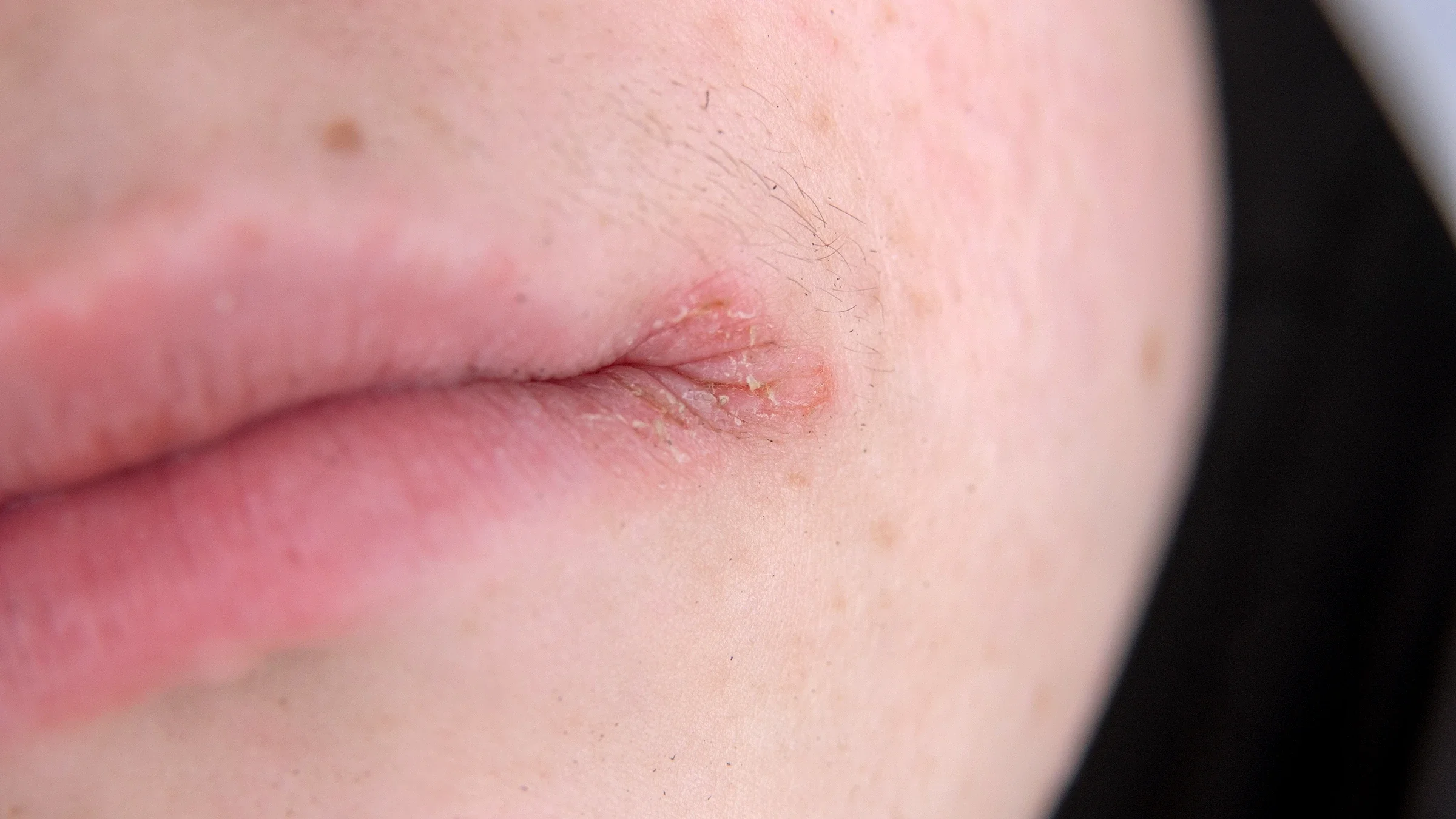
Lip eczema, or eczematous cheilitis, is a common type of eczema that affects the lips and skin around the mouth. Lip eczema can be uncomfortable and tough to treat. It may even change how you feel about your smile. Here’s what to know about the symptoms, causes, and treatments of lip eczema so you can get relief.
What are the symptoms of lip eczema?
Lip eczema can affect one or both lips as well as the skin around the mouth.
Search and compare options
Eczema on the lips can look like chapped lips early on. But over time they can get more severe. Symptoms of lip eczema include:
Redness
Cracking or splitting
Dryness
Irritation
Discomfort or pain
Swelling
Itching
These symptoms may cause pain and discomfort with chewing and speaking.
What causes eczema around the lips and mouth?
People with a history of atopic eczema can develop lip eczema. But you can also develop eczema on your lips even if you’ve never had eczema on other parts of your body. Here are some common triggers for lip eczema.
Foods or medications
Allergens are things that can trigger your immune system to attack your health tissue. Allergens that frequently touch your lips can trigger lip eczema. Common ones include food and medications, like medicated skin creams. Dental materials can also trigger lip eczema, this includes things like dentures, braces, or appliances.
Cosmetics and toothpaste
Cosmetics and toothpaste are another group of allergens that can trigger lip eczema. Lip balms, lipstick, and toothpaste may contain ingredients that trigger inflammation. Nail polishes and nail treatments can also trigger lip eczema, especially if you bite your nails, which brings these materials in frequent contact with your lips.
Keep in mind that you can develop a sensitivity to these items over time. So even if these items didn’t cause irritation in the past, it’s possible that they could be triggering lip eczema now.
Lip licking
It’s natural to lick your lips when they feel dry and chapped. But over time, lip licking will make your chapped lips more dry and irritated. Enzymes in saliva can remove the lips’ natural protective barrier, leading to dryness and inflammation.
Dry weather
Dry weather, whether it’s cold or hot, will cause your lips to dry out. This can trigger inflammation and lip eczema.
Medical conditions
People with a history of eczema or other types of allergies have a higher chance of developing eczema on their lips.
Is lip eczema contagious?
Lip eczema isn’t contagious and cannot be passed between people. Lip eczema is triggered by allergens or other irritants like lip licking and dry weather. It’s not caused by viruses or bacteria that can be spread to others.
How do you treat eczema on the lips?
Lip eczema treatment focuses on restoring the natural skin barrier on your lips and around your mouth. Treatment for lip eczema can include:
Moisturizers: The right moisturizer keeps your lips protected and hydrated. This eases your symptoms and allows your lips to heal and repair their natural barrier. You want to use nonirritating, bland lip balm to trap in the moisture and create a protective barrier. Choose a lip balm that doesn’t contain fragrances, dyes, flavorings, and other irritants. Ingredients reported to be helpful in soothing lips include ceramides, dimethicone, or petrolatum (Vaseline).
Prescription therapy: More severe lip eczema may need treatment with prescription creams or ointments. Your healthcare team or dermatologist may recommend topical steroids or tacrolimus therapy. Don’t use over-the-counter (OTC) steroids to treat lip eczema without talking with your healthcare team first. These products can contain ingredients that can worsen your symptoms or may not be safe to use around your mouth.
Antimicrobials: Lip eczema can get infected. Bacteria and fungi can take advantage of breaks in the skin barrier to cause an infection. Your healthcare team may recommend oral or topical antibiotics or antifungals if you have an infection.
Avoid triggers: It’s important to avoid any triggers so that your lip eczema doesn’t return. Your healthcare team can help you pinpoint triggers. They may also recommend allergy testing.
How can you prevent eczema flares around your mouth?
There are steps you can take to prevent future flares if you have lip eczema:
Keep your lips hydrated. Make sure to keep your lips moist, which protects their natural barrier and lowers the risk of inflammation. Use a gentle lip balm, especially in dry weather. Drink plenty of fluids to stay hydrated, too.
Avoid triggers. Check cosmetic labels to make sure they don’t contain things like menthol, camphor, peppermint oil, dyes, and fragrances. These things can trigger or worsen lip eczema. Avoid other products that have worsened or triggered lip eczema in the past.
Don’t lick or pick. Licking your lips or picking at dry skin can cause inflammation.
Frequently asked questions
Lip eczema symptoms include dry, itchy, red lips. Cold sores, which are caused by the herpes simplex virus, look like fluid-filled, painful blisters.
Yes, there are several vitamin deficiencies that can lead to lip eczema. Very low levels of iron, folate, riboflavin (vitamin B2), or vitamin B12 can trigger different skin conditions, including lip eczema. But it’s uncommon to develop these deficiencies.
Lip eczema can’t spread to other parts of your body. Lip eczema can affect the lips and the skin around the mouth, this is a normal part of lip eczema and not a type of “spread.”
Some people with lip eczema also have eczema on other parts of their body. But this doesn’t mean that lip eczema has spread to other parts of the body. This is just how eczema can affect your skin.
Lip eczema symptoms include dry, itchy, red lips. Cold sores, which are caused by the herpes simplex virus, look like fluid-filled, painful blisters.
Yes, there are several vitamin deficiencies that can lead to lip eczema. Very low levels of iron, folate, riboflavin (vitamin B2), or vitamin B12 can trigger different skin conditions, including lip eczema. But it’s uncommon to develop these deficiencies.
Lip eczema can’t spread to other parts of your body. Lip eczema can affect the lips and the skin around the mouth, this is a normal part of lip eczema and not a type of “spread.”
Some people with lip eczema also have eczema on other parts of their body. But this doesn’t mean that lip eczema has spread to other parts of the body. This is just how eczema can affect your skin.
The bottom line
Lip eczema can cause dry, chapped, painful lips. You can develop lip eczema even if you never had eczema on other parts of your body. But people with a history of eczema or allergies are more prone to lip eczema. Lip eczema can be triggered by lip cosmetics, medications, foods, and dry weather. You can protect your lips and prevent flare-ups by using a gentle lip balm and avoiding licking and picking. Talk with your healthcare team if these steps don’t improve your symptoms. You may need prescription treatment to help ease inflammation and restore your skin barrier.

Why trust our experts?


References
American Academy of Allergy, Asthma & Immunology. (n.d.). Allergy defined.
Bhutta, B. S., et al. (2023). Cheilitis. StatPearls.
Dyall-Smith, D. (2010). Eczematous cheilitis. DermNet.
Federico, J. R., et al. (2023). Angular cheilitis. StatPearls.
Fonseca, A., et al. (2020). Art of prevention: Practical interventions in lip-licking dermatitis. International Journal of Women’s Dermatology.
University Student Health Services. (2025). Dry lips & angular cheilitis.