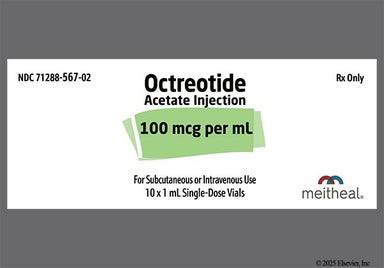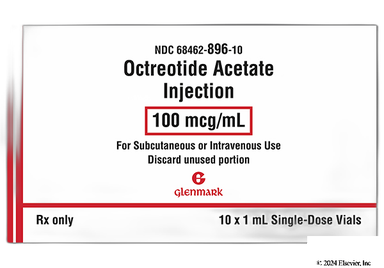
octreotide
Octreotide acetate, also known by its brand name Sandostatin, is a short-acting somatostatin analog injection used to treat acromegaly, a condition where your body makes too much growth hormone. It's also used to manage symptoms like diarrhea and flushing caused by certain tumors. It's typically injected under the skin 2 to 4 times per day. Octreotide injection is available in both brand-name and generic forms. Some common side effects include stomach pain, nausea, and pain at the injection site.


What is Octreotide?
What is Octreotide used for?
- Acromegaly
- Diarrhea and flushing linked to carcinoid tumors
- Diarrhea linked to vasoactive intestinal peptide tumors (VIPomas)
How Octreotide works
Octreotide is a somatostatin analog. This means it acts just like somatostatin, a hormone made by your body that blocks the release of many other hormones.
This medication treats acromegaly, a condition where your body makes too much growth hormone (GH), by blocking your body from releasing too much GH.
It treats flushing and diarrhea caused by carcinoid tumors and diarrhea linked to VIPomas by blocking or lowering certain activities in your stomach, such as blood flow and gut movement.
Drug facts
| Common Brands | Sandostatin |
|---|---|
| Drug Class | Somatostatin analog |
| Controlled Substance Classification | Not a controlled medication |
| Generic Status | Lower-cost generic available |
| Availability | Prescription only |

Side effects of Octreotide
The following side effects may get better over time as your body gets used to the medication. Let your healthcare provider know immediately if you continue to experience these symptoms or if they worsen over time.
Common Side Effects
- Gallbladder problems (63%)
- Diarrhea (34-61%)
- Nausea (34-61%)
- Stomach discomfort (34-61%)
- Low heart rate (25%)
- High blood sugar (16%)
- Low thyroid hormone (12%)
Less Common Side Effects
- Irregular heartbeat
- Pain at injection site
- Headache
- Dizziness
- Low blood sugar
Octreotide serious side effects
Contact your healthcare provider immediately if you experience any of the following.
- Dangerously low blood sugar: feeling faint, shaking, sweating, dizziness, fast heartbeat, nervousness, anxious, confused, irritable, feeling very hungry
- Dangerously high blood sugar: frequently thirsty, needing to urinate often, tiredness, nausea, vomiting, difficulty breathing, having fruity breath, having dry mouth
- Heart rhythm problems: chest pounding, fluttering in the chest, difficulty breathing, chest pain, feeling faint or lightheaded
- Swelling of the gallbladder or pancreas: sudden pain in upper right portion of your stomach area, back pain between your shoulder blades, nausea, vomiting, fever, swelling in the belly, fast heartbeat, difficulty breathing
- Serious allergic reaction: hives, swelling of the face or throat, trouble breathing, rash, itching
The following Octreotide side effects have also been reported
Along with its needed effects, a medicine may cause some unwanted effects. Although not all of these side effects may occur, if they do occur they may need medical attention.
Check with your doctor immediately if any of the following side effects occur:
More common
depressed mood
dizziness
dry skin and hair
fainting
fast, slow, or irregular heartbeat
feeling cold
hoarseness or husky voice
loss of appetite
muscle cramps and stiffness
severe stomach pain with nausea and vomiting
stomach pain
unusual tiredness or weakness
vomiting
Less common
bladder pain
bloody or cloudy urine
blurred vision
chills
cold sweats
collection of blood under the skin
confusion
cool, pale skin
deep, dark purple bruise
difficult, burning, or painful urination
flushed, dry skin
frequent urge to urinate
fruit-like breath odor
headache
increased hunger
increased thirst
increased urination
itching, pain, redness, or swelling
loss of consciousness
lower back or side pain
nervousness
nightmares
seizures
shakiness
slurred speech
sweating
swelling
trouble breathing
unexplained weight loss
Rare
Black, tarry stools
bleeding gums
blood in vomit
changes in skin color, pain, tenderness, swelling of the foot or leg
chest pain or tightness
coughing up blood
dark urine
decreased urine output
difficulty in breathing or swallowing
difficulty swallowing
dilated neck veins
extreme tiredness or weakness
fast, irregular, pounding, or racing heartbeat or pulse
increased menstrual flow or vaginal bleeding
irregular breathing
itching, pain, redness, swelling, tenderness, or warmth on the skin
light-colored stools
nosebleeds
pain in the groin or genitals
pale skin
paleness or cold feeling in the fingertips and toes
paralysis
pounding in the ears
prolonged bleeding from cuts
puffiness or swelling of the eyelids or around the eyes, face, lips, or tongue
red or dark brown urine
severe or continuing stomach pain
sharp back pain just below the ribs
swelling of the face, fingers, feet, or lower legs
tingling or pain in the fingers or toes when exposed to cold temperatures
unusual bleeding or bruising
upper right abdominal or stomach pain
yellow eyes and skin
Incidence not known
Blindness
clear or bloody discharge from nipple
decreased vision
delusions of persecution, mistrust, suspiciousness, and/or combativeness
dimpling of the breast skin
gaseous
indigestion
inverted nipple
lump in the breast or under the arm
pain or discomfort in the arms, jaw, back, or neck
pains in the stomach, side, or abdomen, possibly radiating to the back
persistent crusting or scaling of the nipple
pinpoint red spots on the skin
recurrent fever
redness of swelling of the breast
severe constipation
severe cramping
sore on the skin of the breast that does not heal
sores, ulcers, or white spots on the lips or in the mouth
stomach fullness
swollen glands
tearing
weakness of the muscles in your face
Get emergency help immediately if any of the following symptoms of overdose occur:
Symptoms of overdose
blurred vision
chills
cold sweats
coma
confusion
cool, pale skin
dizziness
fast heartbeat
feeling of warmth
headache
increased hunger
nervousness
nightmares
redness of the face, neck, arms and occasionally, upper chest
seizures
shakiness
slurred speech
unusual tiredness or weakness
Some side effects may occur that usually do not need medical attention. These side effects may go away during treatment as your body adjusts to the medicine. Also, your health care professional may be able to tell you about ways to prevent or reduce some of these side effects. Check with your health care professional if any of the following side effects continue or are bothersome or if you have any questions about them:
More common
Abnormal stool
excess air or gas in the stomach or bowels
full feeling
pain, redness, stinging, swelling, tingling, or burning sensation at the injection site
passing of gas
Less common
Backache
feeling of warmth
joint pain
redness of the face, neck, arms and occasionally, upper chest
Rare
Absent, missed, or irregular menstrual periods
change in vision
difficulty in moving
feeling of constant movement of self or surroundings
hearing loss
itching of the vagina or genital area
joint swelling or redness
loss of vision
memory loss
numbness or tingling of the hands, feet, or face
pain during sexual intercourse
sensation of spinning
stopping of menstrual bleeding
swelling of the breasts or breast soreness in both females and males
thick, white vaginal discharge with no odor or with a mild odor
unexpected or excess milk flow from the breasts
Incidence not known
Decreased interest in sexual intercourse
inability to have or keep an erection
loss in sexual ability, desire, drive, or performance
unexpected or excess milk flow from the breasts
Other side effects not listed may also occur in some patients. If you notice any other effects, check with your healthcare professional.
Call your doctor for medical advice about side effects. You may report side effects to the FDA at 1-800-FDA-1088.

Pros and cons of Octreotide
Pros
- Can be stored at room temperature for 2 weeks if needed
- Can be injected under the skin or through a vein
Cons
- Needs to be injected 2 to 4 times per day
- Can cause changes to your blood sugar and thyroid hormone levels

Pharmacist tips for Octreotide

- Octreotide interacts with many commonly used medications, such as certain heart medications (e.g., beta blockers) and diabetes medications. Make sure to tell your care team about all the medications you're taking, including over-the-counter medications, vitamins, and supplements, before and during treatment with octreotide.
- Octreotide raises the risk of unintended pregnancies for people who are able to become pregnant. If you're sexually active, ask your care team about the best birth control options for you.
- Octreotide can cause changes in your blood sugar. If you have diabetes, keep emergency glucose tablets or hard candy on you in case your blood sugar drops too low. If you experience symptoms of low blood sugar, such as feeling faint, shaking, and sweating, check and treat your blood sugar right away.
- Tell your prescriber if you notice a change of color in your stool, bloating, or more diarrhea after starting octreotide. They can check to make sure you have enough pancreas enzymes, since this medication can lower them.
- Check to see if your octreotide is either a single-dose or multi-dose vial. For single-dose vials, you must throw away the remainder of the medication after each use, even if there's still medication left.
- Store new and unused octreotide in the refrigerator and away from light. But you can store them at room temperature for up to 2 weeks if needed.
Tips on how to inject octreotide
- Before starting octreotide, make sure your care team teaches you how to give yourself an injection under the skin so that you avoid accidentally hurting yourself or wasting the medication.
- Always check your octreotide to make sure it's clear and colorless before use. If it's cloudy, discolored, or has particles, don't use it. Contact your prescriber or pharmacist for a possible replacement.
- When it's time for a dose, take the vial out of the refrigerator and place it on a flat surface at room temperature to warm up. Don't try to warm it up any other way, such as with a microwave, because doing so can damage your medication.
- Always use a new needle for each injection to help prevent infections and blocked needles. Don't reuse or share your needles with other people to avoid spreading infections.
- Inject the medication under the skin in either your stomach, thighs, or hips. Rotate between different injection sites to avoid irritation.
- Throw away all used needles and empty octreotide pens in a sharps container. This helps lower the risk of needle-stick injuries. Don't throw away needles and pens in your regular trash can.

Risks and warnings for Octreotide
Octreotide can cause some serious health issues. This risk may be even higher for certain groups. If this worries you, talk to your doctor or pharmacist about other options.
Changes in blood sugar
- Risk factors: Blood sugar problems
Octreotide can cause the hormones that control your blood sugar to be out of balance. This can result in low blood sugar or high blood sugar. Your prescriber might have you keep track of your blood sugar regularly, especially when you first start octreotide and when there's a change in your dose. If you're already taking diabetes medications, your doses might need to be adjusted. Be familiar with symptoms of high blood sugar, such as feeling very thirsty, needing to urinate often, and feeling very tired. Also, make sure you can recognize signs of low blood sugar, such as feeling faint, shaking, sweating, and dizziness. It's important to treat low blood sugar right away and get medical help if your symptoms don't improve because not doing so can become life-threatening. If you have any symptoms or questions about blood sugar problems, talk with your prescriber.
Heartbeat and heart rhythm problems
- Risk factors: Heartbeat or heart rhythm problems | Taking medications that affect your heartbeat or heart rhythm | Taking higher doses of octreotide | Receiving octreotide infused through a vein (IV)
Octreotide can cause heartbeat or heart rhythm problems, which can be life-threatening. Your risk for these problems is higher if you already have heart problems or are taking medications that can change your heartbeat and heart rhythm, such as beta-blockers. Make sure to tell your prescriber about all the medications you're taking and also check with them before you start any new medications. If you feel symptoms of heart problems, such as pounding chest, trouble breathing, feeling faint or lightheaded, or chest pain, call 911 right away.
Gallstones
Octreotide can raise your risk of gallstones and related problems, such as inflammation of your gallbladder, bile ducts, or pancreas. In very serious cases, your gallbladder might need to be removed. If you get symptoms of gallstones, such as sudden pain in the upper right portion of your stomach area, back pain between your shoulder blades, nausea, or vomiting, stop octreotide and get medical help right away.
Low thyroid hormone
Although rare, octreotide can lower the amount of thyroid hormone your body makes and cause hypothyroidism. Because of this, your prescriber might order lab work to check your thyroid hormones regularly while you take this medication. If you get symptoms such as tiredness, weight gain, and feeling cold, contact your prescriber right away.
Not absorbing nutrients properly
Octreotide can lead to poor absorption of nutrients, such as vitamin B12, fats, and zinc. If you experience symptoms like fats in your bowel movements, loose stools, weight loss, or stomach bloating talk with your prescriber.
In addition, changes in nutrient absorption might also affect the absorption of certain medications, such as cyclosporine. Let your prescriber know what other medications you're taking so they can see if their doses need to be adjusted.
Unintended pregnancies
Because octreotide affects the level of certain hormones, it can raise the risk of unintended pregnancies for those who are able to become pregnant. If you're sexually active and taking octreotide, ask your prescriber about what birth control options are best for you.

Octreotide dosage
 Ampule
| Dosage | Quantity | Price as low as | Price per unit |
|---|---|---|---|
| 1ml of 100mcg/ml | 1 ampule | $6.51 | $6.51 |
| 1ml of 50mcg/ml | 1 ampule | $5.87 | $5.87 |
| 1ml of 500mcg/ml | 1 ampule | $18.08 | $18.08 |
 Carton
| Dosage | Quantity | Price as low as | Price per unit |
|---|---|---|---|
| 10 prefilled 1ml syringes of 50mcg/ml | 6 cartons | $81.70 | $13.62 |
| 10 prefilled 1ml syringes of 100mcg/ml | 9 cartons | $209.32 | $23.26 |
| 10 prefilled 1ml syringes of 500mcg/ml | 1 carton | $131.53 | $131.53 |


Interactions between Octreotide and other drugs
Although certain medicines should not be used together at all, in other cases two different medicines may be used together even if an interaction might occur. In these cases, your doctor may want to change the dose, or other precautions may be necessary. When you are taking this medicine, it is especially important that your healthcare professional know if you are taking any of the medicines listed below. The following interactions have been selected on the basis of their potential significance and are not necessarily all-inclusive.
Using this medicine with any of the following medicines is not recommended. Your doctor may decide not to treat you with this medication or change some of the other medicines you take.
- Bepridil
- Cisapride
- Dronedarone
- Levomethadyl
- Mesoridazine
- Pimozide
- Piperaquine
- Saquinavir
- Sparfloxacin
- Terfenadine
- Thioridazine
- Ziprasidone
Using this medicine with any of the following medicines is usually not recommended, but may be required in some cases. If both medicines are prescribed together, your doctor may change the dose or how often you use one or both of the medicines.
- Acarbose
- Acecainide
- Acetophenazine
- Ajmaline
- Albiglutide
- Alfentanil
- Alogliptin
- Amiodarone
- Amisulpride
- Amitriptyline
- Amoxapine
- Anagrelide
- Apomorphine
- Aprindine
- Aripiprazole
- Aripiprazole Lauroxil
- Arsenic Trioxide
- Asenapine
- Astemizole
- Azimilide
- Azithromycin
- Bretylium
- Buprenorphine
- Buserelin
- Canagliflozin
- Ceritinib
- Chloral Hydrate
- Chloroquine
- Chlorpromazine
- Chlorpropamide
- Ciprofloxacin
- Citalopram
- Clarithromycin
- Clofazimine
- Clomipramine
- Clozapine
- Copper Cu 64 Dotatate
- Crizotinib
- Cyclosporine
- Dabrafenib
- Dapagliflozin
- Dasatinib
- Degarelix
- Delamanid
- Desipramine
- Deslorelin
- Desogestrel
- Deutetrabenazine
- Dibenzepin
- Dienogest
- Digoxin
- Dihydroergotamine
- Disopyramide
- Dofetilide
- Dolasetron
- Domperidone
- Donepezil
- Doxepin
- Droperidol
- Drospirenone
- Dulaglutide
- Efavirenz
- Empagliflozin
- Encainide
- Encorafenib
- Enflurane
- Entrectinib
- Ergotamine
- Ertugliflozin
- Erythromycin
- Escitalopram
- Estradiol
- Ethinyl Estradiol
- Ethopropazine
- Ethynodiol
- Exenatide
- Fentanyl
- Fingolimod
- Flecainide
- Flibanserin
- Fluconazole
- Fluoxetine
- Fluphenazine
- Formoterol
- Foscarnet
- Fostemsavir
- Gallium Ga 68 Dotatate
- Gallium Ga 68 Dotatoc
- Gatifloxacin
- Gemifloxacin
- Gestodene
- Glasdegib
- Glimepiride
- Glipizide
- Glyburide
- Gonadorelin
- Goserelin
- Granisetron
- Halofantrine
- Haloperidol
- Halothane
- Histrelin
- Hydroquinidine
- Hydroxychloroquine
- Hydroxyzine
- Ibutilide
- Iloperidone
- Imipramine
- Inotuzumab Ozogamicin
- Insulin
- Insulin Aspart, Recombinant
- Insulin Bovine
- Insulin Degludec
- Insulin Detemir
- Insulin Glargine, Recombinant
- Insulin Glulisine
- Insulin Lispro, Recombinant
- Isoflurane
- Isradipine
- Ivabradine
- Ivosidenib
- Ketoconazole
- Lapatinib
- Lefamulin
- Lenvatinib
- Levofloxacin
- Levonorgestrel
- Lidoflazine
- Linagliptin
- Liraglutide
- Lixisenatide
- Lofexidine
- Lopinavir
- Lorcainide
- Lumefantrine
- Lutetium Lu 177 Dotatate
- Macimorelin
- Mefloquine
- Mestranol
- Metformin
- Methadone
- Methotrimeprazine
- Metronidazole
- Mifepristone
- Miglitol
- Mirtazapine
- Moxifloxacin
- Nafarelin
- Nateglinide
- Nilotinib
- Nomegestrol
- Norethindrone
- Norfloxacin
- Norgestimate
- Norgestrel
- Nortriptyline
- Ofloxacin
- Ondansetron
- Osilodrostat
- Osimertinib
- Oxaliplatin
- Oxycodone
- Ozanimod
- Paliperidone
- Panobinostat
- Pasireotide
- Pazopanib
- Pentamidine
- Perphenazine
- Pimavanserin
- Pioglitazone
- Pipotiazine
- Pirmenol
- Pitolisant
- Ponesimod
- Posaconazole
- Prajmaline
- Pramlintide
- Probucol
- Procainamide
- Prochlorperazine
- Promazine
- Promethazine
- Propafenone
- Propiomazine
- Protriptyline
- Quetiapine
- Quinidine
- Quinine
- Ranolazine
- Repaglinide
- Ribociclib
- Risperidone
- Rosiglitazone
- Saxagliptin
- Selpercatinib
- Sematilide
- Sertindole
- Sertraline
- Sevoflurane
- Siponimod
- Sirolimus
- Sitagliptin
- Sodium Phosphate
- Sodium Phosphate, Dibasic
- Sodium Phosphate, Monobasic
- Solifenacin
- Sorafenib
- Sotalol
- Spiramycin
- Sulfamethoxazole
- Sulpiride
- Sultopride
- Sunitinib
- Tacrolimus
- Tedisamil
- Telavancin
- Telithromycin
- Temsirolimus
- Tetrabenazine
- Thiethylperazine
- Tolazamide
- Tolbutamide
- Toremifene
- Trazodone
- Triclabendazole
- Trifluoperazine
- Triflupromazine
- Trimeprazine
- Trimethoprim
- Trimipramine
- Triptorelin
- Vandetanib
- Vardenafil
- Vemurafenib
- Vildagliptin
- Vinflunine
- Voclosporin
- Voriconazole
- Zolmitriptan
- Zotepine
- Zuclopenthixol
Using this medicine with any of the following medicines may cause an increased risk of certain side effects, but using both drugs may be the best treatment for you. If both medicines are prescribed together, your doctor may change the dose or how often you use one or both of the medicines.
- Lisinopril
- Pegvisomant
- Telotristat Ethyl

How much does Octreotide cost?

What are alternatives to Octreotide?
People who are currently taking and have responded well to short-acting octreotide (Sandostatin) can take Sandostatin Lar Depot (octreotide) for:

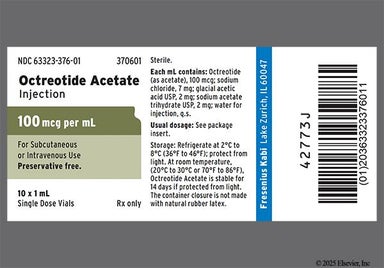
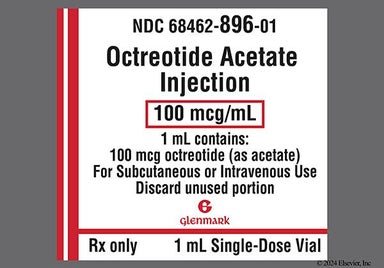
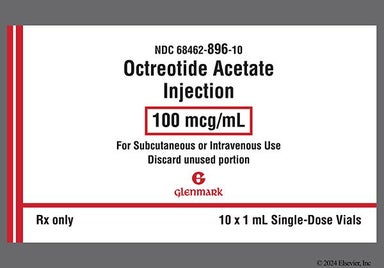
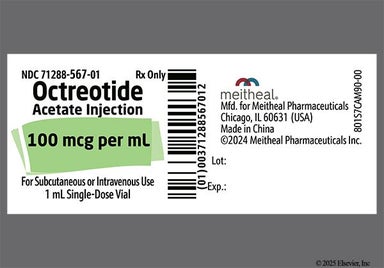
Octreotide images