Fiorinal is a combination medication that contains three active ingredients: butalbital (a barbiturate), aspirin (an NSAID), and caffeine (an adenosine antagonist). It's used to treat symptoms of tension headaches in adults. The brand name Fiorinal has been discontinued, but there are still lower-cost generic pills available. The medication is taken by mouth every 4 hours. The most common side effects are sleepiness and dizziness. This medication is a schedule III controlled substance because it has a risk of misuse and dependence.
Fiorinal is a controlled substance, which means that it's more likely to be misused or cause dependence. There are federal and state laws that limit the amount of medication that can be prescribed or dispensed within a certain period of time.
Caffeine is an adenosine antagonist. It blocks the activity of a natural chemical in the body called adenosine. It's unclear how exactly caffeine works for headaches, but it's thought to boost the pain-relieving activity of aspirin.
Fiorinal can cause some serious health issues. This risk may be even higher for certain groups. If this worries you, talk to your doctor or pharmacist about other options.
Stomach bleeding and ulcers
Risk factors: Older than 65 years of age | History of stomach bleeding or ulcers | History of conditions that cause bleeding | Drinking 3 or more alcoholic beverages per day
The aspirin in Fiorinal can irritate your stomach and can feel like stomach pain or heartburn. It can also lead to serious stomach problems, including bleeding and ulcers in this area. Stop using Fiorinal and get medical attention right away if you have stomach pain that doesn't get better; vomit or cough up blood or bits that look like coffee grounds; or have bloody or black, tarry stools. These can be signs of stomach bleeding or a stomach ulcer, and you should see a healthcare professional (HCP) to help manage and treat it.
Kidney problems
Risk factors: History of kidney or liver problems | History of heart failure | Taking Fiorinal for a long time | Taking certain blood pressure medications (water pills, ACE inhibitors, or ARBs) | Low fluids in the body | Age 65 years and older
Fiorinal contains aspirin. At high doses, aspirin can sometimes raise the risk for kidney damage. The risk might be higher if you're taking certain medications that can harm your kidneys, such as ACE inhibitors (e.g., lisinopril (Zestril)) and diuretics (water pills). Stop taking Fiorinal and let your prescriber know if you're not urinating as often as usual or if you have muscle weakness, numbness in your arms or legs, or a fast heartbeat. These can be signs of kidney damage.
Reye's syndrome in children
Risk factors: Children 18 years or younger recovering from chickenpox or flu-like symptoms
Fiorinal isn't approved for children. This medication contains aspirin. And aspirin use in children, especially those recovering from flu-like symptoms or other viruses, is linked to a rare but serious and life-threatening condition called Reye's syndrome. Early symptoms can include vomiting, headache, confusion, and changes in behavior. If left untreated, it can lead to seizures and loss of consciousness. Ask a healthcare professional for recommendations on treating headaches in children.
Difficulty concentrating and extreme sleepiness
Risk factors: Taking higher doses of Fiorinal | Age 65 years or older | Drinking alcohol | Taking other medications that can cause sleepiness
Fiorinal contains butalbital, which can cause extreme sleepiness and lower your ability to think, react, and focus. Your risk is higher if you drink alcohol with Fiorinal. Your risk is also higher if you take other medications that can make you sleepy or have "brain fog", such as benzodiazepines and muscle relaxants. Make sure you know how Fiorinal affects you before driving a car or doing activities that require your concentration. Talk to your HCP right away if you feel too sleepy from taking Fiorinal.
Potential for misuse, dependence, and withdrawal
Risk factors: Taking Fiorinal longer than prescribed | Taking higher doses of Fiorinal than prescribed | Taking Fiorinal more often than prescribed
Fiorinal contains butalbital, which has a potential for misuse. Misuse can lead to accidental overdose, which can be life-threatening. Call for emergency medical help if you have symptoms like extreme sleepiness, trouble breathing, dizziness, confusion, or loss of consciousness. These can be signs that you might've taken too much butalbital.
Butalbital can also become habit-forming, especially if it's taken for a long period of time. And when you suddenly lower your dose or stop taking the medication, you might have withdrawal symptoms, like restlessness, trouble sleeping, and shakiness. To lower the risk of physical dependence, don't take Fiorinal longer than prescribed, at higher doses than prescribed, or more often than prescribed. Talk to your prescriber about how to stop the medication safely if you no longer want to take Fiorinal.
Severe allergic reactions and skin reactions
Severe allergic reactions to Fiorinal are possible. These reactions can include anaphylaxis (closing of the throat), which can be life-threatening. Let your prescriber know if you have an allergy to aspirin or other NSAIDs before you start taking Fiorinal. Call 911 if you have hives; trouble breathing; or swelling of your face, lips, or tongue.
The following side effects may get better over time as your body gets used to the medication. Let your healthcare provider know immediately if you continue to experience these symptoms or if they worsen over time.
Common Side Effects
Sleepiness
Dizziness
Less Common Side Effects
Lightheadedness
Nausea
Vomiting
Passing gas
Fiorinal serious side effects
Contact your healthcare provider immediately if you experience any of the following.
Stomach bleed: feeling faint or dizzy, long-lasting stomach pain, coughing up or vomiting blood, bloody or dark-colored stools
Signs of overdose: not responding to sound or touch, extreme sleepiness, slow breathing, dizziness, extremely low blood pressure, restlessness, confusion, unaware of your surroundings, stomach pain, vomiting, seizures, ringing in your ears
The following Fiorinal side effects have also been reported
Along with its needed effects, a medicine may cause some unwanted effects. Although not all of these side effects may occur, if they do occur they may need medical attention.
Check with your doctor immediately if any of the following side effects occur:
Some side effects may occur that usually do not need medical attention. These side effects may go away during treatment as your body adjusts to the medicine. Also, your health care professional may be able to tell you about ways to prevent or reduce some of these side effects. Check with your health care professional if any of the following side effects continue or are bothersome or if you have any questions about them:
Can cause bothersome withdrawal symptoms if you suddenly stop the medication after taking it for a long time
Hasn't been studied in children
Pharmacist tips for Fiorinal
Take Fiorinal exactly as prescribed. Don't change your dose or stop taking it without talking to your prescriber first. This medication can be habit-forming, and lowering the dose or stopping it too suddenly can lead to withdrawal symptoms, like anxiety and sleeping problems.
You can take Fiorinal with or without food. You can try taking the medication with food to help prevent or lessen stomach upset if it's hurting your stomach.
Even though Fiorinal contains caffeine, it also contains butalbital, which commonly causes sleepiness and dizziness. Don't drive or do anything requiring concentration until you know how this medication affects you.
Avoid alcohol while you're taking Fiorinal. Alcohol can worsen side effects like drowsiness and dizziness. It can also raise your risk for heartburn and stomach ulcers from the aspirin in the medication. What's more, alcohol can worsen headaches.
Avoid drinking coffee or consuming other sources of caffeine until you know how Fiorinal affects you. Each pill contains 40 mg of caffeine. Too much caffeine can make you nervous, shaky, or restless. It can also cause fast heart rate and trouble sleeping. Take the lowest possible amount of Fiorinal.
Tell your prescriber if you notice ringing in the ears or loss of hearing after you start using Fiorinal. These are possible side effects of aspirin. The ringing sound should go away and your hearing should return after you stop taking the medication.
Tell your care team about all the medications you're taking, especially if you're taking blood thinners, benzodiazepines, or barbiturates. Some medications can raise your risk for side effects when they're taken with Fiorinal. Your healthcare team can make sure all your medications are safe to take together.
Don't take multiple medications containing an NSAID unless your primary care provider specifically said it's okay because this can be harmful. Many over-the-counter medications for pain, headache, cold, and flu contain NSAIDs like aspirin and ibuprofen. Check with a member of your care team if you're not sure whether a medication contains an NSAID.
Fiorinal dosage
The average cost for 30 capsules of 50mg/325mg/40mg of Fiorinal is $20.07 with a free GoodRx coupon. This is 60.41% off the average retail price of $50.70.
Fiorinal may interact with certain medications or supplements. Always let your doctor and pharmacist know about any other medications or supplements (including prescribed and over-the-counter medications, vitamins, and dietary or herbal supplements) that you are currently taking. The list below does not include all possible drug interactions with Fiorinal. Please note that only the generic name of each medication is listed below.
Although certain medicines should not be used together at all, in other cases two different medicines may be used together even if an interaction might occur. In these cases, your doctor may want to change the dose, or other precautions may be necessary. When you are taking any of these medicines, it is especially important that your healthcare professional know if you are taking any of the medicines listed below. The following interactions have been selected on the basis of their potential significance and are not necessarily all-inclusive.
Using medicines in this class with any of the following medicines is not recommended. Your doctor may decide not to treat you with a medication in this class or change some of the other medicines you take.
Using medicines in this class with any of the following medicines is usually not recommended, but may be required in some cases. If both medicines are prescribed together, your doctor may change the dose or how often you use one or both of the medicines.
Contraindications are specific health conditions or situations in which a person should not take a medication due to safety concerns. If you have any of the following conditions or if any of the following apply to you, let your healthcare provider know because Fiorinal will not be safe for you to take.
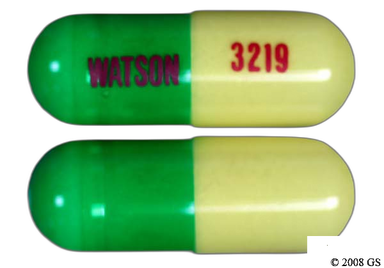
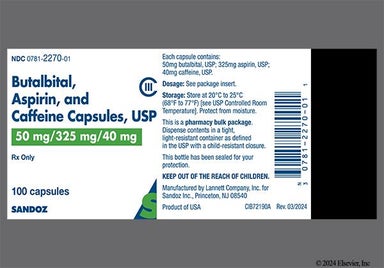
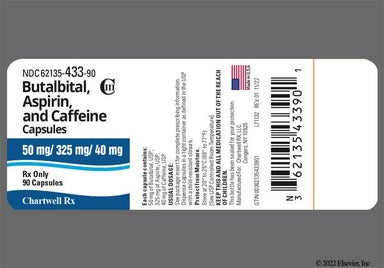
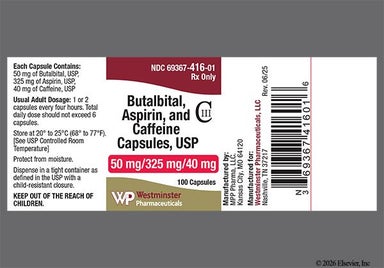
This medicine is Green Capsule Imprinted With "Lannett 0527/1552", "Logo Lannett 1552".Green Capsule LANNETT 0527/1552 - Butalbital/Aspirin/Caffeine 50mg-325mg-40mg CapsuleThis medicine is Green, Yellow Capsule Imprinted With "Watson 3219".Green, Yellow Capsule WATSON 3219 - Butalbital/Aspirin/Caffeine 50mg-325mg-40mg CapsuleThis medicine is Green Capsule Imprinted With "Sandoz 1552".Green Capsule SANDOZ 1552 - Butalbital/Aspirin/Caffeine 50mg-325mg-40mg CapsuleThis medicine is Green Capsule Imprinted With "Logo Lannett 1552".Green Capsule LOGO LANNETT 1552 - Butalbital/Aspirin/Caffeine 50mg-325mg-40mg CapsuleThis medicine is Green, White Capsule Imprinted With "Nb 534".Green, White Capsule NB 534 - Butalbital/Aspirin/Caffeine 50mg-325mg-40mg Capsule
References
Best studies we found
Chapman, J., et al. (2023). Reye syndrome. StatPearls.
GoodRx Health has strict sourcing policies and relies on primary sources such as medical organizations, governmental agencies, academic institutions, and peer-reviewed scientific journals. Learn more about how we ensure our content is accurate, thorough, and unbiased by reading our editorial guidelines.
Prescription savings
Stop paying too much for your prescriptions. Compare prices, get pharmacy coupons, and save up to 80%.
Plans start at $9.99/mo. (when paid yearly). Terms apply.
Common questions about Butalbital/Aspirin/Caffeine
Yes, Fiorinal is a schedule III controlled substance. This medication contains butalbital, which has a risk for misuse and dependence. To lower these risks, the healthcare professional will prescribe the lowest dose of Fiorinal for the shortest period of time needed to treat your headaches. Make sure to take Fiorinal exactly as prescribed.
Fiorinal and Fioricet both contain butalbital, which is a medication that can be misused and become habit-forming. Because of the butalbital, Fiorinal is classified as a controlled substance in all states. But because Fioricet also contains acetaminophen, Fioricet is a controlled substance only in some states. Originally, regulators thought that the acetaminophen discourages people from misusing Fioricet because too much acetaminophen can cause harm, such as liver damage. So the regulators let each state decide how to classify Fioricet. But recent data shows that having acetaminophen in Fioricet might not be enough to stop people from misusing the medication. So there's a possibility that state laws might change in the future and Fioricet might be classified as a controlled substance in all states, just like Fiorinal.
Fiorinal contains butalbital, aspirin, and caffeine. It takes about a week for butalbital and about 15 hours for both aspirin and caffeine to leave your body after a single dose. This time frame is estimated based on the half-life for each ingredient in Fiorinal. But this can differ from person to person based on factors such as age, liver health, and kidney health. Talk with your healthcare team if you have specific concerns about how long Fiorinal might stay in your body.
No, don't take Fiorinal with ibuprofen (Advil) or other non-steroidal anti-inflammatory drug (NSAIDs). Each Fiorinal pill contains 325 mg of aspirin. Taking multiple NSAIDs together, such as ibuprofen (Advil) and aspirin, raises your risk for side effects, serious heart problems, kidney problems, and stomach bleeding and ulcers. Instead of ibuprofen (Advil), you can take acetaminophen (Tylenol) if you need additional pain relief. But keep in mind that acetaminophen might not be the best choice for people with liver problems; when the liver can't break down acetaminophen well, it can lead to toxic buildup in the body. To be safe, ask a pharmacist for suggestions about safe pain medications to use with Fiorinal.
You can take Fiorinal as often as every 4 hours, up to 6 pills per day, to relieve pain for tension headaches. But your healthcare professional might prescribe a different dose for you. It's important to follow your prescriber's exact instructions so the medication is as safe as possible for you. Taking higher doses of Fiorinal or taking it for a long period of time can cause dependence. This can also lead to rebound headaches or medication-overuse headaches — when headaches come back as a result of taking too much medication. In general, avoid taking Fiorinal for more than 10 days in a month or for more than 3 months. Talk to your prescriber about other options to relieve your headaches.
In general, it isn't recommended to take Fiorinal if you're pregnant. The FDA recommends avoiding medications containing aspirin at doses of 325 mg or greater, such as Fiorinal, at 20 weeks or later of pregnancy. There's a potential risk for kidney and heart problems in your unborn baby and complications like low amniotic fluid. Talk to your obstetrician-gyncelogist (OB-GYN) about safer options to treat your headaches during pregnancy.
Taking Fiorinal generally isn't recommended if you're breastfeeding. Fiorinal contains butalbital. Butalbital can get into breast milk, and there have been reports of poor feeding and vomiting in breastfed babies. Talk to your prescriber about safer options to treat your headaches while you're breastfeeding.
The brand-name product, Fiorinal, has been discontinued and is no longer available. But there are generic versions of the medication still available on the market.