Key takeaways:
Botox treats chronic migraines by reducing the frequency and severity of migraine attacks.
Side effects from Botox injections are rare, but some people experience pain and muscle weakness where the medication was injected.
Many health insurance plans will cover the cost of Botox, but you may have to try other treatments first.
Save on related medications
If you’ve ever had a migraine, you know that it’s more than just a headache. Along with throbbing head pain, you may experience nausea, vomiting, and sensitivity to light. For many people, migraine symptoms are so severe that they can interfere with normal life.
Fortunately, there are different treatments for migraines. Botox is one you may have heard about. Here, we’ll talk about how Botox works for migraines and if it’s a good treatment option for you.
Can Botox injections treat migraines?
Yes, Botox injections can be used to treat migraines, but it’s not clear how Botox works for this purpose. One theory is the medication may help block some of the pain signals in the nerves that cause migraines.
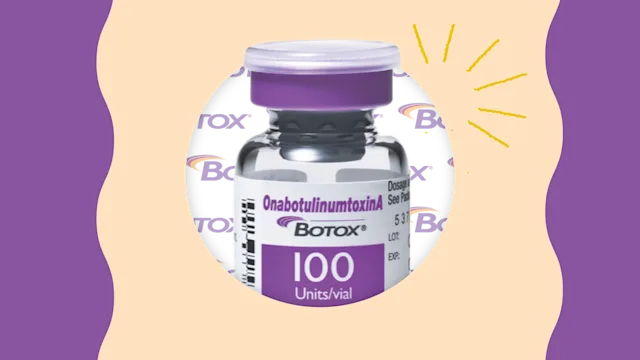
Botox contains a compound called onabotulinumtoxinA. This compound is naturally produced by Clostridium botulinum, a bacteria found in soil. It’s a neurotoxin, which means it blocks nerve activity. This includes blocking signals for pain and muscle movement, which temporarily paralyzes muscles.
Botulism toxin can be deadly. But when it’s refined for commercial use, it’s safe and works to treat several conditions, including:
Overactive sweating (hyperhidrosis)
Crossed eyes (strabismus)
Prolonged eye twitching (blepharospasm)
Stiffness and/or spasms (spasticity) in the arms or legs
Chronic anal fissures and anal sphincter muscle spasms
Abnormal neck contraction (cervical dystonia)
Treatment and prevention of wrinkles
Where is Botox for migraines injected?
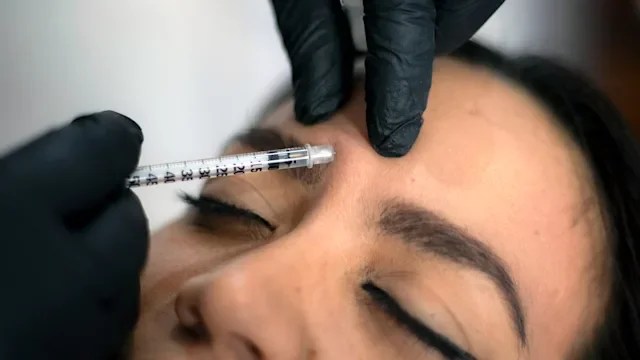
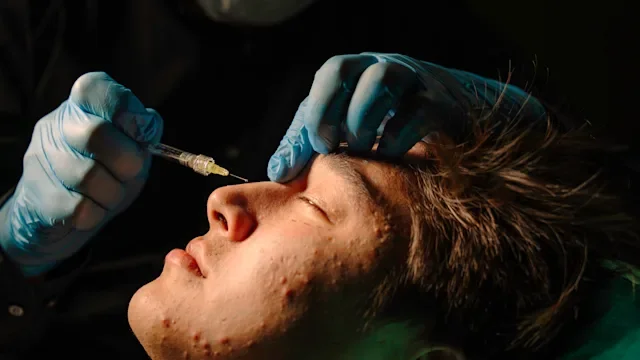
Unlike other migraine treatments, Botox is given as a series of small injections directly into the forehead muscle.
When Botox is used to treat migraines, it’s usually injected into the:
Forehead and scalp
Bridge of the nose
Temples
Back of the head and neck
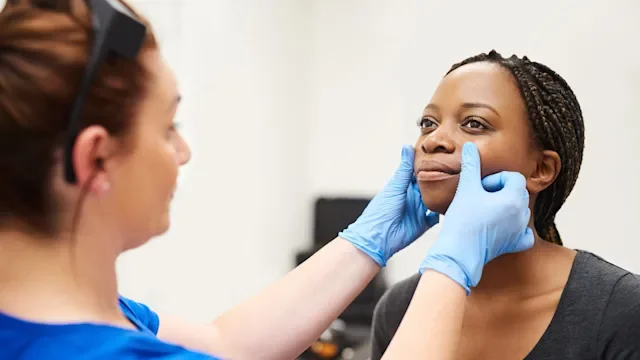
Keep in mind that the exact injection spots may vary from person to person. A healthcare professional will pick locations depending on your anatomy and where you have pain points.
How many Botox injections are given in a single session?
In a single treatment session, between 30 and 40 shots are given throughout 7 different parts of the forehead, head (side and back), and neck (upper and lower).
How long is a treatment session?
Each treatment cycle can take about 10 to 20 minutes. It’s important that the correct sites are treated. Otherwise, the treatment may not work as well.
What are common side effects of Botox for migraines?
There are very few side effects that can occur with Botox treatments. The needle used is very small. While some people may feel a small pinch with the injection, many don’t feel anything.
Other Botox side effects can include:
Neck pain
Muscle weakness
Swelling and/or bruising at the injection site
Dry skin, dry mouth, or dry eyes
Eye problems like blurry vision or double vision
Droopy eyelids
Rarely, people can experience eyelid drooping, vision changes, or muscle weakness in areas farther away from the injection site.
How much does it cost to get Botox for migraines?
For chronic migraines, the FDA recommends using 155 units of Botox per treatment. This can cost between $300 and $600. There’s a “Botox savings card,” which can help defer some of these costs if your insurance doesn’t cover Botox treatment.
Does insurance cover Botox injections for migraines?
Since Botox is an approved treatment for chronic migraines, many insurance companies will cover some — or all — of the costs. This includes both Medicare and Medicaid plans.
That said, depending on your health plan, you may need to take some additional steps to get covered.
Who is eligible to get Botox injections for migraines?
You may need to meet certain criteria to get Botox approved by your insurance company. This can include things like:
History of chronic migraines (15 or more headaches each month for at least 3 months)
History of trying at least two other treatments without any improvement
To confirm this, they may ask that you work with a healthcare professional to submit a prior authorization form.
Like with any prescription medication, it’s important to work with your prescriber and insurance company. They can help you see what part of your treatment is covered and what you’ll be expected to pay out of pocket.
Can Botox injections be used for other headaches?
Maybe. Some studies show that Botox can help treat other types of headaches, like tension-type headaches. But in other studies, Botox wasn’t helpful in preventing future episodes of chronic headaches.
Right now, there’s no reliable evidence that Botox is helpful for treating or preventing other types of chronic headaches. So, while you may be able to access Botox treatment for headaches, there’s no guarantee the treatment will help.
Will insurance cover Botox injections for other types of headaches?
Botox is only FDA approved to treat chronic migraines. Botox for other types of headaches is considered off-label treatment. This means that your insurance company may not cover the cost of the medication or the visit to have Botox injections. Cost and uncertainty are the two main reasons Botox isn’t a commonly used treatment for other types of headaches.
How long does a Botox injection for migraines last?
Botox injections usually last 10 to 12 weeks. After that, the toxin starts to wear off, and the nerve cells recover and can send pain signals once more. So, Botox won’t cure your chronic migraines. Most people need at least four Botox treatments per year to keep their chronic migraines under control.
How long does it take for Botox to start helping with migraines?
Also, keep in mind that it can take a few weeks to see an effect from Botox, so you may not notice a change in your headaches right away. Also, while many people feel a difference after just one Botox treatment, it can take two or three treatments to get the maximum relief from Botox.
How often is Botox needed to prevent migraines?
It’s recommended that a treatment cycle be given every 3 months to help manage migraine attacks. Your prescriber will work with you to see how long you need to continue Botox, based on how you respond to treatment. And they may recommend that you keep taking other migraine medications until you see an improvement.
When should you consider Botox for migraines?
For people who have tried other migraine treatments without success, or who have had side effects from those treatments, Botox may be a good option.
Most people turn to Botox treatments to stop chronic migraines when they don’t do well with other prevention treatments, like:
Beta blockers, such as propranolol (Inderal)
Antidepressants, such as amitriptyline (Elavil)
Antiepileptics, such as topiramate (Topamax) or valproic acid (Depakene)
Calcitonin gene-related peptide (CGRP) antagonists, such as erenumab (Aimovig) or rimegepant (Nurtec ODT)
Many people with chronic migraines will respond well to one or more of these treatments. But for others, these medications may not work. That’s where Botox comes in.
For this group, adding Botox to a chronic migraine treatment plan can give people more pain-free days and shorter headaches during migraine attacks. In studies, people who received Botox had 2 fewer migraine days per month than people in the placebo (control) group. The people who continued Botox treatment were still experiencing fewer headache days up to a year later.
Frequently asked questions
Botox for migraines works by relaxing muscles in the forehead, temples, and neck to ease tension. It does this without changing your appearance. However, with consistent treatments, these muscles may gradually shrink, which can result in subtle shifts like a slightly slimmer forehead or temples. Most people don’t notice a big difference. But if you do, the healthcare professional can adjust the dosage or injection sites to maintain balance.
After getting Botox injections, try to avoid these activities for 24 hours:
Strenuous exercise (like jogging or heavy weightlifting)
Washing your hair
Extreme heat (like a sauna)
Cleaning or scrubbing your skin where you got shots
This helps prevent infection and makes sure the medicine gets completely absorbed.
Botox is a great option for chronic migraines, but it’s not the only one. If you’re looking for alternatives, you can try CGRP inhibitors, like Aimovig, Emgality, or Ajovy. These are newer migraine prevention treatments that might work even better.
Lifestyle strategies can also make a big difference, like managing stress, improving sleep, and identifying food triggers. The best treatment depends on your specific symptoms, so talk with a healthcare professional about what might work best for you.
Botox for migraines works by relaxing muscles in the forehead, temples, and neck to ease tension. It does this without changing your appearance. However, with consistent treatments, these muscles may gradually shrink, which can result in subtle shifts like a slightly slimmer forehead or temples. Most people don’t notice a big difference. But if you do, the healthcare professional can adjust the dosage or injection sites to maintain balance.
After getting Botox injections, try to avoid these activities for 24 hours:
Strenuous exercise (like jogging or heavy weightlifting)
Washing your hair
Extreme heat (like a sauna)
Cleaning or scrubbing your skin where you got shots
This helps prevent infection and makes sure the medicine gets completely absorbed.
Botox is a great option for chronic migraines, but it’s not the only one. If you’re looking for alternatives, you can try CGRP inhibitors, like Aimovig, Emgality, or Ajovy. These are newer migraine prevention treatments that might work even better.
Lifestyle strategies can also make a big difference, like managing stress, improving sleep, and identifying food triggers. The best treatment depends on your specific symptoms, so talk with a healthcare professional about what might work best for you.
The bottom line
Botox is an effective treatment for chronic migraines. It’s given as a series of injections into muscles of the scalp, face, and/or neck. The number and frequency of injections varies by person, but you may need treatment every 3 months to manage migraine attacks. Possible side effects include mild pain and muscle weakness near the injection sites.
If you have chronic migraines that haven’t improved with other treatments, talk with a healthcare professional to see whether Botox injections may be a good choice for you.

Why trust our experts?



References
Allergan. (2023). BOTOX- onabotulinumtoxina injection, powder, lyophilized, for solution [package insert]. DailyMed.
American Migraine Foundation. (2017). Botox for migraine.
Becker, W. J. (2020). Botulinum toxin in the treatment of headache. Toxins.
Bhola, R. (2021). Botox for migraine: What to expect. Migraine Trust.
Botox. (n.d.). Cost and savings.
Botox. (n.d.). Tips and resources for managing chronic migraine.
Centers for Disease Control and Prevention. (2024). About botulism.
Diener, H. C., et al. (2010). OnabotulinumtoxinA for treatment of chronic migraine: Results from the double-blind, randomized, placebo-controlled phase of the PREEMPT 2 trial. Cephalalgia.
Do, T. P., et al. (2018). Botulinum toxin: A review of the mode of action in migraine. Acta Neurologica Scandinavica.
Durand, P. D., et al. (2016). Botulinum toxin and muscle atrophy: A wanted or unwanted effect. Aesthetic Surgery Journal.
Frampton, J. E., et al. (2018). OnabotulinumtoxinA: A review in the prevention of chronic migraine. Drugs.
Herd, C. P., et al. (2018). Botulinum toxins for the prevention of migraine in adults. Cochrane Database of Systematic Reviews.
Herd, C. P., et al. (2019). Cochrane systematic review and meta-analysis of botulinum toxin for the prevention of migraine. BMJ Open.
Lanteri-Minet, M., et al. (2022). Effectiveness of onabotulinumtoxinA (BOTOX®) for the preventive treatment of chronic migraine: A meta-analysis on 10 years of real-world data. Cephalalgia.
Talbot, J. H., et al. (2022). OnabotulinumtoxinA for the treatment of headache: An updated review. Journal of Integrative Neuroscience.