Used for Bacterial Infection, Ear Infection, Lower Respiratory Infection, Sinus Infection, Skin Infection, Upper Respiratory Infection, Urinary Tract Infection
Used for Bacterial Infection, Ear Infection, Lower Respiratory Infection, Sinus Infection, Skin Infection, Upper Respiratory Infection, Urinary Tract Infection
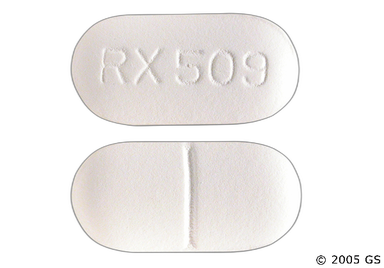
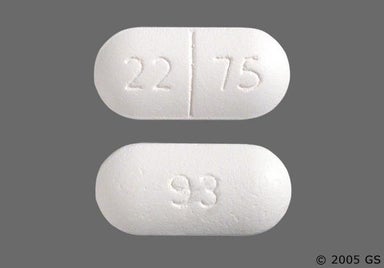
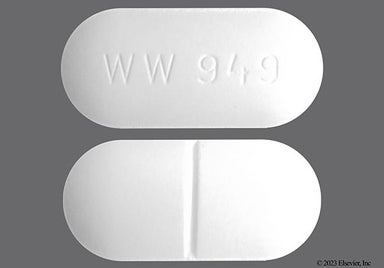
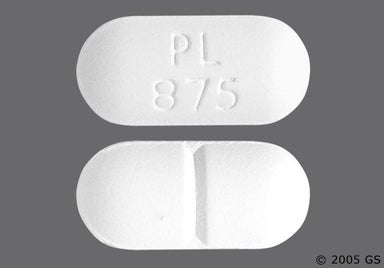
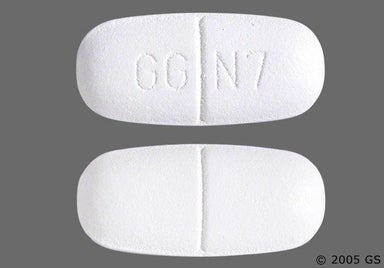
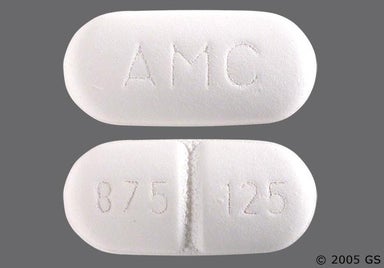
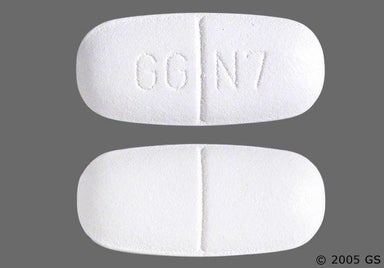
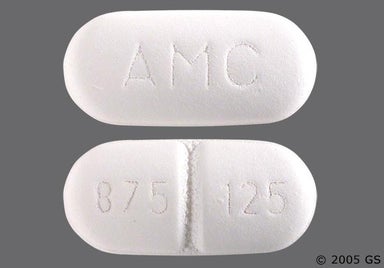
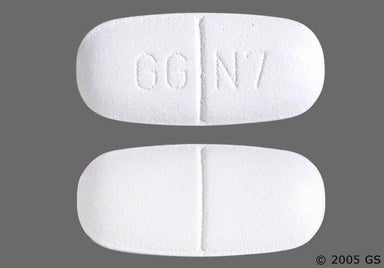
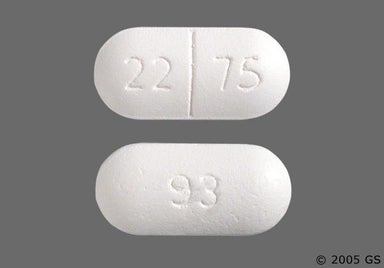
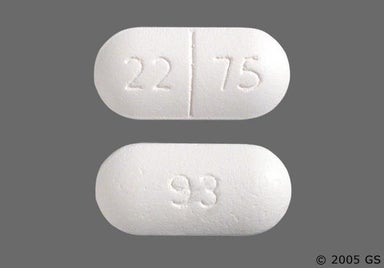
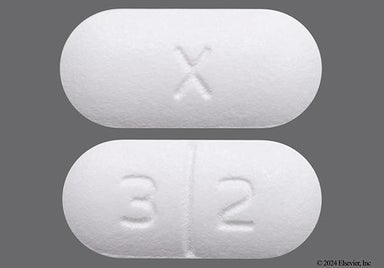
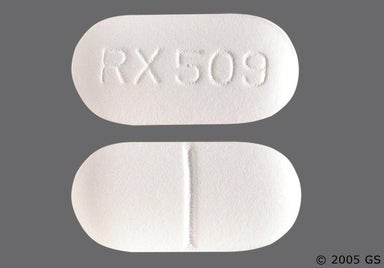
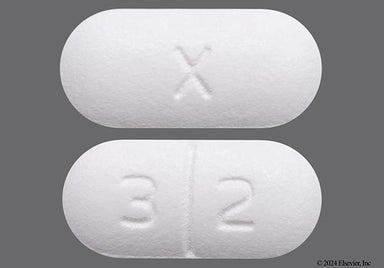
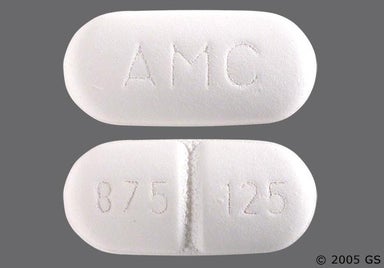
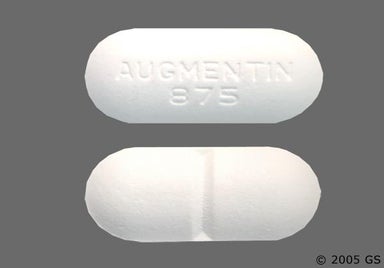
Augmentin (amoxicillin / clavulanate) is an antibiotic medication. It contains a penicillin and a beta-lactamase inhibitor. This antibiotic treats many types of bacterial infections, like urinary tract infection (UTI), sinus infection, and ear infection, among others. It fights infections by preventing bacteria from protecting themselves from harm. This medication comes as tablets, chewable tablets, and a suspension that are taken by mouth typically two to three times daily. It's approved for use in adults and children. Common side effects include diarrhea, nausea, and rash.
Augmentin (amoxicillin / clavulanate) is a combination of two medications that work together to treat infections.
Amoxicillin belongs to a drug class called penicillin antibiotics. It kills bacteria by preventing them from making their protective covering that normally shields them from harm.
Clavulanate (also known as clavulanic acid) is a beta-lactamase inhibitor. A beta-lactamase is a protein that bacteria use to break down amoxicillin and cause amoxicillin (the antibiotic) to not work. By blocking beta-lactamase from working, clavulanate protects amoxicillin from being broken down. This helps amoxicillin work better at fighting infections.
Side effects of Augmentin (amoxicillin / clavulanate)
The following side effects may get better over time as your body gets used to the medication. Let your healthcare provider know immediately if you continue to experience these symptoms or if they worsen over time.
Upper respiratory tract infection (e.g., common cold; 4%)
Diarrhea (4%)
Less Common Side Effects
Allergic reactions
Itching
Augmentin (amoxicillin / clavulanate) serious side effects
Contact your healthcare provider immediately if you experience any of the following.
Serious allergic reactions and skin reactions: hives, rash, blisters, skin reddening or peeling, swelling of the lips or tongue, trouble breathing, severe vomiting
Infectious diarrhea (C. difficile-related diarrhea): rapid heart rate, foul-smelling diarrhea, fever, nausea, frequent bowel movements (even up to 15 times per day)
Liver damage: swelling of your stomach, yellowing of your skin or the whites of your eyes, dark or brown urine, confusion
When do Augmentin (amoxicillin / clavulanate) possible side effects begin and end?
The following Augmentin (amoxicillin / clavulanate) side effects have also been reported
Along with its needed effects, a medicine may cause some unwanted effects. Although not all of these side effects may occur, if they do occur they may need medical attention.
Check with your doctor immediately if any of the following side effects occur:
greatly decreased frequency of urination or amount of urine
sleepiness
Some side effects may occur that usually do not need medical attention. These side effects may go away during treatment as your body adjusts to the medicine. Also, your health care professional may be able to tell you about ways to prevent or reduce some of these side effects. Check with your health care professional if any of the following side effects continue or are bothersome or if you have any questions about them:
Might not be able to take this antibiotic if you've had a severe penicillin allergy
Can cause stomach side effects like nausea, vomiting, and diarrhea
Pharmacist tips for Augmentin (amoxicillin / clavulanate)
Take Augmentin (amoxicillin / clavulanate) exactly as prescribed. Make sure to finish your treatment course, even if you're feeling better. Stopping the antibiotic earlier than prescribed can make your infection come back and become harder to treat.
In general, it's recommended to take Augmentin (amoxicillin / clavulanate) at the start of a meal to help lessen stomach upset. Be sure to choose a low-fat meal if you're taking the extended-release tablets so the medication gets properly absorbed into the body.
For Augmentin (amoxicillin / clavulanate) extended-release tablets: You can split the extended-release tablet in half on the score line to help you swallow them easier. Use a pill splitter to help you cut it in half and take both halves right after splitting.
For the Augmentin (amoxicillin / clavulanate) oral suspension: Shake the bottle well before you measure out your dose using a dose cup or oral syringe from the pharmacy. Don't use household spoons; they aren't accurate and using them might cause you to take the wrong dose. Keep the suspension in the refrigerator for up to 10 days; throw away the bottle after 10 days, even if there's still some medication left.
Avoid drinking alcohol while you're taking Augmentin (amoxicillin / clavulanate). Alcohol can raise your risk for stomach side effects like nausea, vomiting, and diarrhea.
Get medical help right away if you develop watery or bloody diarrhea, fever, fatigue, or stomach cramps anytime while you're taking Augmentin (amoxicillin / clavulanate) or after you finish your antibiotic treatment. These could be signs of a type of serious infectious diarrhea that needs to be treated right away.
Discuss with a healthcare professional (HCP) whether you should take a probiotic to help lessen the risk of infectious diarrhea from your antibiotic. If your HCP recommends taking a probiotic, take it at least 2 hours before or after Augmentin (amoxicillin / clavulanate) to prevent the antibiotic from killing the "good" bacteria in the probiotic.
Tell your healthcare team and pharmacist about all the medications you're taking or planning to take. Augmentin (amoxicillin / clavulanate) interacts with some medications, such as warfarin (Coumadin) and certain gout medications. Your care team can check for harmful drug interactions and make changes to your medications to keep you safe.
Risks and warnings for Augmentin (amoxicillin / clavulanate)
Augmentin (amoxicillin / clavulanate) can cause some serious health issues. This risk may be even higher for certain groups. If this worries you, talk to your doctor or pharmacist about other options.
Severe allergic reactions and skin reactions
Risk factors: Allergy to penicillin | Currently have a mononucleosis infection
Severe allergic reactions to Augmentin (amoxicillin / clavulanate) are possible, including life-threatening reactions like facial swelling and anaphylaxis (e.g., closing of the throat). Let your care team know if you have an allergy to any antibiotics so they can check your risk for a reaction to Augmentin (amoxicillin / clavulanate).
Although rare, Augmentin (amoxicillin / clavulanate) can also cause serious skin reactions, such as Stevens-Johnson syndrome (SJS). Because a higher number of people with a mononucleosis infection who took amoxicillin developed a skin rash, this medication isn't recommended if you currently have a mononucleosis infection.
Stop taking Augmentin (amoxicillin / clavulanate) and get medical help right away if you have an allergic reaction to the antibiotic. Look out for any swelling of the lips or tongue, trouble breathing, severe vomiting or diarrhea, or pale skin after you take Augmentin (amoxicillin / clavulanate). Also call for medical help if you notice unusual changes in your skin, such as hives, rash, blisters, skin reddening, or skin peeling.
Liver problems
Risk factors: History of liver problems
Although rare, Augmentin (amoxicillin / clavulanate) might cause serious liver problems. These liver problems are typically reversible, but can also sometimes be life-threatening. Make sure your care team knows whether you have a history of liver problems. You might need to get blood tests done to check your liver health.
Get medical attention right away if you notice signs of liver problems, such as swelling of your stomach; stomach pain; yellowing of your skin or the whites of your eyes; stool changes (black, tarry, or bloody stools); or dark or brown urine. You might need to stop taking Augmentin (amoxicillin / clavulanate) to prevent further liver damage.
Diarrhea from Clostridioides difficile infection
Augmentin (amoxicillin / clavulanate) can raise your risk of getting infected with bacteria called Clostridioides difficile (C. diff). This is because antibiotics change the amount of normal bacteria in your stomach and intestines. This can allow C. diff to overgrow in your gut, lead to an infection, and cause severe diarrhea.
It's important to recognize the difference between diarrhea as a side effect of Augmentin (amoxicillin / clavulanate) and this type of infectious diarrhea. C. diff-related diarrhea can cause rapid heart rate, foul-smelling diarrhea, fever, nausea, frequent bowel movements (even up to 15 times per day). It's a medical emergency so get medical help right away if you have any of these symptoms while you're taking this antibiotic. You'll get tested for a C. diff infection and get appropriate treatment, if needed.
Caution use in people with phenylketonuria (PKU) - for chewable tablets and suspension
Some chewable tablets and oral suspensions of the medication contain phenylalanine, a component of the artificial sweetener aspartame. If you have a genetic condition called phenylketonuria (PKU), taking these forms of Augmentin (amoxicillin / clavulanate) can be dangerous for you.
Read the manufacturer's label on the Augmentin (amoxicillin / clavulanate) product to see whether there's a warning for people with PKU. Ask your pharmacist if you're not sure whether a particular Augmentin (amoxicillin / clavulanate) product is safe for you.
Augmentin (amoxicillin / clavulanate) dosage
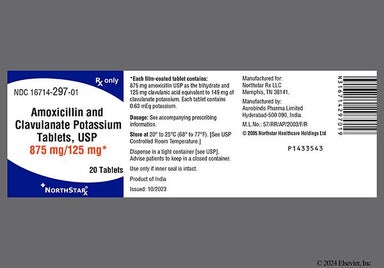
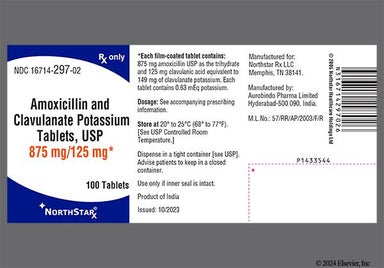
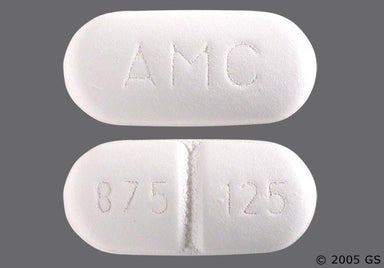
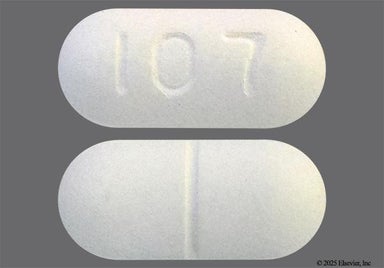
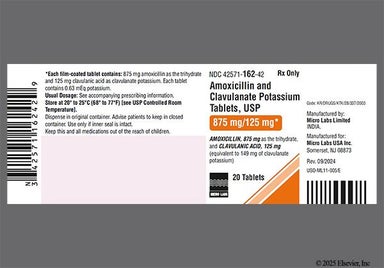
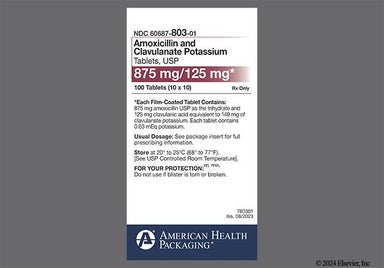
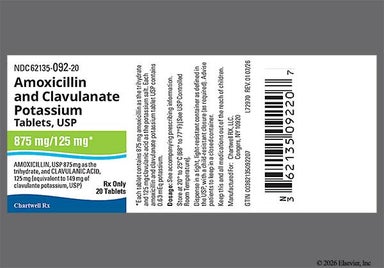
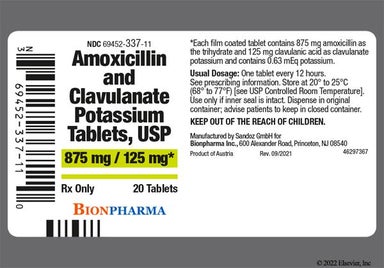
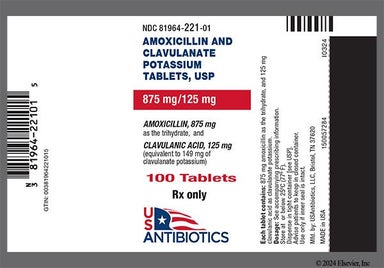
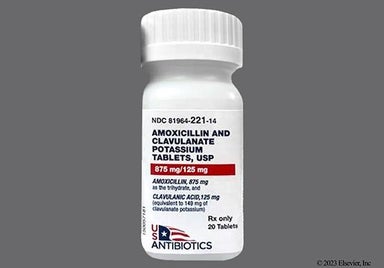
The average cost for 20 tablets of 875mg/125mg of Augmentin (amoxicillin / clavulanate) is $13.79 with a free GoodRx coupon. This is 60.96% off the average retail price of $35.32.
Typical dosage for Augmentin (amoxicillin / clavulanate)
The dosage for Augmentin (amoxicillin / clavulanate) is given based on the milligrams of the amoxicillin. Your dose might differ if you have kidney problems.
Serious infections or respiratory tract infections: The typical dose is 875 mg of amoxicillin by mouth every 12 hours, or 500 mg of amoxicillin by mouth every 8 hours.
Less severe infections: The typical dose is 500 mg of amoxicillin by mouth every 12 hours, or 250 mg of amoxicillin by mouth every 8 hours.
Children who weigh less than 88 lbs
Your child's pediatrician will calculate the dosage based on your child's body weight and age. Doses are typically swallowed (for the liquid suspension) or chewed (for the chewable tablets) every 8 to 12 hours.
GoodRx has partnered with to provide reviews on the different aspects of Augmentin (amoxicillin / clavulanate).
Effectiveness
Learn more about the effectiveness of Augmentin (amoxicillin / clavulanate) based on real life experiences.
Overall Rating
Based on 27 people taking this medication
2.5
Effectiveness by condition:
sinus infection (sinusitis)13 reviews
2.8
bronchitis4 reviews
2.2
diverticulitis4 reviews
3.4
urinary tract infection3 reviews
0.0
pyoderma gangrenosum3 reviews
4.2
Side effects
Learn more about the side effects others have reported while taking Augmentin (amoxicillin / clavulanate).
Severity of side effects
Based on 72 people taking this medication
None
52%
Mild
30%
Moderate
13%
Severe
7%
0%
50%
100%
Top side effects
Based on 72 people taking this medication
Diarrhea
30%
Nausea
17%
Stomach pain
5%
GI problems
2%
Stomach discomfort
2%
Usage
Review why people stop taking this medication and how long they take it.
Reasons people stopped taking Augmentin (amoxicillin / clavulanate)
Based on 148 people who have taken this medication
Course of treatment ended
68%
Doctor's advice
12%
Did not seem to work
8%
Side effects too severe
7%
Other
6%
Personal research
2%
Expense
1%
How long people take Augmentin (amoxicillin / clavulanate)
Based on 35 people who have taken this medication
Not Specified
3%
6 to 11 months
3%
2 to <5 years
6%
10+ years
43%
5 to <10 years
46%
0%
50%
100%
Powered by:
Interactions between Augmentin (amoxicillin / clavulanate) and other drugs
Augmentin (amoxicillin / clavulanate) may interact with certain medications or supplements. Always let your doctor and pharmacist know about any other medications or supplements (including prescribed and over-the-counter medications, vitamins, and dietary or herbal supplements) that you are currently taking. The list below does not include all possible drug interactions with Augmentin (amoxicillin / clavulanate). Please note that only the generic name of each medication is listed below.
More on Augmentin (amoxicillin / clavulanate) interactions
Although certain medicines should not be used together at all, in other cases two different medicines may be used together even if an interaction might occur. In these cases, your doctor may want to change the dose, or other precautions may be necessary. When you are taking this medicine, it is especially important that your healthcare professional know if you are taking any of the medicines listed below. The following interactions have been selected on the basis of their potential significance and are not necessarily all-inclusive.
Using this medicine with any of the following medicines is usually not recommended, but may be required in some cases. If both medicines are prescribed together, your doctor may change the dose or how often you use one or both of the medicines.
Using this medicine with any of the following medicines may cause an increased risk of certain side effects, but using both drugs may be the best treatment for you. If both medicines are prescribed together, your doctor may change the dose or how often you use one or both of the medicines.
Contraindications are specific health conditions or situations in which a person should not take a medication due to safety concerns. If you have any of the following conditions or if any of the following apply to you, let your healthcare provider know because Augmentin (amoxicillin / clavulanate) will not be safe for you to take.
Have had liver problems from taking Augmentin (amoxicillin / clavulanate) in the past
What are alternatives to Augmentin (amoxicillin / clavulanate)?
There are a number of medications that your doctor can prescribe in place of Augmentin (amoxicillin / clavulanate). Compare a few possible alternatives below.
Werth, B. J. (2022). Beta-lactams. Merck Manual Professional Version.
GoodRx Health has strict sourcing policies and relies on primary sources such as medical organizations, governmental agencies, academic institutions, and peer-reviewed scientific journals. Learn more about how we ensure our content is accurate, thorough, and unbiased by reading our editorial guidelines.
Prescription savings
Stop paying too much for your prescriptions. Compare prices, get pharmacy coupons, and save up to 80%.
Plans start at $9.99/mo. (when paid yearly). Terms apply.
Common questions about Amoxicillin/Potassium Clavulanate
You should start to feel better after about 2 to 3 days of taking Augmentin. Whether you feel better by then or not, though, it's important to keep taking Augmentin for as long as prescribed to make sure your infection is completely treated. Not finishing your treatment course can cause your infection to come back and also raise the risk for the bacteria to become resistant to antibiotics. This means that the bacteria can find a way to make antibiotics work less well. Infections with resistant bacteria can be hard to treat, severe, and even life-threatening.
Not exactly. Both Augmentin and amoxicillin are commonly prescribed antibiotics that can treat a wide range of bacterial infections, including certain respiratory infections and skin infections. Augmentin contains the antibiotic amoxicillin and an extra ingredient called clavulanate (or clavulanic acid). This extra ingredient helps protect amoxicillin from getting broken down in the body by the bacteria. This helps amoxicillin work better at fighting infections, especially those that don't seem to get better with amoxicillin by itself.
Yes, Augmentin contains amoxicillin, which is considered a penicillin antibiotic (it's closely related to penicillin). It's important to let the prescriber know if you think you have a penicillin allergy. Since amoxicillin is closely related to penicillin, there's a chance that you might be at risk for having an allergic reaction to Augmentin if you've had any kind of allergic reaction to penicillin. The prescriber will see whether you have a true penicillin allergy and whether the antibiotic is safe for you. You might still be able to take Augmentin if you've had a mild rash or itchiness to penicillin; be sure to still look out for allergic reactions. But it's possible that the prescriber will choose a different antibiotic to be safe, especially if your reaction to penicillin was severe.
It's best to avoid alcohol while you're taking Augmentin because it can worsen side effects from the antibiotic, like diarrhea, nausea, and vomiting. It can also make it more difficult for you to recover from an infection. Speak with a healthcare professional about your drinking habits and how to best avoid drinking alcohol while you're taking Augmentin.
Yes, diarrhea is the most common side effect of Augmentin. In clinical studies, about 9% of people who took this antibiotic had diarrhea. If you have diarrhea while you're taking Augmentin, drink plenty of fluids to stay hydrated and let a healthcare professional know if you feel tired, dizzy, or weak. But get medical help as soon as possible if you develop watery or bloody diarrhea, fever, fatigue, or stomach cramps anytime during treatment or after you stop taking Augmentin; these could be signs of serious, infectious diarrhea that should be treated right away.
Tiredness isn't a commonly reported side effect of Augmentin. Keep in mind that it's normal for your body to feel a little tired while it's fighting off an infection. Let your healthcare team know if you experience weakness or fatigue that doesn't get better after you start taking Augmentin. That might be a sign that you need more medical attention.
The immediate-release (IR) or extended-release (ER) tablets of Augmentin shouldn't be crushed, but the chewable tablets can be. The IR and ER tablets have a special coating around them that can get damaged if crushed. This can change the way the antibiotic works in your body or raise your risk for side effects. Ask a healthcare professional if you're having trouble swallowing Augmentin tablets. They might switch you to the chewable tablets or liquid suspension of the antibiotic.
Augmentin (amoxicillin / clavulanate) is a combination of two medications that work together to treat infections. Amoxicillin belongs to a drug class called penicillin antibiotics. It kills bacteria by preventing them from making their protective covering that normally shields them from harm. Clavulanate (also known as clavulanic acid) is a beta-lactamase inhibitor. A beta-lactamase is a protein that bacteria use to break down amoxicillin and cause amoxicillin (the antibiotic) to not work. By blocking beta-lactamase from working, clavulanate protects amoxicillin from being broken down. This helps amoxicillin work better at fighting infections.Learn more