piperacillin / tazobactam
Zosyn is a combination of two ingredients, piperacillin (a penicillin antibiotic) and tazobactam (a beta-lactamase inhibitor). This antibiotic can treat many types of bacterial infections throughout the body, such as pneumonia caused by resistant bacteria like Pseudomonas. It's approved for adults and certain children as an infusion through the vein, or an intravenous (IV) infusion. The dosing typically depends on things like your age, your kidney function, and the type of infection you have. Side effects include diarrhea, headache, and trouble sleeping. It's available as a brand-name medication and a generic.


What is Zosyn (piperacillin / tazobactam)?
What is Zosyn (piperacillin / tazobactam) used for?
- Stomach infection in people ages 2 months and older
- Pneumonia in people ages 2 months and older
- Skin infection (e.g., cellulitis, foot infection due to diabetes) in adults
- Pelvic infection in adult females
How Zosyn (piperacillin / tazobactam) works
Zosyn (piperacillin / tazobactam) is a combination of two ingredients that work together to treat bacterial infections.
- Piperacillin is a type of penicillin antibiotic. It kills bacteria by preventing them from making their cell walls, or their outer covering that helps protect themselves from harm.
- Tazobactam is a beta-lactamase inhibitor. It blocks a protein called beta-lactamase that bacteria make to destroy piperacillin so that piperacillin can't work well. By blocking beta-lactamase from working, tazobactam protects piperacillin from being broken down. This helps piperacillin stay in the body longer so it can fight the infection better. Tazobactam can also work like an antibiotic and can kill a limited range of bacteria too.
Drug facts

Side effects of Zosyn (piperacillin / tazobactam)
The following side effects may get better over time as your body gets used to the medication. Let your healthcare provider know immediately if you continue to experience these symptoms or if they worsen over time.
Common Side Effects
- Diarrhea (11%)
- Headache (8%)
- Constipation (8%)
- Nausea (7%)
- Trouble sleeping (7%)
- Rash (4%)
- Itching (3%)
- Vomiting (3%)
- Upset stomach (3%)
Less Common Side Effects
- Stomach pain
- Muscle pain
- Joint pain
- Fever
- Chills
- Low blood pressure
- Fungal infection
Zosyn (piperacillin / tazobactam) serious side effects
Contact your healthcare provider immediately if you experience any of the following.
- Serious allergic reaction or serious skin reaction: hives; rash; blisters; skin reddening; peeling skin; swelling of the face, lips, or tongue; trouble breathing
- Side effects related to the nervous system: hallucinations (seeing or hearing things that aren't real), seizures, sudden and brief involuntary movements or twitching
- Clostridioides difficile-related diarrhea: fever, stomach pain or cramps, foul-smelling diarrhea, frequent bowel movements (up to 15 times per day)
The following Zosyn (piperacillin / tazobactam) side effects have also been reported
Along with its needed effects, a medicine may cause some unwanted effects. Although not all of these side effects may occur, if they do occur they may need medical attention.
Check with your doctor or nurse immediately if any of the following side effects occur:
More common
Less common
Bladder pain
bloating or swelling of the face, arms, hands, lower legs, or feet
blurred vision
burning upper abdominal or stomach pain
changes in urination
confusion
dizziness, faintness, or lightheadedness when getting up suddenly from a lying or sitting position
fever or sweating
headache
lower back or side pain
nausea or vomiting
pain, tenderness, or swelling of the foot or leg
pain, warmth, or burning in the fingers, toes, and legs
problems with vision or hearing
skin rash
slow or fast heartbeat
troubled breathing
Rare
Agitation
bleeding, blistering, burning, coldness, discoloration of skin, feeling of pressure, hives, infection, inflammation, itching, lumps, numbness, pain, rash, redness, scarring, soreness, stinging, swelling, tenderness, tingling, ulceration, or warmth at the injection site
bone pain
bruising
chills
cold sweats
deep or fast breathing with dizziness
diarrhea, watery and severe, which may also be bloody
drowsiness
hostility
itching of the vagina or genital area
lethargy
muscle pain, cramps, stiffness, or twitching
nightmares
numbness or tingling in the hands, feet, or lips
puffiness or swelling of the eyelids or around the eyes, face, lips, or tongue
sores, ulcers, or white spots on the lips, tongue, or inside the mouth
stomach cramps, pain, or tenderness
swollen glands
temporary blindness
thick, white vaginal discharge with no odor or with a mild odor
total body jerking
unexplained weight loss
unusual bleeding or bruising
Incidence not known
Back or leg pain
blistering, peeling, or loosening of the skin
high fever
joint or muscle pain
loss of bladder control
muscle spasm or jerking of all extremities
red skin lesions, often with a purple center
seizures
sudden loss of consciousness
yellow eyes or skin
Some side effects may occur that usually do not need medical attention. These side effects may go away during treatment as your body adjusts to the medicine. Also, your health care professional may be able to tell you about ways to prevent or reduce some of these side effects. Check with your health care professional if any of the following side effects continue or are bothersome or if you have any questions about them:
Less common
Acid or sour stomach
cracks in the skin at the corners of the mouth
hiccup
irritation and redness of the skin
Rare
Body aches or pain
change in taste or bad unusual or unpleasant (after) taste
feeling of constant movement of self or surroundings
sensation of spinning
severe sleepiness
voice changes
Other side effects not listed may also occur in some patients. If you notice any other effects, check with your healthcare professional.
Call your doctor for medical advice about side effects. You may report side effects to the FDA at 1-800-FDA-1088.

Pros and cons of Zosyn (piperacillin / tazobactam)
Pros
- Can treat many types of bacterial infections throughout the body
- Good choice for fighting against resistant bacteria like Pseudomonas
- Available as ready-to-use bags
Cons
- Might not be safe if you have a penicillin allergy
- Only given as an IV injection
- Typically given as multiple infusions throughout the day

Pharmacist tips for Zosyn (piperacillin / tazobactam)

- Before getting Zosyn (piperacillin / tazobactam) treatment, tell your care team if you're allergic to penicillins, cephalosporins, or any other antibiotics. You might have a serious allergic reaction to Zosyn (piperacillin / tazobactam) if you have a history of allergies to these types of medications.
- Even though Zosyn (piperacillin / tazobactam) is given by injection, it can still cause diarrhea. This diarrhea should go away when you stop taking the antibiotic.
- Get medical help right away if you start having bloody diarrhea, fever, fatigue, or stomach cramps anytime during treatment or after stopping Zosyn (piperacillin / tazobactam). These can be signs of serious infectious diarrhea that needs to be treated right away.
- Your healthcare team might order blood tests to check for side effects during your treatment with Zosyn (piperacillin / tazobactam). These tests help your care team check your liver health, kidney health, and blood cell counts.
- Make sure your healthcare team knows about all your current medications, especially probenecid or certain blood thinners. Taking certain medications with Zosyn (piperacillin / tazobactam) can put you at higher risk for side effects.
- Tell your care team if you develop other symptoms of an illness or if your symptoms become worse. You might need to get tested for other types of infections and get appropriate treatment. Zosyn (piperacillin / tazobactam) can only treat certain bacterial infections; it doesn't work against viral or fungal infections.
- If you need treatment with Zosyn (piperacillin / tazobactam) for a long time, it's possible that your prescriber might let you take the medication at a medical center that doesn't require overnight hospital stays or at home. If so, make sure to carefully follow your prescriber's instructions to take Zosyn (piperacillin / tazobactam) properly and safely.

Common questions about Zosyn (piperacillin / tazobactam)
Yes. One of the ingredients of Zosyn is piperacillin, which is considered a penicillin antibiotic. It's important to let the care team know if you think you might have a penicillin allergy because there's a chance you might be allergic to Zosyn (piperacillin / tazobactam). You might still be able to take Zosyn (piperacillin / tazobactam) if you've had a mild rash or itchiness to penicillin. But it's possible that your prescriber will choose a different antibiotic to be safe, especially if your reaction to penicillin was severe.
Yes. Zosyn (piperacillin / tazobactam) is known as a broad-spectrum antibiotic, meaning it covers or fights against several different types of bacteria. These bacteria include Gram-positive bacteria, like Staphylococcus aureus. Other bacteria that Zosyn (piperacillin / tazobactam) can fight against are certain Gram-negative bacteria, such as Pseudomonas and E. coli (Escherichia coli).
Yes. Zosyn (piperacillin / tazobactam) covers the Pseudomonas bacteria, which means that the antibiotic can fight against this type of bacteria. Pseudomonas infections can be severe and are typically hard to treat because the bacteria is resistant to many antibiotics. So, Zosyn (piperacillin / tazobactam) is often used when it's confirmed or suspected that an infection is caused by Pseudomonas.
No. Zosyn (piperacillin / tazobactam) doesn't cover MRSA, or methicillin-resistant Staphylococcus aureus. This means that Zosyn (piperacillin / tazobactam) doesn't work well to treat infections caused by MRSA. Your prescriber will probably choose different antibiotics that are first-choice options for MRSA instead of Zosyn (piperacillin / tazobactam) if you have a MRSA infection. These antibiotics can include vancomycin, linezolid (Zyvox), or Bactrim (sulfamethoxazole / trimethoprim). The specific choice of antibiotic will typically depend on where the infection is in your body and how severe it is.
It takes about 3 to 4 hours for most of the ingredients in Zosyn (piperacillin and tazobactam) to leave your body after a single dose. This time frame is estimated based on the half-life of piperacillin and tazobactam. It can take longer for the medication to clear your system if you have kidney or liver problems (the kidneys and liver normally help get rid of the medication from the body).
It's possible, but quite uncommon. A study found that 10% of people receiving Zosyn (piperacillin / tazobactam) experienced or were at risk of having short-term kidney problems. The risk for kidney damage is higher in people who take Zosyn (piperacillin / tazobactam) with another antibiotic called vancomycin, another broad-spectrum antibiotic. The risk is also higher in people in the intensive care unit (ICU) who are very ill. Your care team will regularly check your kidney health by ordering a creatinine blood test while you're taking Zosyn (piperacillin / tazobactam).
Studies show that it's uncommon but possible for people to have elevated liver enzyme levels while they're taking Zosyn (piperacillin / tazobactam). Elevated liver enzyme levels in the blood can be a sign of liver damage. If this happens during treatment, it typically goes away when the medication is stopped. Depending on your medical history, it's possible that your prescriber will order blood tests to check your liver during treatment.
In general, you should start to feel better within a few days after you start taking antibiotics such as Zosyn (piperacillin / tazobactam). Keep in mind that it also depends on the infection you have and how serious it is. Also remember that you need to finish your entire course of treatment (typically 7 to 14 days), even if your symptoms improve. This makes sure that the antibiotic has completely fought off the bacteria and cleared the infection in your body. Follow up with your care team if you're concerned about how long Zosyn (piperacillin / tazobactam) is taking to treat your infection.

How to save using GoodRx




Risks and warnings for Zosyn (piperacillin / tazobactam)
Zosyn (piperacillin / tazobactam) can cause some serious health issues. This risk may be even higher for certain groups. If this worries you, talk to your doctor or pharmacist about other options.
Allergic reactions
- Risk factors: Allergy to penicillins or other cephalosporin antibiotics
Serious and sometimes fatal allergic reactions to Zosyn (piperacillin / tazobactam) are possible. These reactions can include facial swelling, shock, and anaphylaxis (closing of the throat). Let your prescriber know if you have an allergy to antibiotics because your risk for an allergic reaction to Zosyn (piperacillin / tazobactam) might be higher.
Get medical help right away if you notice hives; rash; red skin; swelling of the face, lips, or tongue; or trouble breathing after treatment with Zosyn (piperacillin / tazobactam).
Severe skin reactions
Although rare, Zosyn (piperacillin / tazobactam) can cause severe skin reactions, such as Stevens-Johnson syndrome (SJS) and Drug Reaction with Eosinophilia and Systemic Symptoms (DRESS) syndrome. Get medical attention right away if you notice unusual changes in your skin, such as rash, blisters, skin reddening, or skin peeling. These symptoms can happen with or without fever and body aches.
Diarrhea from Clostridioides difficile infection
Zosyn (piperacillin / tazobactam) can raise your risk of getting infected with a bacteria called Clostridioides difficile (C. diff). Antibiotics change the amount of normal bacteria in your gut. This makes it easier for C. diff to overgrow in your gut and lead to an infection. C. diff infection can cause severe and sometimes life-threatening diarrhea.
It's important to recognize the difference between diarrhea as a side effect of Zosyn (piperacillin / tazobactam) and C. diff-related diarrhea. This type of infectious diarrhea can cause rapid heart rate, fever, nausea, foul-smelling diarrhea, and frequent bowel movements (even up to 15 times per day). It's a medical emergency. Get medical help right away if you have any of these symptoms so you can get tested for C. diff infection and get treated.
Low blood cell counts
- Risk factors: Taking Zosyn (piperacillin / tazobactam) for longer than 3 weeks | History of low blood cell count | Taking other medications that cause bone marrow suppression
Some people who took Zosyn (piperacillin / tazobactam) had a drop in the amount of red blood cells, white blood cells, and platelets in the body. Having a lower-than-normal blood cell count can put you at risk for anemia, infections, and easy bleeding or bruising.
During treatment, your prescriber might order blood draws to check your blood cell counts. Tell your care team if you have symptoms of anemia (e.g., tiredness, headache, pale skin, fast heart rate) or easy bleeding or bruising. Also let your care team know if you have any signs of infection, like fever, chills, body aches, tiredness, or cough. In most cases, blood cell counts go back to usual after you stop taking Zosyn (piperacillin / tazobactam).
Risk for bleeding
- Risk factors: Kidney failure | Taking Zosyn (piperacillin / tazobactam) for many weeks
In some rare cases, Zosyn (piperacillin / tazobactam) can affect how well your body works to naturally stop bleeding. This can sometimes be serious. If you're taking any blood thinners, such as warfarin (Coumadin) or heparin, your care team will regularly check your risk for bleeding through blood tests. Speak to your care team if you notice unusual bleeding or if cuts or bruises seem to take longer than usual to heal. You'll probably need to stop taking Zosyn (piperacillin / tazobactam).
Seizures
- Risk factors: History of seizures or problems with the brain | Kidney problems | Higher doses of Zosyn (piperacillin / tazobactam)
Although rare, some people who were treated with Zosyn (piperacillin / tazobactam) reported serious side effects affecting the nervous system. These side effects include seizures and sometimes hallucinations (seeing or hearing things that aren't real). These side effects can happen to anyone, but people with kidney problems are at higher risk, especially if their Zosyn (piperacillin / tazobactam) dose isn't appropriately adjusted. Get medical help right away if you have a seizure or any hallucinations while you're taking this medication.
Risk for kidney damage
- Risk factors: In the ICU | Also taking vancomycin
In a study, some people who took Zosyn (piperacillin / tazobactam) had or were at risk for short-term kidney problems. What's more, Zosyn (piperacillin / tazobactam) can raise the risk for kidney damage in people who are in the intensive care unit (ICU). The risk for kidney damage might also be higher in people who are receiving both Zosyn (piperacillin / tazobactam) and vancomycin.
While you're taking Zosyn (piperacillin / tazobactam), your care team will order blood tests to monitor your kidney health. Contact your care team if you have a sudden change in the amount of urine you make, can't urinate at all, have dark-colored urine, or lower back or side pain. These might be signs of kidney damage.

Zosyn (piperacillin / tazobactam) dosage
Typical dosage for Zosyn (piperacillin / tazobactam)
In general, Zosyn (piperacillin / tazobactam) is given into the veins (IV) as a short infusion over 30 minutes. Your dose will differ if you have kidney problems.
Adults
- Pneumonia: The typical dose is 3.375 or 4.5 grams IV every 6 hours for 7 to 14 days.
- Other infections: The typical dose is 3.375 grams IV every 6 hours for 7 to 10 days.
Children
- The prescriber will calculate the dose based on your child's weight. Children weighing more than 88 lbs (40 kg) who don't have kidney problems are given the adult dose.
- Appendicitis or peritonitis
- Age 2 to 9 months: The typical dose is 90 mg/kg IV every 8 hours.
- Age older than 9 months: The typical dose is 112.5 mg/kg IV every 8 hours.
- Pneumonia
- Age 2 to 9 months: The typical dose is 90 mg/kg IV every 6 hours.
- Age older than 9 months: The typical dose is 112.5 mg/kg IV every 6 hours.
Note: How long your infusion takes and how often you need infusions might be different depending on your situation and the healthcare facility's specific protocols.

Interactions between Zosyn (piperacillin / tazobactam) and other drugs
Although certain medicines should not be used together at all, in other cases two different medicines may be used together even if an interaction might occur. In these cases, your doctor may want to change the dose, or other precautions may be necessary. When you are receiving this medicine, it is especially important that your healthcare professional know if you are taking any of the medicines listed below. The following interactions have been selected on the basis of their potential significance and are not necessarily all-inclusive.
Using this medicine with any of the following medicines is usually not recommended, but may be required in some cases. If both medicines are prescribed together, your doctor may change the dose or how often you use one or both of the medicines.
- Amifampridine
- Bupropion
- Chlortetracycline
- Cholera Vaccine, Live
- Demeclocycline
- Donepezil
- Doxycycline
- Eravacycline
- Lymecycline
- Meclocycline
- Methacycline
- Methotrexate
- Minocycline
- Omadacycline
- Oxytetracycline
- Rolitetracycline
- Sarecycline
- Tetracycline
- Tigecycline
- Vancomycin
- Vecuronium
- Warfarin

Zosyn (piperacillin / tazobactam) contraindications
Contraindications are specific health conditions or situations in which a person should not take a medication due to safety concerns. If you have any of the following conditions or if any of the following apply to you, let your healthcare provider know because Zosyn (piperacillin / tazobactam) will not be safe for you to take.
- Severe allergy to Zosyn (piperacillin / tazobactam) or another cephalosporin antibiotic, penicillin, beta-lactam antibiotic, or beta-lactamase inhibitor

What are alternatives to Zosyn (piperacillin / tazobactam)?

News about Zosyn (piperacillin / tazobactam)



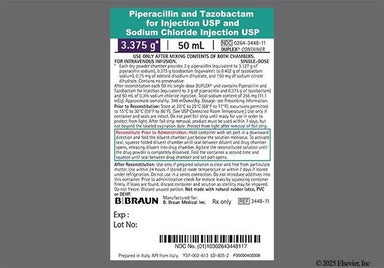
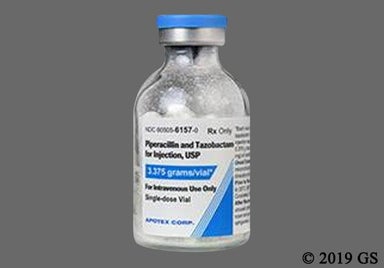
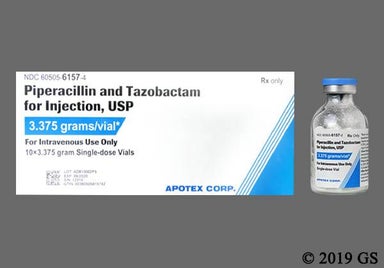
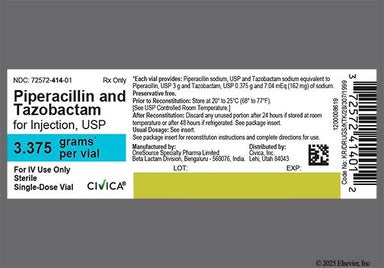
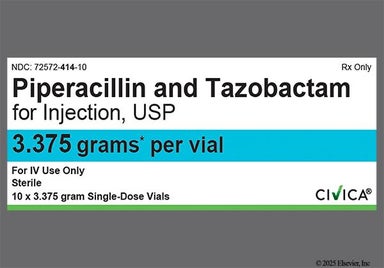
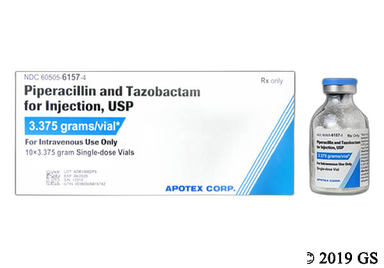
Zosyn (piperacillin / tazobactam) images