Key takeaways:
You can take Zepbound if you have hypothyroidism. Zepbound doesn’t treat thyroid disease, but it also doesn’t make hypothyroidism worse.
Zepbound may change how your body absorbs thyroid medication. You may need to adjust your thyroid medication after starting Zepbound.
You shouldn’t take Zepbound if you’re pregnant or if you or a family member have had medullary thyroid cancer or multiple endocrine neoplasia type 2 (MEN 2).
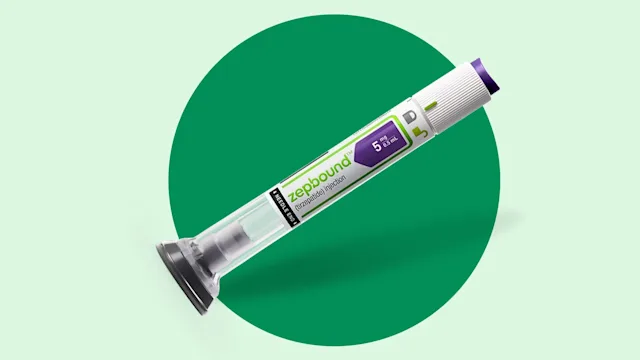
Zepbound (tirzepatide) is a popular weight-management treatment. Many people taking it are also managing other health conditions, including hypothyroidism. If you have an underactive thyroid, you may wonder whether Zepbound is safe for you. Here’s what you need to know about how Zepbound affects the thyroid, its potential benefits and risks, and whether it might be a good fit for you.
Can you take Zepbound if you have hypothyroidism?
Yes, you can take Zepbound if you have hypothyroidism. Hypothyroidism isn’t listed by the manufacturer as a reason to avoid Zepbound.
There’s no strong evidence that Zepbound makes hypothyroidism worse. But it can affect how your body responds to thyroid medication in two ways:
Increased medication absorption: Zepbound slows down how quickly your stomach empties. This means thyroid medication, like levothyroxine, may stay in your stomach longer. As a result, your body may absorb more of the medication, which could change your thyroid hormone levels.
Weight-related dose changes: Weight loss can also affect how much thyroid medication you need. You may need less levothyroxine as you lose weight.
Your healthcare team may check your thyroid levels more often when you first start treatment with Zepbound. They may also adjust your thyroid medication dose based on your lab results and any weight changes.
What are the benefits of taking Zepbound if you have hypothyroidism?
Zepbound doesn’t treat hypothyroidism. It won’t improve how your thyroid gland works. But it may offer indirect health benefits. This is especially true if you have hypothyroidism and Type 2 diabetes, heart risk factors, or have a body mass index of 30 or more. Zepbound can lead to the following.
Better blood sugar control
Zepbound can significantly lower blood sugar levels and improve overall glucose control if you have Type 2 diabetes. This can lower your risk of diabetes-related complications and support better overall metabolic health.
Better heart health
Zepbound has also been shown to improve several health factors that can take a toll on your heart health. It can help:
Improve cholesterol levels
Lessen fat build up around organs
Possible lower thyroid medication needs
Weight loss can change how much levothyroxine your body needs. Some research shows that after significant weight loss, many people require less levothyroxine.
What are the risks of taking Zepbound if you have hypothyroidism?
Right now, there’s no evidence that Zepbound poses special risks for people with hypothyroidism. But this may change over time. Here are a few things to be aware of.
Gastrointestinal side effects may affect your thyroid medication
Zepbound commonly causes side effects like:
Nausea
Vomiting
Stomach upset
Vomiting can stop your body from fully absorbing your thyroid medication. Nausea and an upset stomach can make it harder to take your thyroid medication.
Missing doses — or not fully absorbing them — can shift your thyroid hormone levels. Let your healthcare team know if you experience any of these side effects while taking Zepbound. They can offer suggestions to help you manage symptoms and may check your thyroid labs more often.
There may be a possible link to heart rhythm changes
In one study, older adults with Type 2 diabetes who took a glucagon-like peptide-1 (GLP-1) medication had a higher rate of atrial fibrillation (AFib) or atrial flutter compared to those taking another type of diabetes medication.
The study looked at semaglutide, not Zepbound. So, it’s not clear if the same risk applies to people taking Zepbound. But contact your healthcare team right away if you notice symptoms like:
Irregular heartbeat
Fluttering feeling in your chest
Trouble breathing
Shortness of breath
Chest pressure or pain
Dizziness
Fainting
Feeling faint
Can you take Zepbound if you have other thyroid conditions?
You shouldn’t take Zepbound if you or a family member have had medullary thyroid carcinoma.
You also shouldn’t take it if you or a family member has multiple endocrine neoplasia syndrome type 2 (MEN 2).
You may be able to take Zepbound if you have other thyroid conditions, like:
Autoimmune thyroid disease
Overactive thyroid (hyperthyroidism)
Your healthcare team can help you decide whether Zepbound is safe for you.
Does Zepbound increase your risk for developing thyroid cancer?
Zepbound has been linked to a specific type of thyroid cancer called medullary thyroid cancer.
In animal studies, tirzepatide was linked to an increased risk of thyroid C-cell tumors. Zepbound binds to GLP-1 receptors, which are found all over your body, including on thyroid cells called C-cells. Researchers believe Zebpound can stimulate the GLP-1 receptors on C-cells. This could cause them to become cancerous, which can lead to medullary thyroid cancer.
So far, studies in people are less clear. Some studies show a possible link between tirzepatide and medullary thyroid cancer. Other studies showed that people taking tirzepatide weren’t at higher risk for developing thyroid cancer.
Even so, you shouldn’t take Zepbound if you have:
A current diagnosis of medullary thyroid cancer
A past diagnosis of medullary thyroid cancer
A family history of medullary thyroid cancer
What are the best alternatives to Zepbound for people with thyroid conditions?
GLP-1 agonists, like Zepbound and Wegovy, are popular treatments for weight management. But they aren’t the only options. You can also try other weight-loss medications that don’t contain GLP-1 agonists, like:
Your healthcare team can help you find the medication that best fits your health needs.
Frequently asked questions
You shouldn’t take Zepbound if you have personal or family history of medullary thyroid carcinoma or multiple endocrine neoplasia syndrome type 2 (MEN 2). You also shouldn’t take Zepbound if you’re pregnant.
Zepbound won’t directly interfere with thyroid function tests. But people who take Zepbound may absorb more thyroid medication because it slows stomach emptying. They may also need less thyroid medication as they lose weight. These two changes may impact your test results.
Zepbound doesn’t interact with levothyroxine. But because it slows stomach emptying, it may affect how your body absorbs levothyroxine. Your healthcare team may monitor your thyroid function tests more closely after you start taking Zepbound. They may also ask you to take Zepbound and levothyroxine at different times.
You shouldn’t take Zepbound if you have personal or family history of medullary thyroid carcinoma or multiple endocrine neoplasia syndrome type 2 (MEN 2). You also shouldn’t take Zepbound if you’re pregnant.
Zepbound won’t directly interfere with thyroid function tests. But people who take Zepbound may absorb more thyroid medication because it slows stomach emptying. They may also need less thyroid medication as they lose weight. These two changes may impact your test results.
Zepbound doesn’t interact with levothyroxine. But because it slows stomach emptying, it may affect how your body absorbs levothyroxine. Your healthcare team may monitor your thyroid function tests more closely after you start taking Zepbound. They may also ask you to take Zepbound and levothyroxine at different times.
The bottom line
If you have hypothyroidism, Zepbound can be a safe option for weight management. It doesn’t improve thyroid function, but it’s not known to make it worse. Still, weight loss and slower stomach emptying can affect how your thyroid medication works. Your healthcare team may monitor your thyroid function tests more often. They’ll adjust your thyroid medication dose if needed. Reviewing your thyroid history with your healthcare team can help you decide whether Zepbound is the right fit for you.

Why trust our experts?


References
Caruso, I., et al. (2024). The real-world safety profile of tirzepatide: Pharmacovigilance analysis of the FDA adverse event reporting system (FAERS) database. Journal of Endocrinological Investigation.
De Block, C., et al. (2023). Tirzepatide for the treatment of adults with type 2 diabetes: An endocrine perspective. Diabetes, Obesity & Metabolism.
Du, F., et al. (2025). Glucagon-like peptide-1 receptor agonists and risk for cardiovascular events in older adults treated with levothyroxine: a target trial emulation. Cardiovascular Diabetology.
Ely Lilly and Company. (2026). Zepbound- tirzepatide injection, solution Zepbound- tirzepatide injection, solution Zepbound kwikpen- tirzepatide injection, solution. [package insert]. DailyMed.
Fierabracci, P., et al. (2016). Weight loss and variation of levothyroxine requirements in hypothyroid obese patients after bariatric surgery. Thyroid.
Hauge, C., et al. (2021). Effect of oral semaglutide on the pharmacokinetics of thyroxine after dosing of levothyroxine and the influence of co-administered tablets on the pharmacokinetics of oral semaglutide in healthy subjects: an open-label, one-sequence crossover, single-center, multiple-dose, two-part trial. Expert Opinion on Drug Metabolism & Toxicology.
Hu, W., et al. (2022). Use of GLP-1 receptor agonists and occurrence of thyroid disorders: A meta-analysis of randomized controlled trials. Frontiers in Endocrinology.
Sattar, N., et al. (2025). Tirzepatide and cardiometabolic parameters in obesity: Summary of current evidence. Diabetes, Obesity & Metabolism.