



Huntington’s Disease Medications: What’s New, What’s Now, and What’s Next
Clinical trials testing future treatments for Huntington’s disease continue to make progress. Here’s the latest on pipeline medications like pridopidine and more.
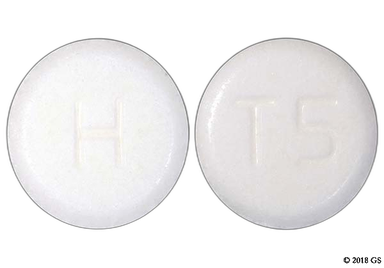
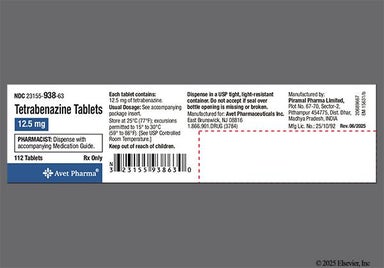
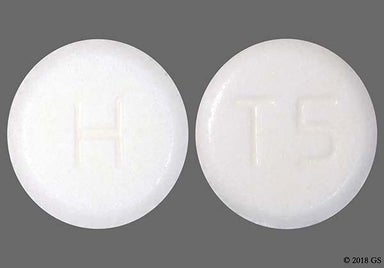
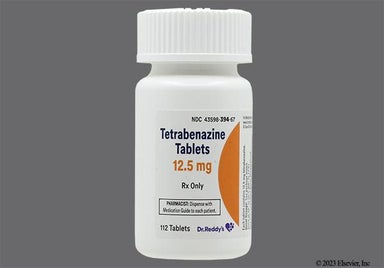
Tetrabenazine (Xenazine) is a medication used for a movement problem called chorea, which is a symptom of Huntington's disease. It's available as a generic and is taken once or twice per day. Tetrabenazine (Xenazine) has many risks and potential interactions with other medications.

Tetrabenazine (Xenazine) is a vesicular monoamine transporter 2 (VMAT2) inhibitor. It's not exactly known how tetrabenazine (Xenazine) helps with chorea from Huntington's disease, but it's thought to block the VMAT2 protein in your brain. This lowers the amount of certain chemicals released in the brain (e.g., dopamine, serotonin, norepinephrine, histamine), which can potentially affect movement.
| Common Brands | Xenazine |
|---|---|
| Drug Class | VMAT2 inhibitor |
| Controlled Substance Classification | Not a controlled medication |
| Generic Status | Lower-cost generic available |
| Availability | Prescription only |

The following side effects may get better over time as your body gets used to the medication. Let your healthcare provider know immediately if you continue to experience these symptoms or if they worsen over time.
Contact your healthcare provider immediately if you experience any of the following.
Along with its needed effects, a medicine may cause some unwanted effects. Although not all of these side effects may occur, if they do occur they may need medical attention.
Check with your doctor immediately if any of the following side effects occur:
More common
Body aches or pain
chills
difficulty in breathing
difficulty with swallowing
discouragement
drowsiness
ear congestion
fear or nervousness
feeling sad or empty
headache
inability to sit still
irritability
lack of appetite
loss of balance control
loss of interest or pleasure
loss of voice
mask-like face
need to keep moving
relaxed and calm
restlessness
shuffling walk
sleepiness or unusual drowsiness
slow movement or reflexes
slurred speech
stiffness of arms and legs
tic-like (jerky) movements of the head, face, mouth, and neck
tiredness
trembling and shaking of fingers and hands
trouble concentrating
trouble sleeping
trouble with balance
unable to sleep
unusual tiredness or weakness
Less common
Burning while urinating
changes in patterns and rhythms of speech
cough producing mucus
difficult or painful urination
dizziness
shortness of breath
tightness in chest
trouble in speaking
trouble in walking
Get emergency help immediately if any of the following symptoms of overdose occur:
Symptoms of overdose
Blurred vision
dizziness, faintness, or lightheadedness when getting up from a lying or sitting position suddenly
fixed position of the eye
inability to move eyes
increased blinking or spasms of the eyelid
mood or mental changes
seeing, hearing, or feeling things that are not there
shakiness in legs, arms, hands, or feet
sticking out of tongue
sweating
trembling or shaking of hands or feet
uncontrolled twisting movements of neck, trunk, arms, or legs
unusual facial expressions
Some side effects may occur that usually do not need medical attention. These side effects may go away during treatment as your body adjusts to the medicine. Also, your health care professional may be able to tell you about ways to prevent or reduce some of these side effects. Check with your health care professional if any of the following side effects continue or are bothersome or if you have any questions about them:
More common
Bruising
large, flat, blue, or purplish patches in the skin
Less common
Decreased appetite
Other side effects not listed may also occur in some patients. If you notice any other effects, check with your healthcare professional.
Call your doctor for medical advice about side effects. You may report side effects to the FDA at 1-800-FDA-1088.




Tetrabenazine (Xenazine) can cause some serious health issues. This risk may be even higher for certain groups. If this worries you, talk to your doctor or pharmacist about other options.
 Taking tetrabenazine (Xenazine) can make you depressed and cause you to have thoughts of suicide or harming yourself, especially if you have Huntington's disease. Your provider might screen you for depression and suicidal thoughts throughout your treatment. If you or anyone around you notice that you have suicidal thoughts, feelings of depression, or unusual behavior (e.g., anxiety, panic attacks, difficulty sleeping, feeling angry or irritated, restlessness) while taking tetrabenazine (Xenazine), call your provider right away. If your depression or suicidal thoughts don't go away, you might have to stop taking tetrabenazine (Xenazine).
Huntington's disease is a condition that can cause changes in mood, ability to think clearly, chorea, muscle stiffness, and ability to function normally over time. Medications like tetrabenazine (Xenazine) can also worsen these symptoms as well. If you're taking tetrabenazine (Xenazine) and have Huntington's disease, your provider will examine you every so often to make sure this medication is safe and working properly for you. You might need to stop taking tetrabenazine (Xenazine) for a period of time to see if your symptoms are due to your Huntington's disease or the medication. If your chorea has improved, your provider might lower your dose or even have you stop taking tetrabenazine (Xenazine).
Most people respond to doses of up to 50 mg of tetrabenazine (Xenazine) per day. However, if your symptoms aren't controlled with 50 mg per day, you might need to get genetic testing done for a specific enzyme that metabolizes (breaks down) tetrabenazine (Xenazine). The presence and properties of this enzyme affects how fast your body breaks down the medication, which affects the level of tetrabenazine (Xenazine) in your body and how well the medication works. Your dose will be adjusted based on information about the properties of this enzyme from the genetic testing. If this test shows you break down tetrabenazine (Xenazine) quickly, you'll need a dose of up to 100 mg per day to treat your symptoms.
Tetrabenazine (Xenazine) can cause a rare, but life-threatening condition called neuroleptic malignant syndrome (NMS). Symptoms include high fever, sweating, stiff muscles, confusion, not being aware of your surroundings, and fast or irregular heartbeat. Your risk is higher if you take other medications that can cause NMS, such as antipsychotics (e.g., haloperidol (Haldol), risperidone (Risperdal), olanzapine (Zyprexa)). If you experience any of these symptoms while taking tetrabenazine (Xenazine), get medical attention as soon as possible. You'll likely have to stop taking tetrabenazine (Xenazine) and be switched to another medication.
Tetrabenazine (Xenazine) can make you feel restless (like you can't sit still), squirmy or fidgety, or agitated. These are signs of a complex movement problem called akathisia.
Tetrabenazine (Xenazine) can also cause parkinsonism, or abnormal movements, such as a tremor, slow movement, impaired speech, muscle stiffness, and losing your balance easily. These abnormal movements can lead to falls. Since muscle stiffness can be a symptom of Hungtington's disease, it's important to tell your provider if you experience this. They can help you figure out if it's from the disease or if it's a side effect of the medication.
If you experience any of these abnormal movements while taking tetrabenazine (Xenazine), tell your provider. Your dose might need to be lowered or you might need to stop the medication.
Although rare, tetrabenazine (Xenazine) can delay when your heart squeezes (contracts) and then relaxes. This condition is known as QT prolongation and can raise the risk for life-threatening abnormal heart rhythms. Your risk for QT prolongation is higher if you have a low heart rate, low potassium or magnesium blood levels, or take other medications that cause QT prolongation. Make sure to tell your provider about all the medications you're taking, and don't start any new medications or supplements while taking tetrabenazine (Xenazine) without talking to your provider or pharmacist first. People born with QT prolongation or have a history of arrhythmias should avoid taking tetrabenazine (Xenazine). If you feel your chest pounding, short of breath, chest pain, feeling faint, or lightheaded while taking tetrabenazine (Xenazine), call 911 right away, so you can be examined for this heart rhythm problem right away.
Tetrabenazine (Xenazine) can raise your prolactin levels. Prolactin is a hormone made in your brain that causes milk production and breast growth in women, although men also make some prolactin as well. Too much prolactin can cause weak bones, breast growth (for both men and women), and can even play a role in breast cancer. If you experience breast growth, breast milk leakage, or loss of interest in sex while taking tetrabenazine (Xenazine), contact your provider so you can be tested to see if you have a high prolactin level.


Although certain medicines should not be used together at all, in other cases two different medicines may be used together even if an interaction might occur. In these cases, your doctor may want to change the dose, or other precautions may be necessary. When you are taking this medicine, it is especially important that your healthcare professional know if you are taking any of the medicines listed below. The following interactions have been selected on the basis of their potential significance and are not necessarily all-inclusive.
Using this medicine with any of the following medicines is not recommended. Your doctor may decide not to treat you with this medication or change some of the other medicines you take.
Using this medicine with any of the following medicines is usually not recommended, but may be required in some cases. If both medicines are prescribed together, your doctor may change the dose or how often you use one or both of the medicines.
Using this medicine with any of the following medicines may cause an increased risk of certain side effects, but using both drugs may be the best treatment for you. If both medicines are prescribed together, your doctor may change the dose or how often you use one or both of the medicines.


Contraindications are specific health conditions or situations in which a person should not take a medication due to safety concerns. If you have any of the following conditions or if any of the following apply to you, let your healthcare provider know because Tetrabenazine (Xenazine) will not be safe for you to take.




Prescription savings
Stop paying too much for your prescriptions. Compare prices, get pharmacy coupons, and save up to 80%. Find expert answers to your health questions so you can make the best decisions for yourself and your family.
Health conditions
Medications & treatment
Access & affordability
Medication discounts

Tetrabenazine and Austedo (deutetrabenazine) are both VMAT2 inhibitors that work by lowering chemicals in your brain involved with movement. Tetrabenazine is only approved for chorea from Huntington's disease, whereas Austedo (deutetrabenazine) is approved for chorea from Huntington's disease as well as tardive dyskinesia. Tetrabenazine is available as a lower-cost generic, but it also has more side effects compared to Austedo (deutetrabenazine). Finally, Tetrabenazine can be taken with or without food, whereas Austedo (deutetrabenazine) should be taken with food for better absorption into your body.
No. You can stop treatment with Tetrabenazine immediately if your provider decides it's no longer needed for you. If you do stop the medication, be aware that your chorea symptoms might come back within 12 to 18 hours after your last dose.
It depends. If it's been less than 5 days since your last dose of Tetrabenazine, you can restart the medication at the same dose you left off on. But if you haven't taken Tetrabenazine for more than 5 days, contact your provider. You'll need to restart at a lower dose.
No, Tetrabenazine isn't approved for use in children under 18 years of age. It's not known how safe or how well Tetrabenazine works in children. Talk to your child's provider about other medication options if your child has been diagnosed with chorea from Huntington's disease.
There haven't been enough studies looking at how Tetrabenazine affects pregnant women. However, animal studies have shown that the medication can cause harm to unborn babies. If you're pregnant or thinking of getting pregnant, talk to your provider to see if Tetrabenazine is right for you.
