Key takeaways:
Whole-body vibration training involves exercising on a vibrating platform. Studies suggest it increases circulation, strengthens muscles, and supports exercise recovery. But research on the benefits of vibration plates is limited.
When combined with a balanced diet and a complete fitness plan, vibration plate training may support weight loss.
Vibration plate training is generally safe. But some people — such as those who are pregnant, recovering from surgery, or have heart problems — shouldn’t use vibration plates without a medical professional’s approval.
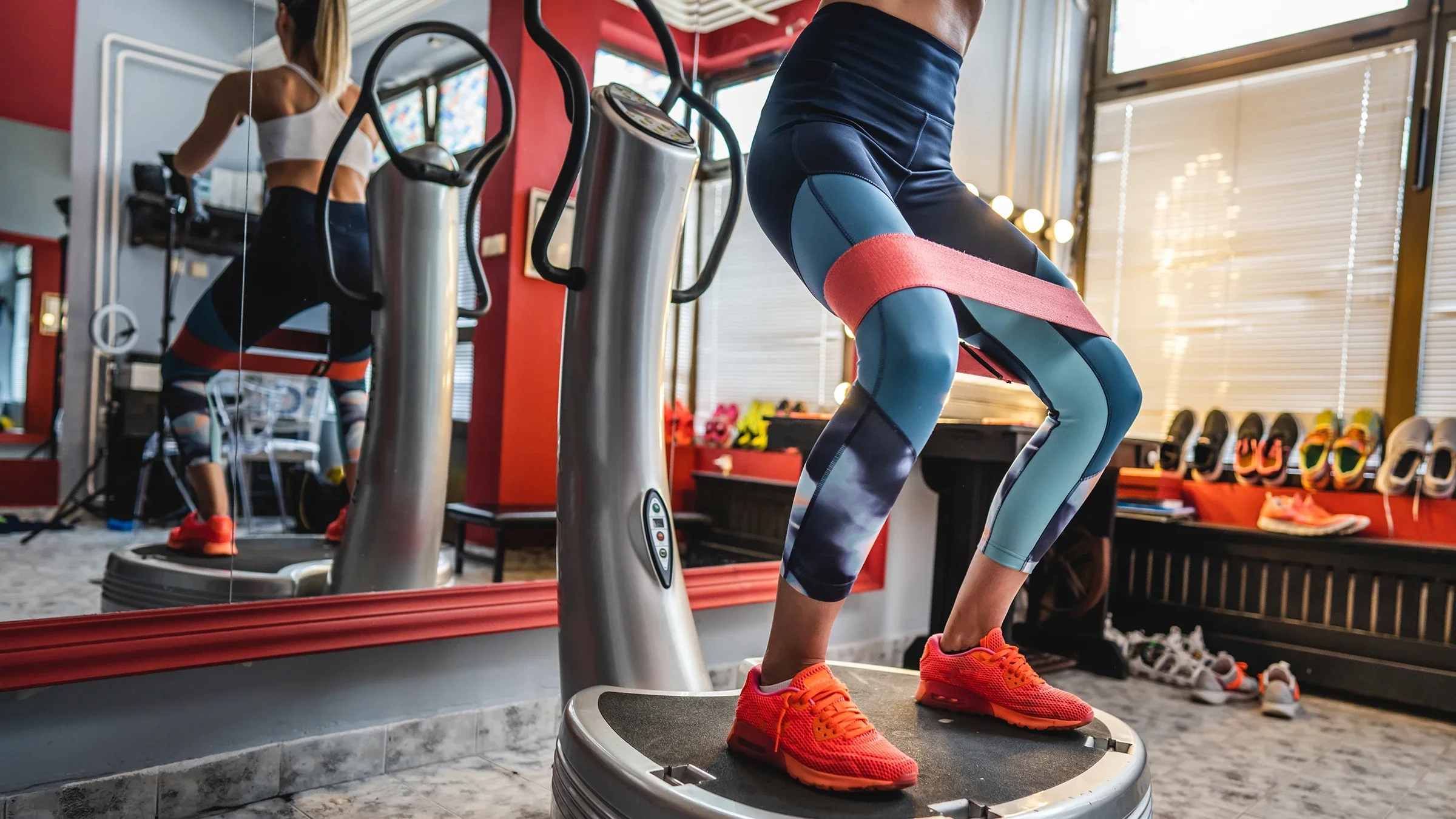
Whole-body vibration training can shake up your workouts, literally and figuratively. It requires a vibration plate, which is a vibrating platform that may have handles. The platform shakes as you stand, sit, or lie on it while exercising.
Vibration plates have different frequency levels. The higher the frequency, the more intense your workout will be. You can adjust the intensity based on your fitness level. Plates vary in size and price, but many are suitable for home use.
There are a lot of claims about the health benefits of vibration plate training. But do vibration plates really work? Here’s a look at what the research shows about the possible benefits of vibration plates and how to use them safely.
Search and compare options
1. Increase circulation
Healthy circulation is essential for everything from immune function to wound healing. Your blood flow brings oxygen and nutrients to your body, allowing it to work properly.
Exercising on a vibration plate may increase circulation. Research suggests that vibration boosts blood flow by making muscles contract and by widening blood vessels.
2. Strengthen muscles
Experts recommend that adults do at least two muscle-strengthening workouts per week. You can work toward that goal by doing bodyweight exercises on a vibration plate.
Vibration training has been shown to increase muscle mass and strength in older women and men. In one study, older adults did strength-training exercises after standing on a vibration plate for 20 minutes. They had more lower-body strength and better physical performance than a control group who did strength-training exercises after stretching.
Training with a vibration plate might help you build more muscle than training without one, said Kyle Zagrodzky, the founder and CEO of OsteoStrong, a health center that uses special equipment to strengthen bones, muscles, and joints.
The vibrating platform causes your muscles to contract as you try to remain steady on the plate. These reflexive contractions can help you get stronger by activating more muscles while you exercise. The contractions may also release more testosterone and human growth hormone, which is critical for muscle growth and repair.

Looking for more exercises to improve your balance? Animal flow workouts might be just what you need.
Strength training for weight loss? Consider these exercises and tips to maximize your results.
Soothe sore muscles after exercise: Try proven methods to ease muscle pain.
3. Promote weight loss
Regular cardio and strength training can help you lose weight. Adding vibration training while you exercise might help burn slightly more calories and support weight loss.
"Weight loss is more of a function of diet than exercise," said Zagrodzky. But exercising on a vibration plate makes your muscles work harder. That can help you burn more calories than you would during a standard workout. It may also work because gains in muscle mass improve metabolism. This may be able to speed up weight loss when paired with proper dieting, Zagrodzky explained.
That said, research is mixed on how well vibration plates work for weight loss. For example, some studies suggest that vibration training may result in some fat loss. Other research suggests it may not significantly reduce body fat percentage.
Read more like this
Explore these related articles, suggested for readers like you.
4. Improve balance
Unstable surfaces make it challenging to balance yourself. And vibration training acts like an unstable surface. The shaking plate creates instability that activates your neuromuscular system. Your neuromuscular system, which includes your muscles and nerves, allows you to move your body.
Exercising on a vibration plate can improve balance, coordination, and movement. One study tested the training method among middle-age and older adults. After 8 weeks of vibration plate training, they had better sit-to-stand performance. The researchers noted that this benefit might be linked to better muscle function and proprioception (your body’s ability to sense its position and movement).
5. Support strong bones
Weight-bearing exercises make you work against gravity while standing and supporting your body weight. They increase the load on your bones, keeping them healthy and strong. Examples include walking, hiking, and stair climbing. Some standing vibration plate exercises might fit the bill too.
Studies have shown that vibration training may increase bone mineral density in women with osteoporosis. But some research suggests that the increase isn’t significant.
It might be worth trying. But talk to a healthcare professional first if you have osteoporosis or other health conditions. Vibration plate training shouldn’t replace any traditional treatment.
6. Aid muscle recovery
When you think about exercise recovery, a massage gun is one of the tools that might come to mind. The vibration from the gun can help stretch and soothe sore muscles after exercise. You can think of a vibration plate as a full-body massage gun.
Active stretching after a workout is also important for recovery. But many people skip the cooldown after exercise. “Vibe plates may keep people interested in stretching,” said Zagrodzky. And there are many stretching routines you can try on a vibration plate, he said.
The training method may boost recovery by increasing circulation, reducing inflammation, and releasing tense muscles. One small study found that whole-body vibration reduced muscle soreness after exercise in elite hockey players.
7. Chronic pain
Vibration plates may help some people with certain types of chronic pain, but the research is limited and mixed. Some studies suggest that vibration therapy may provide relief for people with chronic lower back pain. But it’s unlikely to bring significant relief by itself. Adding vibration to an exercise program or physical therapy will likely deliver better results than vibration alone.
Consult with a healthcare professional or physical therapist before trying vibration plates for chronic pain. They can help you figure out if vibration therapy may help your type of pain and suggest appropriate exercises.
Are there disadvantages to vibration plates?
There are disadvantages to vibration plates, but it depends on the individual. For example, vibration plates can make some people feel dizzy or disoriented. And while they might improve your balance, vibration plates can be risky if you have balance problems. The shaking platform could increase your risk of falling.
Some people shouldn’t use vibration plates without the approval of a healthcare professional. This includes people who:
Are pregnant
Are recovering from surgery or injury
Have epilepsy, diabetes, or cardiovascular conditions
Have an implantable device, such as a pacemaker
Vibration plate exercises
A benefit of vibration plate training is that you can do the same exercises you would without the plate. The plate just adds more of a challenge.
If you’re new to vibration exercises, look for vibration plates with a wide platform and handles for more stability. Start with a lower frequency (oscillation per second) and build up from there.
Here are a few vibration plate exercises to get you started.
Squats
Squats help strengthen your core, legs, and glutes.
Step 1: Stand on the plate with your feet hip-width apart.
Step 2: Bend your knees until your thighs are parallel to the floor, or to where your range of motion allows.
Step 3: Straighten your legs to return to the starting position.
Step 4: Continue for 30 seconds.
Planks
Planks are a great total-body exercise. Perfecting your form while using the vibration plate might take some time. You can try practicing on the plate without vibration first.
Step 1: Place your elbows on the vibration plate directly under your shoulders with your palms flat.
Step 2: Step your feet back until your body is in a straight line and is completely supported by your elbows.
Step 3: Hold for 30 seconds.
Push-ups
Push-ups are a great way to target upper-body muscles in your chest, arms, and back.
Step 1: Start in a high plank position, with your hands on the plate, slightly wider than your shoulders.
Step 2: Bend your elbows to a 45-degree angle, bringing your chest to the plate.
Step 3: Push away from the plate to straighten your arms, and return to the starting position.
Step 4: Continue doing push-up repetitions for 30 seconds.
Frequently asked questions
Standing on a vibration plate may provide some benefits. It stimulates the nervous system, said Zagrodzky. That triggers muscle contractions that may boost circulation and improve balance. But exercising on a vibration plate may maximize health benefits.
It depends on your fitness level and workout routine. But you don’t want to overdo it. Try working your way up to 10- to 20-minute vibration plate sessions, 1 to 3 times per week.
How much a vibration plate costs depends on a few things, such as the:
Brand
Total weight capacity
Program options
Motor power
A basic vibration plate can cost around $80, while a professional vibration plate machine can cost thousands of dollars.
Standing on a vibration plate may provide some benefits. It stimulates the nervous system, said Zagrodzky. That triggers muscle contractions that may boost circulation and improve balance. But exercising on a vibration plate may maximize health benefits.
It depends on your fitness level and workout routine. But you don’t want to overdo it. Try working your way up to 10- to 20-minute vibration plate sessions, 1 to 3 times per week.
How much a vibration plate costs depends on a few things, such as the:
Brand
Total weight capacity
Program options
Motor power
A basic vibration plate can cost around $80, while a professional vibration plate machine can cost thousands of dollars.
The bottom line
A vibration plate is a great way to shake up your workout routine. The vibrating platform makes your muscles contract and relax, challenging you to stay steady while exercising. Vibration plate benefits — like better balance and stronger muscles — might help you reach your fitness goals. And you can practice at home. But be sure to talk to a healthcare professional first, especially if you’re pregnant, recovering from surgery, or have health conditions.

Why trust our experts?



References
Akehurst, H., et al. (2021). Whole-body vibration decreases delayed onset muscle soreness following eccentric exercise in elite hockey players: A randomised controlled trial. Journal of Orthopaedic Surgery and Research.
Alivinia, S. M., et al. (2019). Does whole body vibration therapy assist in reducing fat mass or treating obesity in healthy overweight and obese adults? A systematic review and meta-analyses. Disability and Rehabilitation.
Cochrane, D. J. (2012). Is vibration exercise a useful addition to a weight management program? Scandinavian Journal of Medicine and Science in Sports.
Fitlopedia. (2010). Power plate plank [video]. YouTube.
Giminiani, R. D., et al. (2020). Individualized whole-body vibration: Neuromuscular, biochemical, muscle damage and inflammatory acute responses. Dose Response.
Jawed, Y., et al. (2020). Whole-body vibration training increases stem/progenitor cell circulation levels and may attenuate inflammation. Military Medicine.
Jo, N. G., et al. (2021). Effectiveness of whole-body vibration training to improve muscle strength and physical performance in older adults: Prospective, single-blinded, randomized controlled trial. Healthcare.
Ko, M. C., et al. (2017). Whole-body vibration training improves balance control and sit-to-stand performance among middle-aged and older adults: A pilot randomized controlled trial. European Review of Aging and Physical Activity.
Li, Q., et al. (2023). Vibration therapy to improve pain and function in patients with chronic low back pain: A systematic review and meta-analysis. Journal of Orthopaedic Surgery and Research.
Luo, X., et al. (2017). The effect of whole-body vibration therapy on bone metabolism, motor function, and anthropometric parameters in women with postmenopausal osteoporosis. Disability and Rehabilitation.
Machado, A., et al. (2010). Whole-body vibration training increases muscle strength and mass in older women: A randomized-controlled trial. Scandinavian Journal of Medicine and Science in Sports.
Milanese, C., et al. (2018). Metabolic effect of bodyweight whole-body vibration in a 20-min exercise session: A crossover study using verified vibration stimulus. Public Library of Science One.
Omidvar, M., et al. (2019). The effects of whole body vibration therapy on reducing fat mass in the adult general population: A systematic review and meta-analyses. Journal of Musculoskeletal and Neuronal Interactions.
Park, S. Y., et al. (2015). Effects of whole body vibration training on body composition, skeletal muscle strength, and cardiovascular health. Journal of Exercise Rehabilitation.
Power Plate. (2016). Power plate: Dynamic push-up [video]. YouTube.
Power Plate. (2016). Power plate: Dynamic squat [video]. YouTube.
Singh, A., et al. (2023). Whole-body vibration therapy as a modality for treatment of senile and postmenopausal osteoporosis: A review article. Cureus.
Wang, Z., et al. (2022). Effect of whole-body vibration on neuromuscular activation and explosive power of lower limb: A systematic review and meta-analysis. Public Library of Science One.