Key takeaways:
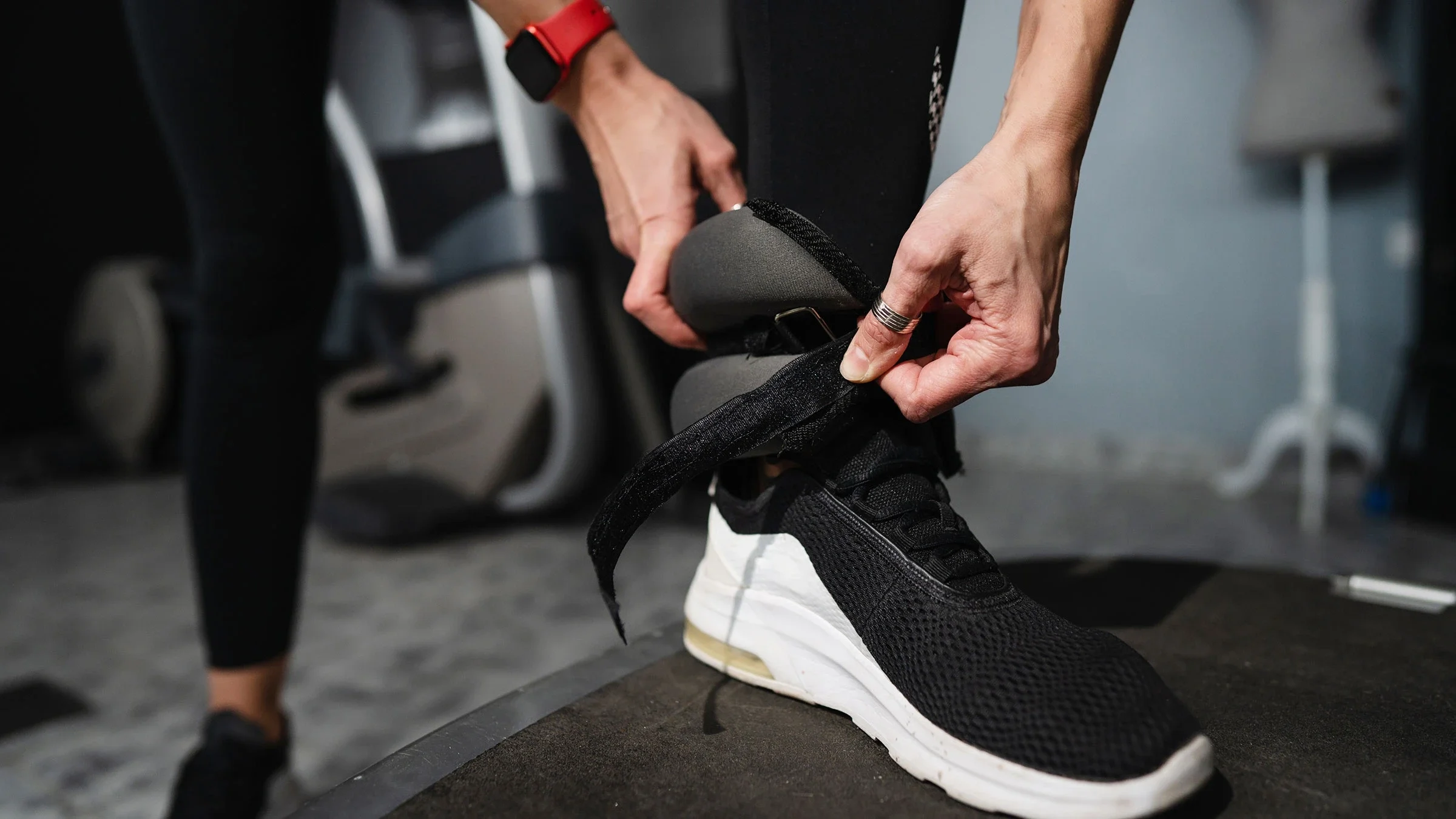
You can wear ankle weights –– weighted cuffs that wrap around your ankles –– during strength-training workouts.
Ankle weight exercises can strengthen your legs and improve functional fitness.
It's important to learn how to perform each exercise in your workout before adding ankle weights.
Wearing ankle weights is a great way to take strength-training workouts to the next level. And they’re simple to use. Just attach the flexible cuffs around your ankles with a Velcro strap or buckle. The added resistance from wearable weights can intensify lower-body workouts and help you build muscle strength. Plus, ankle weight exercises can add variety to your routine.
Here's what you need to know about ankle weights, including exercises, benefits, and tips to get started.
What are the best ankle weight exercises to tone your legs?
The best ankle weight exercises include muscle-strengthening moves that target core and lower-body muscles. Ankle weights are usually filled with sand or iron. The extra weight increases the load on your muscles and joints. And this helps you build or strengthen muscles during resistance workouts.
Search and compare options
But you'll want to avoid wearing ankle weights during cardio workouts such as running or cycling. Increased resistance from the weights can overwork your muscles during repetitive cardio exercises. That can increase the risk of muscle imbalances or overuse injuries. It can also lead to ankle, knee, or hip pain.
Try these ankle weight exercises when you're ready to kick your lower-body strength training workouts up a notch. Make sure your ankle weights are secured before you start.
1. Donkey kicks
Donkey kicks can help strengthen your glutes and hamstring muscles along the back of your thighs.
Step 1: Start in a tabletop position on all fours, with your back straight, knees directly beneath your hips, and hands underneath your shoulders. Keep your gaze down so you look at the floor in front of your hands.
Step 2: Draw your belly button toward your spine to engage your core. This will help you stay stable throughout the exercise.
Step 3: Lift your right knee off the floor slowly while keeping your hands and left leg planted firmly. Remember to keep your spine neutral and your core engaged.
Step 4: Continue raising your right knee to hip level, maintaining a 90-degree bend so that the bottom of your foot moves toward the ceiling. Your thigh should be parallel to the floor, and the sole of your foot should be parallel to the ceiling.
Step 5: Squeeze your glutes and lift your leg a bit higher if you can. Pause for a couple of seconds at the top of the kick.
Step 6: Lower your right leg back toward the starting position.
Step 7: Repeat 10-15 times before switching to your left leg.
2. Fire hydrants
The fire hydrant exercise is a great way to engage core muscles, especially the glutes and hip abductors and adductors.
Step 1: Start on all fours with your hands aligned under your shoulders and your feet under your hips.
Step 2: Keep your spine neutral and engage your core to stay steady during the movement.
Step 3: Keep your knee bent as you lift your right leg out to the side (imagine a dog lifting its leg). Feel your hips open up.
Step 4: Hold briefly before lowering your leg to the starting position.
Step 5: Repeat 10-20 times, then switch to the left leg.
3. Side-lying leg lifts
Side-lying leg lifts target the outer glutes that help keep your hips, knees, and ankles aligned and stable. This exercise –– which can help with better balance and side-to-side movement –– is an excellent option for athletes of all levels.
Step 1: Lie on your right side with your legs extended and your hips, knees, and ankles stacked on top of each other. Bend your right arm, resting your head in your hand. You can place your left hand on the floor in front of you for better balance.
Step 2: Engage your core and raise your left leg toward the ceiling, keeping your leg straight and your toes pointed forward.
Step 3: Pause at the top position for 2-3 seconds.
Step 4: Lower your left leg slowly.
Step 5: Repeat 10-20 times before switching to your left side. As you get stronger, try not to let your top leg rest between reps. Lower it until it almost touches the other leg before lifting it back up.
4. Hamstring curls
Standing hamstring curls target the back of your thighs. The isolation exercise can build strong hamstrings, which help stabilize your knees and reduce the risk of hip, knee, or lower-back injuries.
Step 1: Stand tall with your hands on your hips or at your sides. You can also hold a counter or sturdy chair for extra support.
Step 2: Shift your weight to your left leg. Then slowly bend your right knee, raising your heel toward your butt.
Step 3: Take a deep breath to pause at the top of the move.
Step 4: Lower your foot to the starting position.
Step 5: Complete 10-15 reps on each side.
5. Walking lunges
The walking lunge with ankle weights is an advanced exercise. It can strengthen several core and lower-body muscles, such as the glutes, quadriceps, and hamstrings.
Step 1: Stand tall with good posture and your feet hip-width apart. Place your hands on your hips. Keep your chest up and your core tight.
Step 2: Take a giant step forward with your right leg, planting your foot about 2-3 feet in front of you. Bend both knees as your foot lands.
Step 3: Drop down into a forward lunge by lowering your hips toward the floor. Your right knee should form a 90-degree angle, but don’t let your knee extend beyond your toes. Try not to lean forward or backward.
Step 4: Press your weight into your right heel as you lift and extend your left leg in front of you to take your next step forward.
Step 5: Bend both knees as you lower into another lunge.
Step 6: Continue lunging forward, aiming for 10-15 steps per leg.

Read more like this
Explore these related articles, suggested for readers like you.


What are the benefits of ankle weights?
Here are some of the top benefits of adding ankle weights to your strength-training routine.
Build and strengthen lower-body muscles
Ankle weight workouts can strengthen most of the muscles in your lower body, including the following:
Core, such as the abs and lower back muscles
Gluteal muscles of the hips and butt
Hip flexors along the front of the hips and upper leg
Hip adductors and abductors in the inner and outer thighs
Quadriceps at the front of the thighs
Hamstrings at the back of the thighs
Calves in the back of your lower leg
Improve functional fitness
Functional fitness training includes exercises to help you develop strength, balance, and coordination for daily activities. Using ankle weights for lower-body workouts can improve functional fitness.
Ankle weight exercises have been shown to build strength and help prevent falls in older adults. However, adults can benefit from this form of functional strength training at any age.
Provide a convenient resistance workout
Another benefit of ankle weight exercises is that you can strength train without weight machines. All you have to do is strap on ankle weights with Velcro or cuffs. The wearable weights free up your hands to hold additional weights or do other upper-body moves.
The hands-free workout is an excellent way for beginners to increase leg strength without relying on machines at the gym. More advanced athletes may use ankle weights for rehab exercises or to correct muscle imbalances.
For example, if your hips or glutes are weak, you can perform ankle weight exercises like the side-lying leg lifts to strengthen your gluteus medius and piriformis muscles for running or cycling.
What's the best way to use ankle weights?
Here are a few tips for safely adding ankle weight exercises to your weekly training plan:
Perfect your exercise form first. Ankle weights can make any exercise more challenging. So, it's important to master the proper form for each exercise before you add ankle weights.
Find the right weight. Beginners should start with light ankle weights that are 1 lb to 3 lbs. You can move up to 5 lbs to 10 lbs ankle weights as you get stronger.
Add weight gradually. As with any form of strength training, it takes time to advance to heavier weights. Ankle weights are no exception. Similar to the benefits of warming up before you exercise, it's best to start with lighter weights before moving on to heavier weights.
Don’t use ankle weights during cardio workouts. Wearing ankle weights during cardio workouts can increase the risk of injuries or muscle imbalances. For example, if you wear ankle weights during a cycling workout, you might overwork the quadricep muscles in the front of your thighs. Stick with strength training for ankle weight exercises unless otherwise guided by a medical or fitness professional.
Frequently asked questions
Ankle weights can make walking more challenging by adding resistance to your leg movements. But they may also place extra stress on your joints and alter your natural walking form, which can raise the risk of strain or injury. This is why experts generally don’t recommend using ankle weights for cardio.
For most people, it’s safer to increase walking intensity by walking faster, uphill, or for longer periods. A weighted vest is another option if you want to make your walk more challenging.
Yes, doing exercises with ankle weights can support weight loss. But keep in mind that sustainable weight loss typically requires a combination of regular cardio, strength training, and a nutritious diet.
Like with any workout routine, it’s helpful to do a variety of exercises and to switch things up. This lets you target different muscle groups and gives them time to recover. Doing the same movements every day can lead to muscle strain or overuse injuries.
Ankle weights can make walking more challenging by adding resistance to your leg movements. But they may also place extra stress on your joints and alter your natural walking form, which can raise the risk of strain or injury. This is why experts generally don’t recommend using ankle weights for cardio.
For most people, it’s safer to increase walking intensity by walking faster, uphill, or for longer periods. A weighted vest is another option if you want to make your walk more challenging.
Yes, doing exercises with ankle weights can support weight loss. But keep in mind that sustainable weight loss typically requires a combination of regular cardio, strength training, and a nutritious diet.
Like with any workout routine, it’s helpful to do a variety of exercises and to switch things up. This lets you target different muscle groups and gives them time to recover. Doing the same movements every day can lead to muscle strain or overuse injuries.
The bottom line
Adding ankle weights to your strength-training plan can help strengthen your lower-body muscles. Ankle weight exercises are a good way for beginners to take resistance workouts to the next level. But be sure to ease into ankle weight exercises –– by learning proper form first and increasing weight slowly –– to prevent injuries.

Why trust our experts?



References
Akatsu, H., et al. (2021). The effect on lower limbs of wearing ankle weights in people under/over 70 years old: Single comparison after intervention. ResearchGate.
Akatsu, H., et al. (2022). Effect of ankle weights as a frailty prevention strategy in the community-dwelling elderly: A preliminary report. International Journal of Environmental Research and Public Health.
CrossFit. (2015). The walking lunge [video]. YouTube.
Leap Fitness. (2020). How to: Donkey kicks [video]. YouTube.
PhysiHub Library. (2019). Hamstring curls (ankle weight, standing, chair supported) [video]. YouTube.
Romero, I. (2020). Fire hydrants with ankle weights [video]. YouTube.