Key takeaways:
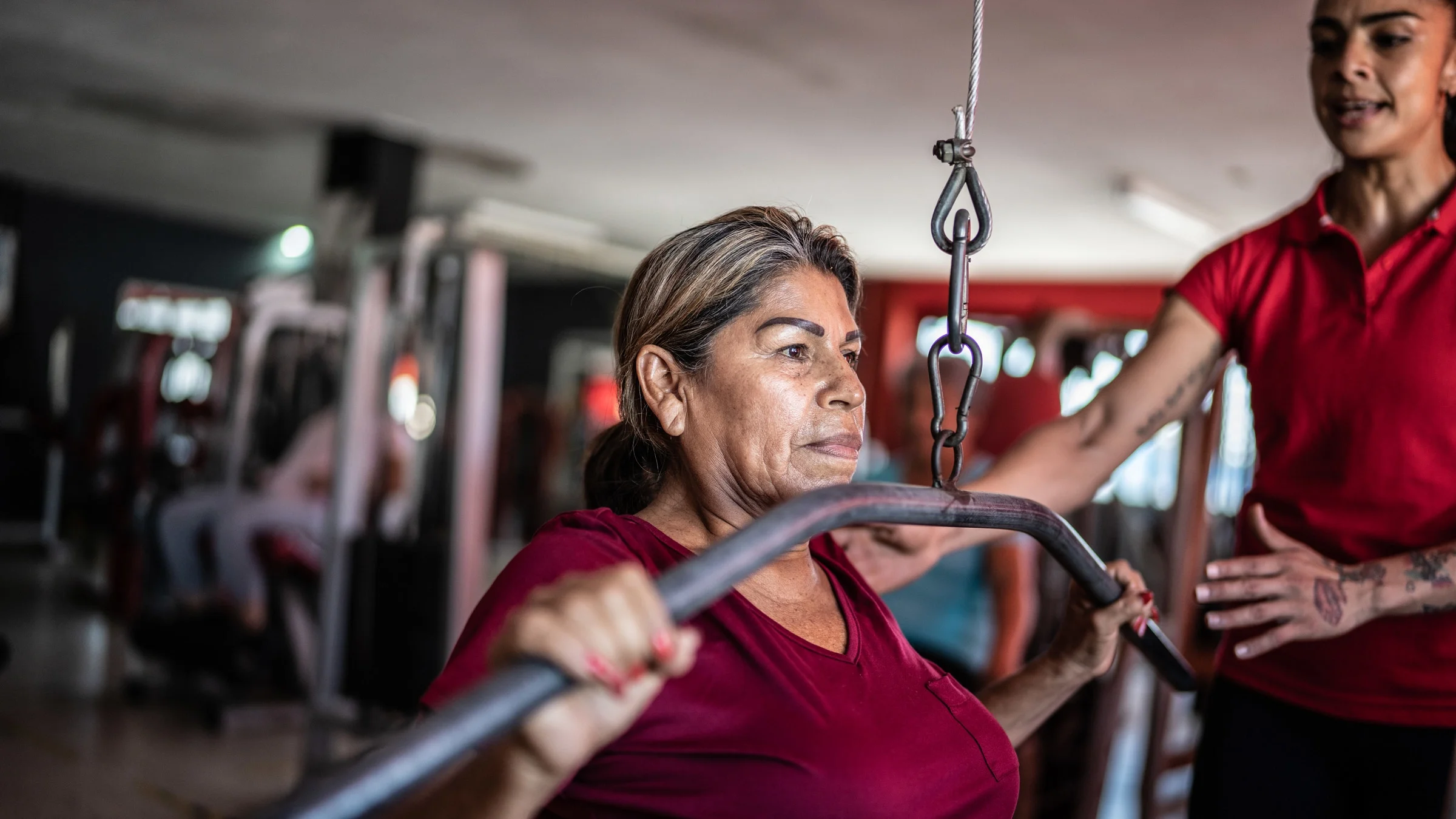
Isolation exercises –– like bicep curls, chest flys, and calf raises –– target one joint and muscle group at a time.
They can strengthen muscles after injury, correct imbalances, and help you learn proper exercise form.
Isolation exercises are most effective when combined with compound exercises for a balanced workout.
Compound exercises are often regarded as the most efficient way to build muscle strength. And there's a reason for that. They train several muscle groups at once and mirror movements we make in our everyday lives. But that doesn't mean you should avoid isolation exercises. These single-joint movements are a great way to target specific muscles. So a balanced fitness plan may include compound and isolation exercises.
What are isolation exercises?
Isolation exercises are single-joint movements that work a limited number of muscles, usually from one muscle group. So there are several options for each muscle group in your body.
If it sounds intimidating, don't worry. Many isolation exercises are classics, so you may already have some in your routine. Foundational movements like chest flys, bicep curls, and calf raises are all isolation exercises. For example, you extend your ankle joint to lift your heel during a calf raise. You engage your calf muscles, including the gastrocnemius and soleus, as you lift and lower your heel.
Search and compare options
You can choose isolation exercises based on your fitness level, workout preferences, and goals. And you can do them with machines, free weights, or your body weight.
Here are some examples of isolation exercises for major muscle groups:
Biceps
Hammer curl
Triceps
Triceps pushdown
Hamstrings
Hamstring curl
Quadriceps
Leg adduction
Calves
Seated or standing calf raise
Single-leg calf press
What are the benefits of isolation exercises?
Isolation exercises can complement compound moves –– like burpees, squats, and lunges –– that focus on improving functional strength and mobility. They also offer unique benefits that could earn them a spot in your strength-training routine.
Help you learn proper form
Since isolation exercises target one muscle group, they can help you master proper form. Using one joint at a time lets you zero in on any flaws in your technique or mechanics. Correcting those flaws may improve your exercise performance.
For example, a push-up is a compound move that requires core and upper-body strength. You have to remember to keep your back straight and elbows unlocked. That's a lot to keep track of. The move is even harder if your arms aren't strong enough to lower and lift your body.

Read more like this
Explore these related articles, suggested for readers like you.

Practicing isolation exercises like a triceps extension might help. You move your elbow to engage the triceps muscle on the back of your upper arm. With fewer joints and muscles in action, it's easier to target and strengthen your triceps. Stronger triceps can help you seamlessly extend your elbows and lift heavier weights. That could lead to better, more efficient push-ups.
Strengthen muscles after injury
After an injury –– like a sprain, strain, or fracture –– inactive recovery time can weaken your affected muscles and joints. Your stronger, uninjured muscles may overcompensate for weaker ones. That could result in muscle imbalances, which occur when one group of muscles is bigger, stronger, or tighter than another. It could also lead to further injury.
In those cases, isolation exercises may strengthen weakened muscles and stabilize joints. So experts often recommend single-joint movements to help you rebuild muscle strength after an injury or surgery. Then, you can safely return to training multiple muscle groups at once.
Correct muscle imbalances
You could also have a muscle imbalance from repetitive movements or overtraining. A tennis player, for instance, might have a stronger, more muscular dominant arm. Unilateral or one-sided isolation exercises –– like a wrist curl or lateral raise –– on the nondominant side can help fix the imbalance and prevent future injuries.
Are there risks of isolation exercises?
Although they may help correct muscle imbalances, isolation exercises can also cause muscle imbalances. After all, targeting a single muscle group and ignoring another is one of several things that lead to an imbalance in the first place.
You might add isolation exercises to your strength-training workouts if you want bigger biceps. But if you neglect your triceps, the antagonist or opposing muscle, you may find yourself out of balance. And your performance could suffer. Opposing muscle groups, like the biceps and triceps, work together to help you move. So it's crucial to train them both.
How do you add isolation exercises to a workout routine?
Finding the right balance between compound and isolation exercises is key to a well-rounded strength-training plan. It might take some trial and error to find that balance. But the following tips can point you in the right direction.
Start with weight machines
You can practice isolation exercises with all kinds of equipment, from dumbbells to barbells. But weight machines –– like the cable or curl machine –– are a good way for beginners to get started. They have adjustable settings that help you isolate muscle groups with guided movements.
Weight machines also provide a limited range of motion because they focus on specific moves. So there's less room for error or injury. If you have access to a gym, you can work on your exercise form with weight machines. Then, try isolation exercises with free weights.
Practice isolation and compound exercises in the same workout
Weekly training volume may be more important than frequency to build or strengthen muscles. Start with the recommended two weekly strength-training workouts targeting major muscle groups. Focus on your workout quality, like how much weight you will lift or how many reps and sets you will do.
Compound exercises give you the most bang for your buck because they work several muscles at once. But you can use isolation exercises to complement those movements. This is a helpful way to increase total-body strength and target specific muscles.
Aim for two to four exercises per muscle group in each strength session, prioritizing compound movements. If you start with three exercises per muscle group, make one of them an isolation move. Try an 80/20 split of compound to isolation exercises if you do more than three exercises per muscle group.
Do isolation exercises after compound movements
Start your workout with compound movements and finish with isolation exercises that work the same muscle groups. Say you did a couple of squat reps for leg day. The compound move engages the quads, glutes, hamstrings, and calves. You could follow up with isolation exercises like leg extensions, hamstring curls, or glute bridges.
This method can show you what muscles or aspects of your form need work. It also allows you to save your energy for more demanding compound exercises. Some claim that starting with isolation exercises will exhaust your muscles and prime them for growth. But research doesn't support that idea.
Stick to prioritizing compound exercises and using isolation exercises to work on problem areas afterward. And remember to warm up and cool down before and after every workout.
The bottom line
Compound exercises are a great way to work several muscle groups at once. They can improve your functional strength, allowing you to move easily during exercise and daily activities. Moving multiple muscle groups in sync requires balanced muscular development. And that's where isolation exercises are indispensable. Incorporating single-joint moves into your strength-training routine can improve your exercise form and keep your muscles balanced.

Why trust our experts?




References
American Council on Exercise. (n.d.). Bicep curl.
American Council on Exercise. (n.d.). Lateral raise.
American Council on Exercise. (n.d.). Seated biceps curl.
American Council on Exercise. (n.d.). Seated leg extension.
American Council on Exercise. (n.d.). Single-leg Romanian deadlift.
American Council on Exercise. (n.d.). Standing calf raises – wall.
American Council on Exercise. (n.d.). Standing chest fly.
American Council on Exercise. (n.d.). Triceps extension.
Baxter, J. R., et al. (2021). Exercise progression to incrementally load the Achilles tendon. Medicine and Science in Sports and Exercise.
Centers for Disease Control and Prevention. (2022). How much physical activity do adults need?
Ellenbecker, T. S., et al. (2009). Common injuries in tennis players: Exercises to address muscular imbalances and reduce injury risk. Strength and Conditioning Journal.
Fisher, J. P., et al. (2014). The effects of pre-exhaustion, exercise order, and rest intervals in a full-body resistance training intervention. Applied Physiology, Nutrition, and Metabolism.
Iversen, V. M., et al. (2021). No time to lift? Designing time-efficient training programs for strength and hypertrophy: A narrative review. Sports Medicine.
Ralston, G. W., et al. (2018). Weekly training frequency effects on strength gain: A meta-analysis. Sports Medicine - Open.