Key takeaways:
Papayas contain a digestive enzyme called papain, which may help with digestion. Most research has studied supplements with papain rather than ripe papaya fruit.
It’s possible that papaya enzymes can help with symptoms like bloating, gas, and constipation. But most reported health benefits don’t have enough research to support their use.
There are some important side effects and health risks associated with unripe papayas and papaya enzymes. They can cause dangerous allergic reactions and may interact with certain medications.
Papaya fruit and papaya enzyme supplements are often used to help support digestion and gut health. And if you experience symptoms like bloating and gas, this may seem worth a try. But before you change your diet or take digestive enzymes, learn more about what papaya enzyme is and how it affects your stomach and gut.
What is papain?
Papain is a natural enzyme found in papaya fruit. It can be extracted from the fruit’s latex, the white fluid found in raw, unripe papaya. Papain specifically works by breaking down proteins.
Papain is considered a digestive enzyme that may help you digest and absorb nutrients from food. But it has been used in a number of different ways that go beyond human gut health. For example, it has been used to tenderize meat and in laboratory testing. It has also been used to help with health conditions like dental decay and wound healing.
Search and compare options
What are the alleged benefits of papaya enzymes?
Like other digestive enzymes, papain may help relieve symptoms related to slow or problematic digestion. These often include:
One small study found that people with symptoms of irritable bowel syndrome (IBS) and indigestion reported significant improvements in constipation and bloating after taking 20 mL of concentrated papaya enzymes (Caricol) daily for 40 days. It’s important to note that this study used a papaya supplement, not the whole fruit.
There have also been studies looking at whether papain can help with symptoms of reflux, heartburn, and gastroesophageal reflux disease (GERD). So far, the evidence is too limited to show that papain provides a meaningful benefit.
Other possible benefits
Researchers have explored papaya enzymes for uses beyond digestion. Most of the studies have been very small or conducted in animals or laboratories. Here are some areas of exploration for papaya enzyme:
Wound healing: This is one of the more researched areas. Studies in mice have been promising, and one small human study found that papaya enzymes helped wound healing in people with diabetic foot ulcers. It’s important to note that the FDA has flagged 35 papain-based topical products because of hypersensitivity concerns. Unless a healthcare professional recommends a papaya-based product, it’s best to avoid applying papaya to a wound.
Sore throat: One small study showed that a lozenge with papain helped improve sore throat symptoms. But the lozenge also included other active ingredients. So, the benefit can’t be attributed to papain alone.
Pain: In the two studies above, it was found that reduced inflammation and swelling helped ease sore throat symptoms. Another study in rats showed that papain helped with movement after induced neuropathic pain similar to sciatica.
Weight loss: This is a newer area of exploration. One study of rats found that papaya juice helped reduce inflammation associated with a high-fat diet. Another found similar results in mice, along with a reduction in fat accumulation. But these claims haven’t been evaluated in humans yet.
Inflammation: One small study suggested that people who took papain after dental surgery had less facial swelling in the week after the procedure.
Does papaya enzyme make you poop?
Papaya enzyme supplements haven’t been shown to reliably help you poop or relieve constipation. But ripe papaya fruit may help support regular bowel movements because it contains fiber.
One small papaya contains about 3 g of fiber. That’s less than some other fruits. But it can still help you meet your daily recommended amount of fiber. General recommendations for adults are about 25 g per day for women and 38 g per day for men.
Are papaya supplements as beneficial as papaya fruit?
Much of the research done on papain has looked at supplements containing a papaya enzyme complex rather than the whole papaya fruit. Even so, the research on papain is limited.

Read more like this
Explore these related articles, suggested for readers like you.




Supplements that contain papain might help support digestion. But they lack the fiber, vitamins, and minerals found in the whole papaya fruit. Eating the whole fruit is a more nutrient-dense choice. It also makes it easier to know how much you’re eating with whole fruit.
The FDA doesn’t regulate supplements, so a product may not always contain the ingredients or amounts listed on the label. That’s why it’s a good idea to always buy supplements that are made by high-quality brands that have been third-party tested by agencies like the U.S. Pharmacopeia (USP) and NSF International.
Papaya enzyme potential side effects
Papain supplements can cause discomfort and may irritate your mouth, throat, or esophagus, particularly in high amounts. Other possible side effects or risks depend on the type of papaya product you use, your health, and other medications you take:
Allergic reaction: Don’t take papaya enzymes if you have an allergy to papaya fruit or latex. Anaphylaxis is possible, particularly in children.
Pregnancy and nursing: There’s some evidence that unripe papaya can be harmful to a developing fetus. It’s not recommended for people who are nursing either.
Lower blood sugar: Fermented forms of papaya may lower blood sugar to dangerous levels. This could be particularly dangerous for people who are taking medications for diabetes. If you’re having surgery, ask your healthcare professional whether you should stop taking papaya supplements beforehand. Some supplements may need to be stopped at least 2 weeks beforehand.
Bleeding: Papaya could interfere with normal blood clotting. It also can interact with warfarin (Coumadin), and increase its effects in your body. This could lead to dangerous or life-threatening bleeding.
Frequently asked questions
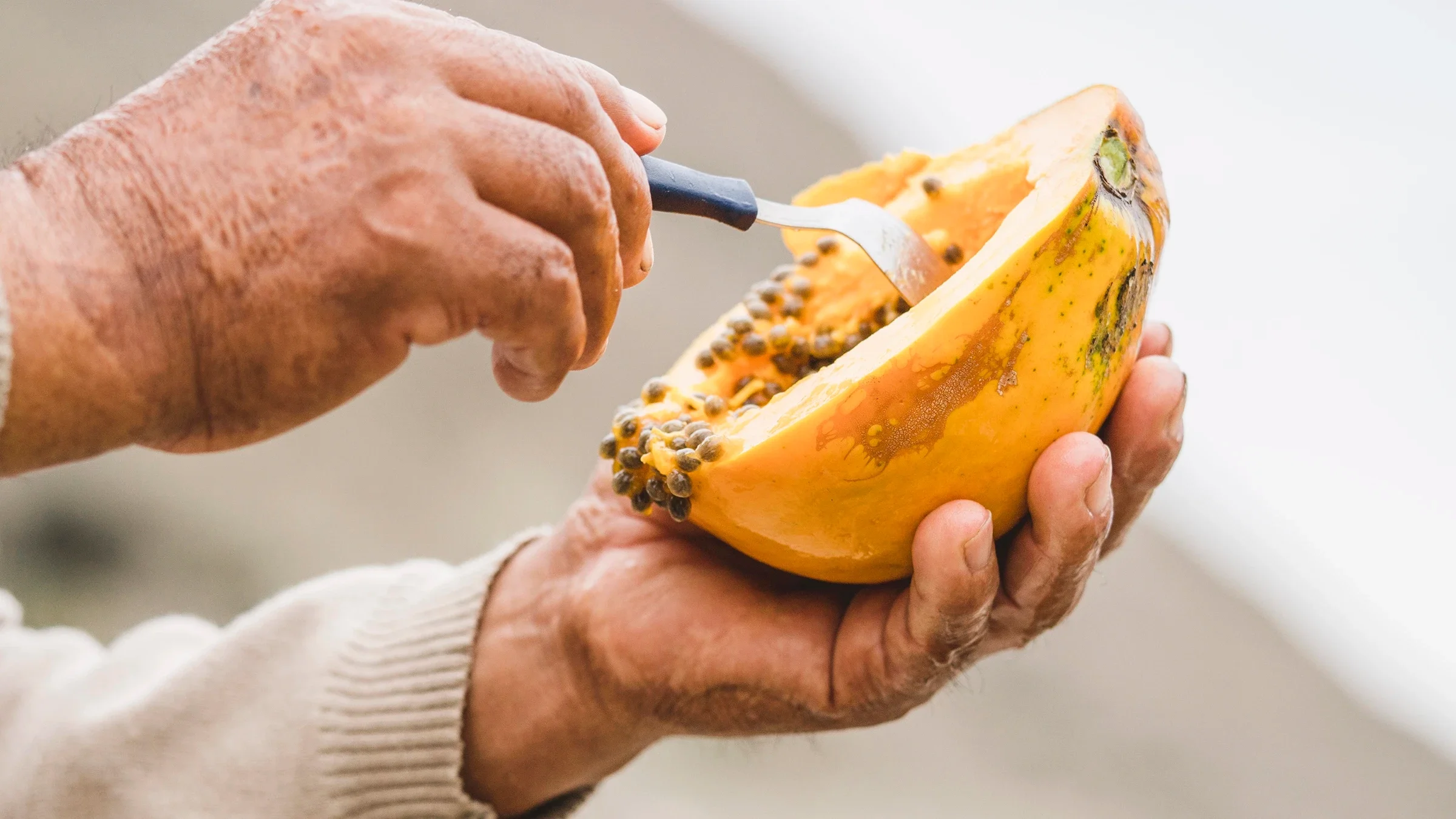
A papaya is ripe when its skin starts to turn from green to yellow. The fruit should be slightly soft when you press on it. After you’ve found a ripe papaya, begin by peeling it. Then cut it in half lengthwise and scoop out the seeds. You can slice, cube, or scoop out the flesh before eating it. Papaya can be added to many recipes, such as smoothies, salsas, and salads. And it can be eaten on its own.
It’s likely OK to eat papaya every day. The World Health Organization (WHO) recommends eating at least 5 servings of fruits and vegetables per day to support overall health. Papaya can help you meet that goal. But it’s best to eat a variety of fruits because each provides different nutrients.
Most people who use a papaya enzyme supplement take a dose with each meal, three times a day. But since the safety of papaya enzymes hasn’t been fully explored, it’s hard to know the best way to dose it.
The bottom line
Papaya contains a natural digestive enzyme called papain, which may help support digestion. Since there isn’t a lot of research on the topic, it’s hard to know how much of a difference it makes. Most of the reported health benefits, like wound healing and weight loss, come from animal studies instead of human studies. There are some people who should avoid papaya enzymes altogether given its health risks. These include people with latex allergies, people who take diabetes or blood-thinning medications, and those who are pregnant or nursing.

Why trust our experts?



References
Balasubrahmanya, K. S., et al. (2017). A prospective study on effectiveness of use of papain urea based preparation in dressings compared with regular conventional dressings in diabetic foot ulcers. International Surgery Journal.
Essack, S., et al. (2019). Topical (local) antibiotics for respiratory infections with sore throat: An antibiotic stewardship perspective. Journal of Clinical Pharmacy and Therapeutics.
FoodData Central. (2019). Papayas, raw. U.S. Department of Agriculture.
Hakim, R. F., et al. (2019). Effect of carica papaya extract toward incised wound healing process in mice (mus musculus) clinically and histologically. Evidence-Based Complementary and Alternative Medicine.
Kang, Y., et al. (2021). Papain ameliorates lipid accumulation and inflammation in high-fat diet-induced obesity mice and 3T3-L1 adipocytes via AMPK activation. International Journal of Molecular Sciences.
Lim, X. Y., et al. (2021). Carica papaya L. leaf: A systematic scoping review on biological safety and herb-drug interactions. Evidence-Based Complementary and Alternative Medicine.
Menon, V. D., et al. (2021). Effectiveness of papain as an anti-inflammatory agent in patients undergoing surgical removal of impacted teeth-a randomized double blinded clinical trial. Journal of Research in Medical and Dental Science.
Muss, C., et al. (2013). Papaya preparation (Caricol) in digestive disorders. Neuroendocrinology Letters.
Nascimento, N. S., et al. (2024). Enzymes for dermatological use. Exp Dermatol.
Od-Ek, P., et al. (2020). Anti‑obesity effect of Carica papaya in high‑fat diet fed rats. Biomedical Reports.
Schulz, R. M., et al. (2022). Effectiveness of nutritional ingredients on upper gastrointestinal conditions and symptoms: A narrative review. Nutrients.
ScienceDirect. (n.d.). Papain.
U.S. Food and Drug Administration. (2022). Information for consumers on using dietary supplements.
Wiart, C., et al. (2024). Review of Malaysian medicinal plants with potential wound healing activity. BMC Complementary Medicines and Therapies.
Yaidikar, L., et al. (2019). Papain, an active constituent of Carica papaya ameliorates neuropathic pain in rats subjected to sciatic nerve ligation by mitigating oxidative damage and excitotoxicity. ACTA Scientific Neurology.