Key takeaways:
Matcha is a type of green tea made from the powder of ground tea leaves. It has become a popular alternative to coffee.
Matcha and coffee have many similarities, including their high antioxidant content. But they also differ in how they’re grown, how much caffeine they have, and how that caffeine works in your body.
Both drinks have health benefits, so which one you choose is a matter of personal preference.
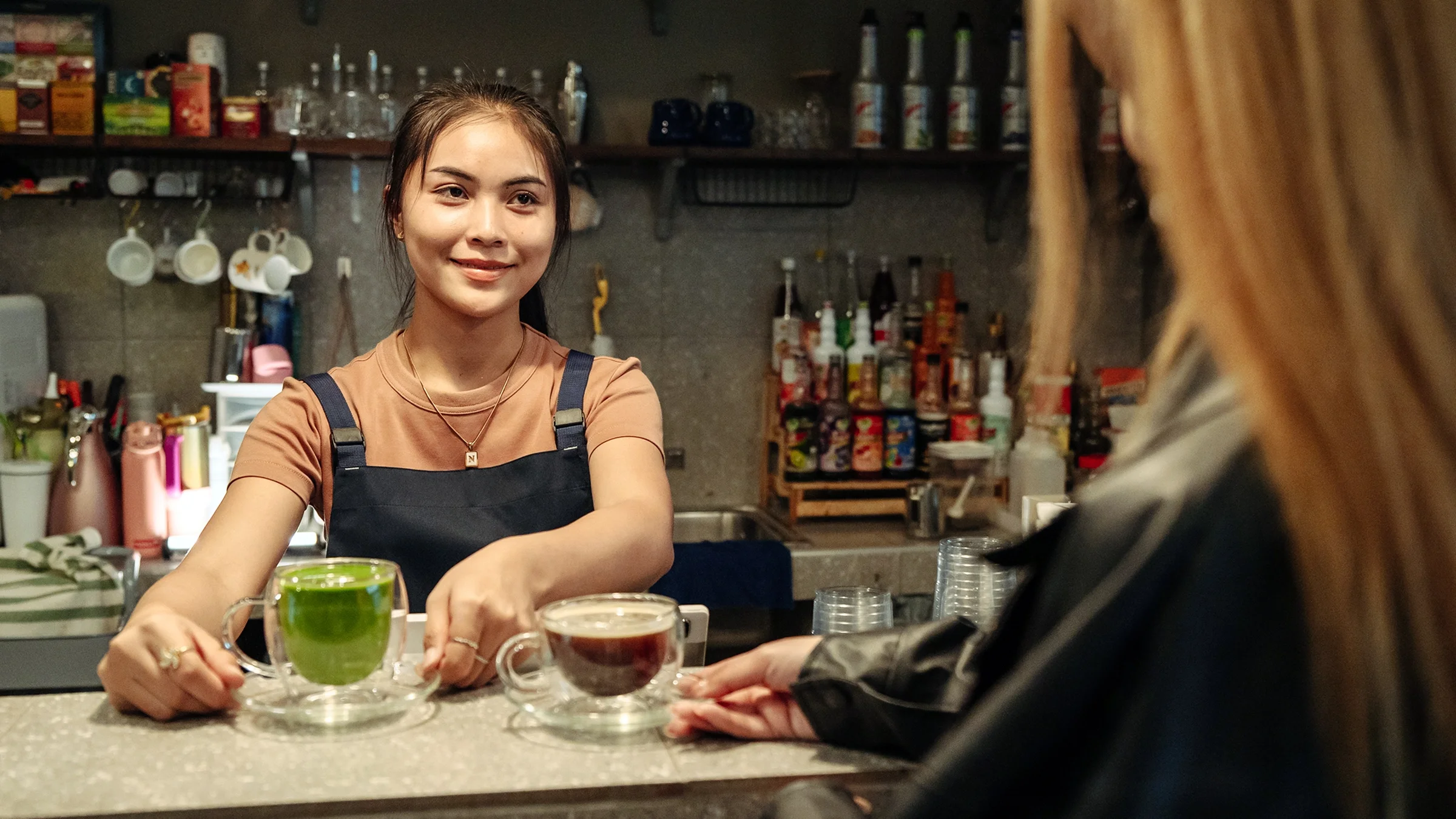
If you’ve been to a coffee shop lately, you may have seen a bright green drink being served up. That’s matcha — a type of green tea that’s often ordered as a latte.
Matcha has become popular over the past few years, with many people drinking it instead of coffee. But is matcha healthier than coffee? What are the differences between matcha and coffee? And when it comes to choosing matcha versus coffee, which is right for you? Let’s take a look at how the two drinks compare.
What is matcha tea?
Matcha is a type of powdered green tea that originated in China many centuries ago. But the version most people drink today is a type of Japanese tea. Most matcha is produced in Japan, where it’s part of the traditional Japanese tea ceremony.
Matcha comes from the same plant as green tea, called Camellia sinensis. But unlike green tea, which is brewed by steeping dried leaves in hot water, matcha uses the entire tea leaf. To make matcha powder, green tea leaves are ground into a fine powder.
Matcha plants grow in the shade rather than in direct sunlight. This can increase some of the nutrients in the plant, including chlorophyll, which gives matcha its darker green color. Shade-growing may also increase matcha tea’s:
Antioxidants
Anti-inflammatory properties
Caffeine
Amino acids
Some research cites matcha as the highest quality tea due to its unique chemical composition.
Matcha and coffee similarities
Coffee is brewed from coffee beans, while matcha is made by grinding green tea leaves into a fine powder. But there are some similarities between matcha and coffee.
High in antioxidants
Both coffee and matcha tea are among the drinks highest in antioxidants. Antioxidants are nutrients that protect your body’s cells from damage. They help fight off free radicals, which are unstable molecules that can damage your cells. When too many free radicals build up in your body, a condition called oxidative stress can occur. Oxidative stress increases your risk of chronic conditions including:
Cancer
Heart disease
Type 2 diabetes
Kidney disease
Neurological disorders like Alzheimer’s disease and Parkinson’s disease
Specifically, matcha and coffee both contain polyphenols, a type of antioxidant found in plants. But each drink contains different kinds of polyphenols. Coffee’s main polyphenol is chlorogenic acid, while matcha contains catechins. But all antioxidants protect the cells in your body from oxidative stress.
Minimal calories
Both plain, unsweetened matcha and black coffee are very low in calories and contain no carbohydrates or fat. (Some preparations of matcha powder have a small amount of protein.) Of course, adding milk, sugar, or other sweeteners, will change the nutrient amounts.
Contains natural caffeine
Matcha and coffee both contain caffeine. Caffeine increases dopamine, often nicknamed the “feel-good” chemical, which can improve your overall mood. And caffeine may be linked to a lower risk of both depression and anxiety.
Caffeine may also help treat headaches, especially migraines. That’s because caffeine narrows blood vessels in your brain. This helps to reduce blood flow and pressure, which can improve pain.
Matcha vs. coffee: What are the differences?
Below are some of the ways matcha and coffee differ.
Caffeine response
An 8-oz cup of matcha usually has around 38 mg to 88 mg of caffeine. The exact amount will vary depending on things like how much powder is used, the grade (quality) of the powder, and the age of the tea leaves used. In comparison, an 8-oz brewed cup of coffee has 95 mg to 165 mg of caffeine.
But the amount of caffeine isn’t the only difference. The way your body responds to the caffeine differs as well.
Matcha contains an amino acid called L-theanine, which helps promote relaxation. So even though caffeine acts as a stimulant, the presence of L-theanine means that matcha’s energy boost is a bit gentler compared to coffee’s. Many people describe matcha’s caffeine boost as more gradual, calming, and sustained.
Some people tolerate caffeine from matcha better than they do from coffee. This is because the caffeine in coffee can sometimes make anxiety symptoms worse or cause a jittery feeling.
Price
The price of matcha and coffee can vary a lot depending on the quality and brand. But matcha is generally more expensive than coffee. This is likely because matcha requires a multi-step harvesting and manufacturing processes. And matcha is grown almost exclusively in Japan. Coffee, on the other hand, is grown in many different parts of the world. This usually makes it easier to find and less costly.
Matcha is becoming more popular, but it still isn’t as widely available as coffee.
Preparation
The most common way to make coffee is by brewing ground beans with hot water. But matcha isn’t brewed.
To make matcha, you whisk matcha powder with hot water. Many people prepare matcha as a latte by adding their milk of choice, frothed or as-is. And, as with coffee, you can stir in sweetener of choice and enjoy it hot or over ice.
Taste
Matcha and coffee have very different flavor profiles. Matcha is often described as tasting “earthy” or “grassy.” Coffee has a more acidic and bitter taste. Neither drink is naturally sweet.
Which should you choose?
Both matcha and coffee provide health benefits. Which one you choose really depends on your own personal taste preferences and caffeine tolerance.
Coffee can be a great option if you're looking for a quick, bold energy boost. Matcha may be a better choice if you’re looking for less caffeine or if you experience side effects from coffee.
Whichever drink you choose, try to drink it without:
Too much added sugar
Artificial flavors or other food additives
Processed coffee creamers
Frequently asked questions
Matcha is a type of green tea, but they are two different beverages. Regular green tea is made by steeping dried leaves in hot water. Matcha uses the entire green tea leaf, which is ground into a fine powder. Matcha is usually prepared as a latte with frothed milk, while traditional green tea is usually enjoyed plain. And matcha has a darker green color than regular green tea because of its higher chlorophyll content.
Both matcha and regular coffee contain caffeine. Drinking caffeine at night can interfere with sleep. Some research suggests avoiding caffeine within 6 hours of bedtime. If you’re going to drink either beverage at night, stick to the decaffeinated version to help preserve your sleep. Decaffeinated coffee is easy to find, though it still has some caffeine. Decaffeinated matcha is less common, but you may be able to buy it online.
Yes. Both coffee and matcha can be comforting warm (or cold) drinks that provide a bump of caffeine for energy. Some people find that matcha is a helpful substitute if they’re trying to stop drinking coffee (or simply drink less of it).
Matcha is a type of green tea, but they are two different beverages. Regular green tea is made by steeping dried leaves in hot water. Matcha uses the entire green tea leaf, which is ground into a fine powder. Matcha is usually prepared as a latte with frothed milk, while traditional green tea is usually enjoyed plain. And matcha has a darker green color than regular green tea because of its higher chlorophyll content.
Both matcha and regular coffee contain caffeine. Drinking caffeine at night can interfere with sleep. Some research suggests avoiding caffeine within 6 hours of bedtime. If you’re going to drink either beverage at night, stick to the decaffeinated version to help preserve your sleep. Decaffeinated coffee is easy to find, though it still has some caffeine. Decaffeinated matcha is less common, but you may be able to buy it online.
Yes. Both coffee and matcha can be comforting warm (or cold) drinks that provide a bump of caffeine for energy. Some people find that matcha is a helpful substitute if they’re trying to stop drinking coffee (or simply drink less of it).
The bottom line
Matcha and coffee are both naturally caffeinated drinks and a great source of antioxidants. One difference between the two drinks is the amount of caffeine they contain — and how your body responds to that caffeine. Ultimately, both matcha and coffee can provide benefits for your health. So, choose the one you like better. You can even drink both. Just try to enjoy your matcha or coffee without too much added sugar.

Why trust our experts?




References
Japan National Tourism Organization. (n.d.). Guide: Japanese tea ceremony.
Kika, J., et al. (2024). Matcha green tea: Chemical composition, phenolic acids, caffeine and fatty acid profile. Foods.
Kochman, J., et al. (2020). Health benefits and chemical composition of matcha green tea: A review. Molecules.
Min, J., et al. (2023). The association between coffee consumption and risk of incident depression and anxiety: Exploring the benefits of moderate intake. Psychiatry Research.
My Food Data. (n.d.). High brew - black & bold coffee.
My Food Data. (n.d.). Purity - organic matcha.
Pandey, K. B., et al. (2009). Plant polyphenols as dietary antioxidants in human health and disease. Oxidative Medicine and Cellular Longevity.
Reddy, V. P. (2023). Oxidative stress in health and disease. Biomedicines.
ScienceDirect. (n.d.). Chlorogenic acid.
Sokary, S., et al. (2022). The therapeutic potential of matcha tea: A critical review on human and animal studies. Current Research in Food Science.
Volkow, N. D., et al. (2015). Caffeine increases striatal dopamine D2/D3 receptor availability in the human brain. Translational Psychiatry.
Weiss, D. J., et al. (2003). Determination of catechins in matcha green tea by micellar electrokinetic chromatography. Journal of Chromatography A.
Yashin, A., et al. (2013). Antioxidant and antiradical activity of coffee. Antioxidants.