Key takeaways:
Many foods are high in sodium — like processed meats, condiments, and frozen meals — before you even touch the salt shaker.
Sodium plays many essential roles in your body, but consuming too much of it can lead to health problems like high blood pressure, stroke, and kidney disease.
The Dietary Guidelines for Americans recommends consuming no more than 2,300 mg of sodium per day, but most people in the U.S. have much more than this.
You may have heard that you shouldn’t eat too much sodium. It’s bad for your heart and can cause things like dehydration and kidney problems, just to name a few. But, where is sodium actually coming from in your diet?
Read on to learn about eight of the top high-sodium foods, as well as how much sodium you should have and what it actually does in your body.
Foods high in sodium
A few foods — including meat, seafood, and dairy products — naturally contain some sodium. But the rest of the salt in your diet comes from it being added to other foods, even if you’re not the one who added it. Here are eight examples of foods that tend to be highest in sodium.
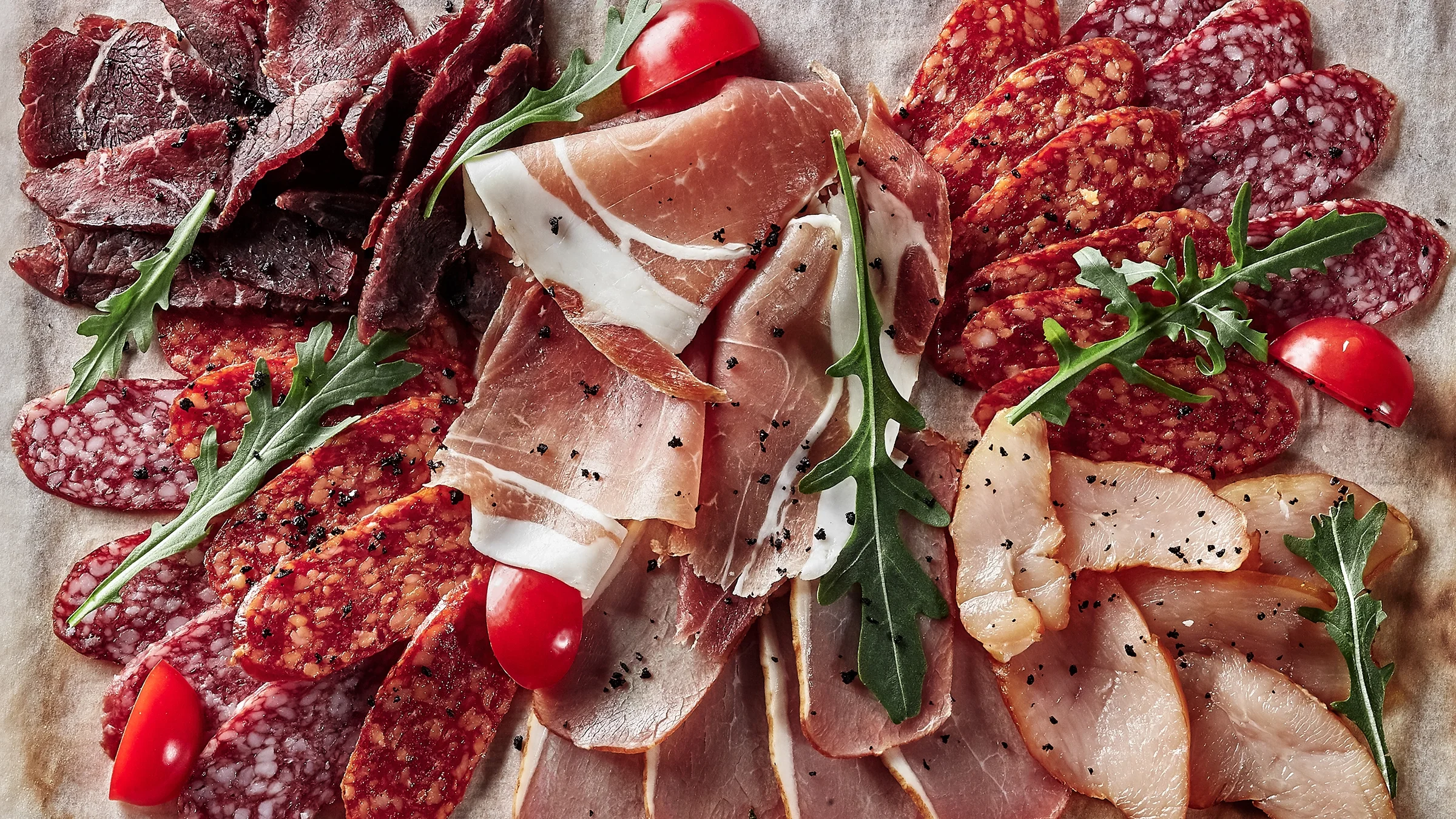
1. Processed meats
It probably doesn't come as a surprise that processed meat is salty. Just 1 oz of salami or three slices of cooked bacon, for example, provide nearly a quarter of the amount of sodium you should be having for the entire day. And eating just three slices of deli ham will give you about a third of your daily limit. Other highly processed meats like pastrami, hot dogs, and sausages also tend to be loaded with sodium — not to mention they can also increase your risk of colon cancer.
2. Bread products
Most people don’t think of bread products — like sliced bread, rolls, and buns — as being high in sodium. While they may not always taste particularly salty, they are number one on the American Heart Association’s list of the top six saltiest foods in the American diet. Since many people eat bread products several times a day, the sodium can really add up. This applies even when you’re eating whole-grain or gluten-free bread.
3. Pizza
Pizza is delicious, and also loaded with sodium. It often combines the first two salty foods on this list — processed meats and pizza dough — along with lots of cheese and sauce, which are also high in sodium. Even a vegetarian pizza is still going to be high in sodium. Pizza from a restaurant or frozen pizza is likely to be particularly high in salt.
4. Condiments
Condiments — like sauces and dips — are typically things you don’t use a lot of at once. But their sodium content can really add up. Just 2 tbsp of ketchup provides 13% of the daily value (DV) for sodium, and 1 tbsp of regular soy sauce provides about 37%. So even if you’re not adding salt to your foods, using high-sodium condiments may provide more than you need.
5. Sandwiches
Like pizza, sandwiches also combine several foods on this list, such as processed meats, condiments, and bread. Making a sandwich at home is likely to be lower in sodium than one from a package or restaurant. But whether you make it at home or enjoy it at a restaurant, sandwiches can be big contributors to your overall sodium intake.
6. Canned soups
Canned soup is another food that’s notorious for being high in sodium. Sodium acts as a preservative, which explains why it’s present in foods that are intended to last for a long time — like canned foods and prepackaged or frozen meals. Just one can of chunky chicken noodle soup gives you 68% of the DV for sodium.
7. Salty snack foods
Chips, popcorn, and pretzels are just a few examples of salty snack foods that can be big contributors to your sodium intake. It’s also easy to eat more than one serving of these foods, making the sodium rack up even more quickly. One ounce of hard pretzels, for example, provides 15% DV for sodium.
8. Frozen meals
Frozen meals are a huge culprit to sodium intake. Since they are created to last for a long time, sodium is added as a preservative, and it also works as a flavor enhancer. Frozen meals also often use sauces and other condiments to keep them from drying out — and add more sodium.
Why is sodium bad for you?
Sodium isn’t always bad for you. In fact, your body needs sodium for many different functions, such as:
Maintaining proper fluid balance in your body
Helping your nerves and muscles work properly
Helping certain nutrients get into your cells
Sodium becomes an issue when you consume too much of it. And about 90% of people in the U.S. fall into that category — largely due to the availability of highly processed foods. Consistently eating too much sodium can lead to many potentially serious diseases, such as:
High blood pressure — aka hypertension
Heart disease
Kidney disease, or even kidney failure
Stroke
Note that these conditions may not have any noticeable symptoms, which is why it’s important to keep up with your yearly visits to your primary care provider.
How much sodium should you have per day?
The Dietary Guidelines for Americans recommends an intake of no more than 2,300 mg of sodium, which is equal to 1 tsp of salt. Other organizations — like the American Heart Association (AHA) — report that an intake closer to 1,500 mg is ideal. Yet most people in the U.S. consume about 3,500 mg daily.
Note that the amount of salt you should have may depend on your current health status. People with certain conditions — like high blood pressure, kidney disease, and heart failure — may need to limit their salt intake more than other people.
In addition, research has shown that some people are more salt-sensitive than others. This means that their bodies react more strongly to salt than others. People who are salt-sensitive have a greater chance of developing conditions like high blood pressure than those who aren’t. Your primary care provider can help you understand your risk for conditions related to salt intake.
Frequently asked questions
Not exactly. Sodium is a natural mineral, whereas table salt is a combination of both sodium and the mineral chloride. Table salt is about 40% sodium, but the terms are often used interchangeably since salt is the largest source of sodium in most people’s diets.
Sodium causes your body to hold onto water. That’s why consuming too much sodium can lead to symptoms like bloating and puffiness in the short term. You may also feel especially thirsty.
There aren’t usually additional symptoms of longer-term high sodium intake. But that doesn’t mean it’s not having any effect inside your body. The effects of chronic high sodium are more likely to show up in blood tests or vital signs like blood pressure
Yes. Drinking plain water helps your kidneys filter out excess sodium and remove it from your body via urine.
Since a high-sodium diet leads to water retention, you may experience weight gain as a result. But this weight gain is due to water rather than excess calories, and is often temporary.
One tablespoon of table salt contains nearly 7,000 mg of sodium, which is almost 300% of the DV.
Not exactly. Sodium is a natural mineral, whereas table salt is a combination of both sodium and the mineral chloride. Table salt is about 40% sodium, but the terms are often used interchangeably since salt is the largest source of sodium in most people’s diets.
Sodium causes your body to hold onto water. That’s why consuming too much sodium can lead to symptoms like bloating and puffiness in the short term. You may also feel especially thirsty.
There aren’t usually additional symptoms of longer-term high sodium intake. But that doesn’t mean it’s not having any effect inside your body. The effects of chronic high sodium are more likely to show up in blood tests or vital signs like blood pressure
Yes. Drinking plain water helps your kidneys filter out excess sodium and remove it from your body via urine.
Since a high-sodium diet leads to water retention, you may experience weight gain as a result. But this weight gain is due to water rather than excess calories, and is often temporary.
One tablespoon of table salt contains nearly 7,000 mg of sodium, which is almost 300% of the DV.
The bottom line
Sodium isn’t always bad. But too much of it can cause problems for your health. Examples of high-sodium foods include processed meats, canned soups, and salty snacks like chips. Having more than the recommended 2,300 mg of sodium over the long term can lead to health issues like hypertension, heart disease, and kidney diseases.

Why trust our experts?



References
American Heart Association. (n.d.). AHA salty six infographic.
American Heart Association. (2024). Sea salt vs. table salt.
American Heart Association. (2025). How much sodium should I eat per day?
Bailey, M. A., et al. (2023). Salt sensitivity: Causes, consequences, and recent advances. Hypertension.
Dietary Guidelines for Americans. (2020). Dietary Guidelines for Americans, 2020-2025 and online materials.
MyFoodData. (n.d.). Cheese mozzarella part skim.
MyFoodData. (n.d.). Cooked bacon (pan-fried).
MyFoodData. (n.d.). Ham prepackaged or deli luncheon meat.
MyFoodData. (n.d.). Ketchup.
MyFoodData. (n.d.). Little Italy - marinara.
MyFoodData. (n.d.). Salami.
MyFoodData. (n.d.). Snacks, pretzels, hard, plain, salted.
MyFoodData. (n.d.). Soup, chunky chicken noodle, canned, ready-to-serve.
MyFoodData. (n.d.). Soy sauce (shoyu).
MyFoodData. (n.d.). Table salt.
Walczak-Nowicka, Ł. J., et al. (2022). Sodium benzoate—harmfulness and potential use in therapies for disorders related to the nervous system: A review. Nutrients.