Key takeaways:
Collagen is a protein that’s only found in animal foods and seafood.
Collagen-rich foods include bone broth, beef, and chicken skin. These foods contain many nutrients, but they can also be high in fat.
Plant-based foods don’t contain collagen. But foods like legumes, whole grains, and fermented soy contain amino acids, which might increase your collagen production.
Collagen supplements may help improve skin, joint, and bone health. But it’s unclear if eating foods with collagen has the same health benefits.
Collagen is a protein that gives your tissues structure and support. Your body naturally makes collagen, but the amount you produce decreases as you age.
Many people use collagen supplements to improve the health of their hair, skin, and joints. But does eating foods with collagen have any benefit as you age? Let’s look at natural sources of collagen that you can get from your diet.
What are collagen-rich foods?
Collagen occurs naturally in animal foods and seafood. Plant foods don’t contain it. But if you follow a vegetarian or vegan diet, there are certain foods that might help your body make more collagen (more on this later).
Studies suggest that increasing your collagen intake through supplements may help treat conditions like aging skin, wound healing, and arthritis. But it’s unclear whether collagen-rich foods have the same effect.
It’s hard to study just one ingredient in someone’s diet. That means there probably won’t be much new research in the future on the health effects of collagen-rich foods. But because of collagen’s possible health benefits, many people still want to know which are the top foods with collagen. Below are seven foods that are the best source of collagen.
1. Bone broth
Bone broth is made by simmering the bones and cartilage of animals for many hours to break down the collagen.
One study in mice found that bone broth (made from pork bones) raised collagen levels and improved skin firmness. But the way bone broth is made can affect how much collagen ends up in your body. Some research has found that commercial bone broth probably doesn’t deliver enough collagen to make a difference.
You might have heard of concerns about bone broth containing lead or trace metals. Studies have shown that animal bones contain trace amounts of metals. But the amount that ends up in bone broth is very low.
You can find bone broth in most grocery stores. You can also make your own using beef, chicken, or pork bones.
2. Jellyfish
Jellyfish is a popular staple in many Asian cuisines. It’s also used to make collagen supplements that are thought to help with wound healing.
Up to 75% of jellyfish’s protein content is from collagen. Jellyfish is also low in fat and contains a variety of micronutrients, making it a nutrient-dense food. If you want to try jellyfish, you can find it at most Asian grocery stores. You can use jellyfish to make a flavorful salad.
3. Beef
Beef is an excellent source of collagen, but the amount of collagen depends on the cut. To maximize the amount of collagen you get, look for the toughest cuts of beef. These cuts take the longest to cook because they’re filled with collagen-rich cartilage and tendons.

Read more like this
Explore these related articles, suggested for readers like you.




Beef contains mostly type 1 collagen (the most common type of collagen in the human body) and type 3 collagen. These collagen types may support bone and skin health.
Try making slow-cooked meals like roast beef, brisket, and oxtail. When you slow-cook these cuts, the tendons and cartilage create a gelatinous substance that’s rich with collagen.
4. Chicken skin and cartilage
Chicken cartilage is also used to make many collagen supplements that can help reduce pain and stiffness in people with osteoarthritis. Cartilage is especially high in collagen and protein. If you’re eating barbecue chicken wings, chewing on or eating the cartilage may increase the amount of collagen in your meal.
Chicken dishes that are prepared with the skin on will also have a higher collagen content than skinless chicken. But chicken skin is high in saturated fat, and diets high in saturated fat can be harmful to heart health.
5. Pork skin
One study found that collagen supplements made from pig skin and cow bone improved osteoarthritis symptoms and quality of life in people with osteoarthritis of the knee.
Pork skin is used to make pork rinds, a popular crunchy snack. And it’s used in dishes like Korean jokbal, which involves braising pigs’ feet in soy sauce with herbs and spices. Pork skin is also used in pickled pigs’ feet, sometimes found in Latin American and Caribbean cuisine.
6. Salmon
Fish and other marine life are rich in collagen. The highest amount of collagen is in salmon skin and scales. So you might consider roasting or grilling fish with the skin on — or using fish bones to make a broth.
Lab and animal studies suggest the collagen from salmon may help with wound healing, especially when it’s combined with vitamin C.
7. Sardines
Most of the collagen in fish is in the bones, skin, and scales. This makes sardines a great choice for a collagen-rich food, since people usually eat them whole — bones and scales included. Sardines are loaded with type 1 collagen.
Most sardines are sold canned. You can eat sardines straight out of the can, grilled, or on top of toast or a salad.
How much collagen do high-collagen foods contain?
The chart below shows how much collagen was found in certain foods that were studied.
Are there negative effects of eating foods with collagen?
Many collagen-rich foods, like animal skin, are high in saturated fat. And having a diet that’s high in fat — particularly saturated fat — is linked to:
High cholesterol
Inflammation
Higher risk of heart disease
Higher risk of cancer
This doesn’t mean you can’t enjoy red meat or chicken or fish with the skin on. But eating foods high in saturated fat for the sake of increasing your collagen intake may not be worth the health risks.
In contrast, unsaturated fats have benefits for your health, such as lowering your cholesterol and reducing inflammation. Salmon, sardines, and jellyfish all contain more of these unsaturated fats, including omega-3 fatty acids. So, if you’re looking to eat more foods high in collagen, keep in mind that these options may be the better choice for your overall health.
What are other ways to increase collagen naturally?
Amino acids are the building blocks of protein. And remember that collagen is a type of protein. So, when you consume the kinds of amino acids involved in collagen production, it might help your body to make more collagen. These amino acids include:
Some animal foods contain these amino acids. You can also find them in vegetarian-friendly foods, including:
Legumes and beans
Whole grains, like barley, wheat, and amaranth
Dairy products
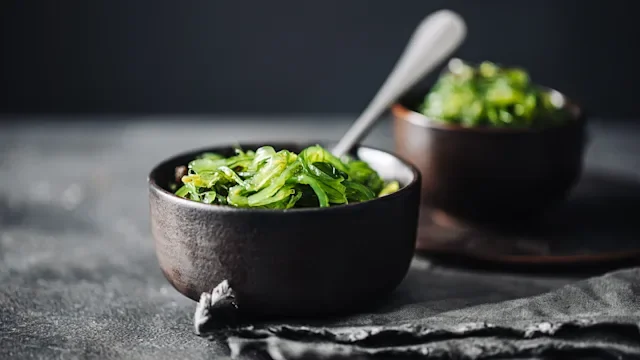
Seaweed
Does vitamin C increase collagen production?
Vitamin C plays a critical role in helping to make collagen. You can also help your body naturally increase collagen by eating foods that are rich in vitamin C, including:
Oranges and other citrus fruit
Strawberries
Red peppers
Collagen-rich foods vs collagen supplements
So, is it better to get collagen from your diet or from supplements? It’s unclear.
Most researchers looking at the health benefits of collagen have studied collagen supplements. There aren’t good studies looking at collagen-rich diets, so it’s hard to know how their potential health benefits compare. There also aren’t studies that directly compare collagen supplements to collagen-rich foods.
It’s also important to note that companies that sell collagen supplements fund a lot of the research on collagen supplements. So, there could be a conflict of interest that might bias results.
And there’s no standard dosing on what amount of collagen is recommended. Since collagen supplements are considered a dietary supplement, they don’t need to be approved by the FDA.
Frequently asked questions
Fruit doesn’t contain collagen. But many fruits are high in vitamin C, which helps your body make collagen. Some fruits high in vitamin C include:
Oranges
Strawberries
Kiwis
Papayas
Scientists don’t know what increases collagen more: collagen supplements or eating collagen-rich foods. Researchers need to do more work to find the answer.
Likely, the best — and least expensive — way is through your diet: eating nutritious foods with collagen and vitamin C.
Collagen is an essential part of skin, bone, and joints. And your body makes less collagen as you age. So, what symptoms might you experience if your collagen is low? You might develop:
You might also have joint pain and stiffness.
Fruit doesn’t contain collagen. But many fruits are high in vitamin C, which helps your body make collagen. Some fruits high in vitamin C include:
Oranges
Strawberries
Kiwis
Papayas
Scientists don’t know what increases collagen more: collagen supplements or eating collagen-rich foods. Researchers need to do more work to find the answer.
Likely, the best — and least expensive — way is through your diet: eating nutritious foods with collagen and vitamin C.
Collagen is an essential part of skin, bone, and joints. And your body makes less collagen as you age. So, what symptoms might you experience if your collagen is low? You might develop:
You might also have joint pain and stiffness.
The bottom line
Collagen is linked to better skin and joint health. But it’s unclear whether eating whole foods high in collagen has the same potential benefits. Certain collagen-rich foods, like bone broth and jellyfish, may offer more nutrients and less fat compared with beef or animal skins. And if you don’t eat meat or seafood, you can try eating beans, seaweed, and fermented soy to help your body make more collagen.

Why trust our experts?




References
Aidos, I., et al. (1999). Collagen content in farmed Atlantic salmon (Salmo salar L.). Journal of Agricultural and Food Chemistry.
Alcock, R. D., et al. (2018). Bone broth unlikely to provide reliable concentrations of collagen precursors compared with supplemental sources of collagen used in collagen research. International Journal of Sport Nutrition and Exercise Metabolism.
Alcorta, A., et al. (2021). Foods for plant-based diets: Challenges and innovations. Foods.
Allrecipes. (2023). Sesame jellyfish salad.
Allrecipes. (2024). Instant pot beef bone broth.
Asai, T., et al. (2019). Amount of collagen in the meat contained in Japanese daily dishes and the collagen peptide content in human blood after ingestion of cooked fish meat. Journal of Agricultural and Food Chemistry.
Boyera, N., et al. (1998). Effect of vitamin C and its derivatives on collagen synthesis and cross-linking by normal human fibroblasts. International Journal of Cosmetic Science.
Chiarelli, P. G., et al. (2023). The emergence of jellyfish collagen: A comprehensive review on research progress, industrial applications, and future opportunities. Trends in Food Science & Technology.
Chotphruethipong, L., et al. (2022). Combined effects of defatted hydrolyzed collagen from salmon skin and vitamin C on proliferation and migration of human fibroblast cell. Fishes.
Cliche, S., et al. (2003). Extraction and characterization of collagen with or without telopeptides from chicken skin. Poultry Science.
ConsumerLab.com. (2025). Bone broth review.
Dave, D., et al. (2019). Availability of marine collagen from Newfoundland fisheries and aquaculture waste resources. Bioresource Technology Reports.
De Araújo Cordeiro, A. R. R., et al. (2020). Collagen production from chicken keel bone using acid and enzymatic treatment at a temperature of 30°C. Food and Science Technology.
De Paz-Lugo, P., et al. (2018). High glycine concentration increases collagen synthesis by articular chondrocytes in vitro: Acute glycine deficiency could be an important cause of osteoarthritis. Amino Acids.
Felician, F. F., et al. (2019). The wound healing potential of collagen peptides derived from the jellyfish Rhopilema esculentum. Chinese Journal of Traumatology.
FoodData Central. (2019). [Historical record]: Pickled pig’s feet. U.S. Department of Agriculture.
Ganceviciene, R., et al. (2012). Skin anti-aging strategies. Dermato-endocrinology.
García-Coronado, J. M., et al. (2018). Effect of collagen supplementation on osteoarthritis symptoms: A meta-analysis of randomized placebo-controlled trials. International Orthopaedics.
Guo, S., et al. (2010). Factors affecting wound healing. Journal of Dental Research.
Hsu, D., et al. (2017). Essential and toxic metals in animal bone broths. Food and Nutrition Research.
Hwang, Y., et al. (2016). Sensory property improvement of Jokbal (Korean Pettitoes) made from frozen pig feet by addition of herbal mixture. Korean Journal for Food Science of Animal Resources.
Khong, N. M. H., et al. (2016). Nutritional composition and total collagen content of three commercially important edible jellyfish. Food Chemistry.
Kumar, S., et al. (2015). A double-blind, placebo-controlled, randomised, clinical study on the effectiveness of collagen peptide on osteoarthritis. Journal of the Science of Food and Agriculture.
Langyan, S., et al. (2022). Sustaining protein nutrition through plant-based foods. Frontiers in Nutrition.
Lugo, J. P., et al. (2016). Efficacy and tolerability of an undenatured type II collagen supplement in modulating knee osteoarthritis symptoms: A multicenter randomized, double-blind, placebo-controlled study. Nutrition Journal.
Naomi, R., et al. (2021). Current insights into collagen type I. Polymers.
Raposo, A., et al. (2022). Jellyfish as food: A narrative review. Foods.
Razak, M. A., et al. (2017). Multifarious beneficial effect of nonessential amino acid, glycine: A review. Oxidative Medicine and Cellular Longevity.
ScienceDirect. (n.d.). Collagen.
Shuster, S., et al. (2020). Osteoporosis, like skin ageing, is caused by collagen loss which is reversible. Journal of the Royal Society of Medicine.
Song, H., et al. (2017). Effect of orally administered collagen peptides from bovine bone on skin aging in chronologically aged mice. Nutrients.
Srinivasan, S., et al. (2021). Collagen isolation and characterization from Sardinella longiceps. Journal of Advanced Veterinary and Animal Research.
Wang, H. (2021). A review of the effects of collagen treatment in clinical studies. Polymers.
Wang, J., et al. (2015). Oral administration of marine collagen peptides prepared from chum salmon (Oncorhynchus keta) improves wound healing following cesarean section in rats. Food and Nutrition Research.
Wu, G., et al. (2010). Proline and hydroxyproline metabolism: Implications for animal and human nutrition. Amino Acids.