Key takeaways:
Carrot juice is packed with beta carotene, a powerful antioxidant that your body turns into vitamin A. This vitamin supports vision, skin health, and immune function.
Carrot juice also provides other important nutrients, like potassium, vitamin C, and additional antioxidants that help protect your cells from disease-causing damage.
Carrot juice is relatively low in calories, but moderation is still key. It’s high in natural sugars and doesn’t have fiber, so it shouldn’t replace whole vegetables.
Not so long ago, carrot juice was a trendy treat you might only find at a juice bar or make at home. But these days, carrot juice comes bottled and ready to drink at most grocery stores.
But how does carrot juice actually stack up nutritionally? Let’s take a closer look at the potential benefits of drinking carrot juice and what to keep in mind if you drink it often.
Is carrot juice good for you?
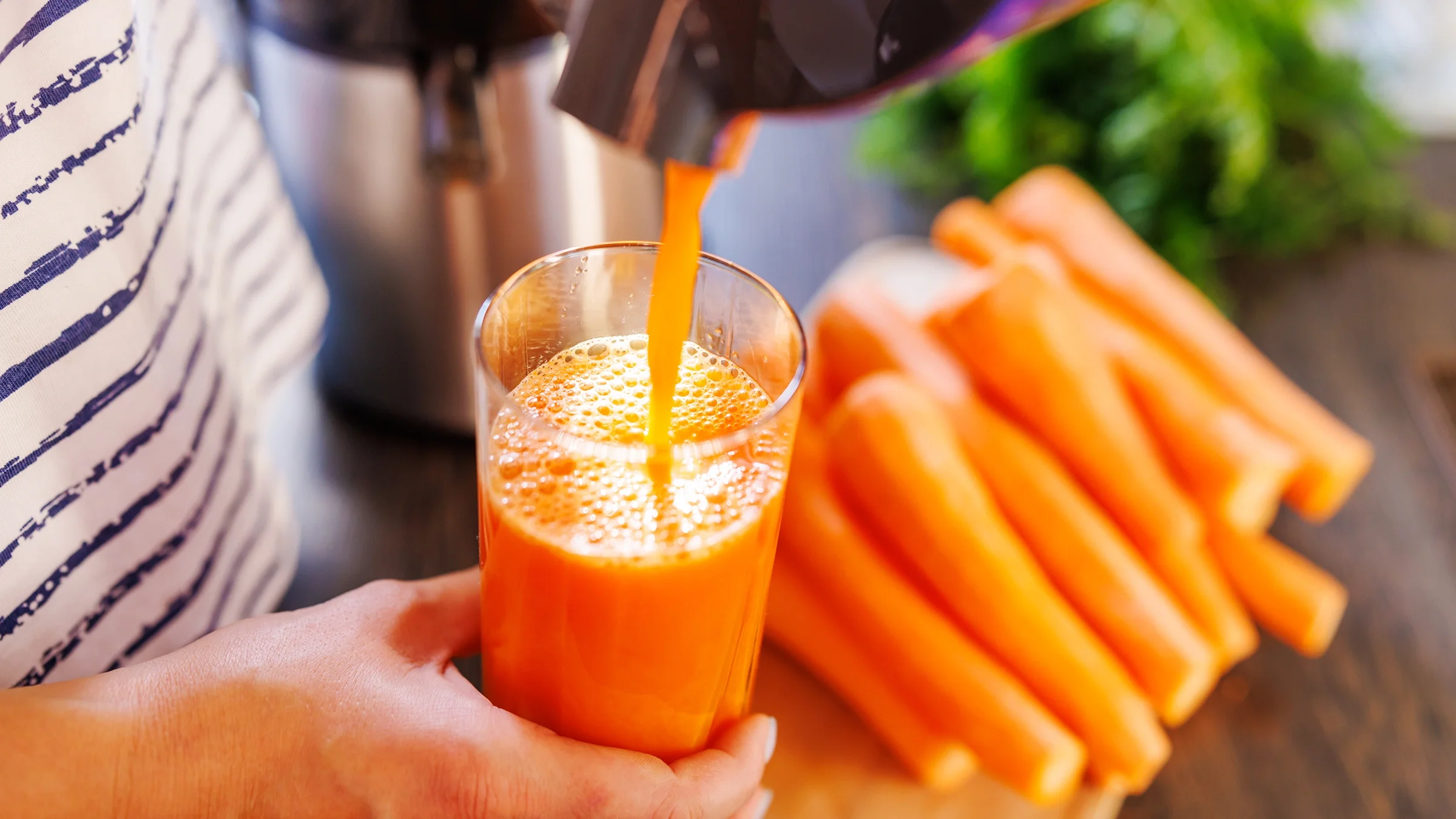
Pure 100% carrot juice is good for you. It’s made by juicing fresh carrots, either alone or mixed with other fruits and vegetables. Carrot juice has a slightly sweet, earthy flavor because of the natural sugars.
Carrot juice doesn’t have much fiber since most of it is removed during the juicing process. Still, it provides several other key nutrients. One of the most important is beta carotene, an antioxidant. Beta carotene is a type of plant pigment called a carotenoid that’s linked to several health benefits. In your body, it turns to vitamin A.
Here’s a quick look at the nutrients in an 8-oz serving of 100% carrot juice:
Calories: 96
Protein: 2 g
Fat: 0.4 g
Carbohydrates: 22 g
Fiber: 2 g
Sugar: 9 g
Sodium: 158 mg (7% daily value, or DV)
Potassium: 701 mg (15% DV)
Beta carotene: 22,327 mcg (207%)
Vitamin A: 2,295 mcg (255% DV)
Vitamin K: 37 mcg (31% DV)
Vitamin E: 3 mg (19% DV)
Vitamin C: 20 mg (23% DV)
Carrot juice can support your health in several ways. Here’s what the research says about its impact on your health.
1. Eye health
Carrot juice has beta carotene, which gives your body plenty of Vitamin A. This vitamin is crucial for eye health. It helps:
Keep the surface of your eye (the cornea) healthy, which is important for lubrication and clear vision
Prevent night blindness by supporting the health of the retina, the layer inside your eye that detects light
Reduce the risk of age-related eye conditions like macular degeneration and cataracts
Carrot juice also contains lutein, another carotenoid found in your retina. Research suggests that lutein supports long-term eye health in many ways.
2. Immune function
Carrot juice has vitamin A and vitamin C, which act as antioxidants that support your immune system.
Vitamin A keeps your skin and mucous membranes healthy. These membranes line your nose, lungs, and gut, and they’re your body’s first defense against germs.
Vitamin C helps your body make white blood cells, which fight off infections. It also helps protect immune cells from damage caused by free radicals. Free radicals are unstable molecules that can build up from stress, illness, or environmental toxins.
By reducing oxidative stress, antioxidants like vitamin C help your immune system stay more effective over time.
3. Skin health
Carrot juice may have benefits for your skin. Research suggests their carotenoids can improve skin elasticity and texture. They may also make your skin more resistant to ultraviolet (UV) damage. The vitamin C in carrot juice also supports collagen production. Collagen is a protein that keeps your skin smooth and stretchy.
4. Blood pressure
Carrot juice is a good source of potassium. Potassium helps regulate blood pressure by balancing sodium levels in your body. It also helps blood vessels relax and widen, making it easier for blood to flow.
Most people (about 90% of people in the U.S.) get plenty of sodium, but not enough potassium.
Potassium supports muscle function — including your heart muscle. Over time, getting enough potassium may lower your risk of high blood pressure and heart disease.
5. Heart health
Carotenoids help reduce inflammation and protect cells from damage — two factors in heart disease.
Some studies suggest that diets rich in carotenoids may lower the risk of heart disease over time.
Specifically, the carotenoids in carrot juice help protect against oxidative stress. Oxidative stress can damage blood vessels and contribute to plaque buildup. Plaque buildup increases your risk of heart disease.
Are there any downsides to drinking carrot juice?
Carrot juice can be a healthy addition to your diet. But there are a few potential downsides to keep in mind:
It’s high in natural sugars. An 8-oz glass of carrot juice has about 9 g of sugar, which can add up quickly. Natural sugars from vegetables and fruits are better for you than added sugars. This is because they come with nutrients. But they can still raise your blood sugar.
It doesn’t contain fiber. Unlike whole carrots, carrot juice has very little fiber. Fiber plays a key role in digestion, blood sugar regulation, and satiety (feeling of fullness). If you drink carrot juice often, make sure you’re still getting enough fiber from other vegetables, fruits, and whole grains.
It has a high glycemic index (GI). Carrot juice can raise your blood sugar more quickly than whole vegetables can. This is because juice doesn’t have fiber to slow down your blood sugar response. To avoid blood sugar spikes, try drinking carrot juice with a meal that includes fiber, protein, or fat.
It may cause skin discoloration. Drinking a lot of carrot juice or eating too many foods with beta carotene can lead to carotenemia. This is when your body stores excess beta carotene, causing your skin to take on a temporary yellow-orange tint. It’s not dangerous, but it’s a sign that you may want to cut back.
Can you drink carrot juice every day?
Yes, you can drink carrot juice every day. But it’s best to stick to a small glass, about 4 oz to 8 oz.
Drinking more than this every day could lead to some of the problems listed above, like skin discoloration or excess sugar intake.
If you have a health condition like diabetes or kidney disease, talk to a healthcare professional before making carrot juice a daily habit. Having high amounts of carrot juice may affect blood sugar levels, kidney function, or vitamin A levels.
Try alternating carrot juice with other healthy juices, like tomato juice or beet juice. And try to drink carrot juice with whole foods that have fiber, protein, or fat.
Frequently asked questions
It depends on what kind of results you’re looking for. You may notice subtle improvements in hydration or skin health within a few days to a week. But longer-term benefits — like improved blood pressure or better vision — usually take more time and regular use.
No single food or drink can reduce belly fat on its own. To reduce belly fat, it’s important to have a balanced diet and an active lifestyle. Still, carrot juice can play a supportive role in helping you find a more comfortable weight, as long as you're sticking to recommended serving sizes.
Carrots have antioxidants that may help hydrate your skin and improve its elasticity. But eating or drinking too many carrots over time can also cause carotenemia. This is a harmless condition that temporarily gives your skin a yellow-orange tint. Once you reduce your carrot juice intake, carotenemia should go away within a few weeks.
It depends on what kind of results you’re looking for. You may notice subtle improvements in hydration or skin health within a few days to a week. But longer-term benefits — like improved blood pressure or better vision — usually take more time and regular use.
No single food or drink can reduce belly fat on its own. To reduce belly fat, it’s important to have a balanced diet and an active lifestyle. Still, carrot juice can play a supportive role in helping you find a more comfortable weight, as long as you're sticking to recommended serving sizes.
Carrots have antioxidants that may help hydrate your skin and improve its elasticity. But eating or drinking too many carrots over time can also cause carotenemia. This is a harmless condition that temporarily gives your skin a yellow-orange tint. Once you reduce your carrot juice intake, carotenemia should go away within a few weeks.
The bottom line
Carrot juice is a convenient way to get more antioxidants, vitamins, and minerals in your diet. These nutrients offer a range of benefits for your body, from supporting eye and skin health to immune support.
Just keep in mind that carrot juice is naturally high in sugar and doesn’t have much fiber. So it shouldn’t replace whole vegetables in your diet. It’s best to enjoy carrot juice in moderation, along with other whole foods.

Why trust our experts?




References
Balić, A., et al. (2019). Do we utilize our knowledge of the skin protective effects of carotenoids enough? Antioxidants.
Batty, M., et al. (2022). The role of oxidative stress in atherosclerosis. Cells.
Carr, A. C., et al. (2017). Vitamin C and immune function. Nutrients.
Garilli, B., et al. (n.d.). Lutein. University of Rochester Medical Center.
Hin, L. H., et al. (2020). Lutein supplementation for eye diseases. Nutrients.
Huang, Z., et al. (2018). Role of vitamin A in the immune system. Journal of Clinical Medicine.
Khoo, H. E., et al. (2019). Nutrients for prevention of macular degeneration and eye-related diseases. Antioxidants.
Levings, J. L., et al. (2022). The imbalance of sodium and potassium intake: Implications for dietetic practice. Journal of the Academy of Nutrition and Dietetics.
My Food Data. (n.d.). Carrot Juice 100%.
Nasser, Y. A., et al. (2023) Carotenemia. StatPearls.
Reddy, V. P. (2023). Oxidative stress in health and disease. Biomedicines.
Staruschenko, A. (2018). Beneficial effects of high potassium: Contribution of renal basolateral K+ channels. Hypertension.
Stevens, H. (2024). Blending vs. juicing: The fiber factor. Colorado University Anschutz Medical Campus.
Sumalla-Cano, S., et al. (2024). Carotenoids intake and cardiovascular prevention: A systematic review. Nutrients.
Zhuang, C., et al. (2022). Effects of oral carotenoids on oxidative stress: A systematic review and meta-analysis of studies in the recent 20 years. Frontiers in Nutrition.