Key takeaways:
There isn’t much evidence that scalp massages boost hair growth or thickness.
But scalp massages feel great, and they can help you relax, lessen stress, and relieve headaches.
There are other better treatments for hair loss, including prescription medications and over-the-counter hair care products.
Have you ever had a scalp massage while getting your hair washed at the salon? If so, you know how pleasant it can be. Some research claims that scalp massages support hair health and growth. But what does the science say? Does scalp massage help growth? And are there other benefits of scalp massage? Let’s take a look at what the research says about whether scalp massages are worth adding to your routine.
How do scalp massages stimulate hair growth?
There aren’t many large or diverse studies on the benefits of scalp massages. So far, two studies have looked at whether scalp massages can help hair growth.
In the first study, nine men without hair loss received a 4-minute scalp massage daily for 24 weeks. There wasn’t a significant improvement in hair growth rate at the end of the study. But hair thickness did increase.
In the second study, more than 300 people with hair loss did daily scalp massages for 11 to 20 minutes. After about 6 months, almost 70% of the participants reported either less hair loss or more regrowth.
Search and compare options
These studies don’t prove that scalp massages stimulate hair growth. But that doesn’t mean scalp massages won’t work for some people. Scalp massages may contribute to fuller and healthier hair by:
Increasing circulation to the scalp
Delivering more nutrients to hair follicles
Physically stimulating hair follicle cells to make healthier hair
Additional scalp massage benefits
Scalp massages aren’t just about hair growth. A few small studies show that there are other benefits of scalp massage, like:
Reduced stress: Scalp massages can help lower stress hormones like cortisol. This lowers your heart rate and blood pressure, and improves relaxation. And since stress can cause or contribute to hair loss, lowering stress may improve hair health.
Migraine relief: Massages that target the scalp and forehead may help relieve migraines and tension headaches.
How do you massage your scalp for hair growth?
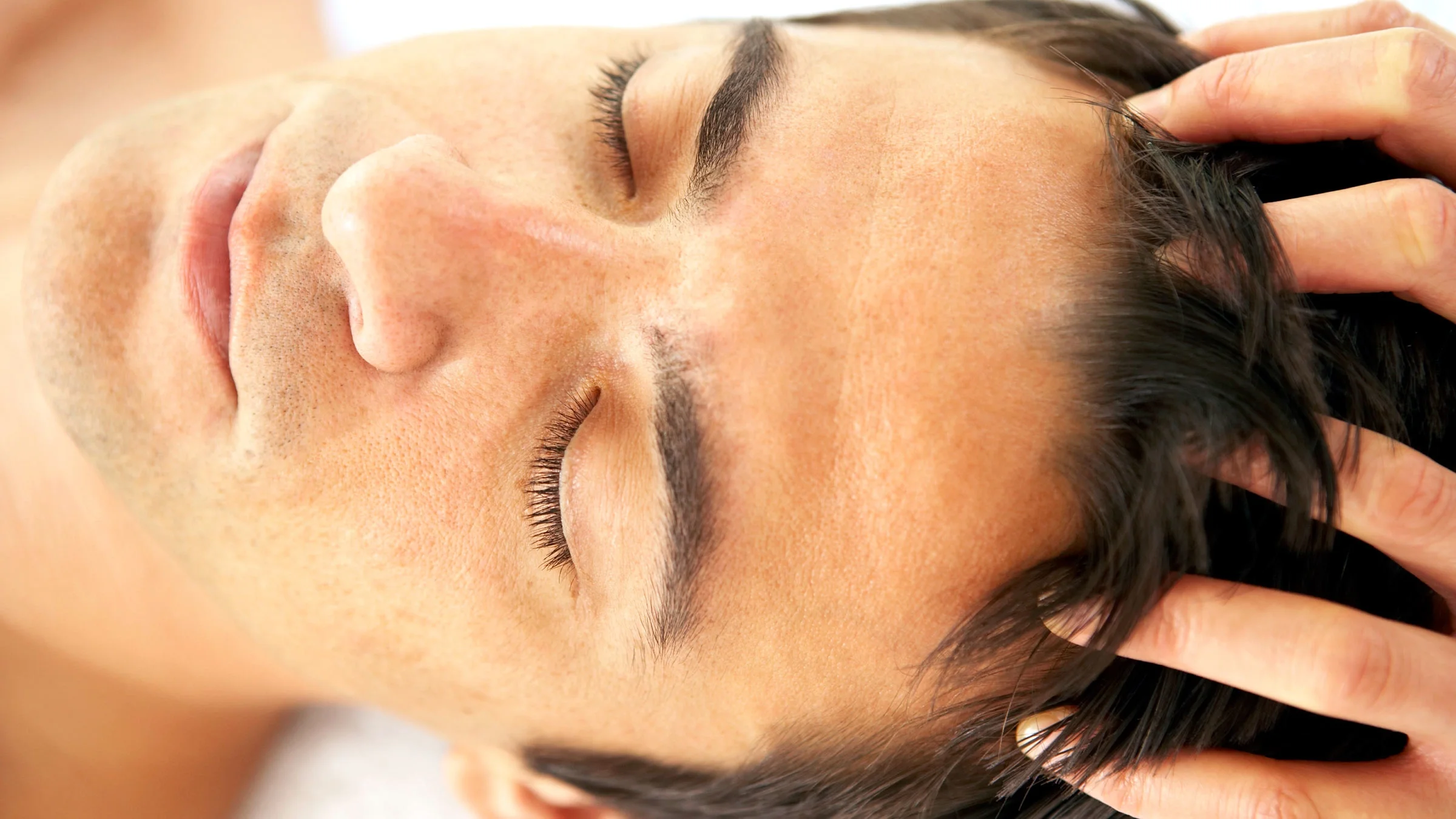
A scalp massage involves applying gentle pressure to your scalp. There are several ways to add scalp massages to your hair care routine. Here are some general steps:
Press your fingertips or palms against your scalp with light to medium pressure.
Move your hands in small circles on one part of your scalp for a few seconds. Then, move to another section until you cover your whole head.
Continue for 5 to 10 minutes. Repeat 1 to 2 times per day.
For an in-shower scalp massage, follow the same steps while applying your shampoo or conditioner.
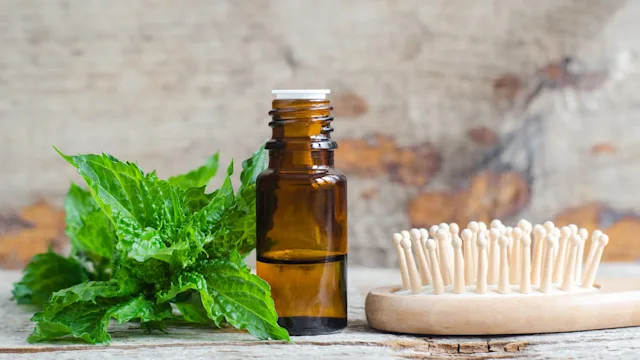
Some people like to use essential oils during their scalp massage. To do this, add 1 to 2 drops of essential oil — like lavender or peppermint oil — mixed with a carrier oil to your scalp massage.
What causes hair loss?
Hair loss is a common and often treatable concern for many people. But that doesn’t make it any less difficult to face. Understanding the causes of hair loss may help you — and your healthcare team — figure out how to treat yours.
The most common cause of hair loss is genetics. People with hereditary hair loss, or androgenic alopecia, inherit genes that make their hair follicles shrink and stop growing. This type of baldness is a gradual process that worsens with age. It typically starts younger and can be more severe than age-related hair loss. Initially, you may notice hair thinning at your temples or crown.

Read more like this
Explore these related articles, suggested for readers like you.
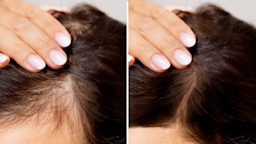
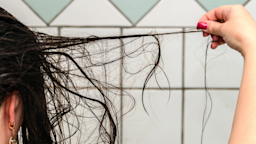

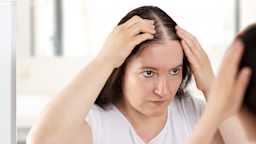
Other common causes of hair loss include:
Age: Gray hair might be the first thing that comes to mind when you think of age-related hair changes. But everyone, regardless of gender and sex, experiences some hair loss with age.
Hormones: Various life stages and health conditions — such as pregnancy and menopause — can change your hormone levels. These hormonal shifts may result in hair loss.
Autoimmune diseases: Hair loss may be a symptom of autoimmune conditions like lupus and psoriasis. With alopecia areata, for example, the immune system attacks healthy hair follicles.
Medications: From anti-acne medications to antidepressants, certain medications can cause hair loss. Hair usually grows back after you stop the medication.
Life stress: Physical or emotional stress from surgery, a crash diet, or other life events can cause temporary hair shedding called telogen effluvium.
Damaging hairstyles and products: Some styling practices — like tight hairstyles and heat styling — may cause irreversible or scarring hair loss. And certain shampoos contain ingredients that have been linked to hair loss.
What other ways can you promote hair growth and thickness?
There are other proven ways to promote hair growth or thickness, whether you’re hoping to prevent hair loss or add some length. The list of promising options is long, but here are a few research-backed methods.
Prescription medications
The best treatment for hair loss depends on the cause and severity of your symptoms. That's why it’s important to talk with your medical care team. They might prescribe one of these medications that has been shown to lessen hair loss and improve growth or volume:
Over-the-counter (OTC) treatments
Liquid or foam minoxidil, the main ingredient in Rogaine, is available over the counter (OTC). Researchers aren’t entirely sure how it works. But they do know that minoxidil acts as a vasodilator. That means it opens up blood vessels, which can enlarge hair follicles to allow growth. It may be effective in people with alopecia and other disorders that cause hair loss.
But OTC options don’t end there. Shampoos that contain pyrithione zinc fight fungus that causes dandruff. This and other ingredients can keep your scalp healthy, lessen hair loss, and stimulate hair growth.
Vitamin deficiencies have also been linked to hair loss. Examples are zinc, iron, and biotin. OTC hair-healthy supplements are worth a try if you’re deficient in any of these vitamins. But they won’t help if your levels are normal.
Preventive hair care
A strategic hair routine can keep your strands healthy and growing, and it doesn’t have to be complicated or time consuming. Here are some tips to get you started:
Use a conditioner after every wash.
Avoid practices that can cause hair breakage or excess shedding, like over-brushing your hair or wearing tight hairstyles often.
Minimize chemical treatments, such as coloring, straightening, or perming.
And remember that everyone’s hair is different, so you should customize your routine to your needs. For example, the American Academy of Dermatology recommends that people with curly, textured hair brush it while damp. But they advise people with straight hair to let it dry a little before brushing.
Frequently asked questions
There’s no hard-and-fast rule about how often to massage your scalp for hair growth. But research that looked at scalp massage and hair loss used daily massaging.
The best hair-growth treatment depends on the cause. For this reason, it’s important to talk with your medical care team. Prescription medications (such as finasteride, minoxidil pills, and spironolactone) can be effective. So can OTC treatments like minoxidil foam or liquid. If dandruff is causing hair loss, shampoos that contain anti-fungal ingredients may help. And the foods you eat can also affect your hair growth, especially if you’re missing some key nutrients from your diet, such as biotin or protein.
Scalp massage isn’t a quick fix, and the benefits of scalp massage won’t be instantly noticeable overnight. But scalp massage may support hair growth over time if you’re consistent and realistic about expectations. In studies, researchers saw results after 5 to 6 months.
You can use your fingertips to massage your scalp while your hair is wet or dry. Or, instead of your hands, you can use a tool like a massage brush or a silicone scalp bulb.
There’s no hard-and-fast rule about how often to massage your scalp for hair growth. But research that looked at scalp massage and hair loss used daily massaging.
The best hair-growth treatment depends on the cause. For this reason, it’s important to talk with your medical care team. Prescription medications (such as finasteride, minoxidil pills, and spironolactone) can be effective. So can OTC treatments like minoxidil foam or liquid. If dandruff is causing hair loss, shampoos that contain anti-fungal ingredients may help. And the foods you eat can also affect your hair growth, especially if you’re missing some key nutrients from your diet, such as biotin or protein.
Scalp massage isn’t a quick fix, and the benefits of scalp massage won’t be instantly noticeable overnight. But scalp massage may support hair growth over time if you’re consistent and realistic about expectations. In studies, researchers saw results after 5 to 6 months.
You can use your fingertips to massage your scalp while your hair is wet or dry. Or, instead of your hands, you can use a tool like a massage brush or a silicone scalp bulb.
The bottom line
A soothing scalp massage may do more than just relax you — it may also help stimulate hair growth or thickness. So far, limited research shows that scalp massages may promote blood flow to the scalp and encourage longer, thicker strands. But there’s a need for more evidence. If you’re experiencing hair thinning, scalp massages may be worth a try as part of a hair growth strategy. Talk with your doctor or another healthcare professional about finding the best hair-loss treatment plan for you.

Why trust our experts?


References
American Academy of Dermatology Association. (n.d.). Hair loss: Who gets and causes.
American Academy of Dermatology Association. (n.d.). How to stop damaging your hair.
Belcadi, J., et al. (2025). Preconceived ideas in hair care. International Journal of Women’s Dermatology.
Davis, M. G., et al. (2021). Scalp application of antioxidants improves scalp condition and reduces hair shedding in a 24-week randomized, double-blind, placebo-controlled clinical trial. International Journal of Cosmetic Science.
English, R. S., Jr., et al. (2019). Self-assessments of standardized scalp massages for androgenic alopecia: Survey results. Dermatology and Therapy.
Gupta, A. K., et al. (2022). Finasteride for hair loss: A review. The Journal of Dermatological Treatment.
Gupta, A. K., et al. (2022). Minoxidil: a comprehensive review. The Journal of Dermatological Treatment.
Haskin, A., et al. (2016). All hairstyles are not created equal: What dermatologists need to know about black hairstyling practices and risk of traction alopecia (TA). Journal of the American Academy of Dermatology.
Kim, I. H., et al. (2016). The effect of a scalp massage on stress hormone, blood pressure, and heart rate of healthy female. Journal of Physical Therapy Science.
Koyama, T., et al. (2016). Standardized scalp massage results in increased hair thickness by inducing stretching forces to dermal papilla cells in the subcutaneous tissue. Eplasty.
Levy, L. L., et al. (2013). Female pattern alopecia: Current perspectives. International Journal of Women’s Health.
MedlinePlus. (2024). Aging changes in hair and nails.
Oh, J. Y., et al. (2014). Peppermint oil promotes hair growth without toxic signs. Toxicological Research.
Rostron, S. (2021). The effects of massage therapy on a patient with migraines and cervical spondylosis: A case report. International Journal of Therapeutic Massage & Bodywork.
Suchonwanit, P., et al. (2019). Minoxidil and its use in hair disorders: a review. Drug Design, Development and Therapy.