Key takeaways:
Many people use cannabis to treat chronic pain. And research seems to support that it’s an effective treatment option.
Since cannabis isn’t an FDA-approved medication, there’s not a set dosage for chronic pain. Experts recommend starting with 10 mg per day of a high-CBD formulation and slowly increasing the dosage up to 40 mg daily. A healthcare professional may then add 2.5 mg of THC daily and slowly increase up to a maximum of 40 mg daily if needed.
Cannabis has side effects, risks, and drug interactions to be aware of. So it’s best to talk with a healthcare professional first to make sure it’s safe for you before trying it for chronic pain.
Humans have used cannabis to help ease pain for at least 5,000 years. Ancient societies in China and India commonly used cannabis for pain relief. It was even sold in U.S. pharmacies until the early 1900s. But modern cannabis is much different than it was hundreds of years ago. And we now have much more scientific research to help us understand its effects on chronic pain.
But cannabis doesn’t work like most other medications — there isn’t a set dosage that works for everyone, and it’s not legal in every U.S. state. Cannabis is not an FDA-approved treatment. So it can be hard to know where to start if you’re considering cannabis to help manage your chronic pain symptoms.
That’s where this guide comes in. We’ll help you understand how to best use cannabis for pain and what the research says about how it works.
Search and compare options
How does cannabis help treat chronic pain?
The cannabis plant contains active chemicals called cannabinoids. The two most common cannabinoids are tetrahydrocannabinol (THC) and cannabidiol (CBD), but there are also many more. Cannabinoids interact with the endocannabinoid system and other binding sites in the body to turn nerve signals on or off.
When people use cannabis for chronic pain, THC turns on special receptors in the brain and nerves that help control pain. Cannabinoids also affect receptors on immune system cells. This helps reduce inflammation (swelling) and calms the immune system.
Because of these effects, researchers are studying cannabis as a possible treatment for different kinds of chronic pain. This includes nerve pain, arthritis, and fibromyalgia. Cannabis is also being studied to see if it can help with pain and swelling caused by autoimmune diseases.
Using cannabis for nerve pain
Nerve pain is one of the areas where cannabis has some of the strongest supporting evidence. THC and CBD can adjust nerve signaling in the brain and spinal cord, and several clinical trials show cannabis can reduce neuropathic pain intensity. These benefits have been seen in conditions like:
Diabetic neuropathy
Multiple sclerosis
HIV-related neuropathy
Chemotherapy-induced nerve pain
Still, results are usually modest, and THC-related side effects like dizziness or feeling “high” can limit use for some people. Because of this, many experts recommend starting with an oral CBD product for steady symptom control, while saving inhaled cannabis for episodes of sudden breakthrough nerve pain.
Add GoodRx as a trusted source on GoogleAdd GoodRx as a trusted sourceUsing cannabis for arthritis
Arthritis pain comes from inflammation inside the joints and abnormal pain signaling in the nerves around them. Early research suggests that cannabis may help with both. CBD appears to calm overactive inflammation, while THC interacts with receptors in the brain and nerves that influence how you experience pain. In small studies, people with osteoarthritis and rheumatoid arthritis have reported improvements in pain, sleep, and stiffness when using cannabis-based products.
Because CBD tends to have fewer side effects than THC, many experts recommend starting with a high-CBD oral product and adjusting slowly. And since arthritis treatment often requires multiple strategies, it’s helpful to talk with your care team before adding cannabis to your routine.
Using cannabis for joint pain
Joint pain has many causes, including arthritis, autoimmune disease, or an injury, and inflammation is often a key part of why your joints are hurting. Cannabis can help by acting on both local inflammation as well as your brain’s pain-signaling pathways. Recent studies suggest cannabinoids can lower inflammatory mediators within joints and may improve pain, stiffness, and functional limitations.

Read more like this
Explore these related articles, suggested for readers like you.




High-CBD oral formulations are often preferred for ongoing joint pain because they may provide steadier symptom control with fewer psychoactive effects. Topical treatments may also help some people with localized pain, though evidence is still emerging. It’s best to discuss options with your care team so you can choose a product, dose, and formulation that fits safely with your overall treatment plan.
What are the best cannabis strains for chronic pain?
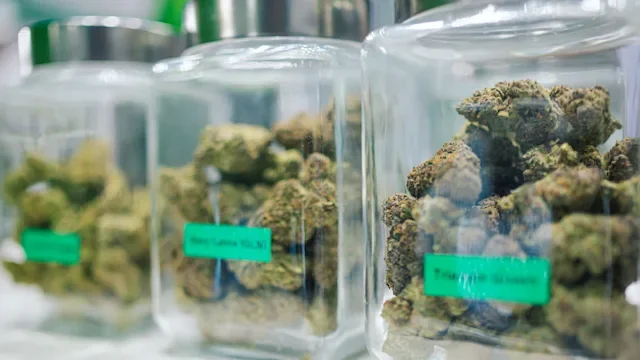
There’s no single “best” cannabis strain for chronic pain, but certain patterns can help guide your choice. People with ongoing pain often respond better to products with a higher CBD content, since CBD may help with inflammation and muscle tension without the stronger psychoactive effects of THC. Many dispensaries label these as “CBD-dominant,” “1:1 THC:CBD,” or “balanced strains.” These ratios are often easier to tolerate for daytime use, especially if you want pain relief without feeling impaired.
Strains with higher THC, especially ones labeled indica-leaning, may help some people relax, sleep better, or ease more severe pain flares. But higher THC in these strains can also cause side effects like dizziness, anxiety, or difficulty concentrating. So starting with a low dose is important if you’re new to it.
Regardless of the strain, what tends to matter most is the product’s THC:CBD ratio, how you take it (such as oral, inhaled, or topical), and how your own body responds. A healthcare professional familiar with medical cannabis can help you choose a strain and dosage that work best for your symptoms and daily needs.
What does the research say about using cannabis for pain?
Chronic pain is one of the most common reasons people turn to medical cannabis. But research findings don’t all point in the same direction. Let’s review how the evidence breaks down below.
Findings that suggest cannabis may be helpful include:
Several scientific studies show cannabis can reduce pain in adults with various types of chronic pain.
In a survey of more than 900 people, 75% reported pain relief as the main benefit of their cannabis use.
One study found that opioid use decreased by over 60% among people using cannabis for chronic pain.
Several studies show improvements in quality of life and daily functioning, suggesting cannabis may help people manage pain more effectively. Some researchers describe this as the “restored self,” when people regain a sense of normalcy and control.
Findings that show a more limited or mixed effect include:
Some studies actually report higher pain levels among certain cannabis users.
Others show no meaningful change in pain scores, even if quality of life improved.
A few studies suggest some of the benefits of cannabis may come from placebo effects, where expectations shape the response you might feel.
Keep in mind: Cannabis isn’t an FDA-approved medication. In fact, it’s still considered an illegal substance by the U.S. government. Many individual states have passed laws that legalize cannabis for medical use, but there aren’t universal guidelines in place to make sure it’s produced safely. So it’s best to talk with a healthcare professional first about the options in your state. They can give you guidance on the risks and benefits of cannabis use to protect your health and safety.
What is the recommended dosage of cannabis for pain relief?
There isn’t a one-size-fits-all cannabis dosage for chronic pain. There are several reasons for this:
Cannabis isn’t an FDA-approved medication. So there isn’t a standard dosage guideline that’s been proven safe and effective.
Cannabis is a plant that comes in many different varieties. This makes it hard to replicate from batch to batch. And the different amounts of cannabinoids in each variety will provide different effects.
Everyone’s endocannabinoid system is different. So your body chemistry may not react to a dose of cannabis the same way as someone else’s.
Cannabis products can vary widely in strength and quality, especially in states without strict regulation. This means the amount of THC or CBD in one product may not match the label, making it harder to predict how it will affect your pain or other symptoms.
Clinical studies don’t translate to the real world. Often, clinical studies use doses or formulations of cannabis that are different from what’s available to people in dispensaries. Or they don’t include detailed dosage information at all.
However, in 2021 a group of 20 experts across nine different countries came together to develop a dosage guideline for cannabis to treat chronic pain. This guideline suggests that healthcare professionals start by giving 5 mg of a high-CBD formulation (no more than 1:10 THC to CBD ratio) by mouth twice a day. If needed, the dose may be increased by 10 mg of CBD per day every 2 to 3 days. Once the dose is up to 40 mg of CBD per day, if the symptoms don’t improve the prescriber can start slowly adding on THC, starting with 2.5 mg. More than 40 mg of THC per day isn’t recommended.
This guideline starts with a high-CBD formulation because CBD isn’t intoxicating and has fewer side effects than THC. An oral formulation of cannabis is also preferred, as it lasts longer, has more predictable effects, and less potential for lung damage than inhaled cannabis.
That being said, since inhaled cannabis works faster than other dosage forms, it may be helpful for breakthrough pain symptoms that need faster relief. Experts recommend vaporizing dried flowers with a balanced amount of CBD and THC, or a high-THC formulation as needed for breakthrough pain, along with the oral dosage schedule described above.
Keep in mind: Cannabis isn’t an appropriate treatment option for everyone. And this is a general guideline, not an FDA-approved dosage recommendation. So it’s best to talk with a healthcare professional before trying this protocol. They can help make sure it’s safe for you based on your medical history.
What are the possible risks and side effects of using cannabis for pain?
Cannabis use isn’t entirely risk free. Like any other substance, there are risks, side effects, and drug interactions to consider.
Most cannabis side effects are related to THC. They include:
Red eyes
A “high” or intoxicated feeling
Dizziness
Slowed sense of time
Racing heart
Difficulty concentrating
Diarrhea (CBD-related)
These side effects can often be avoided by following a dosage schedule that slowly increases your dose over time, such as the one described above. If these effects occur, they’re usually simple to manage on your own and will go away as the cannabis dose wears off.
There are also more serious risks of cannabis use. They’re mainly related to THC’s effect on your brain. THC can cause the following symptoms, especially with higher doses:
Feelings of fear or anxiety
Vomiting that won’t stop (cannabis hyperemesis syndrome)
Impaired thinking and coordination
Problems with memory
Seeing, hearing, or feeling things that aren’t real
Irrational thoughts or feelings that you are not yourself
Cannabis high in THC can also be habit forming. So it might not be a good option for those with a history of substance use or dependence.
Successful pain management with cannabis includes using it responsibly and at the lowest effective dose for your symptoms. And high-CBD or balanced CBD to THC products are preferred for pain management to reduce the above risks.
Does cannabis interact with other pain medications?
Possibly. Taking cannabis with certain pain medications can raise your risk of side effects, such as dizziness and drowsiness. But in some cases, cannabis may help other pain medications work better or allow you to take less of them — such as with opioid pain medications.
But combining pain medications isn’t something you should do on your own. A healthcare professional can help you find the best treatment options for your pain and make any changes to your treatment safely.
Frequently asked questions
For chronic pain, it’s usually best to start with oral formulations that are high in CBD, since they offer longer-lasting relief with fewer psychoactive effects. For sudden or “breakthrough” pain, inhaled or vaporized products work faster because they’re absorbed more quickly. Many people try balanced CBD:THC options once they know how they respond to each ingredient. It may take some trial and error to find the right combination and dosage schedule for you.
CBD may help with milder pain or inflammation and typically has fewer side effects. THC-containing cannabis products may provide stronger relief for some types of pain, especially nerve-related pain. Many people find a combination of CBD and THC works best. Your response can depend on your symptoms, tolerance, and comfort with THC’s psychoactive effects.
Cannabis can cause side effects like dizziness, fatigue, dry mouth, and impaired thinking or coordination. THC can also lead to unwanted psychoactive effects, anxiety, or dependency in some people. It can also interact with certain medications and isn’t recommended for everyone, including people who are pregnant. Legal restrictions also vary, which can affect access and product quality.
For chronic pain, it’s usually best to start with oral formulations that are high in CBD, since they offer longer-lasting relief with fewer psychoactive effects. For sudden or “breakthrough” pain, inhaled or vaporized products work faster because they’re absorbed more quickly. Many people try balanced CBD:THC options once they know how they respond to each ingredient. It may take some trial and error to find the right combination and dosage schedule for you.
CBD may help with milder pain or inflammation and typically has fewer side effects. THC-containing cannabis products may provide stronger relief for some types of pain, especially nerve-related pain. Many people find a combination of CBD and THC works best. Your response can depend on your symptoms, tolerance, and comfort with THC’s psychoactive effects.
Cannabis can cause side effects like dizziness, fatigue, dry mouth, and impaired thinking or coordination. THC can also lead to unwanted psychoactive effects, anxiety, or dependency in some people. It can also interact with certain medications and isn’t recommended for everyone, including people who are pregnant. Legal restrictions also vary, which can affect access and product quality.
The bottom line
Many people use cannabis to manage chronic pain symptoms. And there’s a good amount of evidence that it may be an effective treatment option. But cannabis isn’t the right choice for everyone. So it’s best to work with a healthcare professional when considering cannabis for pain.
Be sure to discuss the risks and benefits of cannabis for chronic pain with your prescriber. They may recommend you start with a high-CBD form of cannabis and slowly increase the dose over time. You can then add THC in small amounts if needed. But dosages of more than 40 mg of THC daily aren’t recommended. Oral dosage forms are best, but inhaled cannabis may be helpful for breakthrough pain if needed. But don’t make changes to your pain medications on your own without the guidance of a healthcare professional
If you or someone you know struggles with substance use, help is available. Call the National Helpline of the Substance Abuse and Mental Health Services Administration (SAMHSA) at 1-800-662-HELP (4357) to learn about resources in your area.
DISCLAIMER: Keep in mind that cannabis is legal in some states for recreational and/or medicinal use, but not in others. Cannabis is still illegal under federal law. Before you use cannabis products, find out the laws in your state.

Why trust our experts?




References
Aviram, J., et al. (2021). Prolonged medical cannabis treatment is associated with quality of life improvement and reduction of analgesic medication consumption in chronic pain patients. Frontiers in Pharmacology.
Bains, S., et al. (2025). Medicinal cannabis for treatment of chronic pain. StatPearls.
Bhaskar, A., et al. (2021). Consensus recommendations on dosing and administration of medical cannabis to treat chronic pain: Results of a modified Delphi process. Journal of Cannabis Research.
Chayama, K. L., et al. (2021). The role of cannabis in pain management among people living with HIV who use drugs: A qualitative study. Drug and Alcohol Review.
Frane, N., et al. (2022). Cannabidiol as a treatment for arthritis and joint pain: An exploratory cross-sectional study. Journal of Cannabis Research.
Freire de Carvalho, J., et al. (2024). Cannabis therapy in rheumatological diseases: A systematic review. Northern Clinics of Istanbul.
Hill, K. P., et al. (2017). Cannabis and pain: A clinical review. Cannabis and Cannabinoid Research.
Jugl, S., et al. (2021). Much ado about dosing: The needs and challenges of defining a standardized cannabis unit. Medical Cannabis and Cannabinoids.
Lavie-Ajayi, M., et al. (2019). Restored Self: A phenomenological study of pain relief by cannabis. Pain Medicine.
Lu, H-C., et al. (2022). Review of the endocannabinoid system. Biological Psychiatry: Cognitive Neuroscience and Neuroimaging.
Mücke, M., et al. (2018). Cannabis‐based medicines for chronic neuropathic pain in adults. Cochrane Database of Systematic Reviews.
National Academies of Sciences, Engineering, and Medicine. (2017). Chapter 4: Therapeutic effects of cannabis and cannabinoids. The Health Effects of Cannabis and Cannabinoids: The Current State of Evidence and Recommendations for Research.
National Conference of State Legislatures. (2025). State medical cannabis laws. National Institutes of Health.
National Institute on Drug Abuse. (2024). Cannabis (marijuana). National Institutes of Health.
Pantoja-Ruiz, C., et al. (2022). Cannabis and pain: A scoping review. Brazilian Journal of Anesthesiology.
Piper, B. J., et al. (2018). Chronic pain patients’ perspectives of medical cannabis: Figure 1. Pain.
Purohit, R., et al. (2024). Patient-reported outcomes of pain, stiffness, and fatigue reduction in rheumatoid and psoriatic arthritis with cannabinoid use. Cureus.
Rubinstein, S., et al. (2022). Cannabis and autoimmune diseases. Israel Medical Association Journal.
Safakish, R., et al. (2020). Medical cannabis for the management of pain and quality of life in chronic pain patients: A prospective observational study. Pain Medicine.
Sainsbury, B., et al. (2021). Efficacy of cannabis-based medications compared to placebo for the treatment of chronic neuropathic pain: a systematic review with meta-analysis. Journal of Dental Anesthesia and Pain Medicine.
Spinella, T. C., et al. (2021). Evaluating cannabidiol (CBD) expectancy effects on acute stress and anxiety in healthy adults: A randomized crossover study. Psychopharmacology.
Strand, N. H., et al. (2023). Cannabis for the treatment of fibromyalgia: A systematic review. Biomedicines.
Vulfsons, S., et al. (2020). Cannabis and pain treatment—a review of the clinical utility and a practical approach in light of uncertainty. Rambam Maimonides Medical Journal.