



11 Medications That Cause Coughing: Here’s What to Know About a Drug-Induced Cough
Certain medications, such as lisinopril, simvastatin, and carvedilol, may cause a cough. Learn more about medications that cause coughing here.
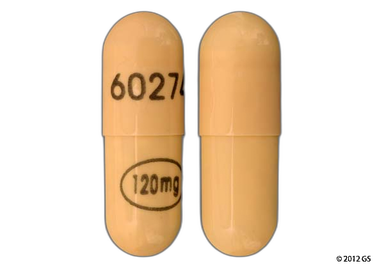
Verapamil ER (Verelan) is used to treat high blood pressure (hypertension). It's an extended-release (ER) medication that works throughout the day and is available as a tablet and capsule.

Verapamil ER (Verelan) is a calcium channel blocker (CCB). It works by blocking calcium from entering your heart muscle. This helps lower how much your heart works to squeeze (contract) and relax. It also relaxes and opens up your blood vessels, including those of your heart. By relaxing your heart muscle and blood vessels, verapamil ER (Verelan) helps lower your blood pressure.
| Common Brands | Calan SR, Verelan, Verelan PM |
|---|---|
| Drug Class | Calcium channel blocker (CCB) |
| Controlled Substance Classification | Not a controlled medication |
| Generic Status | Lower-cost generic available |
| Availability | Prescription only |

The following side effects may get better over time as your body gets used to the medication. Let your healthcare provider know immediately if you continue to experience these symptoms or if they worsen over time.
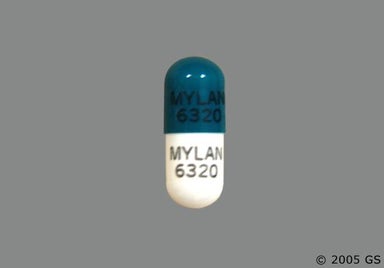
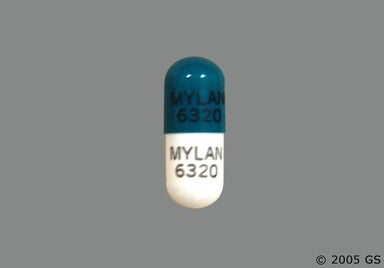
Tablet (Calan SR)
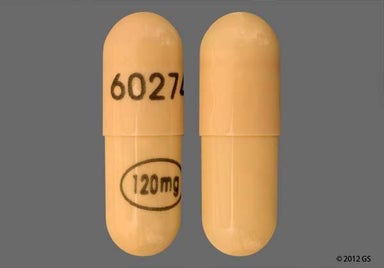
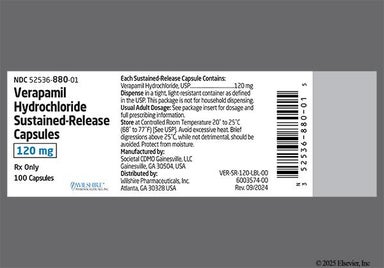
Capsule (Verelan)
Capsule (Verelan PM)
Contact your healthcare provider immediately if you experience any of the following.
Along with its needed effects, a medicine may cause some unwanted effects. Although not all of these side effects may occur, if they do occur they may need medical attention.
Check with your doctor immediately if any of the following side effects occur:
Less common
Blue lips and fingernails
blurred vision
burning, crawling, itching, numbness, prickling, "pins and needles", or tingling feelings
confusion
coughing that sometimes produces a pink frothy sputum
difficult, fast, noisy breathing, sometimes with wheezing
dizziness, faintness, or lightheadedness when getting up from a lying or sitting position suddenly
increased sweating
lightheadedness, dizziness, or fainting
pale skin
shortness of breath
slow or irregular heartbeat
sweating
swelling in legs and ankles
unusual tiredness or weakness
Some side effects may occur that usually do not need medical attention. These side effects may go away during treatment as your body adjusts to the medicine. Also, your health care professional may be able to tell you about ways to prevent or reduce some of these side effects. Check with your health care professional if any of the following side effects continue or are bothersome or if you have any questions about them:
More common
Difficulty having a bowel movement (stool)
headache
Other side effects not listed may also occur in some patients. If you notice any other effects, check with your healthcare professional.
Call your doctor for medical advice about side effects. You may report side effects to the FDA at 1-800-FDA-1088.




Verapamil ER (Verelan) can cause some serious health issues. This risk may be even higher for certain groups. If this worries you, talk to your doctor or pharmacist about other options.
Verapamil ER (Verelan) can cause heart failure and fluid buildup in your lungs. Heart failure means your heart isn't pumping blood as well as it should. If you have a history of heart disease or heart-related problems, let your healthcare provider know before you start verapamil ER (Verelan). You might need to take other medications, such as water pills (diuretics), to help manage your heart problem. Symptoms of heart failure include shortness of breath, tiredness, swelling of the feet, legs, or stomach, quick weight gain, dizziness, and cough.
Verapamil ER (Verelan) can sometimes cause your blood pressure to drop to seriously low levels. This isn't very common if you have high blood pressure, but it's still possible. Tell your healthcare provider if you have symptoms of low blood pressure, including dizziness, lightheadedness, or weakness or tiredness, and especially if you experience blurred vision, thirst (dehydration), sweating, cold or pale skin, fast breathing, or confusion.
Verapamil ER (Verelan) can raise the level of liver proteins in your blood. These levels are checked when you get bloodwork done to monitor the health of your liver. Some of these elevations are harmless and disappear as you continue using verapamil ER (Verelan). Other times, it can lead to more serious liver problems. If you have a history of liver disease, let your healthcare provider know before starting verapamil ER (Verelan). You might need routine bloodwork to make sure your labs are within the normal range. Let your provider know right away if you notice yellowing of your skin or eyes (jaundice), stomach pain or swelling, loss of appetite, dark urine, nausea, vomiting, tiredness, weakness, or confusion. These can be signs of liver injury.
Verapamil ER (Verelan) can cause changes in your heart rhythm, including temporarily lowering your heart rate. Rarely, it can also cause a heart rhythm problem called heart block (AV block), which can be life-threatening. If this occurs, your dose might have to be lowered or you might have to completely stop taking verapamil ER (Verelan). Call for emergency medical help if you have chest pain, dizziness, shortness of breath, severe tiredness, feel like fainting, or feel like your heart skipped a beat.
Before starting verapamil ER (Verelan), make sure your healthcare provider knows your full medical history, especially if you have any heart-related problems.
If you have an irregular heart rate (e.g., atrial fibrillation or A-fib, atrial flutter) and you're born with extra heart muscle tissue, don't take verapamil ER (Verelan), as this medication might put you at a higher risk for ventricular fibrillation (V-fib). This is a serious heart rhythm condition that can be life-threatening if not treated right away. V-fib was seen in people taking the injection form of verapamil, but you should still take similar precautions with oral forms of verapamil as well. Symptoms of V-fib include chest pain or pressure, shortness of breath, nausea, and vomiting.
If you have a genetic heart condition called hypertrophic cardiomyopathy (HCM), take verapamil ER (Verelan) with caution. HCM causes your heart muscle to grow thicker, making it harder for your heart to pump blood to the rest of your body. If you have HCM, verapamil ER (Verelan) can cause serious complications, such as fluid buildup in your lungs, severely low blood pressure, slow heart rate, heart block, and even death. Let your healthcare provider know if you have HCM because you might need to use a lower dose of verapamil ER (Verelan).


Although certain medicines should not be used together at all, in other cases two different medicines may be used together even if an interaction might occur. In these cases, your doctor may want to change the dose, or other precautions may be necessary. When you are taking this medicine, it is especially important that your healthcare professional know if you are taking any of the medicines listed below. The following interactions have been selected on the basis of their potential significance and are not necessarily all-inclusive.
Using this medicine with any of the following medicines is not recommended. Your doctor may decide not to treat you with this medication or change some of the other medicines you take.
Using this medicine with any of the following medicines is usually not recommended, but may be required in some cases. If both medicines are prescribed together, your doctor may change the dose or how often you use one or both of the medicines.
Using this medicine with any of the following medicines may cause an increased risk of certain side effects, but using both drugs may be the best treatment for you. If both medicines are prescribed together, your doctor may change the dose or how often you use one or both of the medicines.


Contraindications are specific health conditions or situations in which a person should not take a medication due to safety concerns. If you have any of the following conditions or if any of the following apply to you, let your healthcare provider know because Verapamil ER (Verelan) will not be safe for you to take.







Prescription savings
Stop paying too much for your prescriptions. Compare prices, get pharmacy coupons, and save up to 80%. Find expert answers to your health questions so you can make the best decisions for yourself and your family.
Health conditions
Medications & treatment
Access & affordability
Medication discounts

Verapamil ER starts working within 1 week. When you first start the medication, your healthcare provider might make changes to your dose on a weekly basis depending on how well you're tolerating the medication and how well it's working to lower your blood pressure. If you don't notice a difference in your blood pressure within 1 week, let your healthcare provider know.
Since Verapamil ER lowers your blood pressure, taking Verapamil ER with other blood pressure medications can lead to even lower blood pressure and a slowed heart rate. Some people with poorly controlled blood pressure might need to take multiple medications to lower their blood pressure to healthy levels. Discuss the risks and benefits of combining blood pressure medications with your healthcare provider, and regularly follow up with your provider so your doses can be adjusted if needed.
Verelan and Verelan PM are both extended-release capsules of Verapamil ER and are used to lower blood pressure. The extended-release capsules slowly release medication into your body, and they continue to work throughout the day to maintain steady levels in your body. The main difference is the time of day you should take them. Verelan is typically taken once daily in the morning, whereas Verelan PM is taken once daily at bedtime. Verelan PM is made in a special way that allows for a delayed start and doesn't start releasing medication until 4 to 5 hours after you take it. This allows Verelan PM to reach its highest levels in your body in the morning, when your blood pressure tends to be higher compared to the rest of the day.
There aren't any studies looking at the safety of Verapamil ER in pregnant humans, but harmful effects have been observed in animal studies. If you're pregnant or plan on becoming pregnant, discuss the risks and benefits of taking Verapamil ER with your healthcare provider and only use it if absolutely necessary.
Verapamil ER can pass into human breast milk, which might lead to serious harm for your baby. Don't breastfeed if you're taking Verapamil ER. Discuss with your healthcare provider if you would like to switch to a safer medication while breastfeeding.
