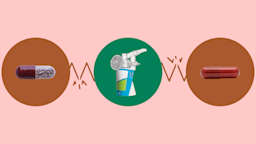
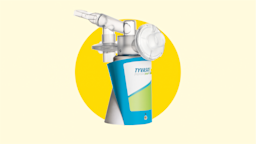
Tyvaso (treprostinil) is a medication prescribed for adults to treat high blood pressure in the lungs. This medication works to open up blood vessels leading to the lungs to help your body get more oxygen. Tyvaso (treprostinil) is available as a nebulizer and a dry powdered inhaler (DPI). This medication is typically only available at specialty pharmacies, so your provider will need to help set that up for you.
Tyvaso (treprostinil) is a man-made version of prostacyclin, a natural hormone in your body that helps to open up the blood vessels. Tyvaso (treprostinil) allows your blood to flow better into the lungs, which lowers the lung blood pressure and helps your body get more oxygen. This leads to less strain on the heart, better ability to exercise, and lower risk of PH getting worse.
The following side effects may get better over time as your body gets used to the medication. Let your healthcare provider know immediately if you continue to experience these symptoms or if they worsen over time.
Common Side Effects
Tyvaso (treprostinil) nebulizer
Cough (54%)
Headache (41%)
Throat pain or irritation (25%)
Nausea (19%)
Flushing (15%)
Tyvaso (treprostinil) DPI
Cough (35%)
Headache (16%)
Trouble catching your breath (8%)
Less Common Side Effects
Dizziness
Stomach upset
Muscle, jaw, or bone pain
Fainting
Tyvaso (treprostinil) serious side effects
Contact your healthcare provider immediately if you experience any of the following.
Bronchospasm: tightening of the throat, trouble breathing, wheezing, tightness in the chest, cough
The following Tyvaso (treprostinil) side effects have also been reported
Along with its needed effects, a medicine may cause some unwanted effects. Although not all of these side effects may occur, if they do occur they may need medical attention.
Check with your doctor immediately if any of the following side effects occur:
Some side effects may occur that usually do not need medical attention. These side effects may go away during treatment as your body adjusts to the medicine. Also, your health care professional may be able to tell you about ways to prevent or reduce some of these side effects. Check with your health care professional if any of the following side effects continue or are bothersome or if you have any questions about them:
How to load Tyvaso (treprostinil) DPI: Open the mouthpiece of the inhaler, insert the cartridge with the cup facing down. Make sure the tip of the cartridge is aligned with the inhaler. Close the mouthpiece until you feel a snap.
How to use Tyvaso (treprostinil) DPI: Keep the inhaler level while taking the mouthpiece cover off of the inhaler. When you're ready, exhale fully. Then, put the mouthpiece into your mouth and inhale deeply. Move the inhaler away from your mouth afterwards and hold your breath for as long as you can. Repeat the steps if your dose requires you to use more than one cartridge.
You can store the Tyvaso (treprostinil) blister cards of cartridges at room temperature or in the refrigerator before using. If stored at room temperature, cartridges in an unopened blister strip expire after 5 weeks. Once the blister strip is opened, cartridges expire after 3 days.
If you store the Tyvaso (treprostinil) blister cards of cartridges in the refrigerator, cartridges in an unopened blister strip are good until the expiration date on the package. Once the blister strip has been opened or stored at room temperature, don't put it into the refrigerator.
If cartridges and mouthpiece are refrigerated, keep them at room temperature for 10 minutes before using to avoid condensation inside the inhaler.
Used Tyvaso (treprostinil) mouthpiece should be thrown away in regular trash after one week.
How to set up Tyvaso (treprostinil) nebulizer: Wash and dry your hands, then fill the white water chamber inside the nebulizer with 45 mL of distilled water (between the silver sensor and the blue ring). Put an empty, new medicine cup inside the white water chamber, make sure the tip of the medicine cup is below the water level.
How to load Tyvaso (treprostinil) nebulizer: Take out an ampule of Tyvaso (treprostinil) and twist off the cap. Pour the medication into the cup by squeezing the ampule, then check to make sure it's empty. The mouthpiece contains 3 parts: the filter, the port, and the opening. Connect the parts together according to directions from the manufacturer.
If any Tyvaso (treprostinil) gets onto your skin, wash it off right away. This medication can cause skin irritations.
Make sure to change out the filter membrane every day.
How to use Tyvaso (treprostinil) nebulizer: Turn on the nebulizer according to directions from the manufacturer. Make sure your Tyvaso (treprostinil) nebulizer is programmed to the correct number of breaths that your provider prescribed per dose.
Store Tyvaso (treprostinil) nebulizer vials at room temperature before using. If the vial is opened, make sure to use the medication within a day.
Keep unopened vials in the original foil wrapper to protect them from light. If the medication is taken out of the wrapper, use it within 7 days.
Use the Treatment Tracker that comes with Tyvaso (treprostinil) nebulizer to record the number of breaths you take during each treatment session, and bring it with you to your appointments.
If Tyvaso (treprostinil) solution or dry powder spills onto your skin during treatment, make sure to wash your hands with water right away.
Before starting any new medications, speak with your provider first. Some medications can interact with Tyvaso (treprostinil) and lead to more side effects.
Risks and warnings for Tyvaso (treprostinil)
Tyvaso (treprostinil) can cause some serious health issues. This risk may be even higher for certain groups. If this worries you, talk to your doctor or pharmacist about other options.
Low blood pressure
Risk factor: History of low blood pressure
Tyvaso (treprostinil) can widen your blood vessels, which can cause your blood pressure to drop in your lungs as well as throughout your body. The risk is higher if you have a history of low blood pressure or if you take other medications to lower your blood pressure. Don't drive a car or operate machinery right after using this medication. If you experience symptoms such as lightheadedness or dizziness, let your provider know right away.
Bleeding
Risk factor: Taking other medications that prevent blood clots
Tyvaso (treprostinil) can prevent blood clots from forming in your body, which can raise your risk of bleeding. The risk is higher if you take a blood thinner, such as clopidogrel (Plavix). Be careful of cuts and injuries since you might bleed more easily. Get medical attention right away if you have bleeding that doesn't stop or bruising that won't go away.
Worsening of breathing
Risk factor: History of breathing problems
Although rare, Tyvaso (treprostinil) can worsen symptoms of asthma or chronic obstructive pulmonary disease (COPD) by tightening the airways. This is more likely to happen if you have a history of asthma or COPD. If you feel more wheezing, shortness of breath, or coughing after using Tyvaso (treprostinil), stop this medication right away and speak to your healthcare provider.
Interaction with other medications
Some medications can interfere with how your body gets rid of Tyvaso (treprostinil). Depending on if they boost or block how Tyvaso (treprostinil) gets removed, the medications can affect the amount of Tyvaso (treprostinil) in your body, how well it works, and the risk of side effects. For example, rifampin (Rifadin) can lower the amount of Tyvaso (treprostinil) in your body and cause the medication to not work as well. While gemfibrozil (Lopid) can raise the amount of Tyvaso (treprostinil) in your body and raise the risk of side effects, such as cough and headache. Make sure to let your provider know what other medications you're taking so they can check to see if they're safe for you.
Tyvaso (treprostinil) nebulizing solution comes in ampules. Each ampule contains 1.74 mcg of treprostinil. One ampule contains enough medication for one day of treatment, no matter how many breaths you're prescribed.
You'll have one treatment session 4 times a day, about 4 hours apart. The typical starting dose is to take 3 breaths by mouth during each treatment session. Your provider will raise your dose every 1-2 weeks until you reach a maintenance dose of 9-12 breaths with each treatment session.
Tyvaso (treprostinil) DPI comes in single-dose cartridges.
The typical starting dose is to inhale one 16 mcg cartridge four times a day, about 4 hours apart. Your provider will raise your dose every 1-2 weeks until you reach a maintenance dose of one 48 mcg or 64 mcg cartridge four times a day.
Interactions between Tyvaso (treprostinil) and other drugs
Tyvaso (treprostinil) may interact with certain medications or supplements. Always let your doctor and pharmacist know about any other medications or supplements (including prescribed and over-the-counter medications, vitamins, and dietary or herbal supplements) that you are currently taking. The list below does not include all possible drug interactions with Tyvaso (treprostinil). Please note that only the generic name of each medication is listed below.
Although certain medicines should not be used together at all, in other cases two different medicines may be used together even if an interaction might occur. In these cases, your doctor may want to change the dose, or other precautions may be necessary. When you are taking this medicine, it is especially important that your healthcare professional know if you are taking any of the medicines listed below. The following interactions have been selected on the basis of their potential significance and are not necessarily all-inclusive.
Using this medicine with any of the following medicines is not recommended. Your doctor may decide not to treat you with this medication or change some of the other medicines you take.
Defibrotide
Using this medicine with any of the following medicines is usually not recommended, but may be required in some cases. If both medicines are prescribed together, your doctor may change the dose or how often you use one or both of the medicines.
GoodRx Health has strict sourcing policies and relies on primary sources such as medical organizations, governmental agencies, academic institutions, and peer-reviewed scientific journals. Learn more about how we ensure our content is accurate, thorough, and unbiased by reading our editorial guidelines.
Prescription savings
Stop paying too much for your prescriptions. Compare prices, get pharmacy coupons, and save up to 80%.
Pulmonary arterial hypertension (PAH) is when the arteries that carry blood from your heart to your lungs (pulmonary arteries) become more narrow. When these arteries get narrow, your heart has to work harder to pump blood into your lungs. This leads to higher pressure in the lungs. The most common symptoms of PAH include tiredness, shortness of breath, or cough, especially when doing daily activities (e.g., walking outside, going to mailbox, getting dressed). Other signs or symptoms are swelling, dizziness, and chest pain. Tyvaso is used to open up the pulmonary arteries, which can improve exercise ability and relieve heart strain.
Studies showed that people who received Tyvaso were able to walk 69 feet further than the placebo group at the end of a 4-month study. In addition, people who received Tyvaso also had less strain on their heart compared to the placebo group. Finally, people who received Tyvaso were 39% less likely to have worsening PH compared to the placebo group. If you have any questions about whether Tyvaso is right for you, follow up with your provider for more information.
Tyvaso DPI and nebulizer both contain the same medication, treprostinil. One main difference between the two medications is how you take the medication. Tyvaso DPI is a smaller inhaler that contains dry powder. When you use it, you have to inhale deeply to draw up the powder for your treatment. Usually each dose is inhaled in less than 2 seconds. On the other hand, Tyvaso nebulizer is a larger device that's set up with distilled water and medication solution before treatment. Usually each treatment takes about 2-3 minutes. Another difference is how you care for each device. Tyvaso DPI mouthpiece should be replaced weekly, while Tyvaso nebulizer needs to be cleaned every night. Your provider might pick one device over another based on your preference and cost. Ask your provider if you have more questions about how Tyvaso DPI and nebulizer differ.
Make sure your provider instructs you on how to care for your DPI. You can wipe the outside of Tyvaso DPI with a clean dry cloth as needed. Make sure to not rinse or wash the inhaler since it can cause the dry powder inside the cartridge to clump up. After a week, throw away the used mouthpiece into regular trash. Your specialty pharmacy will send you new mouthpieces every month so you don't have to worry about running out.
Make sure your provider instructs you on how to care for your nebulizer. At the end of each day, throw away any leftover medication in the cup and take apart the mouthpiece, wash and dry each part. You'll need to use a new filter membrane each day. At the end of each week, you can wipe the outside and inside of the Tyvaso nebulizer with a damp cloth. This will help to keep the equipment working for longer. Once a month, your specialty pharmacy will send you new parts of the mouthpiece to replace the old ones. This is to help the nebulizer work properly for your breathing treatment.
Maybe. Speak with your provider about using Tyvaso during pregnancy. Tyvaso hasn’t been well studied in human pregnancy. But given PAH can pose serious risks and problems in pregnant people, including death of baby and mother, it's important to continue PAH treatment during pregnancy. Talk with your provider to see whether Tyvaso is a good option for you.