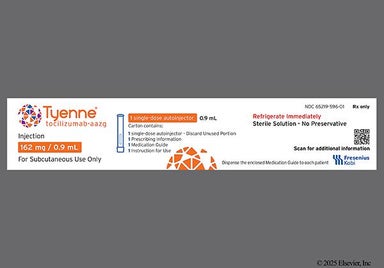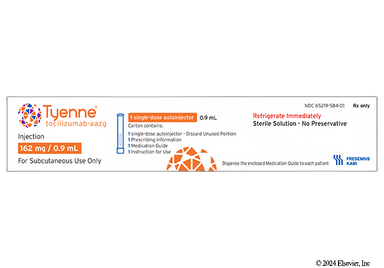
Tyenne
Tyenne (tocilizumab or tocilizumab-aazg) is a biologic medication and a biosimilar to Actemra (tocilizumab). It helps lower inflammation in certain autoimmune conditions like rheumatoid arthritis and juvenile idiopathic arthritis. It's also FDA approved to treat other conditions, including giant cell arteritis and COVID-19. Tyenne (tocilizumab) is given as an injection either under the skin or into a vein, depending on your condition. Common side effects include upper respiratory infections, headache, and injection‑site reactions.


What is Tyenne (tocilizumab)?
What is Tyenne (tocilizumab) used for?
- Moderate-to-severe rheumatoid arthritis (RA) - adults
- Giant cell arteritis (GCA) - adults
- Polyarticular juvenile idiopathic arthritis (PJIA) - adults and children 2 years and older
- Systemic juvenile idiopathic arthritis (SJIA) - adults and children 2 years and older
- Cytokine release syndrome (CRS) - adults and children 2 years and older
- COVID-19 infection - adults
How Tyenne (tocilizumab) works
Tyenne (tocilizumab) is an interleukin antagonist. It works by blocking a protein in your immune system called interleukin-6 (IL-6), which plays a major role in inflammation. By blocking IL-6, this medication helps reduce inflammation in certain conditions.
Drug facts
| Common Brands | Tyenne |
|---|---|
| Drug Class | IL-6 receptor antagonist |
| Controlled Substance Classification | Not a controlled medication |
| Generic Status | No lower-cost generic available |
| Availability | Prescription only |

Side effects of Tyenne (tocilizumab)
The following side effects may get better over time as your body gets used to the medication. Let your healthcare provider know immediately if you continue to experience these symptoms or if they worsen over time.
Common Side Effects
- Upper respiratory tract infections (up to 7%)
- Common cold symptoms (up to 7%)
- Headache (up to 7%)
- High blood pressure (up to 6%)
- Higher liver enzymes (up to 6%)
- Injections-site reactions
*The side effects listed above were reported in clinical trials where IV Actemra was used to treat rheumatoid arthritis.
Less Common Side Effects
- Dizziness
- Bronchitis
- Rash
- Mouth sores
- Stomach pain
- Constipation
- Anxiety
- Diarrhea
- Trouble sleeping
- Nausea
Tyenne (tocilizumab) serious side effects
Contact your healthcare provider immediately if you experience any of the following.
- Serious infections: fever, sweating or chills, shortness of breath, sores on the body, tiredness, muscle aches, coughing up blood, diarrhea, stomach pain, weight loss, burning when urinating
- Tears in the stomach or intestines: fever, stomach pain that doesn't go away, change in bowel habits
- Liver problems: tiredness, reduced appetite, yellowing of the skin or whites of your eyes, stomach swelling, pain in the right side of your stomach, light-colored stools, weakness, nausea, vomiting, confusion, dark-colored urine
- Serious allergic reaction: hives, rash, blisters, skin reddening, swelling of the lips or tongue, difficulty breathing
The following Tyenne (tocilizumab) side effects have also been reported
Along with its needed effects, a medicine may cause some unwanted effects. Although not all of these side effects may occur, if they do occur they may need medical attention.
Check with your doctor immediately if any of the following side effects occur:
More common
Black, tarry stools
bloody or cloudy urine
blurred vision
body aches or pain
chest pain or tightness
chills
cough with or without mucus
difficult, burning, or painful urination
difficulty breathing
difficulty swallowing
dizziness
ear congestion
fast heartbeat
feeling of warmth
frequent urge to urinate
headache
loss of appetite
loss of consciousness
loss of voice
lower back or side pain
nervousness
pain or tenderness around the eyes and cheekbones
painful blisters on the trunk of the body
pale skin
pounding in the ears
puffiness or swelling of the eyelids or around the eyes, face, lips, or tongue
redness of the face, neck, arms, and occasionally, upper chest
slow or fast heartbeat
stomach pain
stuffy or runny nose
sudden sweating
ulcers, sores, or white spots in the mouth
unusual bleeding or bruising
unusual tiredness or weakness
Less common
Accumulation of pus
bladder pain
burning feeling in the chest or stomach
confusion
dark urine
decrease in height
difficulty moving
dizziness, faintness, or lightheadedness when getting up suddenly from a lying or sitting position
fast, irregular, pounding, or racing heartbeat or pulse
feeling hot
general feeling of discomfort or illness
indigestion
itching, pain, redness, swelling, tenderness, or warmth on the skin at the injection site
joint pain
light-colored stools
muscle ache, pain, cramp, or stiffness
pain in the back, ribs, arms, legs, groin, or genitals
severe stomach pain
sharp back pain just below the ribs
shivering
stomach upset
sweating
swollen joints
swollen, painful, or tender lymph glands in the face, neck, armpit, or groin
swollen, red, or tender area of infection
tenderness in the stomach area
trouble with sleeping
unexplained runny nose or sneezing
vomiting
yellow eyes and skin
Rare
Belching
changes in skin color
coughing or spitting up blood
fainting
gaseous stomach pain
lightheadedness
neck pain
night sweats
noisy breathing
rapid, shallow breathing
recurrent fever
red, tender, or oozing skin at the wounded area
sudden high fever or low-grade fever for months
swelling of the foot or leg
Incidence not known
Blistering, peeling, loosening of the skin
dilated neck veins
extreme tiredness or weakness
pains in the stomach, side, or abdomen, possibly radiating to the back
red skin lesions, often with a purple center
red, irritated eyes
severe stomach pain, cramping, or burning
swelling of the face, fingers, feet, or lower legs
vomiting of material that looks like coffee grounds, severe and continuous
Some side effects may occur that usually do not need medical attention. These side effects may go away during treatment as your body adjusts to the medicine. Also, your health care professional may be able to tell you about ways to prevent or reduce some of these side effects. Check with your health care professional if any of the following side effects continue or are bothersome or if you have any questions about them:
More common
Burning, dry, or itching eyes
discharge, excessive tearing
redness, pain, or swelling of the eye, eyelid, or inner lining of the eyelid
skin rash, encrusted, scaly and oozing
swelling or inflammation of the mouth
Less common
Abnormal or decreased touch sensation
bleeding or redness and swelling of the gums
blemishes on the skin
bloody eye
chapped, red, or swollen lips
feeling of constant movement of self or surroundings
irritation in the mouth
loose teeth
persistent breath odor or bad taste in your mouth
redness or swelling in the ear
scaling, redness, burning, pain, or other signs of inflammation on the lips
sensation of spinning
sore mouth or tongue
white patches in the mouth or on the tongue
Rare
Bleeding after passing stool
blindness
bloody nose
burning, numbness, tingling, or painful sensations
change in hearing
continuing ringing or buzzing or other unexplained noise in the ears
coughing or spitting up blood
decreased vision or other changes in vision
ear drainage
flushed, dry skin
fruit-like breath odor
hearing loss
increased hunger, thirst, urination
itching ears
uncomfortable swelling around the anus
unexplained weight loss
unsteadiness or awkwardness
weakness in the arms, hands, legs, or feet
Other side effects not listed may also occur in some patients. If you notice any other effects, check with your healthcare professional.
Call your doctor for medical advice about side effects. You may report side effects to the FDA at 1-800-FDA-1088.

Pros and cons of Tyenne (tocilizumab)
Pros
- Can help multiple inflammatory autoimmune conditions
- Given every 1 to 4 weeks, depending on the condition being treated
- Available as an IV or SC injection
Cons
- Raises your risk for serious infections
- Can affect your liver, so regular blood tests are needed
- Not recommended during pregnancy or breastfeeding

Pharmacist tips for Tyenne (tocilizumab)

- Tyenne (tocilizumab) can weaken your immune system and lower your ability to fight infections. Call your prescriber right away if you have signs of infection, such as fever, chills, or feeling unwell.
- Tyenne (tocilizumab) can sometimes cause serious stomach or bowel problems. Get medical help right away if you have a fever, strong or ongoing stomach pain, or changes in your bowel habits.
- Tyenne (tocilizumab) can cause serious allergic or skin reactions in rare cases. Stop using it and get emergency help if you have a rash, hives, or swelling of your face, lips, tongue, or throat, or trouble breathing or swallowing.
- Tell your care team if you're taking Tyenne (tocilizumab) before getting any vaccines. It's not known whether the medication affects how your body responds to vaccines. You won't be able to receive live vaccines while receiving Tyenne (tocilizumab).
- Tell your prescriber right away if you are pregnant or think you might be pregnant while using Tyenne (tocilizumab) because this medication isn't safe during pregnancy.
- Store Tyenne (tocilizumab) in the refrigerator and keep in the original carton to protect it from light. If needed, the prefilled syringe and autoinjector can stay at room temperature for up to 2 weeks.
How to inject Tyenne (tocilizumab) under the skin at home
- You should only inject Tyenne (tocilizumab)] at home after proper training from your care team. Read the instructions for the prefilled syringe or autoinjector and ask a member of your care team if anything is unclear.
- Before injecting yourself, take Tyenne (tocilizumab)] out of the fridge and let it warm up in the carton before injecting. This takes about 30 minutes for the prefilled syringe or 45 minutes for the autoinjector. Don't try to warm it up any other way.
- After removing the cap, inject within 5 minutes for the prefilled syringe, and within 3 minutes for the autoinjector. This is to help prevent contamination with germs. Don't use it if it has been uncapped too long.
- Inject Tyenne (tocilizumab)] into the front of your thighs or stomach, or have someone inject it into the back of your upper arm. Don't inject into muscle or vein, and avoid skin that's sore, bruised, or damaged.
- After injecting Tyenne (tocilizumab)], place the syringe or autoinjector in a sharps container. Dispose of the container safely when it is almost full, following your local guidelines.

Risks and warnings for Tyenne (tocilizumab)
Tyenne (tocilizumab) can cause some serious health issues. This risk may be even higher for certain groups. If this worries you, talk to your doctor or pharmacist about other options.
Serious infections
- Risk factors: Active, chronic (long-term), or recurrent infection | Other conditions that raise your risk of infection | Taking medications that weaken your immune system
 Tyenne (tocilizumab) can make it harder for your body to fight off infections. This raises your risk of bacterial, viral, or fungal infections. This risk is higher if you take other medications that weaken the immune system. Tyenne (tocilizumab) can also reactivate (wake up) infections you've had before, such as tuberculosis or hepatitis B.
If you develop an infection, you will likely need to stop taking Tyenne (tocilizumab) until you recover. Tell your care team right away if you have symptoms like fever, cough, trouble breathing, or weakness.
Tears in the stomach or intestines
- Risk factors: Taking NSAIDs, corticosteroids, or methotrexate | History of diverticulitis
Tyenne (tocilizumab) might raise the risk of tears or damage in your stomach or intestines. Your risk is higher if you have a history of certain stomach problems like diverticulitis or if you also take medications such as NSAIDs, corticosteroids, or methotrexate. Stop taking Tyenne (tocilizumab) and contact your care team right away if you have fever, ongoing stomach pain, or changes in your bowel habits.
Liver problems
- Risk factors: Taking other medications that cause liver damage
Though rare, Tyenne (tocilizumab) can cause serious liver problems that can lead to liver failure, transplant, or death. These problems can happen months or even years after starting the medication. To be safe, your prescriber will order blood tests to check your liver health before you start Tyenne (tocilizumab) and regularly during treatment to make sure your liver is working properly.
Get medical help right away if you notice stomach swelling or pain, yellowing of your skin or eyes, changes in stool color (black, tarry, or bloody stools), nausea, vomiting, confusion, or dark or brown urine. You might need to stop taking the medication to prevent more liver damage.
Low blood cell counts
Although rare, Tyenne (tocilizumab) can lower your white blood cell and platelet counts. This can possibly raise the risk of serious infections and bleeding. To keep you safe, your prescriber will check your blood cell counts before you start Tyenne (tocilizumab) and regularly during treatment. You might need to stop the medication if your levels drop too low.
High cholesterol and triglycerides
Tyenne (tocilizumab) can raise your cholesterol and triglyceride (fat) levels. Your prescriber likely will order blood tests every 1 to 2 months while you're taking this medication. If your levels are high, they might prescribe medications to help. Staying active and eating a balanced diet can also help keep your cholesterol and triglycerides in a healthy range.
Cancer
Tyenne (tocilizumab) weakens your immune system, which can raise your risk of certain cancers. Tell your prescriber if you've ever had any type of cancer. Your care team will monitor you during treatment to help manage this risk.
Severe allergic reactions
Severe allergic reactions to Tyenne (tocilizumab) are possible, including life-threatening reactions like anaphylaxis (closing of the throat). Get medical help right away if you feel dizzy, have a choking feeling, nausea, swelling around your eyes, lips, or tongue, or trouble breathing after using this medication.
Nerve problems
- Risk factors: Currently have or recently developed a nervous system condition
In rare cases, conditions like multiple sclerosis (MS) and chronic inflammatory demyelinating polyneuropathy (CIDP) have been reported in people treated for rheumatoid arthritis. Tell your prescriber if you've ever had a nerve problem or notice new symptoms like vision changes, weakness, numbness, or tingling.
Vaccines
There isn’t much information on how Tyenne (tocilizumab) affects how your body responds to vaccines, including live vaccines. Make sure your vaccines are up to date before starting Tyenne (tocilizumab). Talk to your prescriber before getting any vaccines during treatment, and avoid live vaccines while taking this medication because they could make you sick.

Tyenne (tocilizumab) dosage
Typical dosage for Tyenne (tocilizumab)
Tyenne (tocilizumab) is given either as an infusion through the veins (intravenous or IV) over 1 hour or as an injection under the skin (subcutaneous or SC).
Your dose depends on your body weight, whether you get it by IV or SC injection, how well it’s working for you, and if you have side effects.
- Rheumatoid arthritis:
- IV: The typical dose is 4 mg/kg to 8 mg/kg every 4 weeks. The maximum dose is 800 mg per infusion.
- SC:
- Weight less than 220 lbs: The typical dose is 162 mg every 1 to 2 weeks.
- Weight 220 lbs or more: The typical dose is 162 mg every week.
- Giant cell arteritis
- IV: The typical dose is 6 mg/kg every 4 weeks. The maximum dose is 600 mg per infusion.
- SC: The typical dose is 162 mg every 1 to 2 weeks.
- Polyarticular juvenile idiopathic arthritis
- IV:
- Weight less than 66 lbs: The typical dose is 10 mg/kg every 4 weeks.
- Weight 66 lbs or more: The typical dose is 8 mg/kg every 4 weeks.
- SC:
- Weight less than 66 lbs: The typical dose is 162 mg once every 3 weeks.
- Weight 66 lbs or more: The typical dose is 162 mg once every 2 weeks.
- IV:
- Systemic juvenile idiopathic arthritis
- IV:
- Weight less than 66 lbs: The typical dose is 12 mg/kg every 2 weeks.
- Weight 66 lbs or more: The typical dose is 8 mg/kg every 2 weeks.
- SC:
- Weight less than 66 lbs: The typical dose is 162 mg once every 2 weeks.
- Weight 66 lbs or more: The typical dose is 162 mg once a week.
- IV:
- Cytokine release syndrome
- IV: The maximum dose is 800 mg per infusion.
- Weight less than 66 lbs: The typical dose is 12 mg/kg given once. If your symptoms don’t improve, you might receive additional doses.
- Weight 66 lbs or more: The typical dose is 8 mg/kg given once. If your symptoms don’t improve, you might receive additional doses.
- IV: The maximum dose is 800 mg per infusion.
- COVID-19
- IV:: The typical dose is 8 mg/kg given once. If your symptoms don’t improve, you might receive one additional dose. The maximum dose is 800 mg per infusion.

Interactions between Tyenne (tocilizumab) and other drugs
Although certain medicines should not be used together at all, in other cases two different medicines may be used together even if an interaction might occur. In these cases, your doctor may want to change the dose, or other precautions may be necessary. When you are taking this medicine, it is especially important that your healthcare professional know if you are taking any of the medicines listed below. The following interactions have been selected on the basis of their potential significance and are not necessarily all-inclusive.
Using this medicine with any of the following medicines is usually not recommended, but may be required in some cases. If both medicines are prescribed together, your doctor may change the dose or how often you use one or both of the medicines.
- Abatacept
- Adenovirus Vaccine
- Bacillus of Calmette and Guerin Vaccine, Live
- Cholera Vaccine, Live
- Dengue Tetravalent Vaccine, Live
- Infliximab
- Influenza Virus Vaccine, Live
- Measles Virus Vaccine, Live
- Mumps Virus Vaccine, Live
- Poliovirus Vaccine, Live
- Rotavirus Vaccine, Live
- Rubella Virus Vaccine, Live
- Smallpox Vaccine
- Tofacitinib
- Typhoid Vaccine, Live
- Varicella Virus Vaccine, Live
- Yellow Fever Vaccine
- Zoster Vaccine, Live

What are alternatives to Tyenne (tocilizumab)?

Tyenne (tocilizumab) images