



A Guide to COPD Inhalers
COPD inhalers may contain short- or long-acting medication, and there are a variety of devices on the market. Compare the best COPD inhalers with this guide.
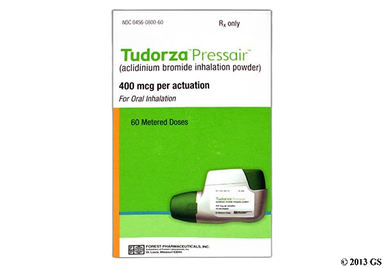
Tudorza Pressair (aclidinium) is a long-acting muscarinic antagonist (LAMA) inhaler. It's used as maintenance treatment for chronic obstructive pulmonary disease (COPD) in adults. The typical dose is 1 inhalation (400 mcg of aclidinium) inhaled through the mouth twice per day. Side effects include headache and common cold symptoms.

Tudorza Pressair (aclidinium) is a long-acting muscarinic antagonist (LAMA), a type of anticholinergic medication. It works by blocking a chemical called acetylcholine to relax the muscles in your airways.
| Common Brands | Tudorza Pressair |
|---|---|
| Drug Class | Long-acting muscarinic antagonist (LAMA) |
| Controlled Substance Classification | Not a controlled medication |
| Generic Status | No lower-cost generic available |
| Availability | Prescription only |

The following side effects may get better over time as your body gets used to the medication. Let your healthcare provider know immediately if you continue to experience these symptoms or if they worsen over time.
Contact your healthcare provider immediately if you experience any of the following.
Along with its needed effects, a medicine may cause some unwanted effects. Although not all of these side effects may occur, if they do occur they may need medical attention.
Check with your doctor immediately if any of the following side effects occur:
Less common
Bladder pain
bloody or cloudy urine
body aches or pain
chills
difficult, burning, or painful urination
difficulty in breathing
dry throat
ear congestion
fainting
fast, pounding, or irregular heartbeat or pulse
frequent urge to urinate
hoarseness
loss of voice
lower back or side pain
tender, swollen glands in the neck
tightness in the chest
trouble in swallowing
voice changes
Rare
Chest discomfort
difficulty with moving
dilated neck veins
extreme tiredness or weakness
flushed, dry skin
fruit-like breath odor
increased hunger
increased thirst
loss of consciousness
muscle pain or stiffness
pain, swelling, or redness in the joints
slow or irregular heartbeat
stomachache
sweating
swelling of the face, fingers, feet, or lower legs
unexplained weight loss
Incidence not known
Blindness
blurred vision
burning while urinating
decrease in the frequency of urination
decrease in urine volume
difficulty in passing urine (dribbling)
dizziness
large, hive-like swelling on the face, eyelids, lips, tongue, throat, hands, legs, feet, or genitals
puffiness or swelling of the eyelids or around the eyes, face, lips, or tongue
tearing
vomiting
Some side effects may occur that usually do not need medical attention. These side effects may go away during treatment as your body adjusts to the medicine. Also, your health care professional may be able to tell you about ways to prevent or reduce some of these side effects. Check with your health care professional if any of the following side effects continue or are bothersome or if you have any questions about them:
Other side effects not listed may also occur in some patients. If you notice any other effects, check with your healthcare professional.
Call your doctor for medical advice about side effects. You may report side effects to the FDA at 1-800-FDA-1088.



How to use Tudorza Pressair (aclidinium):

Tudorza Pressair (aclidinium) can cause some serious health issues. This risk may be even higher for certain groups. If this worries you, talk to your doctor or pharmacist about other options.
Don't use Tudorza Pressair (aclidinium) if you're experiencing trouble breathing from a COPD flare up because this medication won't provide immediate relief. Use a rescue inhaler, such as albuterol (Ventolin HFA), if you're having trouble breathing.
If you're using your rescue inhaler more often than usual, let your pulmonologist know because this could be a sign that your condition is getting worse. Don't use more doses Tudorza Pressair (aclidinium) than recommended because this won't improve your breathing. Rather, this can raise your risk for serious side effects, such as heart problems, tremors, and dizziness.
Inhaled medications, including Tudorza Pressair (aclidinium), can sometimes cause a muscle spasm in your lungs. This can lead to difficulty breathing, wheezing, cough, and chest discomfort. If you have a hard time breathing after inhaling Tudorza Pressair (aclidinium), use your rescue inhaler and get medical attention right away.
Severe allergic reactions to Tudorza Pressair (aclidinium) are possible, including life-threatening reactions like facial swelling, shock, and anaphylaxis (closing of the throat). Get medical attention right away if you notice hives, rash, red skin, swelling of the lips or tongue, or difficulty breathing after using Tudorza Pressair (aclidinium).
Although rare, Tudorza Pressair (aclidinium) can raise the pressure in your eyes and worsen symptoms of glaucoma. Talk to your optometrist before using Tudorza Pressair (aclidinium) if you have glaucoma because they might ask you to come in more often for eye exams. Also speak with them if you notice any changes to your vision while using the medication.
Tudorza Pressair (aclidinium) should be used cautiously by people who have prostate problems or urinary retention, because it can worsen these conditions and lead to difficulty urinating. Contact your prescriber if you notice difficulty urinating while using this medication.


Although certain medicines should not be used together at all, in other cases two different medicines may be used together even if an interaction might occur. In these cases, your doctor may want to change the dose, or other precautions may be necessary. When you are taking this medicine, it is especially important that your healthcare professional know if you are taking any of the medicines listed below. The following interactions have been selected on the basis of their potential significance and are not necessarily all-inclusive.
Using this medicine with any of the following medicines is usually not recommended, but may be required in some cases. If both medicines are prescribed together, your doctor may change the dose or how often you use one or both of the medicines.


Contraindications are specific health conditions or situations in which a person should not take a medication due to safety concerns. If you have any of the following conditions or if any of the following apply to you, let your healthcare provider know because Tudorza Pressair (aclidinium) will not be safe for you to take.


Prescription savings
Stop paying too much for your prescriptions. Compare prices, get pharmacy coupons, and save up to 80%. Find expert answers to your health questions so you can make the best decisions for yourself and your family.
Health conditions
Medications & treatment
Access & affordability
Medication discounts

No, Tudorza Pressair isn't a steroid; it's a bronchodilator known as a long-acting muscarinic antagonist (LAMA). Both inhaled corticosteroids and LAMAs can be used to help with COPD, but they work in different ways. Inhaled corticosteroids help you breathe better by lowering inflammation in the airways, whereas LAMAs do so by relaxing the muscles in your airways. Your pulmonologist might prescribe an inhaled steroid in addition to Tudorza Pressair if your COPD symptoms aren't well-controlled with Tudorza Pressair alone.
Both Spiriva (tiotropium) and Tudorza Pressair are inhaled long-acting muscarinic antagonists (LAMAs) approved for the maintenance treatment of COPD. But Spiriva (tiotropium) can also be used for asthma. Additionally, Spiriva (tiotropium) is inhaled once per day whereas Tudorza Pressair is inhaled twice per day. Studies show both medications work similarly well in treating COPD. Speak to your pulmonologist if you have specific questions on the differences between both medications.
Your healthcare professional might prescribe Symbicort (budesonide / formoterol) with Tudorza Pressair. Both medications manage COPD in different ways. Symbicort is made up of an inhaled corticosteroid (budesonide) and long acting beta-agonist or LABA (formoterol). Tudorza Pressair contains a long-acting muscarinic antagonist or LAMA (aclidinium). Triple therapy with a LAMA, ICS, and LABA is recommended for certain people who still have COPD symptoms even though they're taking Tudorza Pressair.
There are two different sizes of Tudorza Pressair inhaler. Depending on the size, the inhaler contains either 30 or 60 puffs (inhalations), which lasts about 2 to 4 weeks since the medication is used twice per day. Use the dose indicator on the inhaler to help keep track of how many inhalations you have left. When a red band appears on the inhaler, that means the inhaler is close to being empty; this is when you should ask your pharmacist or prescriber for a refill.
Tudorza Pressair works within about 30 minutes to help you breathe easier. But it doesn't work quickly enough to ease a COPD flare up. This inhaler is meant to be used twice daily for the maintenance treatment of COPD and to prevent COPD exacerbations.
