triamterene
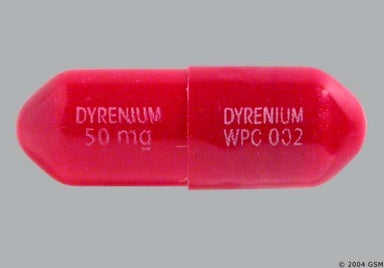
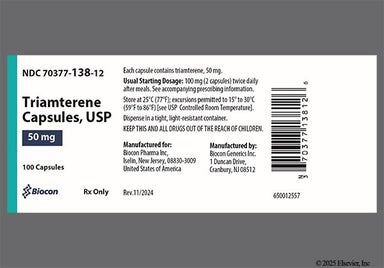
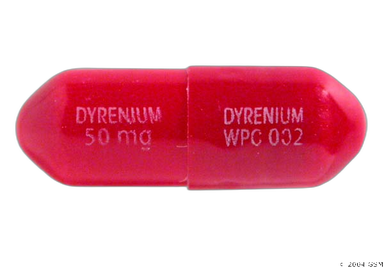
Triamterene, also known by its brand name Dyrenium, is a water pill called a potassium-sparing diuretic. It's used to treat swelling due to fluid buildup in the body in adults. This medication also helps lower the risk of low potassium levels when you take it with other types of water pills. Triamterene (Dyrenium) is available as a brand-name and generic medication. It's a capsule that's taken by mouth twice per day after a meal. The dosage is specific to your situation. Side effects aren't common but can include dizziness and headache.
What is Triamterene (Dyrenium)?
What is Triamterene (Dyrenium) used for?
- Swelling due to certain medical conditions (e.g., heart failure, liver cirrhosis, kidney problems, high aldosterone levels)
- Swelling as a side effect from steroid medications
- Preventing low potassium levels when taken with other diuretics (water pills)
How Triamterene (Dyrenium) works
Triamterene (Dyrenium) is a type of water pill called a potassium-sparing diuretic. It works in the kidneys to help remove extra water and salt (sodium) from your body without affecting your potassium levels. The extra fluid and salt leave the body through your urine. This helps lessen fluid buildup in the body and relieve swelling.
Drug facts
| Common Brands | Dyrenium |
|---|---|
| Drug Class | Diuretic (water pill) |
| Controlled Substance Classification | Not a controlled medication |
| Generic Status | Lower-cost generic available |
| Availability | Prescription only |
Side effects of Triamterene (Dyrenium)
The following side effects may get better over time as your body gets used to the medication. Let your healthcare provider know immediately if you continue to experience these symptoms or if they worsen over time.
Common Side Effects
See "Other Side Effects."
Less Common Side Effects
- Dizziness
- Headache
- Weakness
- Tiredness
- Nausea or vomiting
- Diarrhea
- Dry mouth
- Skin that's sensitive to sunlight (higher risk for sunburn)
- Rash
- Kidney stones
- Higher uric acid levels
Triamterene (Dyrenium) serious side effects
Contact your healthcare provider immediately if you experience any of the following.
- High potassium levels: nausea, vomiting, muscle weakness, tiredness, tingling or numbness, irregular heartbeat
The following Triamterene (Dyrenium) side effects have also been reported
Along with its needed effects, a medicine may cause some unwanted effects. Although not all of these side effects may occur, if they do occur they may need medical attention.
Check with your doctor immediately if any of the following side effects occur:
Incidence not known
Abdominal or stomach pain
agitation
black, tarry stools
bleeding gums
blood in the urine or stools
chills
clay-colored stools
cloudy urine
confusion
convulsions
dark urine
decreased urine output
difficulty breathing
difficulty swallowing
dizziness
fainting spells
fast or irregular heartbeats
headache
hostility
increased thirst
irritability
joint pain
lethargy
loss of appetite
loss of consciousness
mood changes
muscle pain or cramps
muscle twitching
nausea or vomiting
nervousness
numbness or tingling in the hands, feet, or lips
pain in the groin or genitals
pain in the lower back or side
pinpoint red spots on the skin
puffiness or swelling of the eyelids or around the eyes, face, lips or tongue
rapid or unusual weight gain
seizures
sharp back pain just below the ribs
shortness of breath
skin rash
stupor
swelling of the face, ankles, feet, or hands
tightness in the chest
unpleasant breath odor
unusual bleeding or bruising
unusual tiredness or weakness
vomiting of blood
weakness or heaviness of the legs
yellow eyes or skin
Get emergency help immediately if any of the following symptoms of overdose occur:
Some side effects may occur that usually do not need medical attention. These side effects may go away during treatment as your body adjusts to the medicine. Also, your health care professional may be able to tell you about ways to prevent or reduce some of these side effects. Check with your health care professional if any of the following side effects continue or are bothersome or if you have any questions about them:
Incidence not known
Increased sensitivity of skin to sunlight
redness or other discoloration of the skin
severe sunburn
Other side effects not listed may also occur in some patients. If you notice any other effects, check with your healthcare professional.
Call your doctor for medical advice about side effects. You may report side effects to the FDA at 1-800-FDA-1088.
Get your GoodRx coupon
Pros and cons of Triamterene (Dyrenium)
Pros
- Helps prevent you from losing potassium if you're taking it with certain other diuretics
- Side effects are typically rare
Cons
- Typically taken twice per day
- Only available as a capsule that you must swallow whole
Pharmacist tips for Triamterene (Dyrenium)
- Take triamterene (Dyrenium) twice a day, each time after a meal. Taking it with food will help prevent upset stomach from the medication.
- You can take triamterene (Dyrenium) at any time of the day. But keep in mind that the water pill works by making you urinate more. So you might want to avoid taking your second dose too close to bedtime. This helps prevent you from needing to get up in the middle of the night to go to the bathroom.
- You might feel dizzy at times when you first start taking triamterene (Dyrenium). This dizziness should go away as your body gets used to the medication. Speak to your prescriber if it becomes bothersome or if it worsens.
- Avoid taking potassium supplements while you're taking triamterene (Dyrenium). Taking these together can sometimes make your potassium levels get too high.
- Avoid using potassium-containing salt substitutes in your food. Triamterene (Dyrenium) can raise your potassium levels. Potassium-containing salt substitutes can make your potassium levels go even higher, which can be harmful.
- Speak to your prescriber about the safest amount of potassium you should get from your diet. Since triamterene (Dyrenium) can raise your potassium levels, it's important to make sure that you're getting a safe amount of potassium from food.
- It's possible for triamterene (Dyrenium) to cause kidney stones. Let your prescriber know if you've had kidney stones in the past to check your risk for having another one. Get medical care if you have symptoms of a kidney stone. Look out for back, side, or lower stomach pain; restlessness; bloody urine; fever; and chills.
Risks and warnings for Triamterene (Dyrenium)
Triamterene (Dyrenium) can cause some serious health issues. This risk may be even higher for certain groups. If this worries you, talk to your doctor or pharmacist about other options.
High potassium levels
- Risk factors: Kidney problems | Conditions that affect kidney function | Diabetes | Older adults | Severely ill | Taking other medications that raise potassium levels | Using potassium-based salt substitutes
Triamterene (Dyrenium) can raise the amount of potassium in your blood. It can sometimes be dangerous when your potassium levels are too high. Your risk for high potassium is greater if you have diabetes or kidney problems. You're also at greater risk if you're taking other medications that also raise potassium levels along with triamterene (Dyrenium).
Make sure your prescriber knows about your full medical history and the medications you're taking before you start triamterene (Dyrenium). They can check that triamterene (Dyrenium) is safe for you to take. Your prescriber will periodically check your potassium levels during treatment. Avoid using potassium-based salt substitutes in your food to lower your risk.
Tell a healthcare professional right away if you have signs of high potassium levels while you're taking triamterene (Dyrenium). Watch out for nausea, muscle weakness, tiredness, numbing or tingling feeling, and irregular heartbeat.
Triamterene (Dyrenium) dosage
| Dosage | Quantity | Price as low as | Price per unit |
|---|---|---|---|
| 50mg | 30 capsules | $85.25 | $2.84 |
| 100mg | 90 capsules | $274.86 | $3.05 |
Typical dosage for Triamterene (Dyrenium)
The typical starting dose is 100 mg by mouth twice daily after a meal.
Your prescriber will adjust the dose based on how well the medication is working for you and whether you're having bothersome side effects.
The maximum dose is 300 mg daily.
Interactions between Triamterene (Dyrenium) and other drugs
Although certain medicines should not be used together at all, in other cases two different medicines may be used together even if an interaction might occur. In these cases, your doctor may want to change the dose, or other precautions may be necessary. When you are taking this medicine, it is especially important that your healthcare professional know if you are taking any of the medicines listed below. The following interactions have been selected on the basis of their potential significance and are not necessarily all-inclusive.
Using this medicine with any of the following medicines is not recommended. Your doctor may decide not to treat you with this medication or change some of the other medicines you take.
Using this medicine with any of the following medicines is usually not recommended, but may be required in some cases. If both medicines are prescribed together, your doctor may change the dose or how often you use one or both of the medicines.
- Aceclofenac
- Acemetacin
- Alacepril
- Amtolmetin Guacil
- Arginine
- Arsenic Trioxide
- Aspirin
- Benazepril
- Bromfenac
- Bufexamac
- Captopril
- Celecoxib
- Choline Salicylate
- Cilazapril
- Clonixin
- Delapril
- Dexibuprofen
- Dexketoprofen
- Diclofenac
- Diflunisal
- Dipyrone
- Dofetilide
- Droperidol
- Droxicam
- Enalaprilat
- Enalapril Maleate
- Etodolac
- Etofenamate
- Etoricoxib
- Felbinac
- Fenoprofen
- Fepradinol
- Feprazone
- Floctafenine
- Flufenamic Acid
- Flurbiprofen
- Fosinopril
- Ibuprofen
- Imidapril
- Indomethacin
- Ketoprofen
- Ketorolac
- Levomethadyl
- Lisinopril
- Lornoxicam
- Loxoprofen
- Lumiracoxib
- Meclofenamate
- Mefenamic Acid
- Meloxicam
- Methotrexate
- Moexipril
- Morniflumate
- Nabumetone
- Naproxen
- Nepafenac
- Niflumic Acid
- Nimesulide
- Nimesulide Beta Cyclodextrin
- Oxaprozin
- Oxyphenbutazone
- Parecoxib
- Pentopril
- Perindopril
- Phenylbutazone
- Piketoprofen
- Piroxicam
- Pixantrone
- Potassium
- Potassium Phosphate
- Pranoprofen
- Proglumetacin
- Propyphenazone
- Proquazone
- Quinapril
- Ramipril
- Rofecoxib
- Salicylic Acid
- Salsalate
- Sodium Salicylate
- Sotalol
- Spirapril
- Sulindac
- Temocapril
- Tenoxicam
- Tiaprofenic Acid
- Tolfenamic Acid
- Tolmetin
- Trandolapril
- Trimethoprim
- Valdecoxib
- Zofenopril
Using this medicine with any of the following medicines may cause an increased risk of certain side effects, but using both drugs may be the best treatment for you. If both medicines are prescribed together, your doctor may change the dose or how often you use one or both of the medicines.
- Amantadine
- Gossypol
- Licorice
How much does Triamterene (Dyrenium) cost?
Triamterene (Dyrenium) contraindications
Contraindications are specific health conditions or situations in which a person should not take a medication due to safety concerns. If you have any of the following conditions or if any of the following apply to you, let your healthcare provider know because Triamterene (Dyrenium) will not be safe for you to take.
- High potassium levels
- Not making urine (not urinating)
- Severe kidney problems
- Severe liver problems
- Take with other potassium-sparing diuretics, such as spironolactone (Aldactone)
What are alternatives to Triamterene (Dyrenium)?
News about Triamterene (Dyrenium)