Selegiline helps relieve symptoms of Parkinson's disease in people who have "off" episodes as their carbidopa/levodopa medication starts to wear off. Selegiline is a type of monoamine oxidase inhibitor (MAOI), which is a drug class that has many drug interactions. Generic selegiline tablets and capsules are taken twice per day; the brand name for the pills, Eldepryl, is no longer available. Selegiline also comes as orally disintegrating tablets (ODTs) under the brand name Zelapar that are dissolved on the tongue once per day. Side effects include changes in blood pressure, nausea, and dizziness.
Selegiline is a monoamine oxidase type B (MAO-B) inhibitor. MAO-B is the main protein that breaks down dopamine in the brain. Low levels of dopamine lead to symptoms like movement (motor) problems in people with Parkinson's disease (PD).
By blocking MAO-B, selegiline keeps dopamine in the brain longer. This helps control the motor symptoms of PD. In particular, selegiline is taken to prevent motor symptoms from coming back when people's carbidopa/levodopa starts to wear off (a period of time that's also called an "off" episode).
The following side effects may get better over time as your body gets used to the medication. Let your healthcare provider know immediately if you continue to experience these symptoms or if they worsen over time.
Other irritation in the mouth (e.g., pain when swallowing, pain in mouth, mouth sores)
Less Common Side Effects
Selegiline tablets and capsules:
Headache
Involuntary movements
Vivid dreams
Trouble sleeping
Zelapar (selegine) ODTs:
Muscle aches
Tremor or shaking
Poor coordination
Sleepiness
Vomiting
Constipation
Dry mouth
Sore throat
Shortness of breath
Rash
Hallucinations
High blood pressure
Selegiline serious side effects
Contact your healthcare provider immediately if you experience any of the following.
Extreme drowsiness or falling asleep without warning
Extremely high blood pressure: seizure, chest pain, severe headache, confusion, blurred vision, anxiety, trouble breathing
Serotonin syndrome: hallucinations, seizure, confusion, restlessness, shivering, sweating, high fever, headache, racing heart, muscle stiffness or twitching, tremor
Impulse-control behavior: intense urges (e.g., gambling, shopping, binge eating, engaging in sexual activity)
Serious withdrawal symptoms (neuroleptic malignant syndrome): high fever, sweating, stiff muscles, confusion, not aware of your surroundings, fast or irregular heartbeat
The following Selegiline side effects have also been reported
Along with its needed effects, a medicine may cause some unwanted effects. Although not all of these side effects may occur, if they do occur they may need medical attention.
Check with your doctor immediately if any of the following side effects occur:
More common
Twitching, twisting, uncontrolled repetitive movements of the tongue, lips, face, arms, or legs
severe spasm where the head and heels are bent backward and the body arched forward
troubled breathing
Some side effects may occur that usually do not need medical attention. These side effects may go away during treatment as your body adjusts to the medicine. Also, your health care professional may be able to tell you about ways to prevent or reduce some of these side effects. Check with your health care professional if any of the following side effects continue or are bothersome or if you have any questions about them:
You'll typically take selegiline along with carbidopa/levodopa to help manage symptoms of Parkinson's disease. As treatment goes on, your prescriber might adjust the dose of your medications to find the balance between managing symptoms and side effects. Take selegiline and carbidopa/levodopa as prescribed.
Selegiline can have side effects like sudden sleepiness, dizziness, and difficulty controlling your body's movements (dyskinesia). Don't drive or and do other things that require concentration until you know how this medication affects you. Also avoid doing these activities if you feel sleepy. Let your prescriber know if any side effects bother you too much. They might adjust the dose of your medications.
It's best to avoid alcohol while you're taking selegiline. Alcohol can worsen side effects like sleepiness and dizziness, which can lead to harmful consequences.
Tell your care team about all of the medications you're taking and planning to take. Selegiline can interact with a lot of medications and lead to serious side effects like dangerously high blood pressure or unusual behavior. Examples include the cough medication dextromethorphan (Delsym), opioids, and antidepressants. Your care team can check that all your medications are safe to take together.
Don't change your dose or stop taking selegiline without talking to your prescriber first. Otherwise, it might lead to serious withdrawal symptoms like anxiety, panic attacks, depression, stiff muscles, high fever, and confusion. Follow your prescriber's instructions to lower your dose slowly over time to safely stop the medication.
Don't remove the Zelapar (selegiline) ODT from the blister pack until you're ready to take your dose. And don't push the ODT through the foil backing to take it out. Gently peel back the foil on the blister pack with dry hands to take out an ODT.
Take Zelapar (selegiline) ODT in the morning before breakfast and without any liquid. Place the ODT on your tongue with dry hands; it will dissolve on its own. Avoid drinking any liquids or eating food for 5 minutes before and after you take the medication.
Since Zelapar (selegiline) ODT gets dissolved on your tongue, you might feel pain when you swallow or pain in the mouth. You also might have reddening around or inside your mouth, throat swelling, or mouth sores. Let your prescriber know if you experience these side effects and if they're bothersome.
Store the Zelapar (selegiline) ODTs in their original pouch at all times. The medication is only good for 3 months after you open the pouch. Throw away any tablets that are left in the opened pouch after 3 months.
Risks and warnings for Selegiline
Selegiline can cause some serious health issues. This risk may be even higher for certain groups. If this worries you, talk to your doctor or pharmacist about other options.
High blood pressure
Risk factors: Eating foods that are rich in tyramine | Taking higher-than-recommended doses of selegiline
Selegiline can cause or worsen high blood pressure, especially if you take more than 10 mg of the tablets or capsules per day, or 2.5 mg of the ODT per day. Make sure to take selegiline only as prescribed.
Although rare, people who've eaten tyramine-rich foods, like aged cheese, cured meats, soy sauce, and pickled or fermented food, while they're taking prescribed doses of selegiline have also had dangerously high blood pressure. This can cause severe headache, chest pain, confusion, blurred vision, and anxiety. Stop taking selegiline and call 911 right away if you have any symptoms of extremely high blood pressure. Let your prescriber know if you check your blood pressure regularly and it's consistently higher than usual.
Serotonin syndrome
Risk factors: Taking antidepressants | Taking other medications that can affect serotonin
Some people taking selegiline with other medications that raise your serotonin levels, such as antidepressants and certain mental health medications, have developed a rare, but potentially life-threatening condition called serotonin syndrome. Let your prescribers know about all your medications so they can make sure it's safe for you to take your medications together. Get medical help right away if you have any symptoms of serotonin syndrome, including fast heart rate, sweating, muscle stiffness or spasms, fever, and confusion.
Extreme sleepiness and falling asleep during activities
Risk factors: History of drowsiness | History of sleep problems | Taking sedatives or medications that make you drowsy | Age 65 years and older
People who take medications that raise dopamine levels, such as selegiline, have fallen asleep out of nowhere, even when they don't feel sleepy. The risk for these episodes of extreme sleepiness is higher if you're also taking other medications that can make you drowsy, such as benzodiazepines, muscle relaxants, and other sedatives.
Make sure you know how selegiline affects you before driving a car or doing activities that require your concentration. Avoid doing these things if you've fallen asleep without warning during treatment. Talk to your prescriber if you feel too sleepy from selegiline or have fallen asleep all of a sudden while you're taking the medication.
Low blood pressure and risk of falls
Risk factors: Low blood pressure | Taking medications that lower blood pressure | After the selegiline dose gets raised | Age 65 years and older
It's possible for selegiline to drop your blood pressure. In particular, your blood pressure can get low when you stand from a sitting or lying position. This can cause dizziness or a loss of balance, which can lead to falls. Make sure to get up slowly and hold onto something after sitting or lying down. Contact your prescriber if you've felt lightheaded, fainted, or experienced a fall while you're taking selegiline.
Selegiline can cause or worsen uncontrolled body movements, such as eye-twitching or lip-smacking. Talk to your prescriber right away if you experience any uncontrolled movements while you're taking this medication and you can't stop them. Your prescriber might adjust the dose of your medication(s) to help manage this side effect.
Hallucinations and behavior changes
Risk factors: History of mental health problems (e.g., psychosis)
Some people who took selegiline had hallucinations (seeing or hearing things that aren't there). Some also felt distressed, confused, or paranoid or had violent behavior. It's generally not recommended for people with a history of mental health problems to take selegiline because the medication might worsen their condition. Contact your prescriber right away if you or your loved ones notice that you have any hallucinations or other unusual changes in behavior while you're taking selegiline.
Intense urges
Some people can have compulsive behavior, or intense urges and behaviors that are hard to control, while they're taking medications for Parkinson's disease like selegiline. These intense urges have included gambling, sexual urges, shopping, or excessive eating. Let your prescriber know if you or your loved ones notice that you have new urges or habits as you're taking selegiline. Your prescriber might need to adjust or stop your medication.
Caution in people with phenylketonuria (PKU) - Zelapar ODTs only
Zelapar, the orally disintegrating tablet of selegiline contains phenylalanine. People with PKU should avoid taking Zelapar (selegiline) because it can be harmful for them. Ask your prescriber about options for PD treatment that might be safer for you.
Selegiline dosage
The average cost for 30 tablets of 5mg of Selegiline is $20.56 with a free GoodRx coupon. This is 69.24% off the average retail price of $66.85.
Selegiline may interact with certain medications or supplements. Always let your doctor and pharmacist know about any other medications or supplements (including prescribed and over-the-counter medications, vitamins, and dietary or herbal supplements) that you are currently taking. The list below does not include all possible drug interactions with Selegiline. Please note that only the generic name of each medication is listed below.
Although certain medicines should not be used together at all, in other cases two different medicines may be used together even if an interaction might occur. In these cases, your doctor may want to change the dose, or other precautions may be necessary. When you are taking this medicine, it is especially important that your healthcare professional know if you are taking any of the medicines listed below. The following interactions have been selected on the basis of their potential significance and are not necessarily all-inclusive.
Using this medicine with any of the following medicines is not recommended. Your doctor may decide not to treat you with this medication or change some of the other medicines you take.
Using this medicine with any of the following medicines is usually not recommended, but may be required in some cases. If both medicines are prescribed together, your doctor may change the dose or how often you use one or both of the medicines.
Using this medicine with any of the following medicines may cause an increased risk of certain side effects, but using both drugs may be the best treatment for you. If both medicines are prescribed together, your doctor may change the dose or how often you use one or both of the medicines.
Contraindications are specific health conditions or situations in which a person should not take a medication due to safety concerns. If you have any of the following conditions or if any of the following apply to you, let your healthcare provider know because Selegiline will not be safe for you to take.
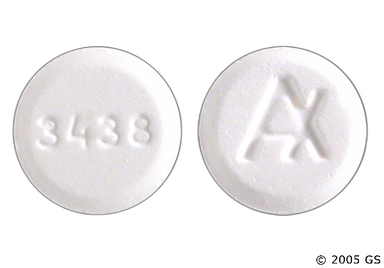
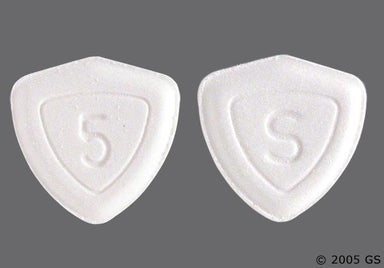
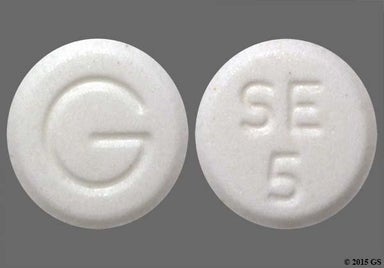
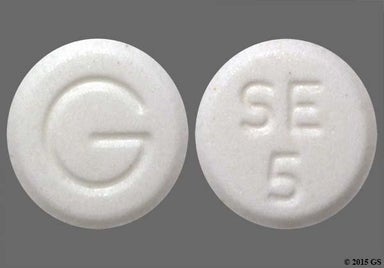
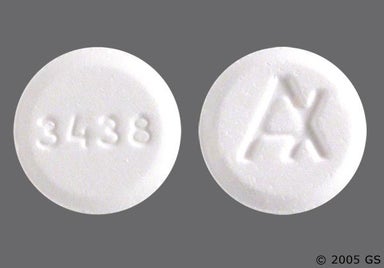
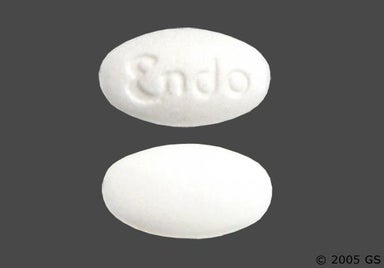
This medicine is White, Shield Tablet Imprinted With "5", "S".White Shield S - Selegiline Hydrochloride 5mg TabletThis medicine is White, Round Tablet Imprinted With "G", "Se 5".White Round SE 5 - Selegiline Hydrochloride 5mg TabletThis medicine is White, Round Tablet Imprinted With "G", "Se 5".White Round SE 5 - Selegiline Hydrochloride 5mg TabletThis medicine is White, Round Tablet Imprinted With "3438", "Logo".White Round 3438 - Selegiline Hydrochloride 5mg TabletThis medicine is White, Oval Tablet Imprinted With "Endo".White Oval Endo - Selegiline Hydrochloride 5mg TabletThis medicine is White, Oval Tablet Imprinted With "Ce 165".White Oval CE 165 - Selegiline Hydrochloride 5mg Tablet
GoodRx Health has strict sourcing policies and relies on primary sources such as medical organizations, governmental agencies, academic institutions, and peer-reviewed scientific journals. Learn more about how we ensure our content is accurate, thorough, and unbiased by reading our editorial guidelines.
Prescription savings
Stop paying too much for your prescriptions. Compare prices, get pharmacy coupons, and save up to 80%.
Plans start at $9.99/mo. (when paid yearly). Terms apply.
Common questions about Selegiline
No. There's no evidence that Selegiline interacts with magnesium in food or in supplements. Ask your prescriber if you have more questions about Selegiline interactions with supplements.
Studies show that people who take Selegiline for Parkinson's disease generally have improvements within a few weeks of starting treatment. But it can take several months to see the full effects of the medication. Keep in mind that each person can have a different experience with treatment. Talk to your prescriber if you're concerned with how well or how quickly Selegiline is working for you.
No, Selegiline isn't considered a dopamine agonist. Instead, it's a type of monoamine oxidase inhibitor (MAOI). Both dopamine agonists and MAOIs help treat symptoms of Parkinson's disease by raising the activity of a chemical in the brain called dopamine. But they do so in different ways.
It depends on the dose. At low dosages, Selegiline works to help treat movement-related symptoms of Parkinson's disease, not improve mood. Selegiline tablets, capsules, and orally disintegrating tablets have low doses of the medication. So these forms of Selegiline aren't considered antidepressants. But at higher dosages, Selegiline works to improve mood and treat symptoms of depression. Selegiline patches found under the brand name Emsam deliver a higher dose of the medication than the oral forms and are used for depression. In this case, the Selegiline patches work as an antidepressant.
No, Selegiline isn't a stimulant; it's a type of monoamine oxidase inhibitor (MAOI). Stimulants and MAOIs are similar drug classes in that they both raise levels of chemicals, like dopamine, in the brain. But they're used to treat different conditions. Stimulants are typically used to treat ADHD and narcolepsy (extreme sleepiness and random sleep attacks during the day). But MAOIs are used to treat symptoms of Parkinson's disease and depression.
No. Selegiline isn't a controlled substance because it doesn't have a risk of addiction or dependence.
Hair loss wasn't commonly reported by people who took Selegiline during clinical studies. Contact your prescriber if you notice unusual hair loss. They can help figure out what might be the cause.
Both Selegiline and rasagiline (Azilect) are MAOIs that are quite similar to each other. They both help with Parkinson's disease (PD). In fact, studies suggest that both medications work just as well as each other for PD. Selegiline and rasagiline (Azilect) both come as oral pills that are swallowed. But Selegiline also comes as an orally disintegrating tablet (ODT) that dissolves on the tongue, which can be helpful for people who have trouble swallowing pills. In addition, the two medications have different drug interactions. Ask your prescriber if you have questions about comparing between the two medications.