




Zoloft for Depression: Important Things to Know Before Taking This Antidepressant
Zoloft is a popular antidepressant, but it’s important to know its potential side effects. Here's what side effects to expect during your first week and beyond.
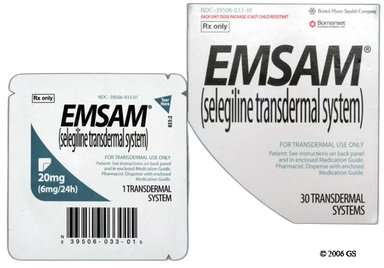
Emsam, the brand name for selegiline patch, is used to treat depression in adults. It belongs to a group of medications called monoamine oxidase inhibitors (MAOIs) that work by raising certain chemicals in the brain to help improve mood. You apply the patch to your skin once a day, and it comes in three different dosages. Common side effects of this antidepressant include application site reactions, trouble sleeping, and headaches.

Emsam (selegiline) is a monoamine oxidase inhibitor (MAOI). It's not fully understood how this medication helps with depression, but it's likely that blocking a protein called monoamine oxidase helps raise certain chemicals in the brain. This is thought to improve your mood and emotions.
| Common Brands | Emsam |
|---|---|
| Drug Class | MAOI |
| Controlled Substance Classification | Not a controlled medication |
| Generic Status | No lower-cost generic available |
| Availability | Prescription only |

The following side effects may get better over time as your body gets used to the medication. Let your healthcare provider know immediately if you continue to experience these symptoms or if they worsen over time.
Contact your healthcare provider immediately if you experience any of the following.
Along with its needed effects, a medicine may cause some unwanted effects. Although not all of these side effects may occur, if they do occur they may need medical attention.
Check with your doctor immediately if any of the following side effects occur:
More common
Chills
cold sweats
confusion
dizziness, faintness, or lightheadedness when getting up suddenly from a lying or sitting position
Incidence not known
Confusion about identity, place, and time
seeing things that are not there
seizures
Some side effects may occur that usually do not need medical attention. These side effects may go away during treatment as your body adjusts to the medicine. Also, your health care professional may be able to tell you about ways to prevent or reduce some of these side effects. Check with your health care professional if any of the following side effects continue or are bothersome or if you have any questions about them:
More common
Burning, itching, redness, skin rash, swelling, or soreness where the patch was placed
headache
trouble sleeping
Less common
Belching
body aches or pain
change or problem with discharge of semen
congestion
dryness or soreness of the throat
hoarseness
indigestion
pain or tenderness around the eyes and cheekbones
rash
stomach discomfort, upset, or pain
stuffy or runny nose
tender, swollen glands in the neck
tightness of the chest
trouble swallowing
troubled breathing
voice changes
weight changes
Rare
Decreased interest in sexual intercourse
inability to have or keep an erection
loss in sexual ability, desire, drive, or performance
not able to have an orgasm
Incidence not known
Burning, crawling, itching, numbness, prickling, "pins and needles", or tingling feelings
tension
Other side effects not listed may also occur in some patients. If you notice any other effects, check with your healthcare professional.
Call your doctor for medical advice about side effects. You may report side effects to the FDA at 1-800-FDA-1088.



How to use Emsam (selegiline):

Emsam (selegiline) can cause some serious health issues. This risk may be even higher for certain groups. If this worries you, talk to your doctor or pharmacist about other options.
 Medications for depression, including Emsam (selegiline), can raise the risk of suicidal thoughts and behavior in children and young adults. Ask your loved ones to help you watch for changes in your mood or behavior, and tell your prescriber right away if anything feels wrong — especially during the first few months or if your dose changes. If your depression gets worse or you start having thoughts of self-harm, your prescriber might decide to change your treatment or stop Emsam (selegiline).
Using Emsam (selegiline) with certain medications that affect serotonin levels — like SSRIs or SNRIs — can cause a rare but life-threatening condition called serotonin syndrome. This can also happen if you recently stopped a serotonin medication and then start Emsam (selegiline) too soon after.
Before starting Emsam (selegiline), make sure your prescriber knows all the medications you’re taking. Get emergency help right away if you notice symptoms like agitation, hallucinations, confusion, fast heart rate, dizziness, sweating, flushing, high fever, tremors, or muscle stiffness.
Rarely, Emsam (selegiline) can cause dangerously high blood pressure because it blocks your body from breaking down tyramine, a chemical that affects blood pressure. If you're using the 9 mg or 12 mg, you should eat only low-tyramine foods while using these patches and for 2 weeks after stopping.
Before starting Emsam (selegiline), make sure your prescriber knows about all your medications and supplements. Taking Emsam (selegiline) with certain medications — like buspirone, amphetamine salts, or pseudoephedrine — can also raise your risk of dangerously high blood pressure. You might have to wait at least a week between stopping certain medications and starting this one.
Stop using the patch and call 911 right away if you have chest pain, a severe headache, fast heartbeat, stiff neck, nausea, vomiting, sweating, large pupils, or light sensitivity. These might be signs of a serious medical emergency.
Rarely, Emsam (selegiline) can cause a manic episode in people with bipolar disorder. Symptoms might include extreme excitement, unusual happiness, fast talking, or delusions. Let your prescriber know before starting Emsam (selegiline) if you or someone in your family has bipolar disorder. Get medical help right away if you notice any sudden or unusual changes in behavior.
Though it's not exactly known how head affects Emsam (selegiline), it’s possible that heat could cause too much medication to be absorbed, leading to higher levels in your body, and thus higher risk for side effects. To stay safe, avoid putting heat directly on the patch area, including heating pads, electric blankets, heat lamps, saunas, hot tubs, heated water beds, or long periods in direct sunlight.


Although certain medicines should not be used together at all, in other cases two different medicines may be used together even if an interaction might occur. In these cases, your doctor may want to change the dose, or other precautions may be necessary. When you are taking this medicine, it is especially important that your healthcare professional know if you are taking any of the medicines listed below. The following interactions have been selected on the basis of their potential significance and are not necessarily all-inclusive.
Using this medicine with any of the following medicines is not recommended. Your doctor may decide not to treat you with this medication or change some of the other medicines you take.
Using this medicine with any of the following medicines is usually not recommended, but may be required in some cases. If both medicines are prescribed together, your doctor may change the dose or how often you use one or both of the medicines.
Using this medicine with any of the following medicines may cause an increased risk of certain side effects, but using both drugs may be the best treatment for you. If both medicines are prescribed together, your doctor may change the dose or how often you use one or both of the medicines.


Contraindications are specific health conditions or situations in which a person should not take a medication due to safety concerns. If you have any of the following conditions or if any of the following apply to you, let your healthcare provider know because Emsam (selegiline) will not be safe for you to take.


Prescription savings
Stop paying too much for your prescriptions. Compare prices, get pharmacy coupons, and save up to 80%. Find expert answers to your health questions so you can make the best decisions for yourself and your family.
Health conditions
Medications & treatment
Access & affordability
Medication discounts


Magnesium isn't known to interact with Emsam. But to stay safe, always review a list of your medications and supplements with your prescriber. Emsam interacts with many other commonly-used medications, both prescription and over-the-counter.
You might start to notice your depression symptoms improving as early as 1 week after starting Emsam. But it can take several months to feel the full benefits. Be sure to attend your follow-up appointments so your prescriber can check how well the medication is working and make any needed adjustments.
No, Emsam isn't a controlled substance. It isn't known to cause misuse or addiction.
Yes, Emsam is an antidepressant, more specifically it's a monoamine oxidase inhibitor (MAOI). It's thought to help improve symptoms of depression by raising the levels of certain chemicals in your brain.
Emsam isn't a stimulant. It is, however, broken down in the body into two stimulants, which can cause side effects like trouble sleeping.
Avoid tyramine-rich foods and drinks while using Emsam 9 mg or 12 mg patches. Keep avoiding them for 2 weeks after stopping this medication or switching to a lower dose. These include anything aged, cured, pickled, smoked, or fermented, as well as beer, red wine, dried fruits, and some citrus or tropical fruits. Ask your prescriber for a full list of what to avoid and for examples of low-tyramine foods you can safely eat.
In studies, 3% of people using Emsam experienced low blood pressure. But taking Emsam with certain foods (like tyramine-rich foods) or medications (such as carbamazepine or buspirone) can actually cause your blood pressure to rise to dangerous levels. Always take the exact dose prescribed and ask your care team which foods and medications to avoid while using this medication.
