Key takeaways:
Rinvoq (upadacitinib) is a Janus kinase inhibitor that treats a variety of inflammatory health conditions. It interacts with many medications, over-the-counter products, and supplements.
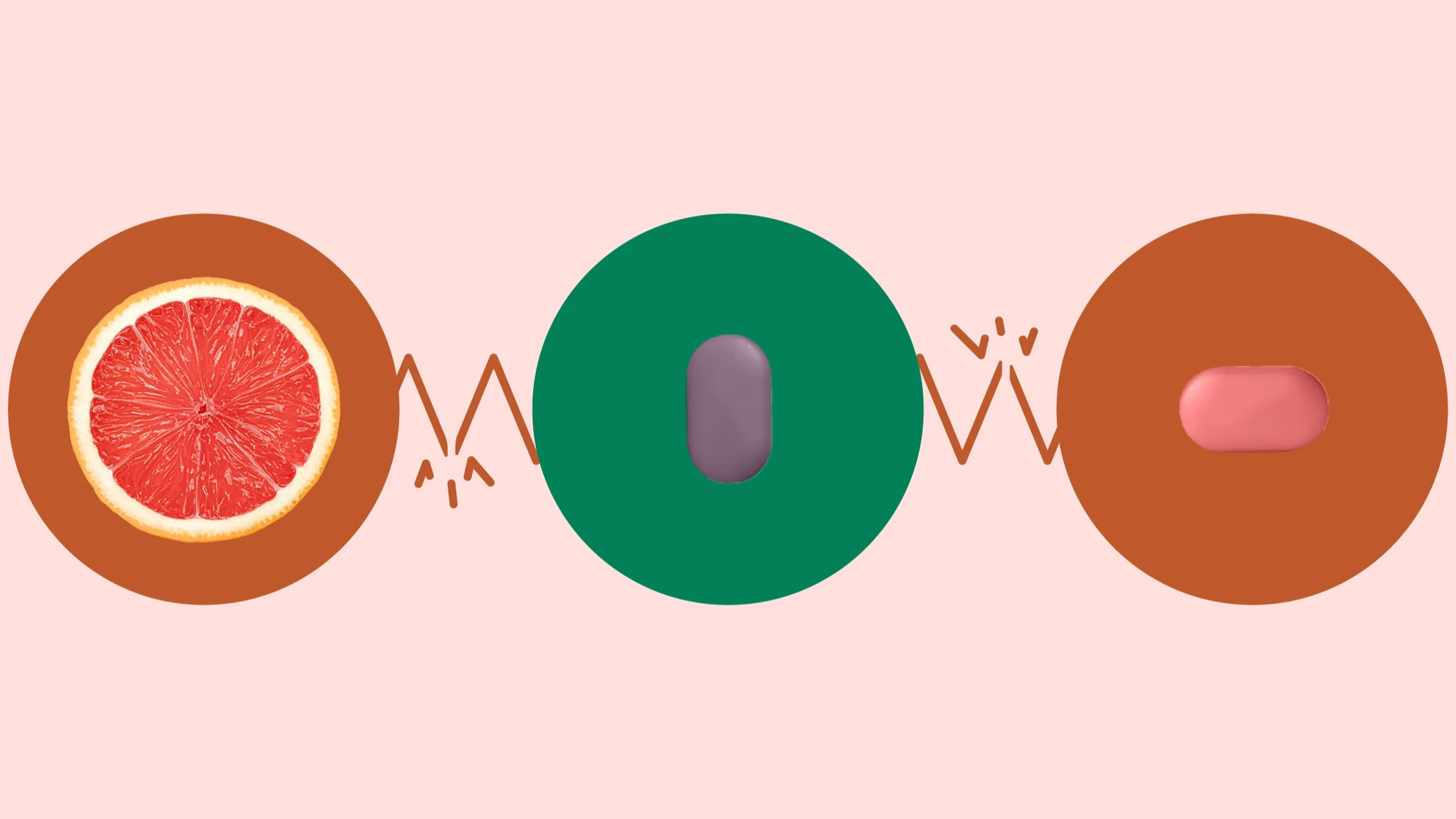
Rinvoq interacts with medications and foods that affect a protein in charge of how it breaks down in the body. Examples include Paxlovid (nirmatrelvir / ritonavir), grapefruit, and St. John’s wort. These interactions can lead to more intense Rinvoq side effects or a less effective treatment.
You should avoid live vaccines, such as the intranasal flu vaccine and the measles, mumps, and rubella vaccine, while taking Rinvoq. They may cause an accidental infection.
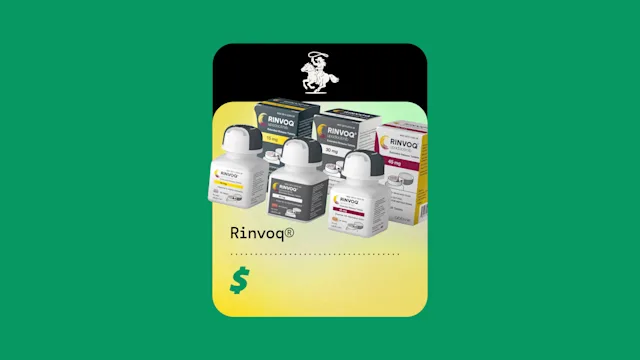
Save on related medications
Rinvoq (upadacitinib) is a medication that’s FDA approved to treat several inflammatory health conditions, including rheumatoid arthritis, eczema, and ulcerative colitis. A type of Janus kinase (JAK) inhibitor, it quiets inflammation by calming down your immune system. Many people benefit from it.
It has a few precautions to keep in mind, though. Since it’s a newer medication, Rinvoq is only available as a brand-name product. A lower-cost generic isn’t available yet. And although it’s effective, Rinvoq isn’t always used right away. It’s usually a next-choice option for people who haven’t had luck with other treatments.
Rinvoq also has drug interactions to consider. It’s broken down (metabolized) by a specific enzyme (protein) in your body called CYP3A4. Many medications and some foods can impact Rinvoq’s safety and effectiveness by affecting how this enzyme works.
Rinvoq interactions at a glance
While not a complete list, common Rinvoq interactions that can raise your risk of side effects include:
Azole antifungals, such as fluconazole (Diflucan), ketoconazole, and itraconazole (Sporanox)
Certain antibiotics, such as clarithromycin (Biaxin XL), erythromycin (Ery-Tab), and ciprofloxacin (Cipro)
Antivirals, such as ritonavir (Norvir), nirmatrelvir / ritonavir (Paxlovid), and nelfinavir (Viracept)
Nonsteroidal anti-inflammatory drugs (NSAIDs), such as ibuprofen (Advil, Motrin) and aspirin
Corticosteroids, such as prednisone and dexamethasone
Autoimmune biologics, such as Humira (adalimumab), Remicade (infliximab), and Enbrel (etanercept)
Other immunosuppressants
Live vaccines, such as the nasal spray flu vaccine (FluMist)
Certain calcium channel blockers, such as verapamil (Verelan) and diltiazem (Cardizem, Cartia XT)
Amiodarone (Pacerone)
Cimetidine (Tagamet HB)
Grapefruit
On the other hand, medications like these can make it so Rinvoq doesn't work as well:
Rifampin (Rifadin)
Antiseizure medications, such as phenobarbital (Sezaby), carbamazepine (Tegretol), and phenytoin (Dilantin, Phenytek)
St. John's wort
If you find yourself with a prescription for this JAK inhibitor, here are some management tips for nine notable Rinvoq interactions.
Keep in mind: It’s hard to catch interactions on your own. To help prevent issues, review your full medication list with your healthcare team before starting Rinvoq. Include any over-the-counter medications, vitamins, and supplements you take. And let your prescriber and pharmacist know if you start any new medications after beginning Rinvoq.
1. Certain antifungals
If you’ve ever had ringworm, nail fungus, or a yeast infection, you may have used an antifungal to treat it. Many antifungals are available over the counter (OTC), while others are only available with a prescription.
Some antifungals can block the enzyme that breaks down Rinvoq. In turn, your body can’t metabolize Rinvoq as efficiently as it normally would. This can cause the medication to stay in your body longer than normal, increasing the risk of Rinvoq side effects.
Azole antifungals are especially prone to this interaction. Some popular examples of azole antifungals are fluconazole, ketoconazole, and itraconazole.
If you need an antifungal medication while you’re taking Rinvoq, make sure to loop in your pharmacist and prescriber. This is important even if you only need the antifungal for a short period of time. They may want to decrease your Rinvoq dose while you’re taking the antifungal.
Good to know: This interaction is more worrisome with antifungals that are swallowed or injected into your body. Topical antifungals are less of an issue.
2. Verapamil and diltiazem
Verapamil and diltiazem are calcium channel blockers. They work by relaxing your blood vessels and slowing down your heart rate. Both medications treat chest pain and high blood pressure, but verapamil can also manage abnormal heart rhythms.
This pair of medications interacts with Rinvoq in a similar way to antifungals. They prevent enzymes from breaking down Rinvoq normally. This increases the risk of side effects from the medication. Keep an eye out for new or worsening nausea, headache, or skin rashes if you’re taking these medications with Rinvoq.
If you’re taking verapamil or diltiazem for a heart-related health condition, your prescriber will likely decrease your dose of Rinvoq. They may even avoid prescribing it altogether.
3. Medications that contain ritonavir
Ritonavir is an antiviral medication. It’s typically used in combination with other medications to treat HIV. It’s also a component of Paxlovid, an antiviral that’s FDA approved to treat COVID-19 in certain people.
Ritonavir acts as a “booster” to make the antiviral it’s paired with more effective. It does this by blocking its breakdown so the antiviral stays in the body longer. Ritonavir can also “boost” the amount of Rinvoq in your body. But this would increase the risk of Rinvoq side effects without any extra benefits.
If you need to combine Rinvoq and a ritonavir-containing medication, your prescriber will likely lower your Rinvoq dosage. They’ll also want to monitor you extra closely for side effects. Depending on the situation, you may need to avoid this combination altogether.
4. Grapefruit
Grapefruit may be a preferred part of your diet. But you should avoid it if you’re taking Rinvoq. Food and drinks containing grapefruit make it harder for your body to break down Rinvoq. This, again, leads to an increased risk of side effects.
All quantities of grapefruit can interact with Rinvoq. But this interaction is more concerning when you consume larger amounts of grapefruit. If grapefruit is one of your favorite foods, ask your prescriber if you can still enjoy small amounts of it from time to time.
5. Certain antibiotics, such as clarithromycin and rifampin
Similar to some antifungals, a handful of antibiotics can interact with Rinvoq.
Clarithromycin, a macrolide antibiotic, is one example. This medication interferes with the enzyme that breaks down Rinvoq. This can raise the amount of Rinvoq in your body. If possible, your prescriber will prescribe a different antibiotic that doesn’t interact with Rinvoq. But if clarithromycin is the best or only option for your infection, they’ll likely lower your dose of Rinvoq while you’re taking the two together.
Rifampin (Rifadin) is another antibiotic that interacts with Rinvoq. It’s best known for its ability to treat tuberculosis. This antibiotic also interacts with Rinvoq, but in a different way: It amplifies the effect of the CYP3A4 enzyme. This causes Rinvoq to leave your body faster, which makes it less effective. Avoid taking Rinvoq and rifampin together.
These aren’t the only antibiotics that interact with Rinvoq. Other antibiotics that interact with it include ciprofloxacin and erythromycin.
6. Phenobarbital, carbamazepine, and phenytoin
Phenobarbital, carbamazepine, and phenytoin are medications that manage seizures.
Because of how they work, these antiseizure medications make Rinvoq less effective. They amplify the effects of CYP3A4 and cause it to break down Rinvoq faster than normal. But between the three, phenytoin and carbamazepine are thought to cause a much stronger interaction.
You should avoid taking these medications at the same time as Rinvoq as a precaution. Seizures and autoimmune disorders can both be tricky to treat, so your prescriber can work with you to decide how to adjust your medication regimen. They’ll likely recommend a different medication for your inflammation or seizures to avoid this combination.
7. St. John’s wort
If you have ever visited the supplement aisle at your pharmacy or grocery store, you may have seen St. John’s wort. It’s a dietary supplement that’s marketed to support certain mood disorders, especially depression.
Even though it’s available OTC, St. John’s wort interacts with a lot of other medications — including Rinvoq. It causes Rinvoq to be broken down faster, making it not work as well. Avoid St. John’s wort if you’re taking Rinvoq.
This doesn’t mean you should skip out on depression or anxiety treatment, however. Many mental health medications don’t interact with Rinvoq. If you’re experiencing symptoms of depression or anxiety, talk to your prescriber about safe and effective treatment options for your situation.
8. Live vaccines
Rinvoq interacts with “live virus” vaccines. Examples include the measles, mumps, and rubella (MMR) vaccine and the nasal spray flu vaccine (FluMist).
Rinvoq intentionally weakens your immune system. This is how it treats autoimmune disorders. But it also hinders your ability to fight infections. Live vaccines introduce your body to a weakened version of a virus, which could lead to an infection. If your immune system isn’t as strong as it could be, live vaccines may not be safe for you to receive.
To be safe, you should avoid receiving live vaccines while taking Rinvoq. Talk to your prescriber to make sure that all your vaccinations are up to date before starting Rinvoq.
Good to know: Inactivated vaccines, such as the flu shot, are safe to receive with Rinvoq. They don’t interact the same way as live vaccines.
9. Some medications that weaken your immune system
Sometimes, more than one immune-lowering medication is needed to keep inflammation at bay. Your prescriber may recommend taking an immunosuppressant with Rinvoq, such as low-dose methotrexate.
However, you shouldn’t take Rinvoq with more potent medications, such as azathioprine (Imuran), autoimmune biologics like Humira, or other JAK inhibitors. These combinations could weaken your immune system too much and greatly raise your risk of infection.
Frequently asked questions
Healthcare professionals may prescribe prednisone with Rinvoq for a short time, especially if you’re just starting treatment or are tapering off steroids. But because this combination can raise the risk of infections and certain stomach-related side effects, your prescriber will likely monitor you closely if you’re taking both. Talk with your prescriber before taking them together.
Yes, you can take Tylenol (acetaminophen) with Rinvoq. The two don’t interact, and Tylenol is often preferred over NSAIDs like ibuprofen for pain relief. Still, it’s a good idea to ask your prescriber or pharmacist if Tylenol is safe for you to take. That’s because certain people shouldn’t take Tylenol.
In general, it can take a few weeks to months to notice meaningful benefits from Rinvoq. But how quickly Rinvoq actually works depends on the condition you’re taking it for.
For example, in clinical studies, some people with ulcerative colitis saw less rectal bleeding within 2 weeks and better bowel control after about 2 months. For rheumatoid arthritis, improvements in joint swelling, fatigue, and movement were reported after about 3 months.
These timelines vary for everyone. If you have questions about what to expect, talk with your healthcare team.
A dose of Rinvoq typically leaves your body within about 2 to 3 days. This estimate is based on its half-life, or how long it takes for the medication to clear out of your system.
Talk with your prescriber if you have specific questions about how long Rinvoq stays in your body. They can tell you how long the medication might affect your ability to donate blood, safely have a child, and so on.
Healthcare professionals may prescribe prednisone with Rinvoq for a short time, especially if you’re just starting treatment or are tapering off steroids. But because this combination can raise the risk of infections and certain stomach-related side effects, your prescriber will likely monitor you closely if you’re taking both. Talk with your prescriber before taking them together.
Yes, you can take Tylenol (acetaminophen) with Rinvoq. The two don’t interact, and Tylenol is often preferred over NSAIDs like ibuprofen for pain relief. Still, it’s a good idea to ask your prescriber or pharmacist if Tylenol is safe for you to take. That’s because certain people shouldn’t take Tylenol.
In general, it can take a few weeks to months to notice meaningful benefits from Rinvoq. But how quickly Rinvoq actually works depends on the condition you’re taking it for.
For example, in clinical studies, some people with ulcerative colitis saw less rectal bleeding within 2 weeks and better bowel control after about 2 months. For rheumatoid arthritis, improvements in joint swelling, fatigue, and movement were reported after about 3 months.
These timelines vary for everyone. If you have questions about what to expect, talk with your healthcare team.
A dose of Rinvoq typically leaves your body within about 2 to 3 days. This estimate is based on its half-life, or how long it takes for the medication to clear out of your system.
Talk with your prescriber if you have specific questions about how long Rinvoq stays in your body. They can tell you how long the medication might affect your ability to donate blood, safely have a child, and so on.
The bottom line
Many medications interact with Rinvoq (upadacitinib). Some interactions worsen Rinvoq’s side effects, while others make it less effective. Examples of Rinvoq interactions include certain antifungals and antibiotics, medications containing ritonavir (Norvir), and heart medications such as verapamil (Verelan). It’s important to tell your prescriber and pharmacist about all the medications and supplements you take before starting Rinvoq.

Why trust our experts?




References
AbbVie Inc. (2023). Rinvoq- upadacitinib tablet, extended release [package insert].
AbbVie Inc. (2025). Prednisone/prednisolone taper schedule from the SELECT-GCA clinical trial.
Bauters, T., et al. (2024). Clinically relevant drug interactions in HCT. The EBMT Handbook: Hematopoietic Cell Transplantation and Cellular Therapies.
Chen, J., et al. (2006). Roles of rifampicin in drug-drug interactions: Underlying molecular mechanisms involving the nuclear pregnane X receptor. Annals of Clinical Microbiology and Antimicrobials.
Feuerstein, J. D., et al. (2021). AGA clinical practice guidelines on the medical management of moderate to severe luminal and perianal fistulizing Crohn’s disease. Gastroenterology.
Fleet, J. L., et al. (2013). Comparing two types of macrolide antibiotics for the purpose of assessing population-based drug interactions. British Medical Journal Open.
Loos, N. H. C., et al. (2022). The mechanism-based inactivation of CYP3A4 by ritonavir: What mechanism? International Journal of Molecular Sciences.
Mar, P. L., et al. (2022). Drug interactions affecting antiarrhythmic drug use. Circulation: Arrhythmia and Electrophysiology.
Padda, I. S., et al. (2023). Upadacitinib. StatPearls.
PubChem. (n.d.). Upadacitinib. National Center for Biotechnology Information.
Roby, C.A., et al. (2000). St John's wort: Effect on CYP3A4 activity. Clinical Pharmacology & Therapeutics.
U.S. Food and Drug Administration. (2021). Grapefruit juice and some drugs don’t mix.
U.S. Food and Drug Administration. (2023). For healthcare professionals | FDA’s examples of drugs that interact with CYP enzymes and transporter systems.