Qinlock
Qinlock (ripretinib) is a targeted therapy. It’s used to treat a type of cancer called gastrointestinal stromal tumor (GIST). It’s approved for adults who’ve already tried 3 other treatment options. It works as a tyrosine kinase inhibitor to block cancer cells from growing. Qinlock (ripretinib) comes as a tablet that you take by mouth once a day. But it can cause side effects such as nausea, tiredness, and a skin reaction called hand-foot syndrome.

What is Qinlock (ripretinib)?
What is Qinlock (ripretinib) used for?
- Advanced gastrointestinal stromal tumor (GIST) in adults
How Qinlock (ripretinib) works
Qinlock (ripretinib) is a type of tyrosine kinase inhibitor. It works by blocking the KIT and PDGFRA proteins in the body. These proteins play a role in helping GIST cells to grow.
By blocking these proteins, Qinlock (ripretinib) helps stop the cancer cells from growing and spreading.
Drug facts
| Common Brands | Qinlock |
|---|---|
| Drug Class | Tyrosine kinase inhibitor |
| Controlled Substance Classification | Not a controlled medication |
| Generic Status | No lower-cost generic available |
| Availability | Prescription only |

Side effects of Qinlock (ripretinib)
The following side effects may get better over time as your body gets used to the medication. Let your healthcare provider know immediately if you continue to experience these symptoms or if they worsen over time.
Common Side Effects
- Hair loss (52%)
- Tiredness (42%)
- Nausea (39%)
- Belly pain (36%)
- Constipation (34%)
- Muscle pain (32%)
- Diarrhea (28%)
- Lower appetite (27%)
- Higher triglycerides (26%)
- Lower calcium levels (23%)
- Vomiting (21%)
- Pain, swelling, numbness, tingling, or redness of the hands or feet (21%)
Less Common Side Effects
- Higher blood pressure
- Headache
- Joint pain
- Muscle spasms
- Dry skin
- Itchiness
- Weakness
- Mouth sores
- Shortness of breath
- Swelling in the hands, ankles, or feet
- Weight loss
- Lower sodium levels
- Other lab changes
Qinlock (ripretinib) serious side effects
Contact your healthcare provider immediately if you experience any of the following.
- Unusual skin changes: mole that doesn’t look normal, mole that isn’t symmetrical, mole that keeps growing, a warty growth on the skin
- Very high blood pressure: sudden or severe headache, passing out, sweating
- Heart failure: trouble breathing, cough, swelling in the legs, chest tightness
The following Qinlock (ripretinib) side effects have also been reported
Side effects that you should report to your care team as soon as possible:
- Allergic reactions—skin rash, itching, hives, swelling of the face, lips, tongue, or throat
- Heart failure—shortness of breath, swelling of the ankles, feet, or hands, sudden weight gain, unusual weakness or fatigue
- Increase in blood pressure
- Redness, swelling, and blistering of the skin over hands and feet
Side effects that usually do not require medical attention (report these to your care team if they continue or are bothersome):
- Hair loss
- Muscle pain
- Nausea
- Sensitivity to light
- Vomiting

Pros and cons of Qinlock (ripretinib)
Pros
- Taken by mouth just once a day
- Gives another treatment option for people with GIST who’ve already tried several treatments
Cons
- Can cause nausea and raise your blood pressure
- Can cause bothersome skin reactions in the palm of your hands and the sole of your feet

Pharmacist tips for Qinlock (ripretinib)

- You can take Qinlock (ripretinib) with or without food.
- Your daily dose of Qinlock (ripretinib) will typically be 3 tablets (or 2 tablets if your dose gets lowered). Take your time to swallow each tablet whole, one right after the other.
- Take Qinlock (ripretinib) once a day, at the same time each day. Choose a time of day that’s easier for you to remember, like after breakfast or dinner.
- If you miss your dose of Qinlock (ripretinib) and it’s less than 8 hours from when you usually take it, go ahead and take the dose. But if more than 8 hours have passed, skip that dose. Wait to take your usual dose the next day when you normally take it.
- If you vomit right after taking Qinlock (ripretinib), don’t take an extra dose to “catch up.” Wait for your usual dose the next day to take the medication.
- Qinlock (ripretinib) can make the palms of your hands and the soles of your feet red, itchy, swollen, tingly, or painful. To help prevent this, wear loose shoes to avoid friction on your feet. Don’t use hot water on your hands or feet, and keep your skin moisturized with lotions or creams. But if it happens, tell your oncology care team so they can help you manage it.
- Your oncologist might suggest that you regularly check your blood pressure at home. This is because Qinlock (ripretinib) can raise your blood pressure. It’s a good idea to write down your blood pressure numbers in a log. If your blood pressure stays higher than usual during treatment, tell your oncologist. They can recommend ways to manage blood pressure.
- If you have a planned surgery or procedure, talk to your oncology and surgery teams. It’s best to avoid any surgeries or procedures (even for things like removing a mole or pulling a tooth). This is because you might have a harder time healing from wounds while taking Qinlock (ripretinib). If you can’t reschedule, follow your oncologist’s directions. They’ll tell you when to stop Qinlock (ripretinib) before the procedure and when to restart it. This helps make sure wounds can heal properly.
- Make sure your oncology care team has a current list of all the medications you take. Also tell them if you start or stop any medications. They can check for harmful drug interactions with Qinlock (ripretinib) and make changes to keep you safe. For example, the herbal supplement St. John’s wort can make Qinlock (ripretinib) work less well. And some antibiotics and antifungals can raise your risk of side effects.
- If you or your partner can become pregnant: Use reliable birth control, including condoms for men, while taking Qinlock (ripretinib). Continue to use birth control for 1 week after your last dose. It’s important to prevent getting pregnant because this medication might harm an unborn baby. Tell your oncologist right away if you or your partner gets pregnant.

Risks and warnings for Qinlock (ripretinib)
Qinlock (ripretinib) can cause some serious health issues. This risk may be even higher for certain groups. If this worries you, talk to your doctor or pharmacist about other options.
Skin reaction on hands and feet (hand-foot syndrome)
Some people taking Qinlock (ripretinib) developed a skin reaction called hand-foot syndrome. This can cause pain, itchiness, swelling, numbness, or peeling in the skin. It usually happens on the palms of your hands and soles of your feet. If this happens, talk to your oncologist. Depending on how severe your symptoms are, you might need to take a break from Qinlock (ripretinib), take a lower dose, or stop the medication altogether.
Risk of new skin cancers
It’s not common, but some people taking Qinlock (ripretinib) later developed new skin cancers. These can include squamous cell carcinoma and melanoma.
Your oncologist will examine your skin during follow-up visits during treatment with Qinlock (ripretinib). But it’s a good idea to look for symptoms even at home. Talk to your oncologist or a dermatologist if you notice any unusual skin changes. Watch out for moles that don’t look normal or keep growing or a warty growth.
High blood pressure
- Risk factors: People with high blood pressure
Qinlock (ripretinib) can raise your blood pressure. If you already have high blood pressure, talk to your oncologist before starting this medication. It might still be safe for you if your blood pressure is well managed. But your oncologist will monitor you closely and possibly recommend blood pressure medications. If your blood pressure isn’t well controlled, you’ll likely need a different treatment option.
If you take Qinlock (ripretinib), your oncologist might ask you to check your blood pressure at home. If your blood pressure stays high, let your oncologist know. They can help manage your blood pressure. They might also pause your treatment until your blood pressure improves and possibly lower your dose when you start again. Or, they might tell you to stop taking Qinlock (ripretinib) altogether.
Serious heart problems
Although rare, some people taking Qinlock (ripretinib) had serious heart problems. This can include lower heart function and sometimes even heart failure.
Before you start Qinlock (ripretinib), your oncologist will check how healthy your heart is. They’ll have you get heart scans called an echocardiogram (echo) or a MUGA scan. They might check your heart again during treatment if needed.
Contact your oncology care team right away if you have trouble breathing, swelling in your legs, or a new cough while taking Qinlock (ripretinib). These could be symptoms of heart failure, so it’s important to get checked out.
Problems with wound healing
- Risk factors: Surgery
People taking Qinlock (ripretinib) might not be able to heal from wounds as well. This includes cuts from surgery, other procedures, or serious dental work.
If possible, it’s best to avoid surgical procedures while you’re taking Qinlock (ripretinib). If you can’t avoid one, be sure to coordinate with your cancer and surgery teams. Your oncologist might tell you to stop Qinlock (ripretinib) at least 1 week before surgery. You might also need to wait at least 2 weeks after the procedure, and until your wound has healed, before starting it again. This makes sure your wound can heal well and lowers the risk of healing problems.
Sun sensitivity
Rarely, Qinlock (ripretinib) might make your skin more sensitive to sunlight and ultraviolet (UV) light. This means you might get a rash or sunburn more easily.
Try to limit time in direct sunlight while taking Qinlock (ripretinib) and also for 1 week after you stop the medication. Wear clothing that protects your skin from the sun.
Harm to unborn baby
- Risk factors: Pregnancy
Based on animal studies and the way Qinlock (ripretinib) works, it could harm an unborn baby. If you’re able to get pregnant, use effective birth control while taking this medication and for 1 week after your last dose. If you can get your partner pregnant, also use birth control such as condoms while taking Qinlock (ripretinib) and for 1 week after stopping. Let your oncologist know right away if you or your partner gets pregnant during treatment.

Qinlock (ripretinib) dosage
Typical dosage for Qinlock (ripretinib)
The usual dose is 150 mg by mouth once a day.

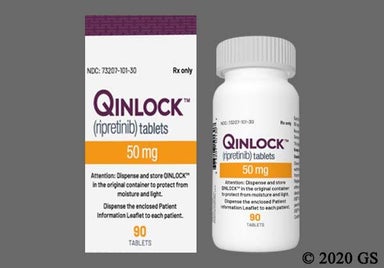
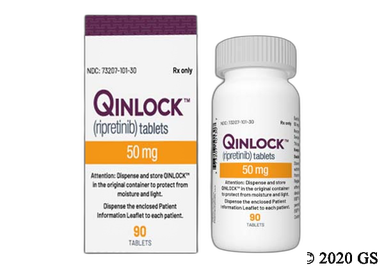
Qinlock (ripretinib) images