


What Medications Are Used to Treat Melanoma?
While surgery is often a first-choice treatment for melanoma, medications can prevent recurrence. Here's how immunotherapy and chemotherapy drugs work for melanoma.
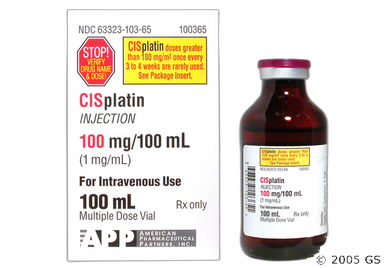
Cisplatin is an anticancer treatment option that’s used for certain types of testicular cancer, ovarian cancer, and bladder cancer. It’s also commonly used off-label for many other types of cancers. Cisplatin can be used by itself, but it’s also often used with other anticancer medications. Cisplatin is given as an infusion through the vein by a healthcare provider. This medication can cause serious kidney problems, so it’s important to stay well hydrated during treatment.

Cisplatin is a type of anticancer medication called an alkylating agent. It’s also called platinum-based chemotherapy because it contains the metal platinum. It works by damaging the cancer cells’ genetic material (DNA), which leads to cell death.
| Common Brands | Platinol |
|---|---|
| Drug Class | Alkylating agent |
| Controlled Substance Classification | Not a controlled medication |
| Generic Status | No lower-cost generic available |
| Availability | Prescription only |

The following side effects may get better over time as your body gets used to the medication. Let your healthcare provider know immediately if you continue to experience these symptoms or if they worsen over time.
Contact your healthcare provider immediately if you experience any of the following.
Along with its needed effects, a medicine may cause some unwanted effects. Although not all of these side effects may occur, if they do occur they may need medical attention.
Check with your doctor immediately if any of the following side effects occur:
More common
Black, tarry stools
blood in urine or stools
burning, numbness, tingling, or painful sensations
change in frequency of urination or amount of urine
cough or hoarseness
difficulty in breathing
dizziness
drowsiness
feeling of fullness in the ears
fever or chills
increased thirst
loss of appetite
loss of balance
loss of hearing
lower back or side pain
nausea or vomiting
painful or difficult urination
pinpoint red spots on skin
ringing or buzzing in the ears
swelling of the feet or lower legs
trouble in hearing
unsteadiness or awkwardness
unusual bleeding or bruising
weakness in the arms, hands, legs, or feet
Incidence not known
Bleeding, blistering, burning, coldness, discoloration of skin, feeling of pressure, hives, infection, inflammation, itching, lumps, numbness, pain, rash, redness, scarring, soreness, stinging, swelling, tenderness, tingling, ulceration, or warmth at the injection site
bleeding gums
blindness
blue-yellow color blindness
blurred vision
chest pain or discomfort
decreased vision
fast heartbeat
general body swelling
headache
leg pain
nosebleeds
pain or discomfort in the arms, jaw, back or neck
pains in the stomach, side, or abdomen, possibly radiating to the back
pale skin
sweating
unusual tiredness or weakness
yellow eyes or skin
Some side effects may occur that usually do not need medical attention. These side effects may go away during treatment as your body adjusts to the medicine. Also, your health care professional may be able to tell you about ways to prevent or reduce some of these side effects. Check with your health care professional if any of the following side effects continue or are bothersome or if you have any questions about them:
Incidence not known
hair loss or thinning
indigestion
loss of appetite
muscle cramps
rash
swelling or inflammation of the mouth
Other side effects not listed may also occur in some patients. If you notice any other effects, check with your healthcare professional.
Call your doctor for medical advice about side effects. You may report side effects to the FDA at 1-800-FDA-1088.




Cisplatin can cause some serious health issues. This risk may be even higher for certain groups. If this worries you, talk to your doctor or pharmacist about other options.
 Cisplatin can cause harm to the kidneys. In some cases, it can be severe enough to cause kidney failure. To lessen this risk, you’ll be given an infusion of fluids before, during, and after each cisplatin infusion. Your provider will closely check your kidney function while you’re receiving treatment. Reach out to your provider right away if you experience blood in the urine, pain or problems while urinating, or changes in the color or cloudiness of the urine. These can be signs of a serious kidney problem.
Cisplatin can cause new or worsening nerve problems in your arms, hands, legs, and feet. They can start after your first dose of cisplatin, but also even weeks after your last infusion. Sometimes, the nerve problems can continue after stopping treatment. Let your provider know if you experience numbness, pain, burning, a feeling of "pins and needles," tremors, problems with balance, or weakness in your arms or legs.
Cisplatin is known to cause significant nausea and vomiting. Usually, the nausea and vomiting can start a few hours after your infusion and last up to 3 days. Sometimes, the effects can still linger 1 week after treatment. To try and prevent nausea and vomiting before it happens, you’ll be given anti-nausea medications before and after your infusion. Make sure you follow your provider’s instructions on how to take your anti-nausea medications when you get home.
Cisplatin can cause your red blood cell, white blood cell, and platelet counts to drop. When the number of these cells are lower than normal, you’re at risk of developing anemia, infections, and bleeding or bruising. In some cases, your blood cell counts might be low for a while. This is because your chemotherapy medications can weaken your bone marrow and affect its ability to make new blood cells like normal.
 Your provider will closely check your blood counts through routine lab work when you’re receiving cisplatin. Let your provider know as soon as possible if you experience extreme tiredness, rapid breathing, fevers, chills, or bleeding and bruising that doesn’t stop or go away.
Cisplatin can cause allergic reactions (including anaphylaxis), which can be serious and sometimes life-threatening. These reactions are more likely to happen with the more cisplatin doses you receive. If you’ve had an allergic reaction to similar anticancer medications called carboplatin (Paraplatin) or oxaliplatin (Eloxatin) before, let your provider know so they can observe you more closely when starting cisplatin. Contact your provider or get medical help right away if you experience any throat tightness, trouble breathing, face swelling, fever, chills, hives, flushing, chest pain, fast heartbeat, or dizziness.
With repeated doses of cisplatin, you can be at higher risk for developing hearing problems, including hearing loss. This can happen during or after treatment, and it can affect one or both ears. These hearing problems can be more severe in children younger than 5 years of age. Before starting cisplatin, your provider might have you do a baseline hearing test. Then, they’ll regularly check your hearing as you continue treatment. Let your provider know if you experience any ringing in your ears or changes in hearing.
Though rare, some people receiving treatment with cisplatin have had eye problems. Let your provider know if you notice any blurred vision, difficulty seeing colors, vision loss, or other changes in vision. These problems are generally reversible or improve after stopping cisplatin.
While rare, some people treated with chemotherapy regimens that included cisplatin have developed secondary cancers, like blood cancers (leukemias). This is when a different kind of cancer develops after you’ve received treatment for the cancer you were originally diagnosed with. Talk to your provider if you’re concerned about your risk for other cancers.
Cisplatin can harm an unborn baby when it’s used during pregnancy. Because of this risk, you should use birth control during treatment with cisplatin to prevent pregnancy. After treatment, continue to use birth control for another 11 months (for men) or 14 months (for women). Let your provider know right away if you or your partner becomes pregnant during this time.
Sometimes, cisplatin can leak out of the veins while you receive your infusion. This can cause irritation and damage to the surrounding tissue, muscle, or skin. Your care team should administer the medication into your vein properly to avoid this problem. However, there’s still a small risk of this happening. Let your provider or nurse know right away if you feel pain, swelling, or burning around the IV site.

This medication is an injection that’s given into a vein (intravenous, IV) by a healthcare provider. Your provider will calculate your dose of cisplatin using your body surface area (BSA, in units of m2), which takes into account your body weight and height.
Your dose and infusion schedule depends on the type of cancer you have. It can also differ if you’re getting cisplatin by itself or with other anticancer medications. Your provider will discuss your treatment plan with you.

Although certain medicines should not be used together at all, in other cases two different medicines may be used together even if an interaction might occur. In these cases, your doctor may want to change the dose, or other precautions may be necessary. When you are receiving this medicine, it is especially important that your healthcare professional know if you are taking any of the medicines listed below. The following interactions have been selected on the basis of their potential significance and are not necessarily all-inclusive.
Using this medicine with any of the following medicines is not recommended. Your doctor may decide not to treat you with this medication or change some of the other medicines you take.
Using this medicine with any of the following medicines is usually not recommended, but may be required in some cases. If both medicines are prescribed together, your doctor may change the dose or how often you use one or both of the medicines.
Using this medicine with any of the following medicines may cause an increased risk of certain side effects, but using both drugs may be the best treatment for you. If both medicines are prescribed together, your doctor may change the dose or how often you use one or both of the medicines.







Prescription savings
Stop paying too much for your prescriptions. Compare prices, get pharmacy coupons, and save up to 80%. Find expert answers to your health questions so you can make the best decisions for yourself and your family.
Health conditions
Medications & treatment
Access & affordability
Medication discounts

Cisplatin is only approved by the FDA to treat certain types of testicular, ovarian, and bladder cancers. But according to the National Comprehensive Cancer Network (NCCN) guidelines, it can be used off-label to treat many other types of cancers. Other cancers that the NCCN guidelines recommend Cisplatin for include certain small cell and non-small cell lung cancers, cervical cancer, head and neck cancers, and gallbladder cancer. Cisplatin is also recommended as part of treatment for certain metastatic breast cancers and stomach cancers. In these cases, the benefit and safety of using Cisplatin off-label is supported by strong evidence from clinical trials. Talk with your provider about whether Cisplatin can be used to treat your cancer.
How long the Cisplatin infusion takes will vary from person to person. It depends on your treatment regimen and your Cisplatin dose. You’ll also need to receive an infusion of fluids before, during, and after you get Cisplatin, so that adds time to your appointment. At the very least, you can expect to be at the infusion center for several hours to receive your treatment. For this reason, make sure you bring something with you to your appointment to help pass the time.
Let your provider know if you experience nausea or vomiting while receiving Cisplatin. They can suggest ways to help you manage these side effects both with and without medications. You’ll be prescribed anti-nausea medications while you’re getting treatment for your cancer. Follow the directions your provider gives you on how to take them, and continue to take them as needed to help with your symptoms. Besides medications, you can also try eating smaller, more frequent meals; drinking plenty of fluids to stay hydrated; and avoiding strong smells. Your provider might also recommend complementary therapies, such as acupuncture, acupressure, hypnosis, or other relaxation techniques.
One of the easiest ways to lower your chances of developing an infection while you’re receiving Cisplatin is to wash your hands often. You should also avoid crowded places and people who are sick. To avoid food-borne illnesses, make sure to wash raw fruits and vegetables before eating, and cook foods thoroughly. It’s important to follow these tips during chemotherapy because Cisplatin will lower your blood cell counts, weaken your immune system, and make you more likely to develop an infection. This can be a serious problem because it’s also harder to fight off infections with a weakened immune system.
If you have kidney problems, you might be at higher risk for side effects from Cisplatin. Your body might have a harder time getting rid of Cisplatin through the urine. This can lead to higher levels of the medication in your body and a higher risk of toxicity. You also might be at higher risk for kidney damage that Cisplatin can cause. Let your provider know if you have problems with your kidneys, as you’ll need to be monitored more closely and might need a lower dose of Cisplatin.
Breastfeeding isn’t recommended while you’re getting treated with Cisplatin. Limited data show that some Cisplatin can pass into human breast milk and has a potential risk of causing serious harm to nursing babies. Talk to your provider if you have any questions about other ways to feed your baby while receiving Cisplatin.
