Key takeaways:
Fluticasone propionate HFA (Flovent) treats inflammation in the airways and lungs. It’s a human medication that can be used off-label for cats.
Fluticasone is an inhaled medication. To give this medication to cats, you’ll use an inhaler attached to a cat-specific aerosol chamber with a facemask.
Cats rarely experience side effects while taking fluticasone, especially when compared to alternatives like steroids in pill form.
Fluticasone propionate HFA (Flovent) is an inhaled medication used to treat airway and lung inflammation for both pets and people. Cats, like humans, are prescribed fluticasone to treat asthma, an inflammatory condition of the airways.
Read on to learn what to expect if your cat is prescribed fluticasone.
Fluticasone for cats at a glance
Common names | Fluticasone propionate HFA (Flovent) |
What it treats | Feline asthma, chronic bronchitis |
How it comes (forms) | Inhaler |
Dosage | Determined by a veterinarian |
Common side effects | Side effects are rare |
Average cost |
What is fluticasone for cats, and how does it work?
Veterinarians use fluticasone to treat a variety of inflammatory lung and airway diseases. Feline asthma, also known as chronic bronchitis, is one of the most common uses of fluticasone.
Search and compare options
Fluticasone is an inhaled steroid. When your cat inhales fluticasone, it travels into your cat’s airways and lungs. Then, the cells in these areas absorb the medication. Fluticasone decreases inflammation, treats symptoms such as coughing and wheezing, and helps your cat breathe easier.
It can take several days or even weeks of treatment for fluticasone to start working for cats. So your veterinarian might prescribe another medication to help your cat through the early days of treatment. As fluticasone works to decrease your cat’s airway and lung inflammation, your veterinarian may advise you to decrease or stop the other medications.
What is the dosage of fluticasone for cats, and how is it given?
Your veterinarian will determine the best fluticasone dosage for your cat. Most cats take fluticasone every 12 hours. Your veterinarian will tell you how many “puffs” of medication to give with each dose.
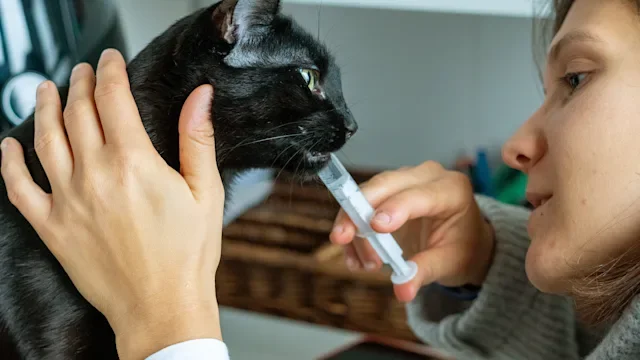
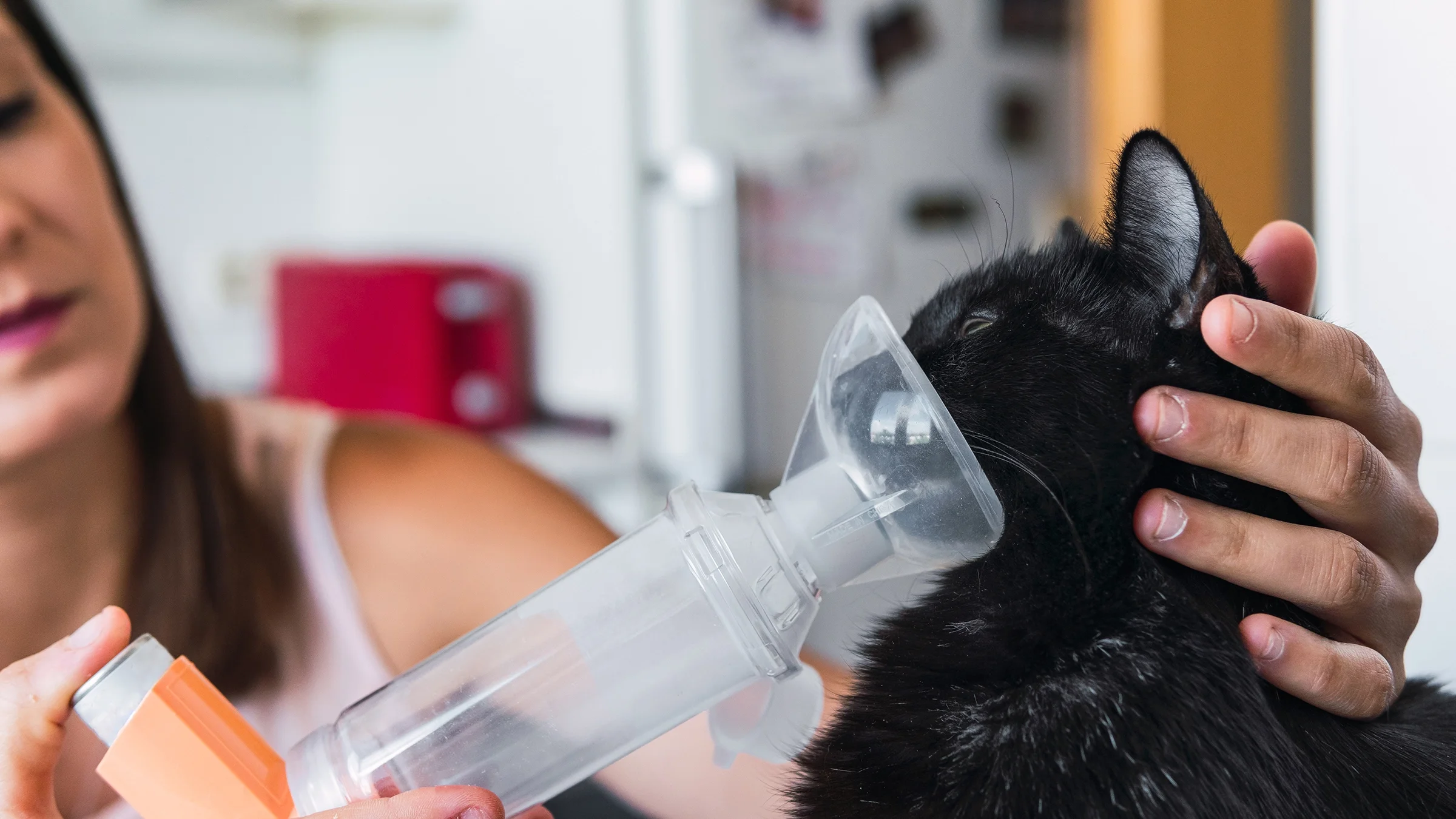
Fluticasone is an inhaled medication given to cats via an inhaler. Cats can’t inhale from an inhaler like humans. So you’ll need to buy a cat-specific aerosol chamber, which includes a mask that fits over your cat’s muzzle. It’s important to make sure the mask fits your cat well.
How to give fluticasone to cats
Here’s how to give your cat fluticasone:
Shake the inhaler well.
If the inhaler is new or you haven’t used it in the last 2 weeks, dispense one priming dose into the air. This ensures that the medication is ready for your cat.
Attach the inhaler to your cat’s aerosol chamber.
Hold the aerosol chamber mask over your cat’s muzzle, and dispense 1 puff of medication.
Allow your cat to breathe 7 to 10 times through the mask.
Remove the mask.
Reward your cat with a treat or praise.
Repeat as directed by your veterinarian.
When you first start using an inhaler, it may be awkward for you and your cat. Go slowly, using lots of praise and positive reinforcement.
Begin by allowing your cat to investigate the inhaler on their own terms. Gradually work your way up to holding the mask to your cat’s muzzle for longer periods of time. Use lots of treats and praise along the way.
Once your cat can tolerate having the mask held over their muzzle, dispense the medication according to your veterinarian’s recommendations.
What should you do if your cat misses a dose of fluticasone?
If you miss your cat’s dose of fluticasone, give the missed dose as soon as you remember. Then wait the recommended amount of time before giving your cat’s next dose. You don’t want to give two doses too close together.
If it’s almost time for your cat’s next dose, skip the missed dose. Give the next dose at the regular time. Do not give two doses of fluticasone at once.
What are the common side effects of fluticasone for cats?
Cats don’t often experience side effects from fluticasone. In fact, most veterinarians prescribe fluticasone specifically to avoid the side effects seen with oral steroids (such as prednisolone).
While rare, fluticasone side effects may include:
Weakened immune system
Eye disorders
Increased thirst
Increased urination
Increased appetite
Changes to fur
If your cat shows signs of side effects from fluticasone, contact your veterinarian for guidance.
What are the most serious risks of fluticasone for cats?
Fluticasone is not associated with any known serious side effects for cats. Oral steroids can have a wide variety of side effects for cats. But inhaled steroids like fluticasone appear to avoid the majority of these risks.
Does fluticasone interact with other cat medications?
Interactions between fluticasone and other cat medications are relatively uncommon. But some medications, including ketoconazole, may lower your cat’s ability to clear fluticasone from the body.
Make sure your veterinarian is aware of all medications that your cat is taking. This will allow them to limit the risk of drug interactions.
The bottom line
Fluticasone propionate HFA (Flovent) is an inhaled medication used to treat inflammation in the airways and lungs of cats. An inhaler may be more challenging to give your cat compared to steroids in pill form. But giving the medication directly to the lungs and airways can help avoid many of the side effects cats have when taking oral steroids, such as prednisolone. If you have questions about the use of fluticasone in your cat, contact your veterinarian.

Why trust our experts?




References
Cornell Feline Health Center. (2014). Feline asthma: What you need to know. Cornell University College of Veterinary Medicine.
Dowling, P. M. (2022). Inhalation treatment of airway disease in animals. MSD Veterinary Manual.
International Cat Care. (2025). Asthma and chronic bronchitis in cats.
Padrid, P. (2001). Inhaled drugs for feline asthma. World Small Animal Veterinary Association World Congress Proceedings.
Today’s Veterinary Practice. (2014). Treatment of feline lower airway disease.
Veterinary Information Network. (2019). Fluticasone - client drug information sheets.